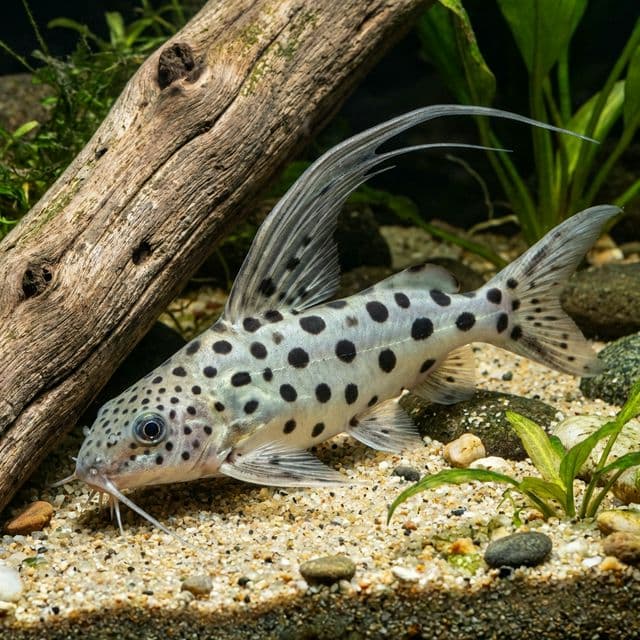
Petricola Catfish: Synodontis petricola
A charming, highly social dwarf Synodontis catfish endemic to Lake Tanganyika.

Petricola Catfish
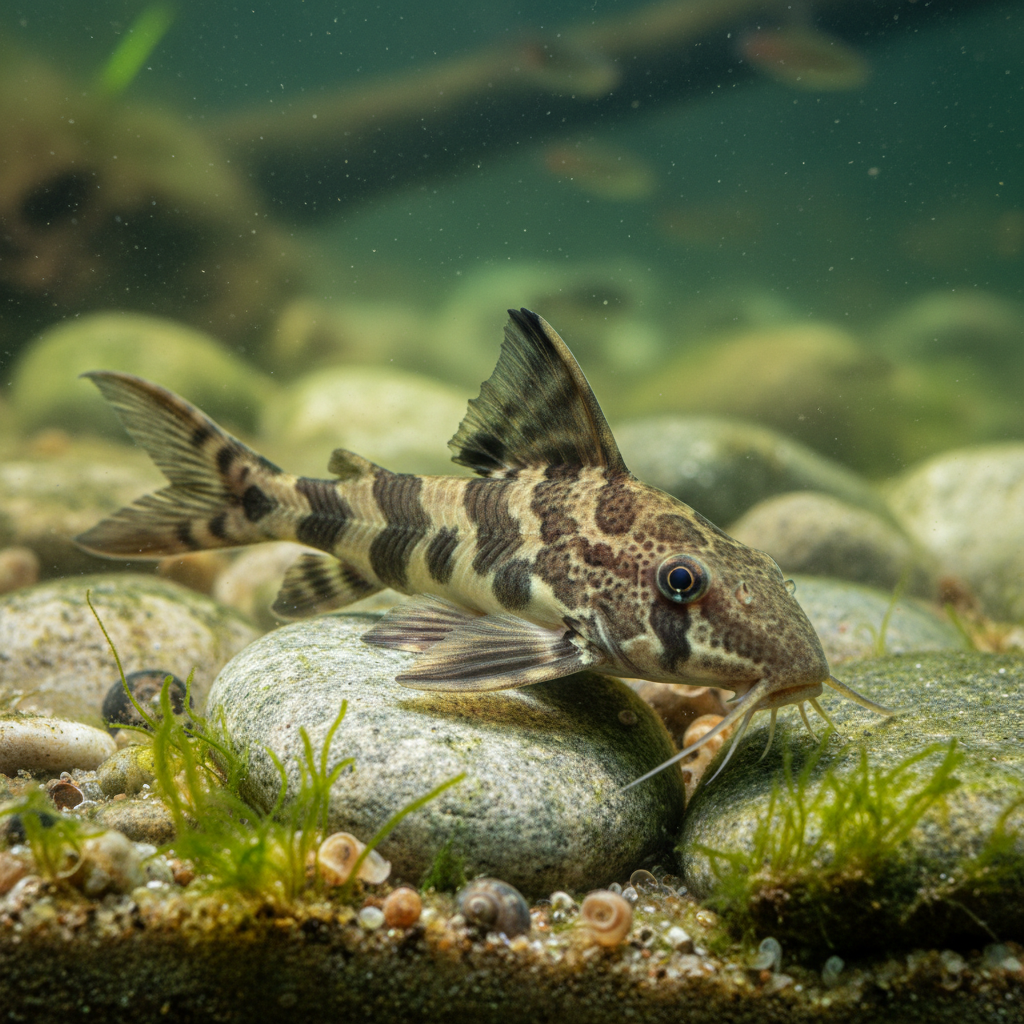
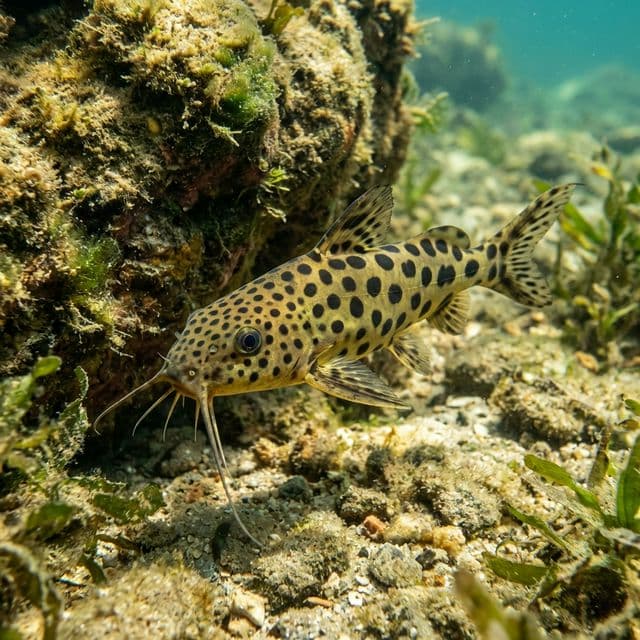
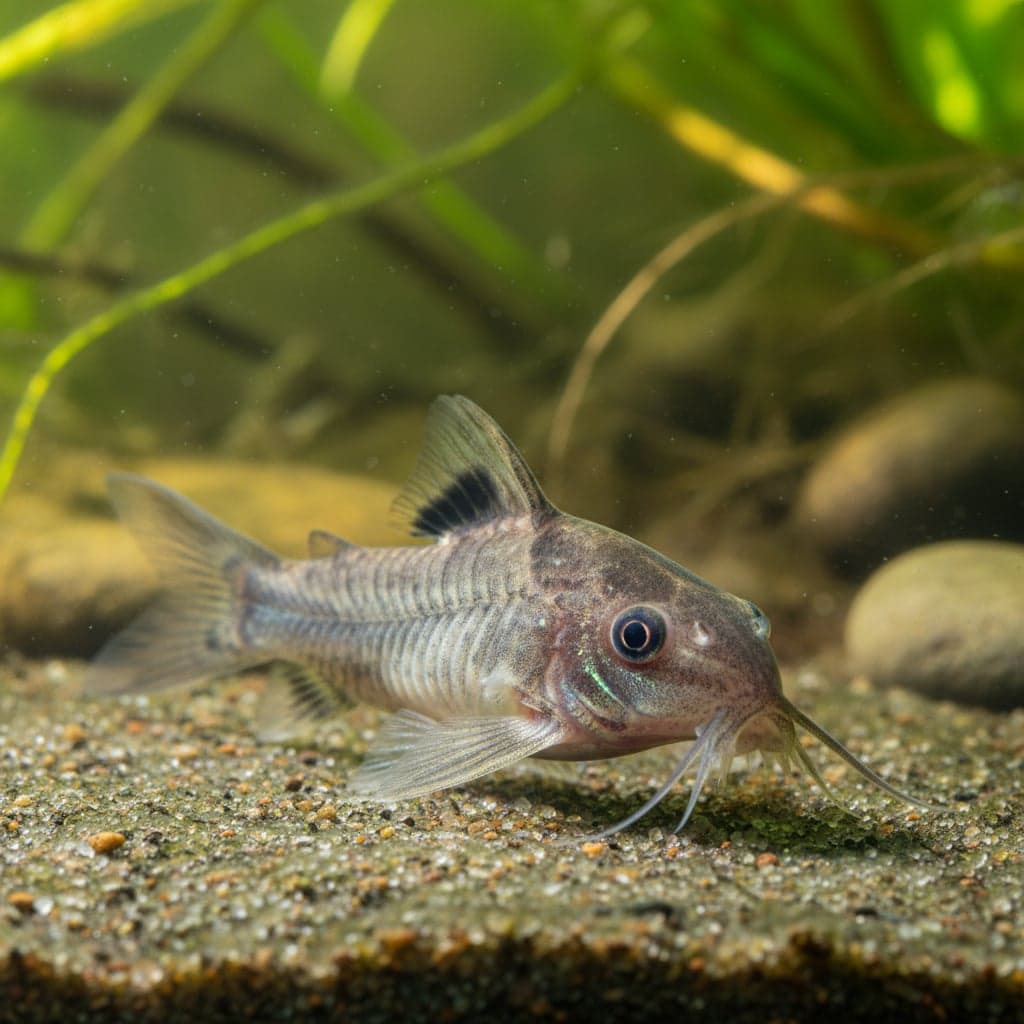
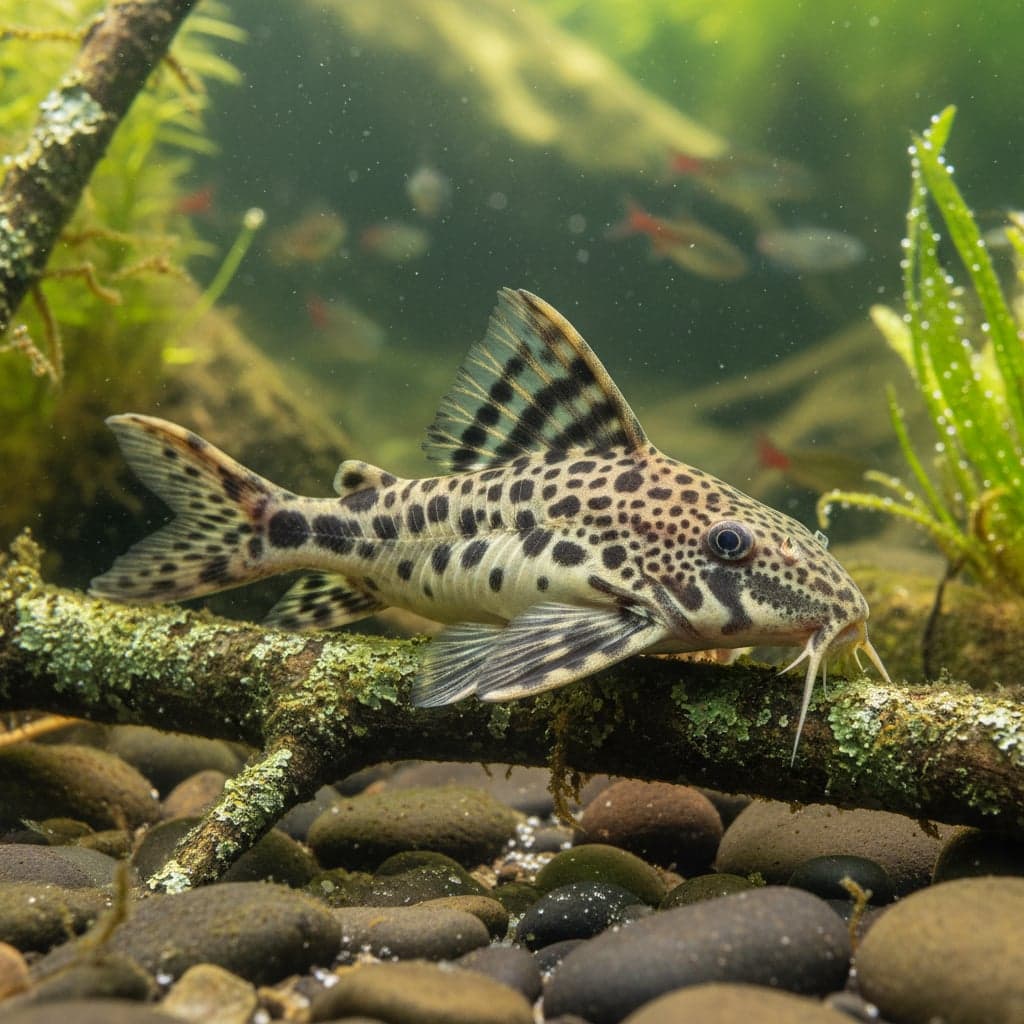
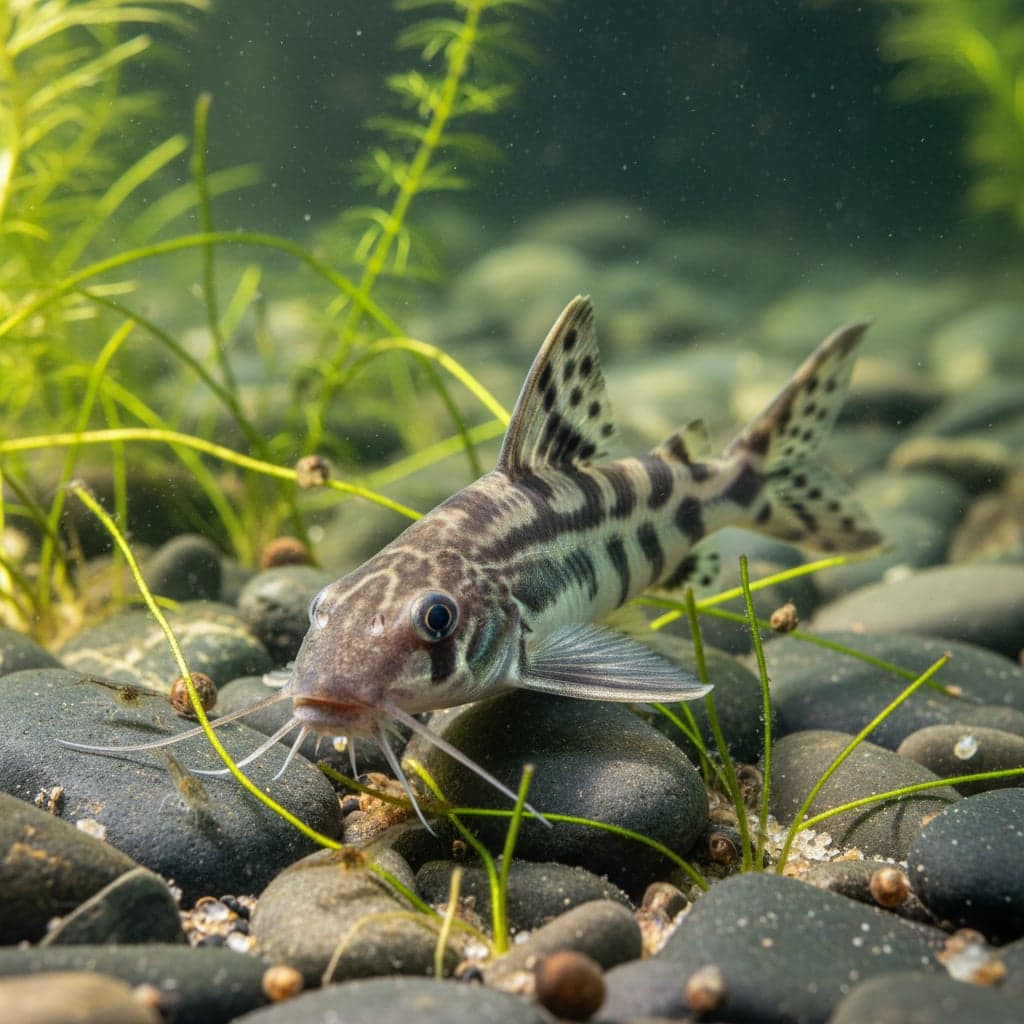
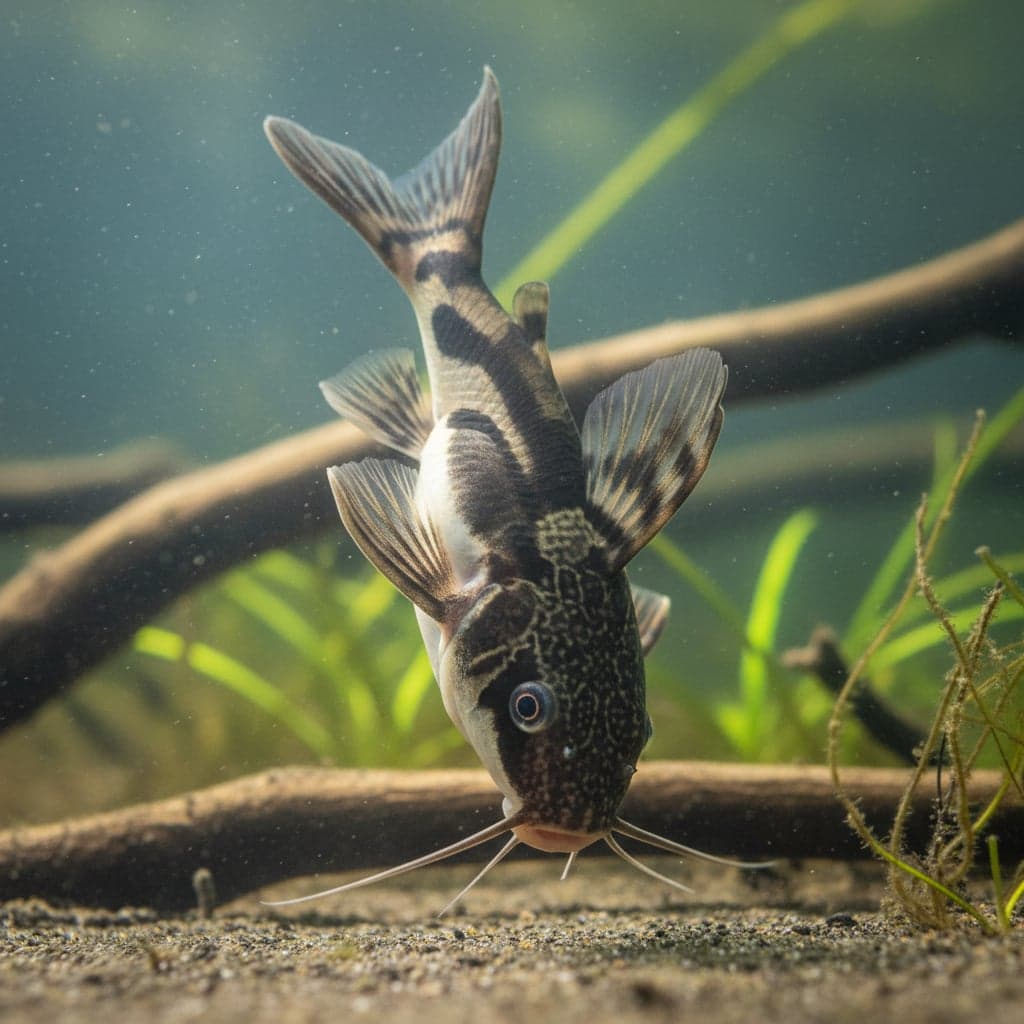
The Petricola Catfish, scientifically known as Synodontis petricola, is a small and captivating freshwater fish native to the African Great Lakes. This species is highly regarded in the aquarium hobby for its unique appearance, which emphasizes a slender body adorned with a striking pattern of dark spots against a light background. Typically reaching a size of about 4 to 6 inches, this catfish features elongated dorsal and pectoral fins that give it a graceful, almost majestic look as it swims through its environment. Its distinctive appearance combined with its intriguing nocturnal behaviors makes the Petricola Catfish an appealing choice for both novice and seasoned aquarists.
In addition to its visual appeal, the Petricola Catfish holds significant importance in the aquarium community due to its relatively hardy nature and adaptability to various tank conditions. As a species that naturally inhabits complex structures such as rocky crevices and plant-rich environments, this fish behaves uniquely in a home aquarium setting; it often utilizes its surroundings for both shelter and play, contributing to a lively aquatic atmosphere. For aquarists seeking to create a vibrant community tank, the Petricola Catfish serves as both an attractive centerpiece and a delightful addition to community dynamics.
Natural Habitat & Origin
The Petricola Catfish originates primarily from the rocky shorelines and river systems of Lake Tanganyika in East Africa. This natural habitat is characterized by its clear waters, providing both optimal visibility and a unique ecosystem filled with diverse marine life. In its native environment, the Petricola Catfish typically inhabits areas with rocky substrate and submerged structures, which offer essential hiding spots and breeding grounds. These locations are often filled with a mixture of both blackwater and clearwater, lending to the fish’s adaptability to varied water conditions.
Understanding the natural habitat of the Petricola Catfish is critical for successful aquarium maintenance. The fish thrives in slightly acidic to neutral waters, where it can find ample natural shelter along the substrate. Its evolutionary adaptations are closely tied to the unique environmental conditions of its native regions, making knowledge of these factors essential for replicating a suitable aquarium environment.
Care Requirements
To ensure a thriving environment for the Petricola Catfish, careful attention must be paid to water parameters. Ideal conditions include a pH range of 6.0 to 7.5, a temperature between 72°F to 82°F (22°C to 28°C), and water hardness levels of 5 to 18 dGH. These parameters mimic the fish's natural habitat and promote optimal health and behavior.
When setting up a tank for the Petricola Catfish, a minimum size of 30 gallons is recommended to provide ample swimming space and hiding spots. The substrate should consist of smooth gravel or sand to protect their delicate barbels. Incorporating various decorations such as rock formations, driftwood, and dense plant life will create an inviting environment that mirrors their natural habitat. While lighting can be moderate, it is essential to offer shaded areas as the Petricola Catfish benefits from a balanced light cycle that allows for both active hours and restful periods.
Diet & Feeding
The Petricola Catfish is an omnivore, thriving on a varied diet that includes both plant and animal matter. In captivity, it can be fed a combination of high-quality sinking pellets, flakes, and even live or frozen foods like bloodworms and brine shrimp. This diverse diet ensures that the fish receives all necessary nutrients for growth, health, and vibrancy. It is advisable to feed the Petricola Catfish small portions 2-3 times a day, providing a mix of foods to keep it engaged and interested.
Additionally, live and frozen foods are beneficial as they replicate the natural diet of the fish. Offering occasional green supplements, such as spirulina and blanched vegetables, will also cater to its herbivorous instincts and enhance overall well-being. The key is to maintain a balanced diet that supports both health and activity levels, contributing to the longevity and vibrancy of the Petricola Catfish.
Behavior & Temperament
The Petricola Catfish is a peaceful and intriguing species that exhibits fascinating social behaviors. Generally non-aggressive, these fish prefer to stay within the company of their own kind and are best kept in small groups of 5 to 6 individuals. Their schooling nature helps to reduce stress levels, allowing them to feel secure and more confident in their environment. They tend to be more active during the evening and night, showcasing their unique behavior as they explore the substrate and inhabit the tank's structures.
In terms of vertical placement, the Petricola Catfish predominantly occupies mid to bottom areas of the tank. While they do venture up towards the surface during feeding times, their natural instincts guide them to the lower regions, where they seek out detritus and forage for food. This behavior not only adds interest to their activity but also contributes to a well-rounded community tank environment.
Tank Mates
When selecting tank mates for the Petricola Catfish, it is important to consider species that share a similar temperament and environmental needs. Compatible tank mates include smaller cichlids, peaceful tetra varieties, and other community fishes that inhabit the mid-water level or above. Some excellent choices include neon tetras, gouramis, danios, and the peaceful species of barbs.
However, it is crucial to avoid aggressive or overly territorial fish, such as larger cichlids and any predatory species, as these can stress the Petricola Catfish and disrupt the overall harmony of the aquarium. By carefully curating tank mates based on the Petricola Catfish’s sociable nature and environmental needs, aquarists can foster a vibrant, lively, and diverse aquatic community.
Breeding
Breeding the Petricola Catfish in captivity can be a challenging yet rewarding endeavor. To encourage spawning behavior, it is essential to simulate their natural habitat, which includes providing ample hiding spots and creating a suitable environment with slightly acidic water conditions (pH around 6.5) and stable temperatures of around 76°F (24°C). Densely planted areas, along with flat surfaces where they can lay eggs, enhance the likelihood of successful breeding.
During the breeding process, the female will typically lay small clusters of eggs in protected areas of the tank, while males engage in courtship displays to attract females. After fertilization, it’s prudent to remove the adults from the breeding area to prevent them from consuming the eggs. After a few days, the eggs will hatch, and the fry will require infusoria or finely crushed flake food for optimal growth. Breeding requires patience and attention to detail, making it a fulfilling challenge for dedicated aquarists.
Common Health Issues
While the Petricola Catfish is generally a hardy and resilient species, it can be prone to certain health issues, particularly if not maintained in optimal conditions. Common concerns include ich, fin rot, and bacterial infections. Preventative measures include maintaining stable water parameters, regular tank maintenance, and ensuring a balanced diet.
In the case of morbidity, early intervention is crucial. Signs of illness like clamped fins, reduced activity, or visible lesions warrant immediate attention. Isolation from the main tank is advisable to prevent the spread of any potential diseases. Regular health check-ups, water quality testing, and a proactive approach to nutrition will significantly reduce the likelihood of disease and keep these social catfish active and healthy.