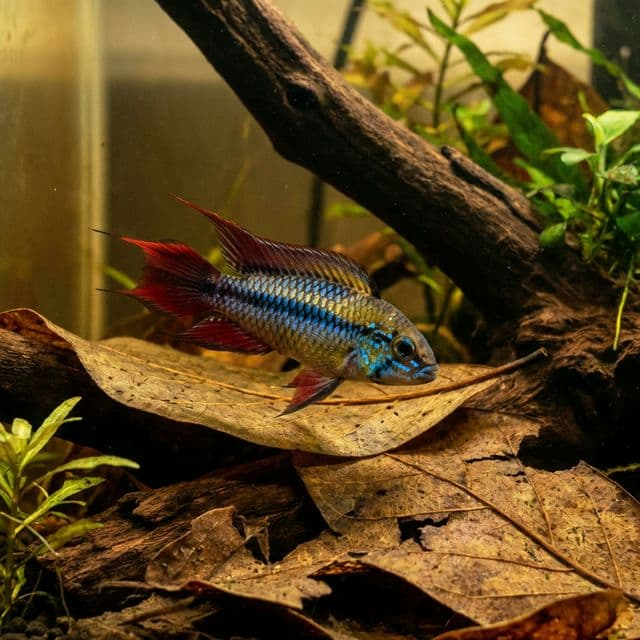
Ram: Mikrogeophagus ramirezi
A stunningly colorful, widely kept dwarf cichlid from South America, available in electric blue, German blue, and gold varieties.
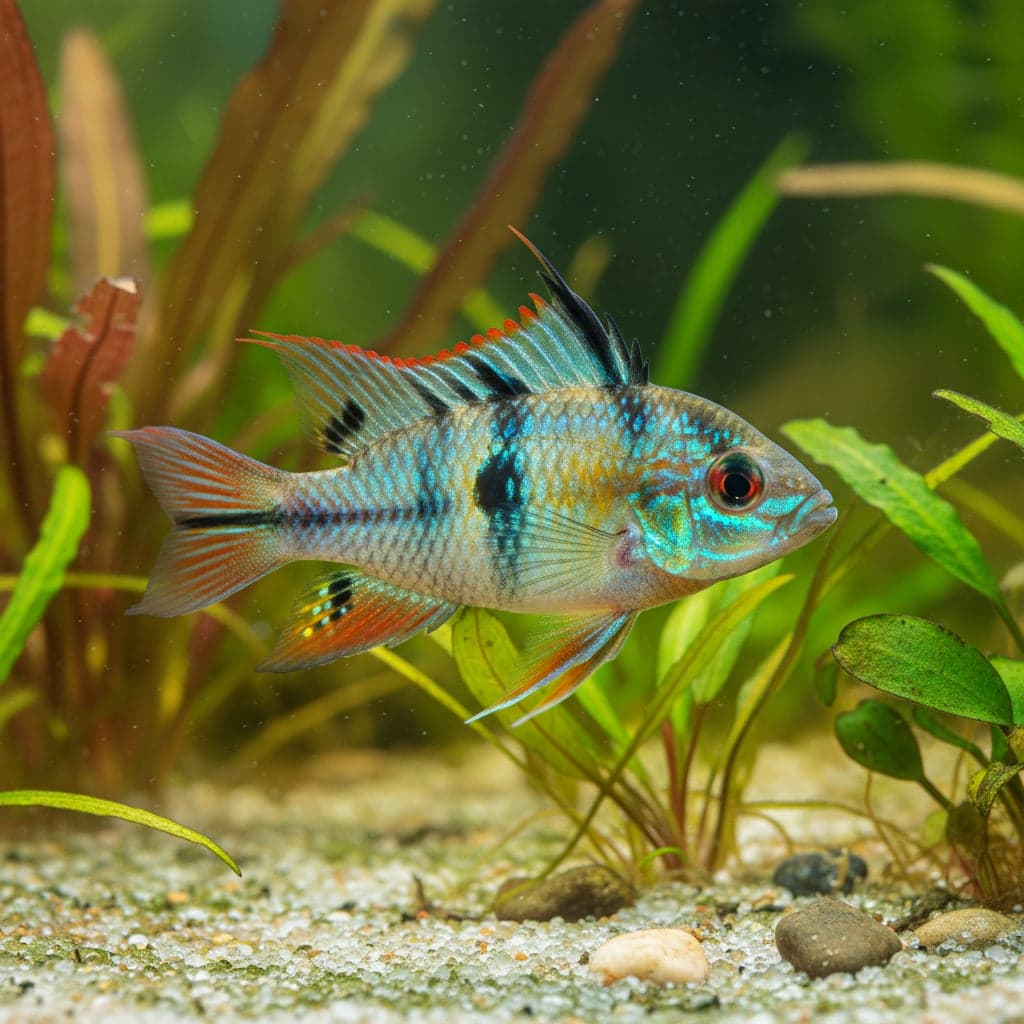
Ram
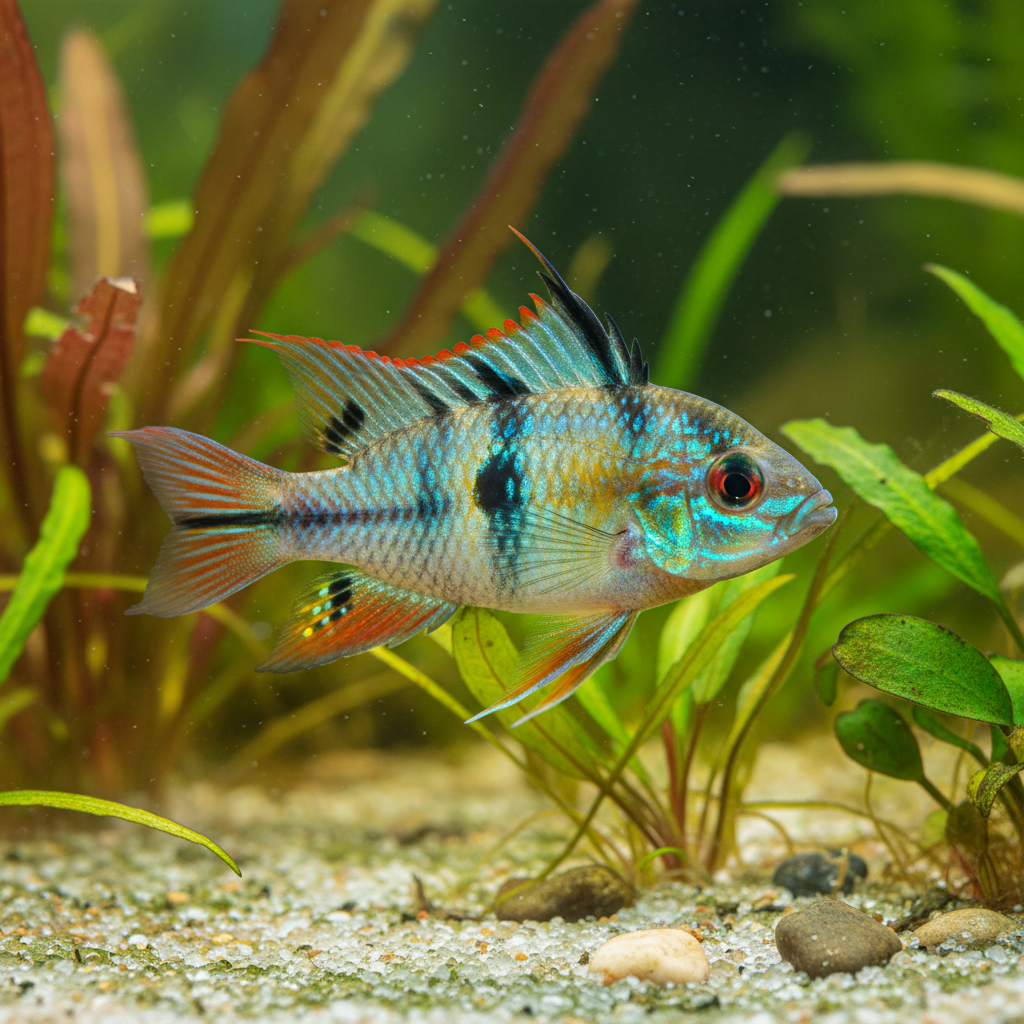
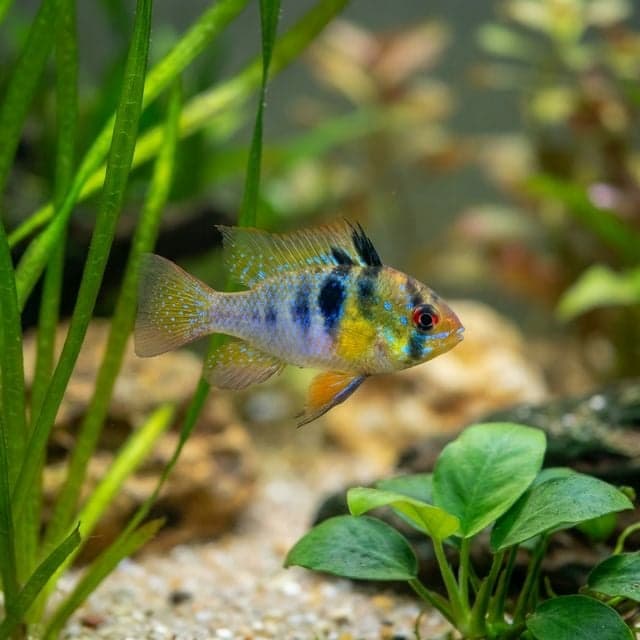
The Ram, scientifically known as Mikrogeophagus ramirezi, is a small cichlid species that has gained immense popularity in the aquarium hobby due to its striking colors and peaceful nature. Native to South America, this fish showcases a captivating bright blue and yellow body adorned with intricate patterns that vary among individuals. Males often exhibit more vibrant colors and larger fin extensions than females, making them visually appealing in both community tanks and species-specific setups. With their relatively gentle disposition, Rams are suitable for aquarists of all skill levels, further solidifying their significance in the world of freshwater aquariums.
Rams play an important role in the aquarium ecosystem, as they are often used to educate aquarists about the unique behaviors and care requirements of cichlids. Their distinctive personalities and engaging behaviors, coupled with their ability to adapt to various tank setups, make them a favorite choice for both beginners and seasoned fish keepers. As ornamental fish, they contribute to the rich diversity of freshwater species available and serve as a captivating focal point in any aquatic display.
Natural Habitat & Origin
Rams are primarily found in the Orinoco River Basin in Venezuela and Colombia, where they inhabit slow-moving, shallow waters rich in vegetation and organic debris. These waters are often characterized as blackwater environments due to the presence of tannins released from decomposing plant material, which imparts a dark color to the water and lowers the pH. The natural habitat of the Ram is typically soft and acidic, providing an excellent environment for breeding and developing their vibrant colors.
In these conditions, Rams thrive in areas with abundant leaf litter and plenty of hiding spots among submerged plants and driftwood. This environment not only serves as a shelter but also influences their natural behavior, as they often seek refuge among vegetation when startled. Understanding their natural habitat is crucial for creating a suitable aquarium environment that encourages healthy growth and activity.
Care Requirements
To ensure the health and well-being of your Ram, it is essential to replicate its natural water conditions. The ideal water parameters include a pH of 5.5 to 7.5, a temperature range of 78°F to 86°F (25°C to 30°C), and a hardness level of 2 to 15 dGH. Regular water changes and quality maintenance are vital, as Rams are sensitive to fluctuations in water quality.
When setting up a tank for Rams, a minimum size of 20 gallons is recommended, allowing adequate swimming space while providing multiple hiding spots. Use a dark substrate to enhance their coloration, and incorporate live plants like Amazon swords, Java ferns, and floating plants that provide cover. Lighting should be moderate to low, mimicking the dappled sunlight of their natural habitat. Additionally, include driftwood to create hiding places and to promote a more natural environment.
Diet & Feeding
Rams are omnivores, and in captivity, their diet should consist of high-quality flakes, pellets, and a variety of live or frozen foods. A balanced diet rich in protein is important for vibrant colors and overall health. Age-appropriate commercial foods, such as spirulina flakes, can help enhance their natural color. It is also beneficial to supplement their diet with brine shrimp, daphnia, and other protein sources.
To foster healthy growth and maintain high energy levels, feed Rams small amounts 2-3 times a day, ensuring that all food is consumed within a few minutes to prevent water quality issues. A varied diet will not only keep them healthy but also encourage their natural behaviors, enhancing the overall aquarium experience.
Behavior & Temperament
Rams are known for their peaceful and friendly temperament, making them ideal candidates for community tanks. They are social fish that prefer to be kept in pairs or small groups, as this replicates their natural environment and influences their social structure. However, it is important to note that during breeding, males can become territorial and exhibit mild aggression towards other tank inhabitants, particularly if their breeding area is threatened.
In terms of swimming behavior, Rams tend to occupy the lower and mid-levels of the tank, often darting in and out of the foliage. They appreciate variety in their environment, which encourages natural exploration and foraging behavior. Providing plenty of cover and open swimming space will help reduce stress and promote healthy activity levels.
Tank Mates
When selecting tank mates for Rams, consider their peaceful nature. Compatible species include small tetras (like Neon Tetras and Rummy-nose Tetras), small rasboras, and peaceful dwarf cichlids such as Apistogrammas. Additional suitable companions are Corydoras catfish and Otocinclus, both of which maintain a low profile in the aquarium.
Conversely, it’s best to avoid aggressive or larger fish species that may bully or prey on Rams. Avoid housing them with fish such as larger cichlids, aggressive barbs, and fast-swimming species like certain types of danios, as these fish may stress Rams or outcompete them for food.
Breeding
Breeding Rams in captivity can be a rewarding experience, as they are relatively easy to spawn given the right conditions. To encourage breeding, maintain water parameters at a slightly lower pH of around 6.0 and a temperature around 82°F (28°C). Provide spawning sites, such as flat stones or smooth surfaces among dense vegetation, where the female can lay her eggs.
During the breeding process, Rams exhibit fascinating behaviors, with the male often performing elaborate displays to attract the female's attention. Once the eggs are laid, both parents take on the responsibility of guarding and caring for the young. If successful, fry can be fed a diet of infusoria or crushed flakes in the early stages, gradually transitioning to larger foods as they grow.
Common Health Issues
Rams are generally hardy, but they can be prone to certain diseases, particularly in newly established aquariums or under poor water conditions. Common health issues include ich (Ichthyophthirius multifiliis), fin rot, and velvet disease. Prevention is key, and maintaining clean, stable water conditions is essential for avoiding these problems.
Regular observation for signs of stress or illness is important. Implementing a quarantine procedure for new arrivals can help prevent the introduction of pathogens. Additionally, a nutritious diet, regular water changes, and appropriate tank mate selections will contribute to optimal health and disease resistance in your Rams.