Red Stripe Mimic Tang
The Red Stripe Mimic Tang (Acanthurus tristis) is an Indian Ocean surgeonfish whose juveniles mimic Eibl's dwarf angel — a hardy, reef-safe algae grazer for medium-large tanks.

Red Stripe Mimic Tang
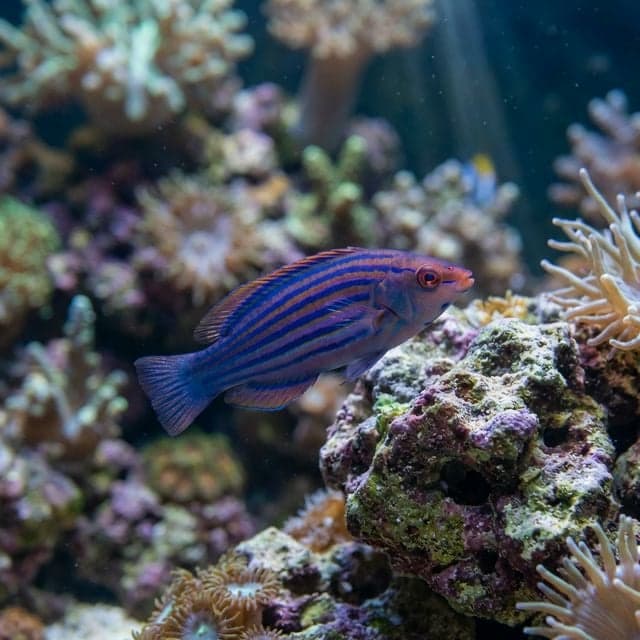
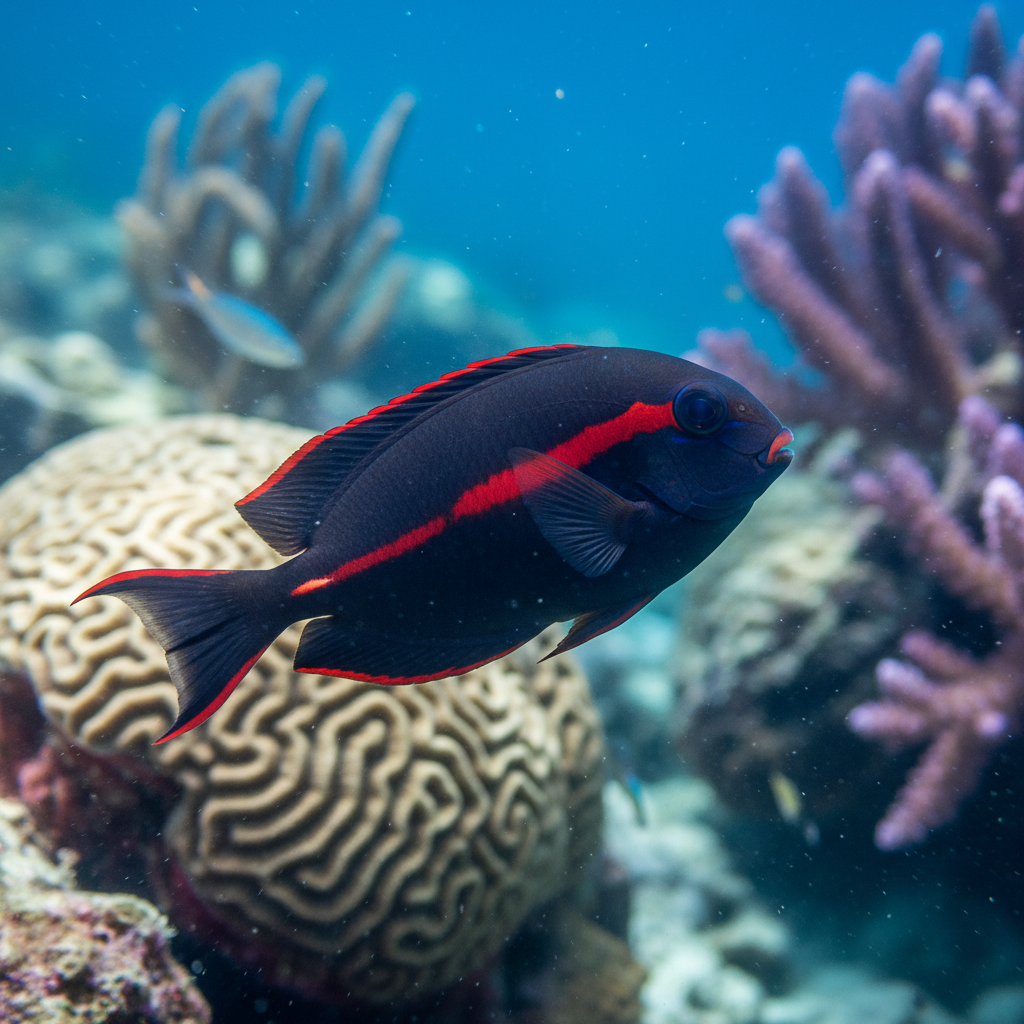
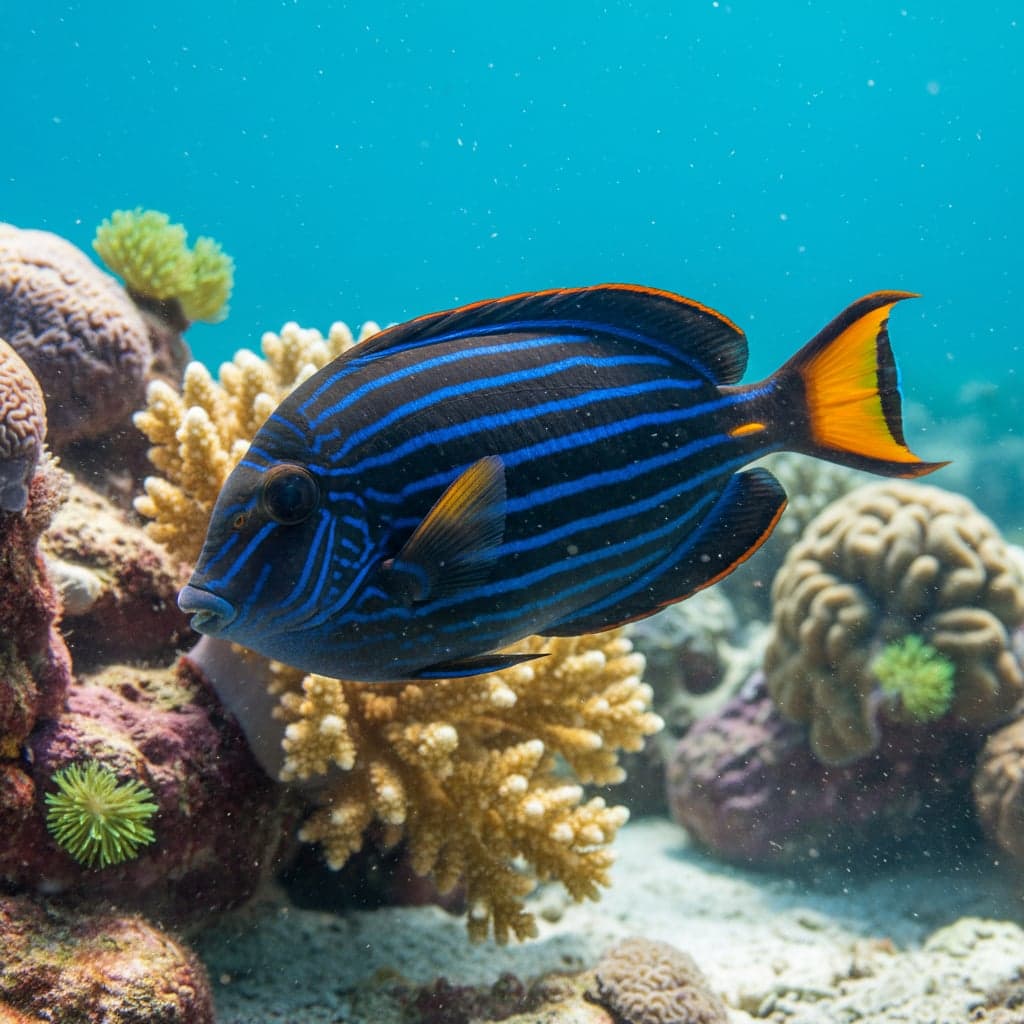
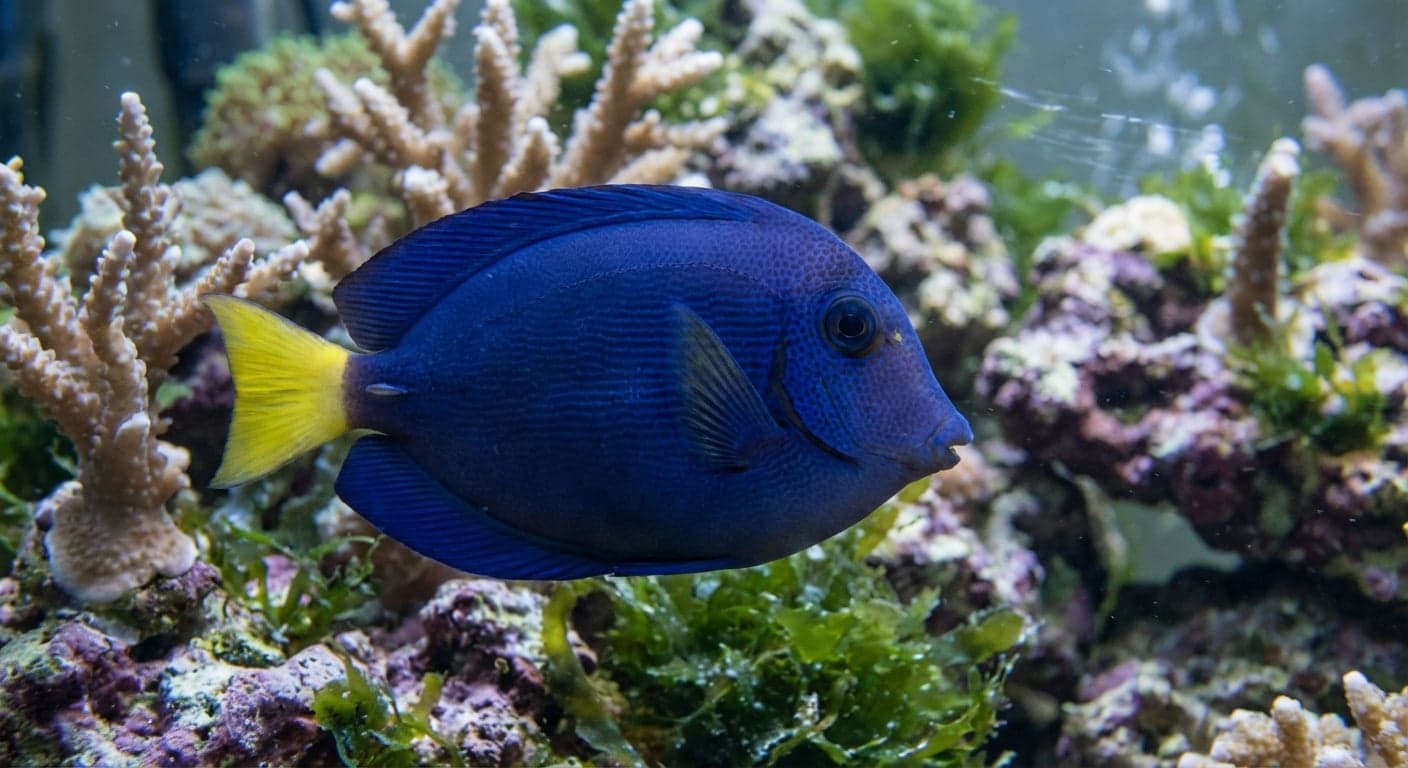
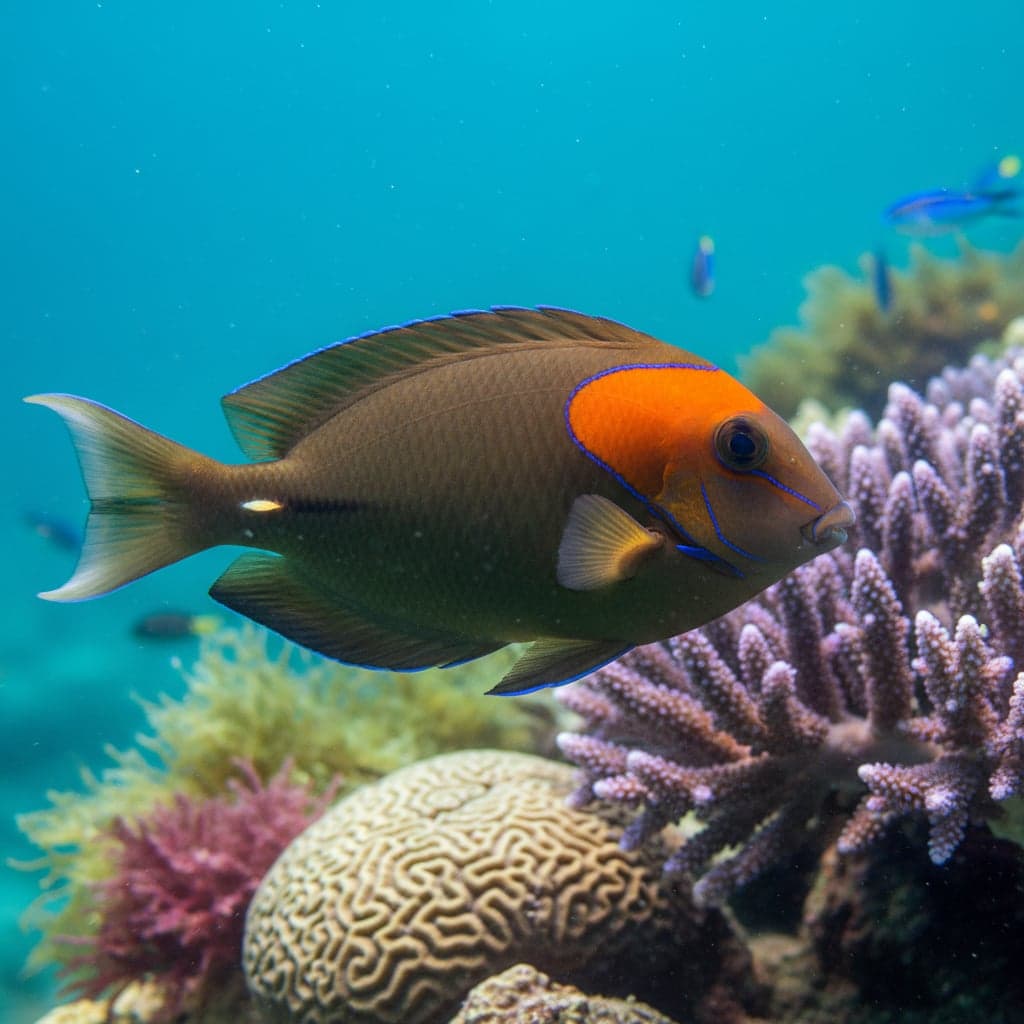
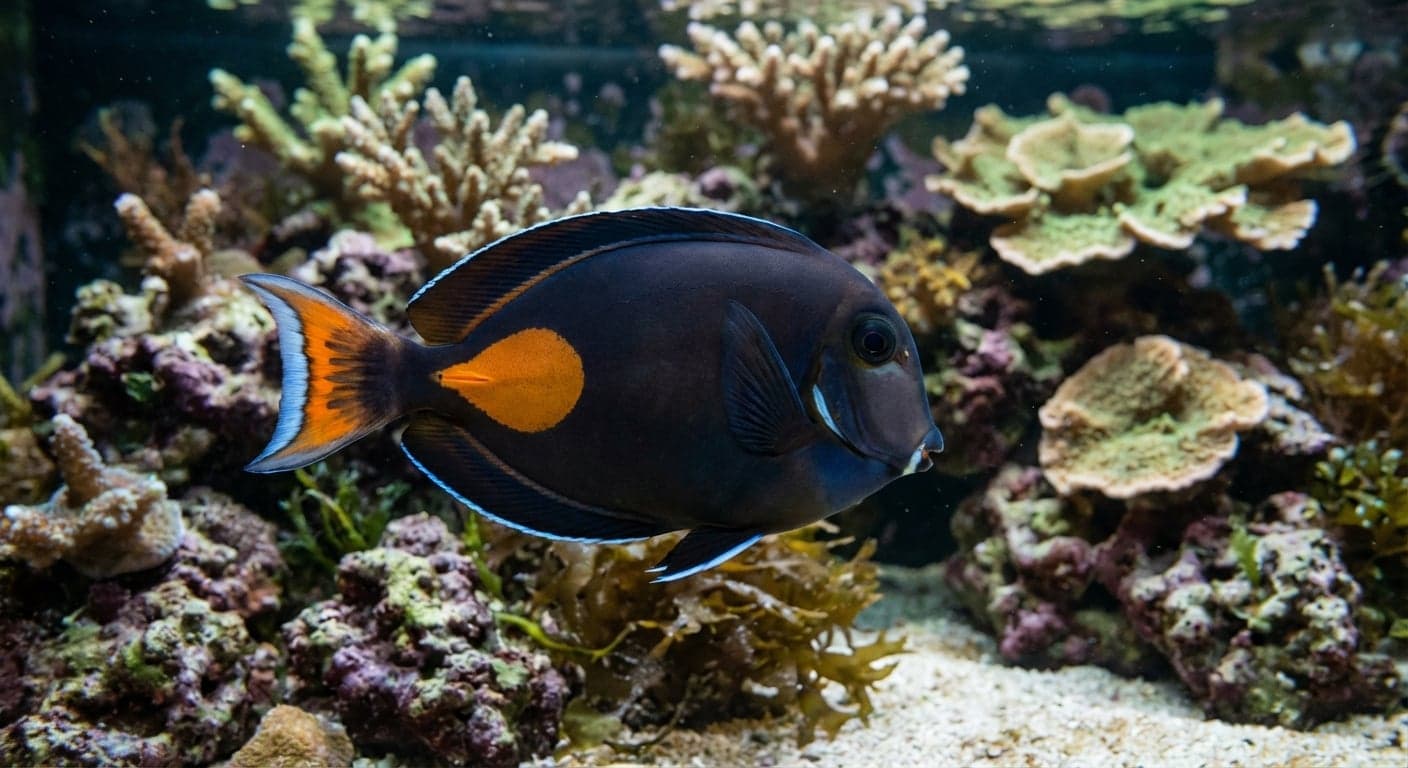
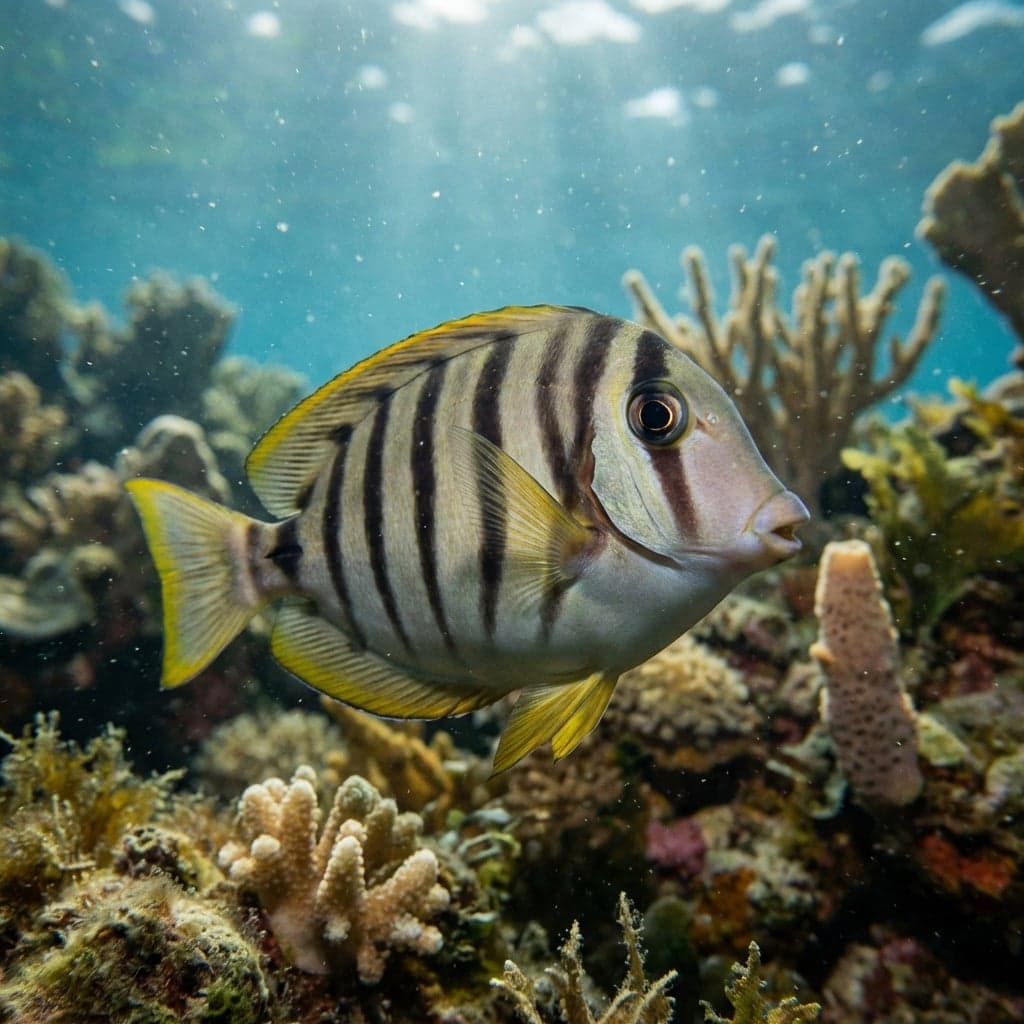
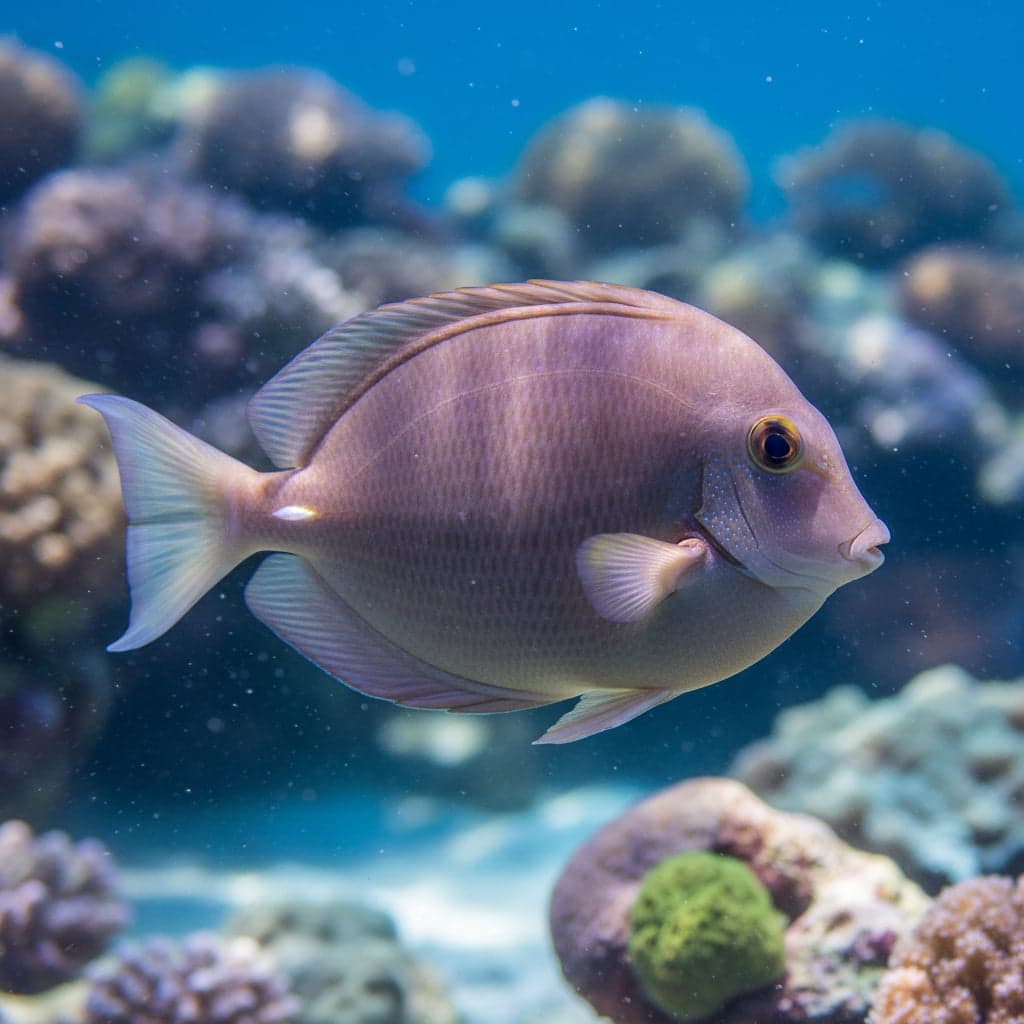
The Red Stripe Mimic Tang (Acanthurus tristis), also called the Indian Ocean mimic surgeonfish, is sold as much for a biological trick as for adult looks. As a juvenile it closely copies Eibl's dwarf angelfish (Centropyge eibli) — pale grey-tan body, orange pinstripes, the same silhouette at a glance — which gives young fish a measure of protection by resembling a reef angel many predators have learned to leave alone. As it grows, the disguise collapses into a darker, more uniform grey-brown surgeonfish with subtler markings.
That transformation is half the appeal. The other half is a hardy, reef-safe grazer related to the more familiar mimic tang (Acanthurus pyroferus), but with an Indian Ocean range and its own angel model. Buy knowing the cute striped juvenile will not stay that colour.
Natural Habitat & Origin
Acanthurus tristis occurs in the eastern Indian Ocean, including reefs around the Andaman Sea, Thailand, Malaysia and neighbouring island groups depending on locality records. Juveniles stay near structure and often near the Centropyge eibli populations they mimic. Adults range more widely over coral and rocky reefs as they graze algae and detritus films.
In the aquarium the fish wants what most acanthurids want: open swimming water, mature live rock covered in grazeable film, and enough flow to keep oxygen high and detritus from blanketing the rock. It is not a cave fish and not a sand sifter; it is a mid-water and rock-face worker with a surgeon’s caudal spine for defence.
Care Requirements
Hold salinity near 1.024–1.026, pH 8.1–8.4, and temperature 24–26°C (75–79°F), with strong, chaotic flow and excellent oxygenation. Adults reach about 25 cm (10 inches). The listed minimum of around 340 litres (about 90 US gallons) is a floor for a single fish, not a spacious forever home — tangs this size are active swimmers, and longer tanks (six foot class and up) reduce chronic pacing and aggression. If you can offer more volume, do.
Mature rock matters as much as litres. A sterile new tank with bare ceramic and no film leaves a herbivore unemployed between nori feedings. Cycle fully, grow the rock in, then add the tang. Zero ammonia and nitrite, nitrate kept reasonable — see ammonia and nitrite and nitrate. A lid helps; startled tangs can jump.
Log salinity and nutrients in the Aquarium Tracker; slow creep in nitrate or a heater fault shows up there before the fish flashes and clamps.
Diet & Feeding
Primarily herbivorous, with detritus and film making up much of the wild intake. In captivity the staple should be plant: dried marine algae (nori) on a clip several times a week, herbivore pellets or flakes with spirulina, and algae-based frozen foods. Occasional meaty items (mysis, enriched brine) are fine as a minority fraction; they are not a substitute for greens.
Feed frequently in small amounts. Surgeonfish have long guts adapted to almost constant grazing. One large evening feeding of protein-heavy food is the wrong shape of diet and is a common path to thin fish that “eat well” on the wrong things. Leave nori up long enough to graze, remove rotting sheets, and keep rock surfaces productive. Marine diets and feeding schedules expand on timing.
Weight loss with a hollow belly behind the pectorals is the underfeeding tell, even if the fish still rushes the glass at dinner. Increase green feedings and check for bullying that keeps it off the clip.
Behavior & Temperament
Semi-aggressive and territorial toward other tangs, as is typical for Acanthurus. Keep it as the only surgeonfish unless the system is very large and aquascaped to break lines of sight. Toward unrelated fish it is usually manageable if those fish are not competing for the same mid-water grazing lanes.
The caudal peduncle spine (the “scalpel”) is sharp. Do not net carelessly, do not bag it against other fish, and do not reach into a corner with bare hands when the fish is trapped. Wounds from that spine infect easily in warm salt water.
Introduce thoughtfully — preferably after the tank is mature and, if other semi-aggressive fish are present, not as the first livestock to claim every rock face. Mimic juveniles may be ignored by fish that later challenge the adult colour form; watch relationships through the transition.
Tank Mates
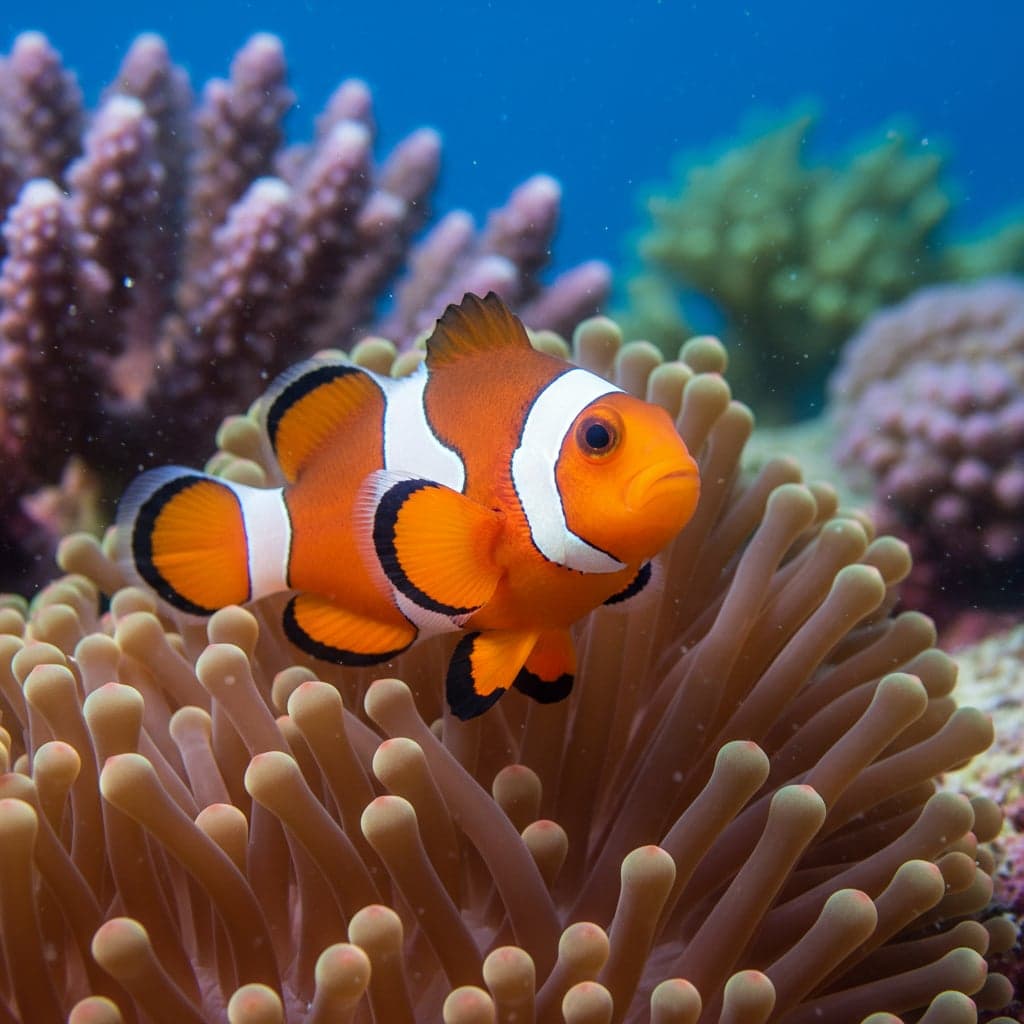
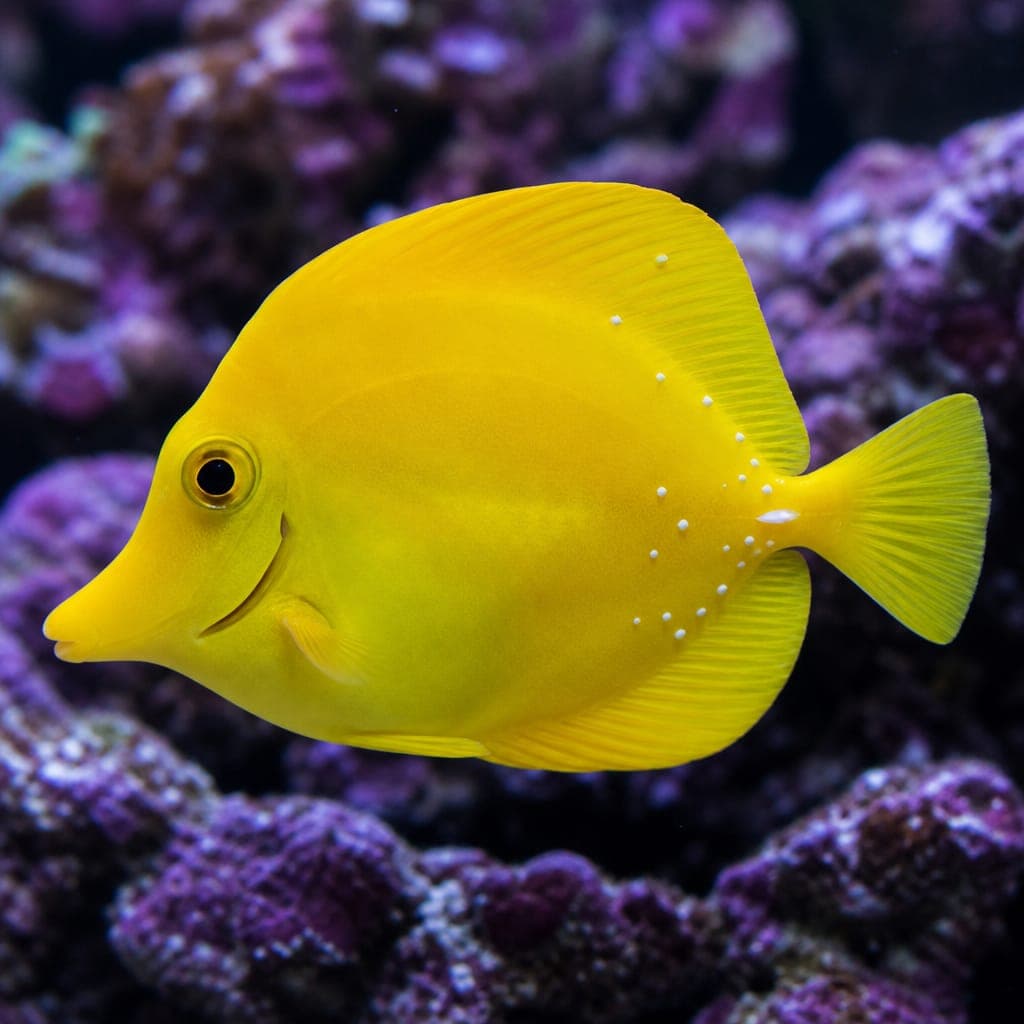
House with robust fish in different niches: wrasses such as the six line, angelfish, larger gobies, common clownfish, and anthias in systems large enough for them. Avoid other tangs — yellow tang, kole, mimic and similar — except in very large reefs where aggression can dissipate.
It is reef-safe with corals and ornamental invertebrates. It grazes algae and film; it does not eat coral polyps or hunt shrimp. That is a clean reef-safe claim, provided the system can feed a hungry herbivore without relying on the coral to be dinner. Compare the more coral-risky butterflies if you are weighing “interesting mid-size fish” options.
Breeding
Pelagic spawner with planktonic larvae. Not bred in home aquaria in any practical sense. Trade fish are wild-collected. There is no captive-bred pipeline that removes quarantine responsibility.
Common Health Issues
Surgeonfish are classic carriers and victims of marine ich (Cryptocaryon irritans) and velvet (Amyloodinium ocellatum). Shipping stress, low oxygen and bare tanks without grazing all raise risk. Quarantine every specimen under a quarantine protocol; treat in a hospital tank with appropriate therapy — not with copper in a display reef full of inverts. See medications.
HLLE (head and lateral line erosion) shows up in some tangs under poor nutrition, stray voltage or chronic water-quality stress; a green-heavy diet and stable parameters are the practical prevention. Thin fish and ich often arrive together after a long supply chain — buy from sources that hold fish, quarantine on arrival, and do not rush a skinny mimic onto a show reef.
Given mature rock, frequent algae-based feedings, swimming room and a clear quarantine, the Red Stripe Mimic is a hardy intermediate tang with a better story than most — watch the juvenile angel costume fade and you still have a working reef grazer underneath.