Sixbar Angelfish
The Sixbar Angelfish (Pomacanthus sexstriatus) is a large, spectacular Indo-Pacific marine angelfish for experts — growing to 46cm and needing a very large tank.

Sixbar Angelfish
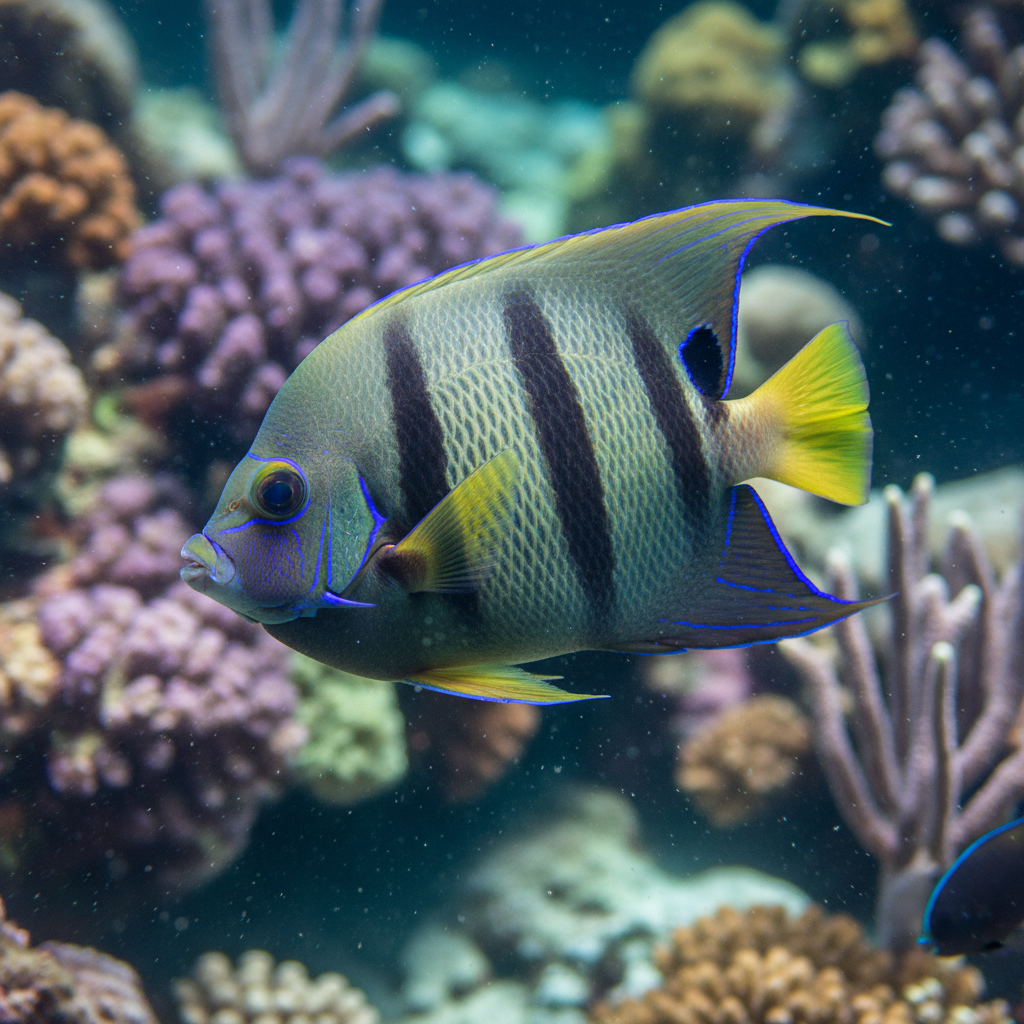
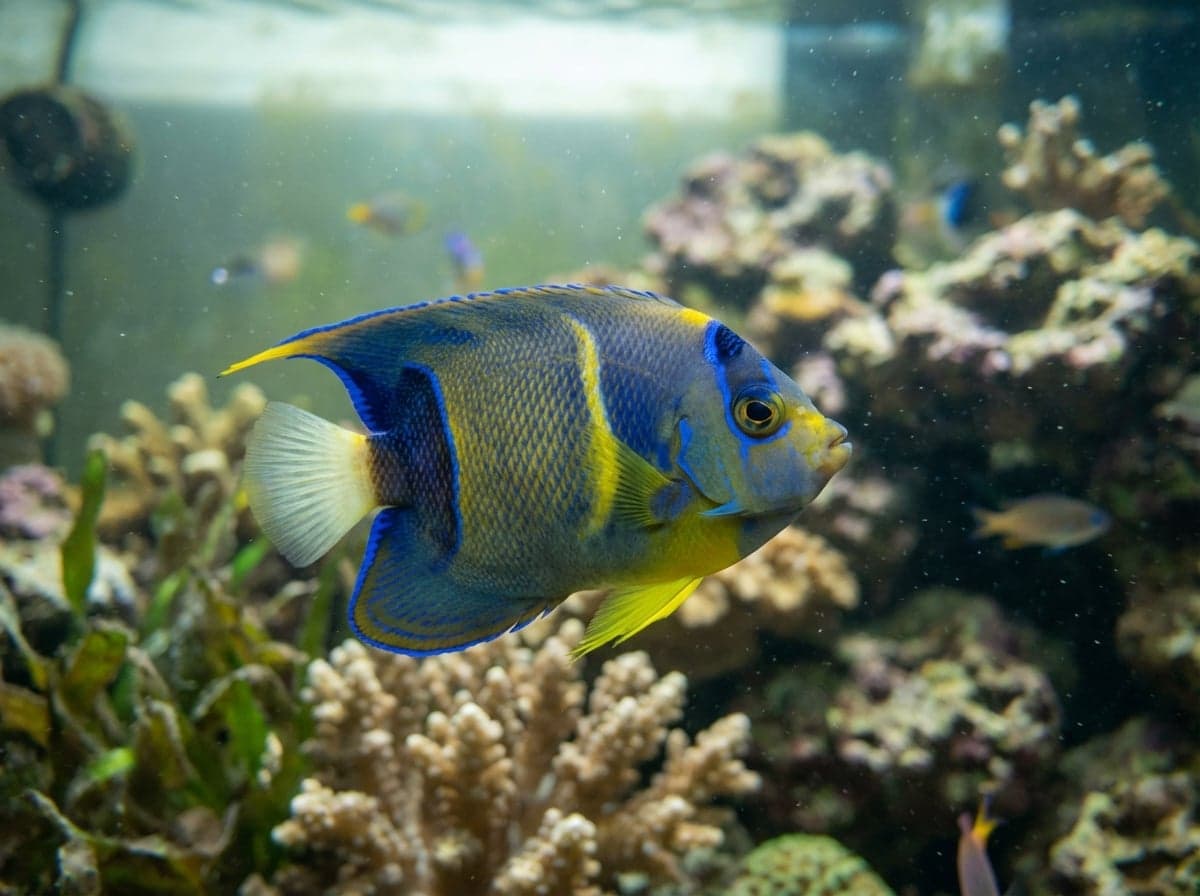
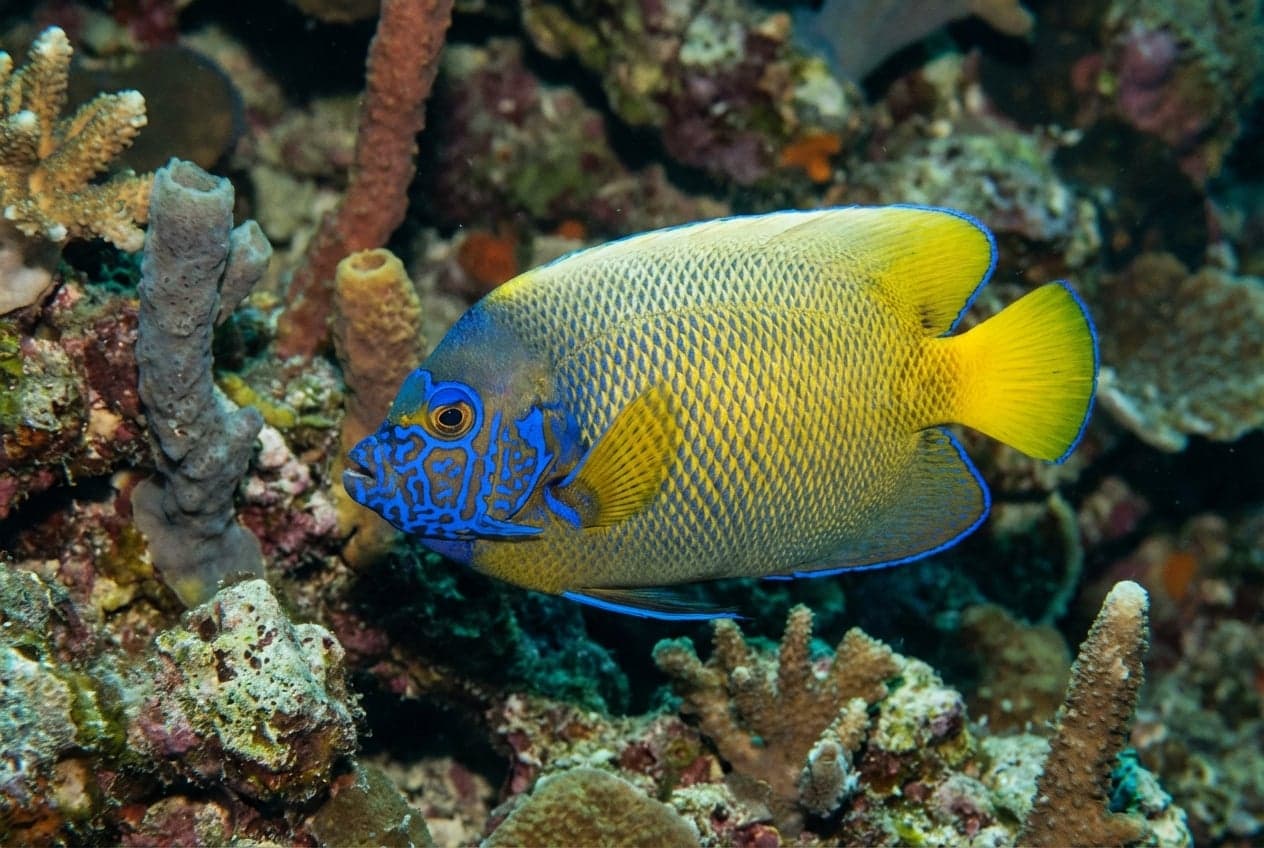
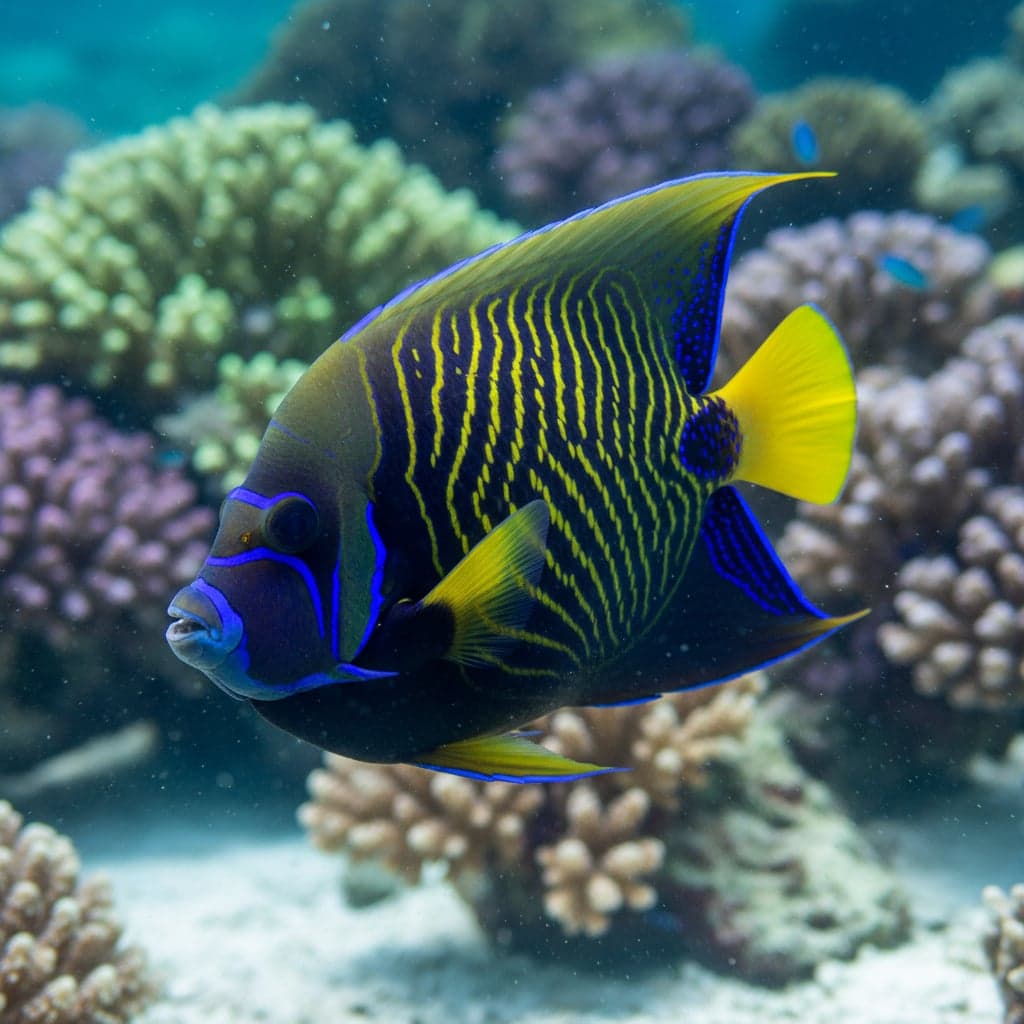
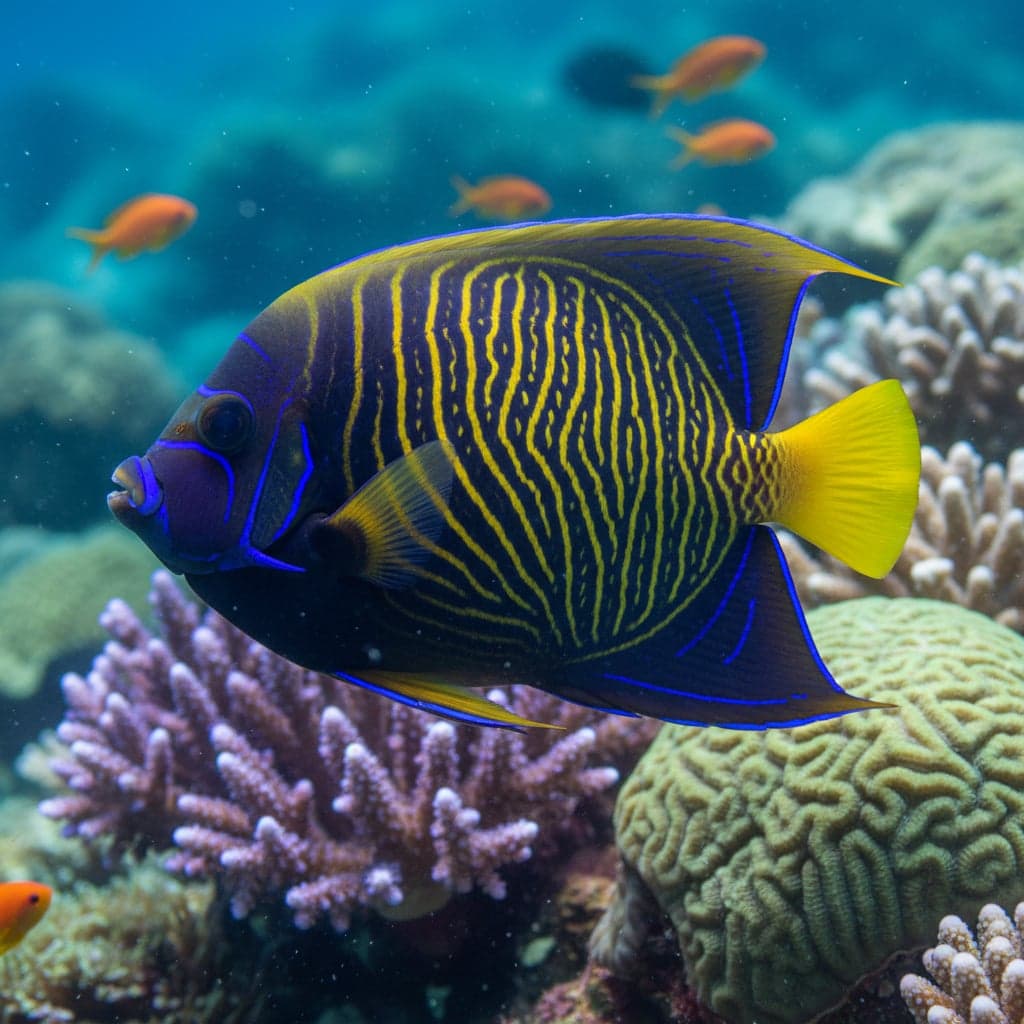
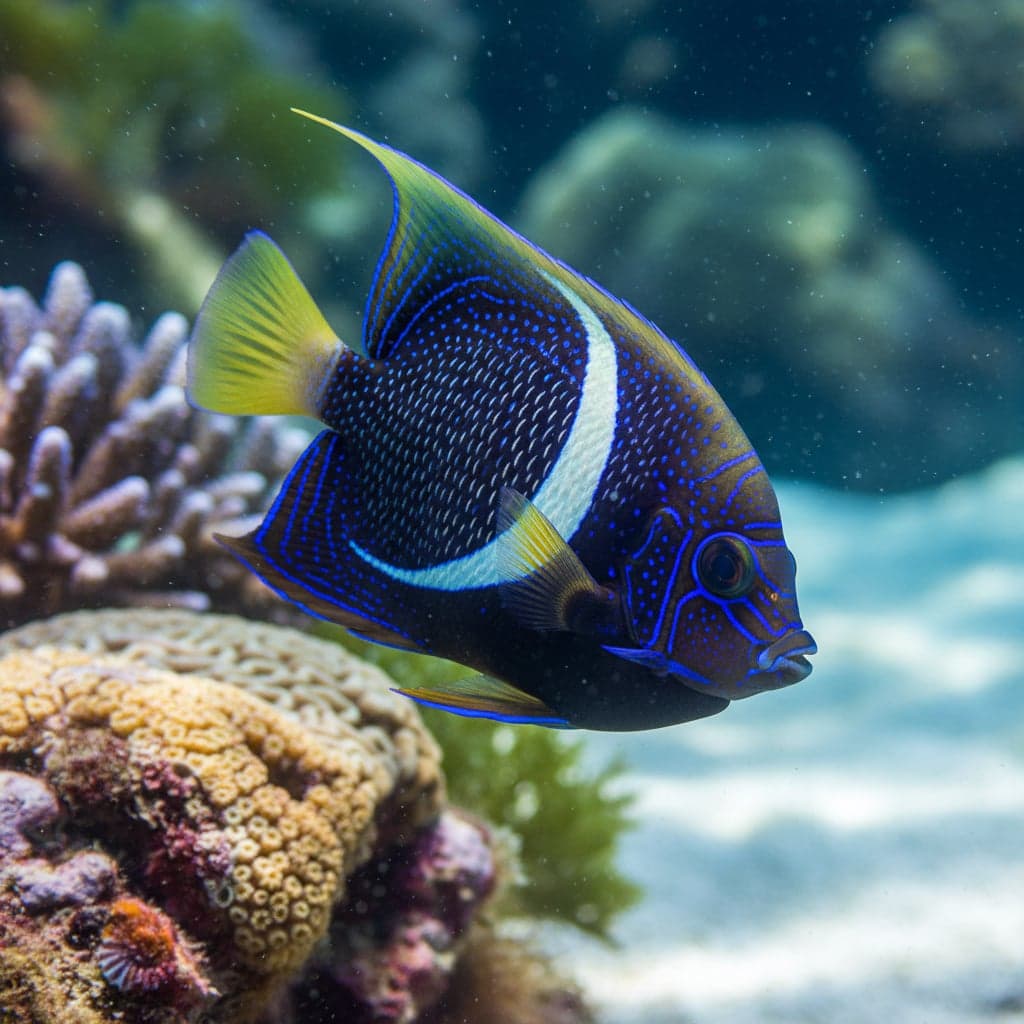
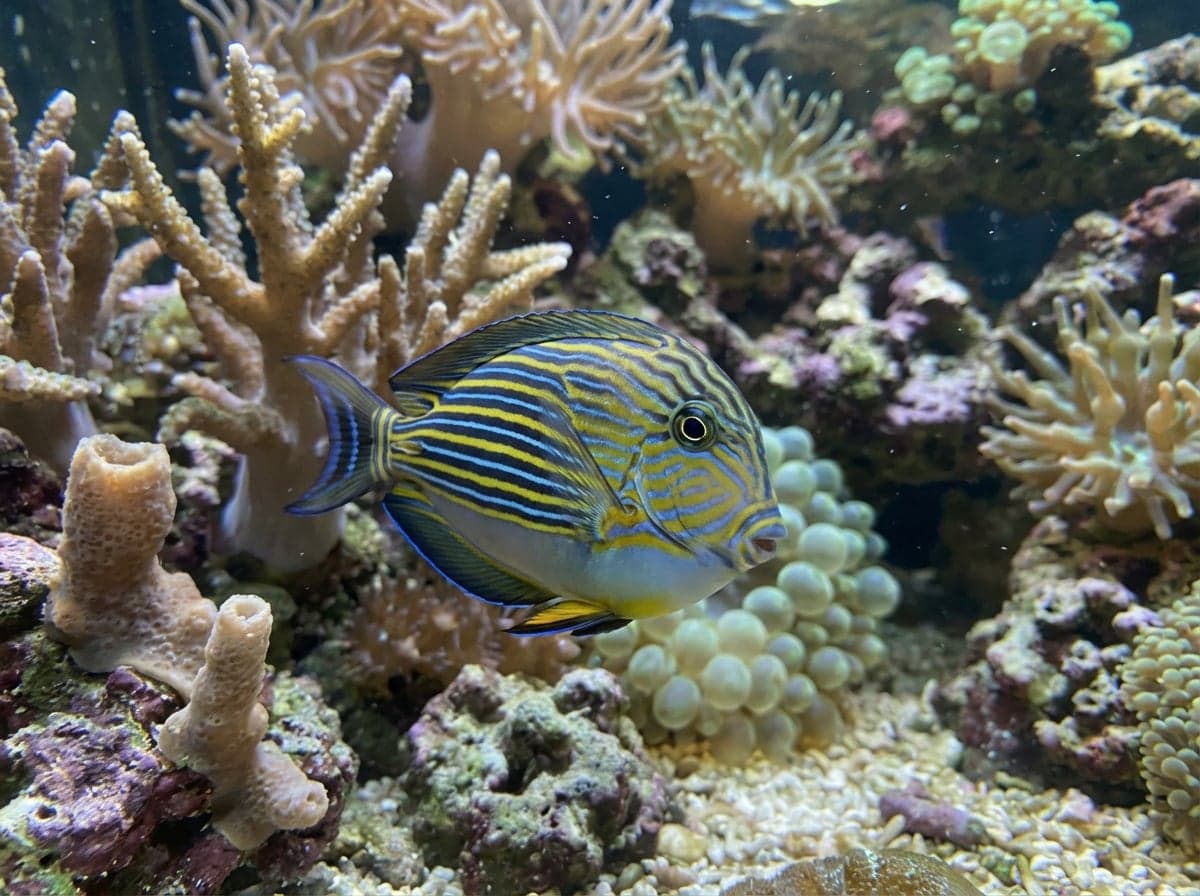
The Sixbar Angelfish (Pomacanthus sexstriatus) is one of the giants of the angelfish world — a bold, beautiful Indo-Pacific species that grows to nearly half a metre long. Adults are brownish-yellow, scattered with vivid blue spots and marked by the six dark vertical bars that give the fish its name, while juveniles wear a completely different livery of blue-black broken by white bands. It is a magnificent display animal, but its sheer adult size makes it suitable only for very large aquariums and experienced keepers.
A curious detail: when alarmed, P. sexstriatus can produce loud grunting sounds. Combined with its scale and presence, it is a true showpiece fish for those who can house it properly.
Natural Habitat & Origin
The Sixbar Angelfish ranges across the Indo-Pacific, from Sri Lanka east to the Solomon Islands. It inhabits lagoons and outer reef slopes with rich coral growth, at depths from about 1 to 60 metres (3–197 feet). Juveniles tend to shelter in coral-rich shallows, while adults patrol larger territories in pairs or alone.
Recreating this means a large, open system with substantial live rock for grazing and territory, and excellent, stable water quality.
Care Requirements
This species demands space above all else. Reaching up to about 46 cm (18 inches), only juveniles are realistically suitable for home aquaria, and even they quickly outgrow modest tanks. Plan for a very large aquarium — on the order of 1,100 litres (around 300 US gallons) as a practical minimum for a growing adult, and more is genuinely better. Maintain salinity around 1.024–1.026, pH 8.1–8.4, and a temperature of about 24–26°C (75–79°F), with powerful filtration to handle the heavy bioload.
Buying a small juvenile is fine only if you can commit to housing a fish of this eventual size.
Diet & Feeding
Pomacanthus sexstriatus is an omnivore; adults graze macroalgae and also consume sponges and tunicates. In captivity, provide a varied diet built around marine angelfish preparations containing sponge, along with herbivore foods, spirulina, frozen mysis and enriched blends. Feed several times a day, and allow grazing on live rock between meals to satisfy its natural browsing behaviour.
Behavior & Temperament
Large angelfish are confident, territorial fish, and the Sixbar is no exception. It is semi-aggressive and will dominate smaller or more timid tankmates, particularly in confined quarters. Keep only one large angel per system unless the tank is enormous, and introduce it thoughtfully alongside robust companions that can hold their own.
Tank Mates
Suitable companions are other large, robust marine fish able to coexist with an assertive angel: tangs, large wrasses, triggers (with care), and similar. Avoid small, timid fish that will be bullied. It is generally not reef-safe — like most large angels it is likely to nip stony corals, soft corals and clam mantles — so it is best suited to fish-only or fish-only-with-live-rock systems.
Breeding
The Sixbar Angelfish is a pelagic spawner that releases planktonic eggs, and like other large Pomacanthus it is not bred in the home aquarium. The combination of adult size and demanding larval requirements keeps captive breeding within the realm of public aquaria and research; trade specimens are wild-collected.
Common Health Issues
Given proper space and water quality, the Sixbar Angelfish is fairly hardy, but it is susceptible to the usual marine ailments — marine ich (Cryptocaryon irritans) and marine velvet (Amyloodinium ocellatum) — especially when stressed by inadequate housing. The most common real-world problem is keepers underestimating its adult size, leading to stunting and water-quality issues in undersized tanks. Quarantine new arrivals, maintain pristine stable water, and only take this fish on if you can meet its long-term space requirements.