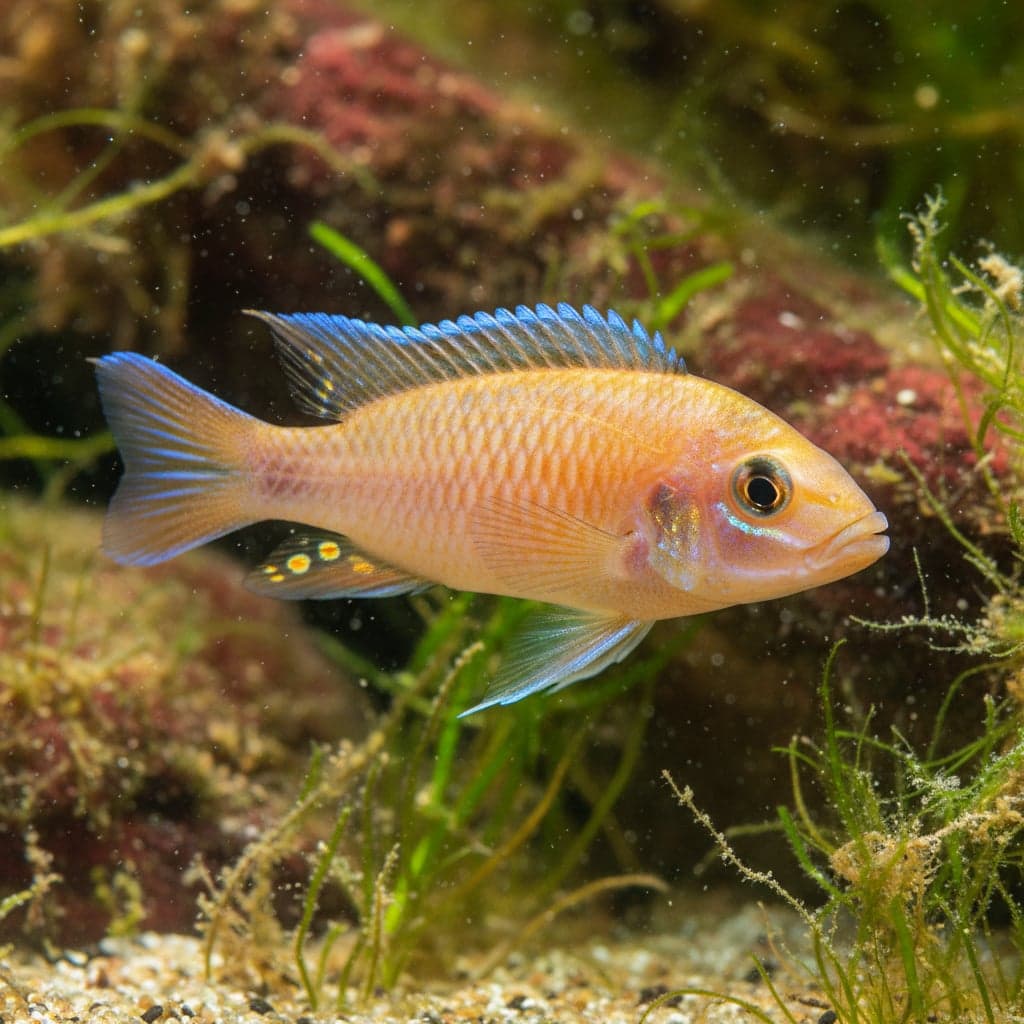
Tanganyikan Bullhead Catfish: Lophiobagrus cyclurus
A 12cm Tanganyikan catfish that shelters in rock crevices. Needs hard alkaline rift-lake water and plenty of caves.
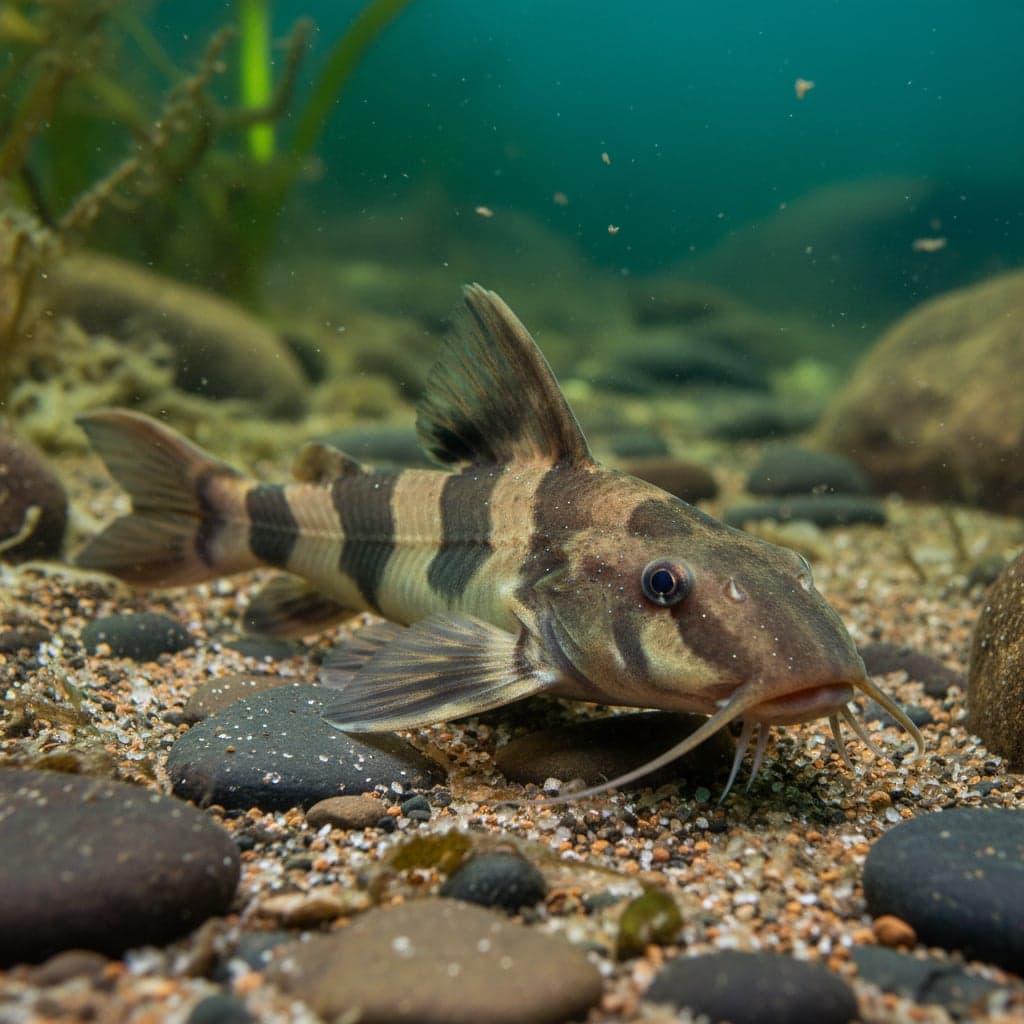
Tanganyikan Bullhead Catfish
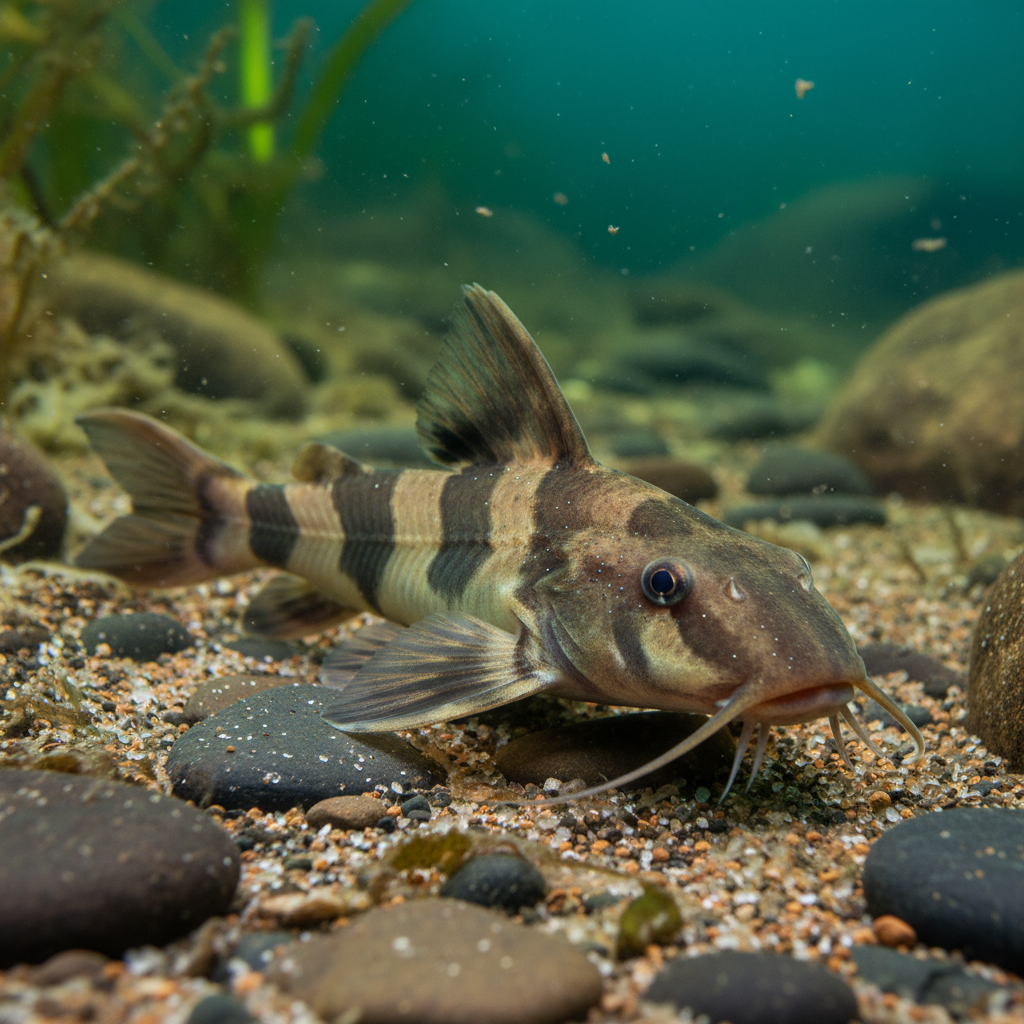
The Tanganyikan Bullhead Catfish, scientifically known as Lophiobagrus cyclurus, is a distinct and captivating species native to Lake Tanganyika in Africa. This fish is particularly notable for its intriguing, flattened head and elongated body, which can reach lengths of up to 3-4 inches (8-10 cm) in a well-maintained aquarium setting. Its coloration is a blend of silvery-grey and darker shades, adorned with subtle patterns that create an appealing appearance, making it a fascinating addition to both novice and experienced aquarists. As a member of the Bagridae family, the Tanganyikan Bullhead Catfish showcases unique physical adaptations that underscore its predatory lifestyle, including sensitive barbels that help it navigate and forage in its natural habitat.
In the aquarium hobby, the Tanganyikan Bullhead Catfish holds significance not only for its striking aesthetic but also for its engaging behavior and adaptability. Enthusiasts appreciate its ability to thrive in various tank setups and its compatibility with diverse aquatic communities. These catfish possess a range of compensatory traits, allowing aquarists to observe both its natural instincts and behaviors in a controlled environment. Keeping this species encourages aquarists to replicate the unique conditions of Lake Tanganyika, enhancing the overall appreciation for biodiversity and conservation efforts for freshwater ecosystems.
Natural Habitat & Origin
The Tanganyikan Bullhead Catfish is indigenous to Lake Tanganyika, situated among the borders of four African countries: Burundi, the Democratic Republic of Congo, Zambia, and Tanzania. This expansive lake is renowned for its clear, mineral-rich waters and significant depth, which creates a complex ecosystem characterized by various substrates, from rocky outcrops to sandy bottoms. The habitat of Lophiobagrus cyclurus is typically associated with areas of structural complexity where shelter is available, such as crevices and rocky ledges. These features facilitate the catfish's foraging behaviors and provide refuge from potential predators.
In terms of water conditions, Lake Tanganyika is often classified as a clearwater system, with high pH values ranging from 8.0 to 9.0 and relatively stable temperatures between 23°C and 28°C (73°F to 82°F). The Tanganyikan Bullhead Catfish thrives in slightly alkaline, hard water rich in calcium and magnesium, essential for maintaining its health and overall vitality. This species is used to a stable environment; thus, fluctuations in water parameters should be avoided in the home aquarium to replicate its natural habitat effectively.
Care Requirements
To ensure the well-being of the Tanganyikan Bullhead Catfish, aquarists must create an environment that mirrors its natural habitat. A minimum tank size of 75 gallons is recommended to provide ample swimming space and upon which to establish a suitable environment with a densely structured layout. The aquarium should be equipped with high-quality filtration to maintain clean water, paired with a substrate that consists of fine sand or small gravels, allowing the catfish to forage without potential injury.
In terms of water parameters, maintaining a temperature between 24°C and 28°C (75°F to 82°F) is ideal, along with a pH level of 8.0 to 9.0 and a hardness range of 10-20 dGH. Lighting should be moderate to replicate the catfish's natural habitat, and hiding spots created through rock formations, caves, and driftwood will give the fish a sense of security. While live plants may be included, the focus should be on providing areas where the fish can hide and explore, as the Tanganyikan Bullhead Catfish can be somewhat shy during the initial acclimatization period.
Diet & Feeding
The Tanganyikan Bullhead Catfish is categorized as a carnivorous species, with a diet primarily consisting of small invertebrates and fish in the wild. In captivity, it flourishes with a well-rounded diet that includes high-quality sinking pellets, frozen or freeze-dried foods, and the occasional live treat. Providing a mix of protein sources, such as bloodworms, brine shrimp, and daphnia, will mimic its natural feeding habits and promote optimal health.
As omnivores, Tanganyikan Bullhead Catfish can also consume vegetable matter, so offering spirulina flakes or blanched vegetables can help diversify their diet. Feeding multiple small meals daily rather than one large feeding is encouraged, as it not only reduces the risk of overfeeding but also stimulates natural foraging behaviors. Careful observation of their eating habits will provide insights into their overall health and well-being, enabling aquarists to make necessary dietary adjustments.
Behavior & Temperament
The Tanganyikan Bullhead Catfish exhibits a unique blend of solitary and social behaviors. While they are primarily found in pairs or small groups in the wild, they can display territorial tendencies, particularly during breeding or when establishing a hierarchy in a community tank. These fish are not overly aggressive but may assert dominance over each other or smaller tank mates. Therefore, providing adequate space and hiding spots is essential to alleviate potential conflicts.
Throughout the tank, the Tanganyikan Bullhead Catfish displays a tendency to occupy the bottom and middle levels, often seeking refuge among rocks or debris. They may occasionally venture to the upper levels, especially if they feel secure within their environment. Providing a structured habitat not only caters to their natural instincts but also encourages interactions with other species, making them a captivating fish to observe within a well-balanced aquascape.
Tank Mates
Choosing suitable tank mates for the Tanganyikan Bullhead Catfish is crucial for a harmonious aquarium environment. Compatible species typically include other peaceful or semi-aggressive cyprinids, cichlids, or catfish from Lake Tanganyika, such as the African Lake Cichlids and various Synodontis species. Additionally, keeping them with larger tetras or barbs can work well, provided that the other species do not pose a threat to their safety.
Aquarists should avoid pairing the Tanganyikan Bullhead Catfish with overly aggressive or territorial fish, particularly small species that may be seen as prey. Species such as bettas, small characins, or any aggressive cichlid forms should be excluded from their environment to minimize stress and ensure the safety of all inhabitants. A carefully curated community tank will enhance the overall dynamics, creating a beautiful and engaging ecosystem.
Breeding
Breeding the Tanganyikan Bullhead Catfish in captivity can be a rewarding yet challenging endeavor. This species typically displays a substrate-spawning behavior, favoring rocky crevices where the female can lay eggs protected from potential predation. Males will court females by displaying vibrant colors and engaging in swimming displays, followed by the female depositing eggs in suitable hiding spots.
To encourage successful breeding, maintaining stable water parameters is crucial, combined with a diet high in protein-rich foods to support reproductive health. A breeding pair may require a dedicated tank to safely spawn, ideally featuring ample hiding places and appropriate nesting sites. After spawning, the eggs will usually hatch within a few days, and the fry should be fed infusoria or specialized fry food until they grow large enough to accept larger foods.
Common Health Issues
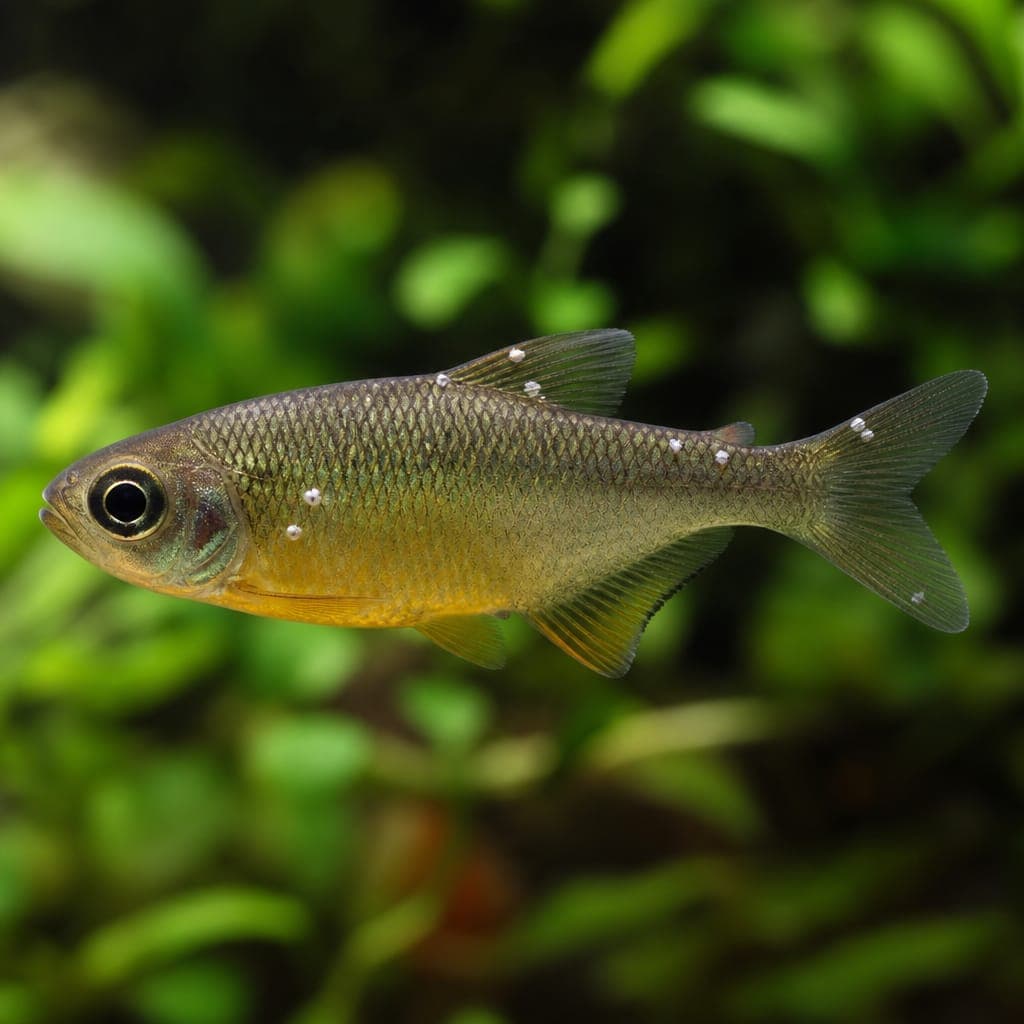
While generally hardy, the Tanganyikan Bullhead Catfish can be susceptible to specific health issues in captivity. Common diseases include ich (Ichthyophthirius multifiliis), fin rot, and bacterial infections. Maintaining excellent water quality with regular changes, stable alkaline parameters, and careful feeding prevents most problems. Quarantine new arrivals and treat ich or fin rot promptly with aquarium-safe medications. Rocky cover, compatible Tanganyikan tank mates, and a meaty diet keep Tanganyikan Bullhead Catfish hardy and active for years. Sharp gravel can injure their barbels, so prefer sand or smooth substrate, and address cloudy water or clamped fins before infections spread.