Tinfoil Barb: Barbonymus schwanenfeldii
A 35cm barb that shoals, jumps and eats every plant in the tank. Needs 800L+ and a group — routinely sold at 5cm for community tanks.
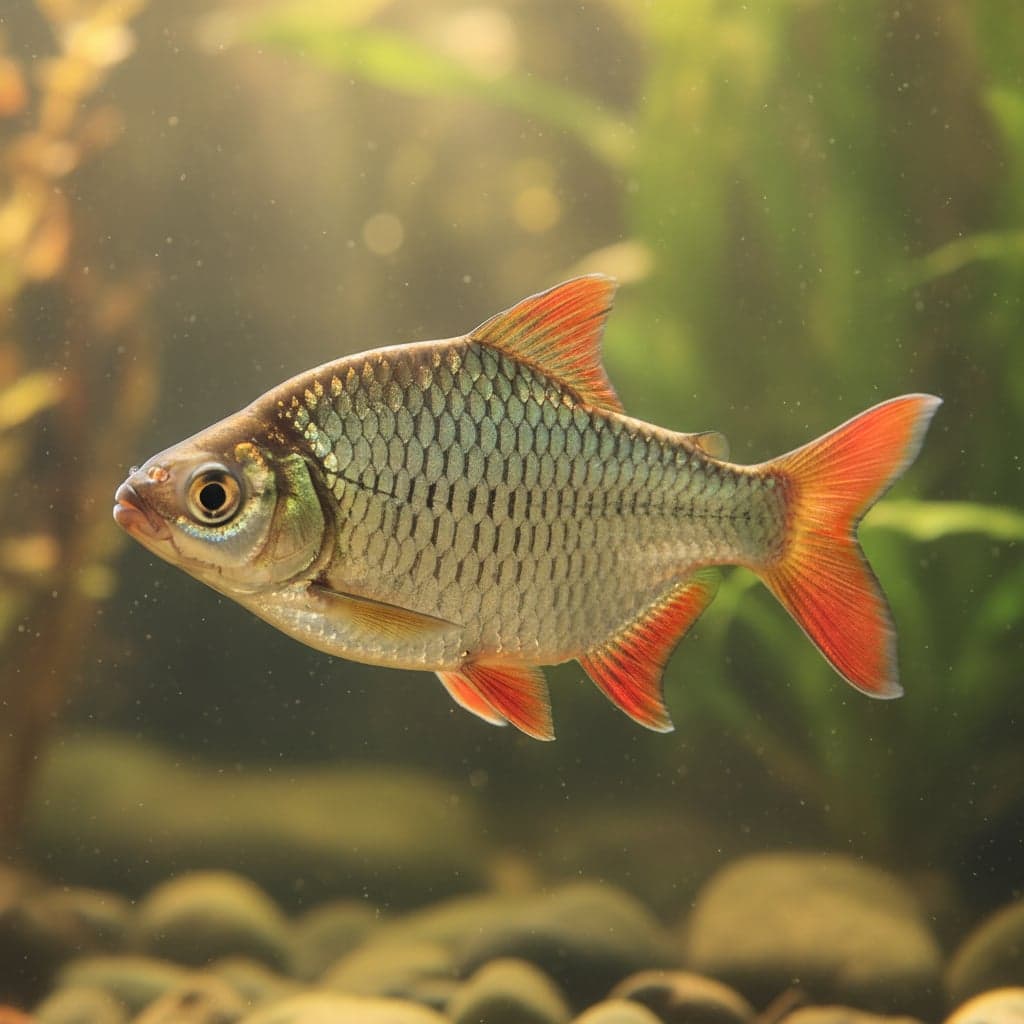
Tinfoil Barb
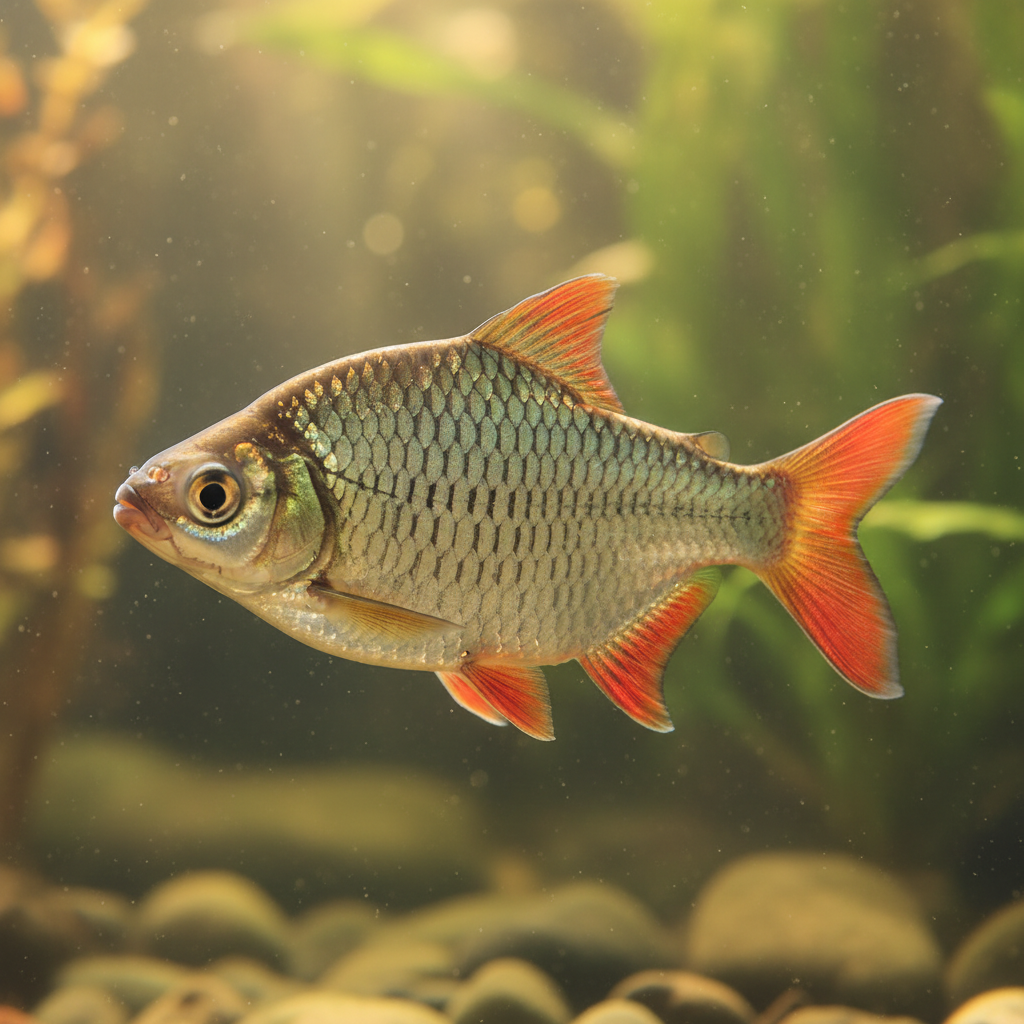
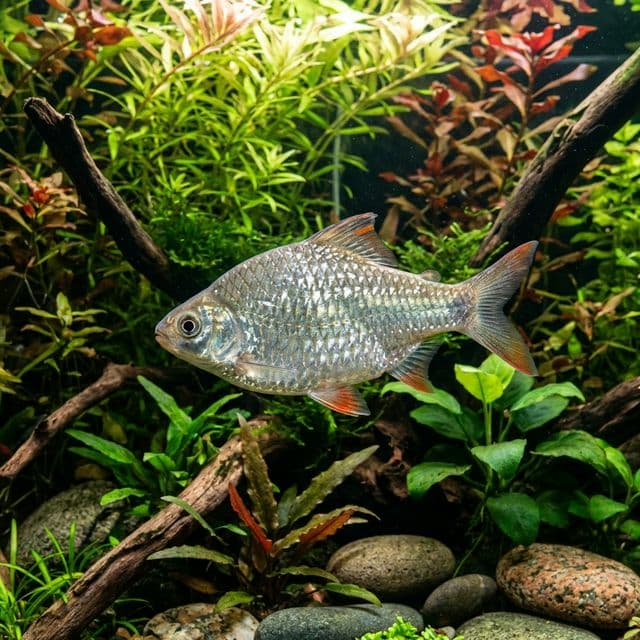
The Tinfoil Barb (Barbonymus schwanenfeldii) is a striking freshwater fish that has captivated aquarists with its shimmering, metallic scales and graceful swimming patterns. Its most notable feature is the reflective, silvery body adorned with a slight golden sheen and black markings near its dorsal fin. This visual appeal, combined with its active nature, makes the Tinfoil Barb a popular choice for both novice and experienced fish keepers. Additionally, these fish are known for their peaceful temperament, which allows them to thrive in community tanks, provided they are kept with appropriate tank mates.
In the aquarium hobby, the Tinfoil Barb holds significance not just for its beauty, but also for its schooling behavior. They are social creatures that flourish in groups, often exhibiting dynamic interactions with their counterparts. These fish are energetic swimmers, making them ideal for larger tanks where they can showcase their agility. Their appealing appearance and lively disposition contribute to the overall aesthetic and dynamic quality of any aquatic environment, making them a favored species among aquarists looking to create a vibrant community display.
Natural Habitat & Origin
The Tinfoil Barb is indigenous to the freshwater rivers and streams of Southeast Asia, particularly in countries like Indonesia, Malaysia, and Thailand. They inhabit various freshwater environments such as rivers, swamps, and floodplains, showing a preference for slow-moving waters rich in vegetation. These habitats typically are characterized by clear to slightly turbid waters with plenty of submerged plants and organic debris, providing both shelter and food sources for the fish. Such environmental conditions support a diverse ecosystem that plays a crucial role in the natural behavior and dietary habits of the Tinfoil Barb.
Care Requirements
To ensure the health and well-being of the Tinfoil Barb, it is essential to replicate their natural environment as closely as possible in captivity. The recommended water parameters for housing Tinfoil Barbs include a pH level of 6.0 to 7.5, a temperature range of 75°F to 82°F (24°C to 28°C), and a moderate hardness of 5 to 15 dGH. As for tank size, a minimum of 75 gallons is advised to accommodate their active swimming behavior and schooling nature, as they thrive in larger volumes of water.
The tank setup should include a soft substrate, such as sand or fine gravel, to mimic their natural habitat. Additionally, incorporating various aquatic plants, driftwood, and rocky structures will provide hiding spots and enhance the tank's aesthetic appeal. Adequate lighting is vital to stimulate plant growth and create a welcoming environment for the Tinfoil Barb, with a moderate level of illumination being ideal.
Diet & Feeding
Tinfoil Barbs are omnivorous and have a varied diet that reflects their opportunistic feeding habits in the wild. In an aquarium setting, they can thrive on high-quality flakes, pellets, and granules formulated for omnivorous fish. Supplementing their diet with frozen or live foods such as bloodworms, brine shrimp, and daphnia enhances their color and promotes overall health. It is essential to provide a balanced diet, as well as routine feeding schedules to keep them active and healthy. Feed them multiple small meals throughout the day rather than a single large feeding to avoid overfeeding and water quality issues.
Behavior & Temperament
Tinfoil Barbs exhibit a lively and engaging social behavior, displaying distinct schooling habits that highlight their natural instincts. They thrive in groups of at least five or more, as solitary individuals may become stressed and exhibit signs of anxiety. Despite their energetic nature, they are generally peaceful and can coexist with many community fish species. However, it is important to note that they can also be quite curious and may nip at the fins of smaller or slower fish, so suitable tankmates should be selected carefully.
In terms of vertical placement in the tank, Tinfoil Barbs tend to swim in the middle to upper levels of the aquarium. Their active swimming style contributes to the dynamic environment, so ample swimming space should be provided to prevent territorial disputes or stress among the group.
Tank Mates
When selecting compatible tank mates for Tinfoil Barbs, it is essential to consider their size and activity level. Suitable companions include medium to large species such as Rainbowfish, larger Tetras, Gouramis, and various species of catfish like the Corydoras and Synodontis. Additionally, other peaceful barbs, such as Cherry Barbs or Tiger Barbs, can make good tank mates. Conversely, it is advisable to avoid pairing Tinfoil Barbs with aggressive or fin-nipping species, such as certain Cichlids or smaller community fish like Betta fish, as this can lead to stress and injury.
Breeding
Breeding Tinfoil Barbs in captivity presents a challenge, primarily due to their group spawning nature. To encourage spawning behavior, it is essential to set up a dedicated breeding tank with optimal water parameters: a slightly acidic pH of about 6.5, a temperature of 78°F to 80°F (25°C to 27°C), and soft water around 3 to 5 dGH. The breeding tank should include fine-leaved plants, spawning mops, or mesh to facilitate egg laying.
When breeding, it is best to introduce a group of several adults, allowing them to pair off naturally. After spawning, the adult fish should be removed from the tank to prevent them from eating the eggs, as Tinfoil Barbs can be quite effective at consuming their spawn. The eggs typically hatch within 24 to 48 hours, and fry should be fed finely crushed flakes or infusoria until they reach a size suitable for small brine shrimp or powdered fish foods.
Common Health Issues
Tinfoil Barbs are generally hardy fish, but they can be susceptible to common freshwater fish diseases. Issues such as ich (white spot disease), fin rot, and bacterial infections may occur, often stemming from poor water quality or stress. To prevent these ailments, maintaining optimal water conditions through regular testing and water changes is crucial. Quarantining new arrivals for at least two weeks before introducing them to the main tank can also help reduce the risk of disease outbreaks. Regular observation of your Tinfoil Barbs will ensure early detection of any health problems, allowing for prompt intervention and treatment.