Two Spot Catfish: Mystus bimaculatus
A 10cm Asian catfish that stays small and peaceful. Nocturnal, needs driftwood and cover, and feeds properly only after the lights go out.
Two Spot Catfish
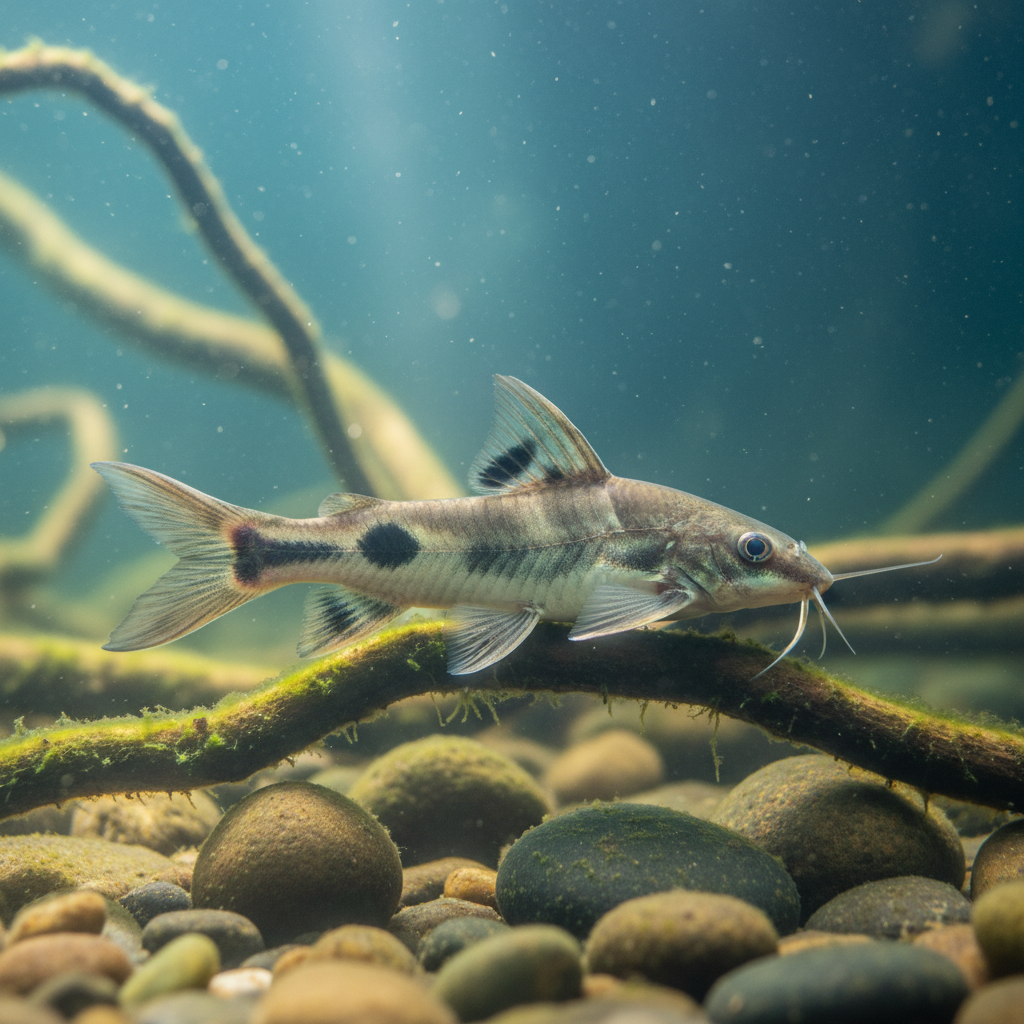
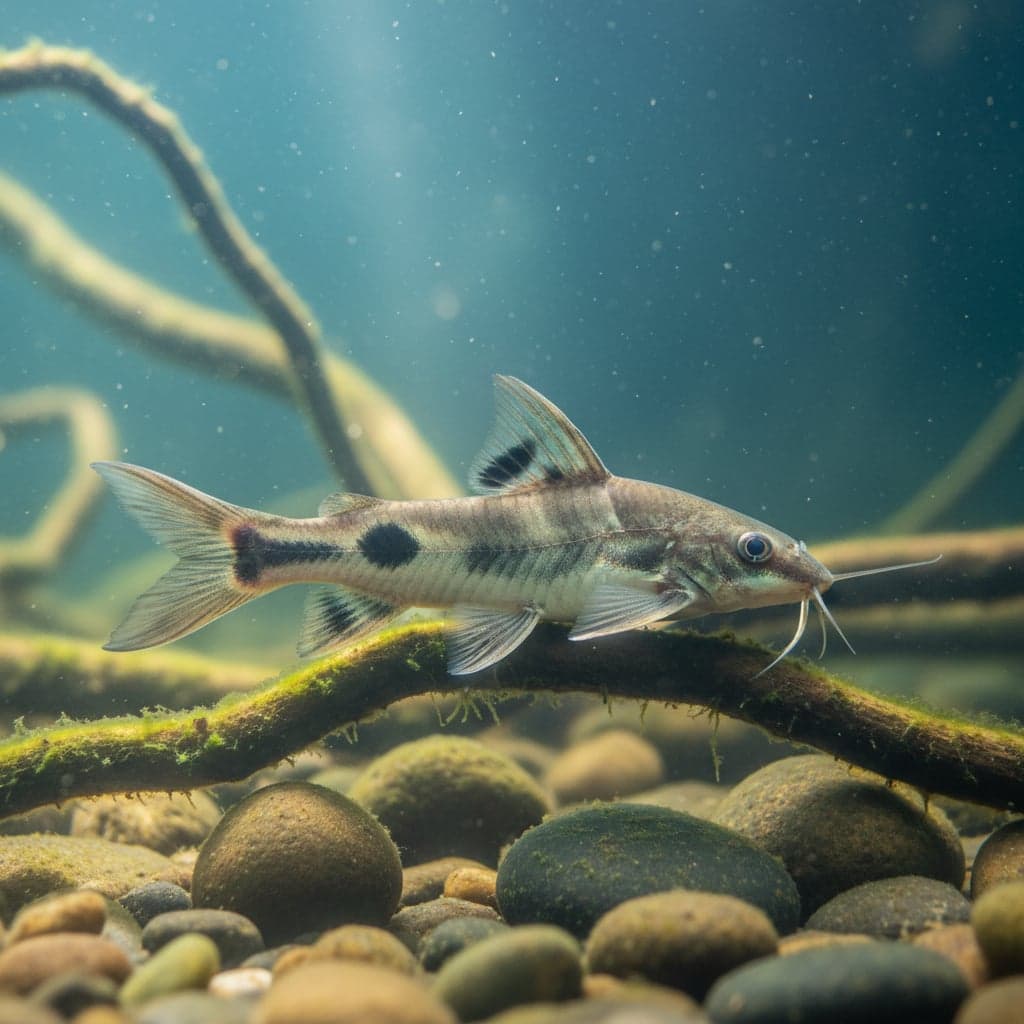
The Two Spot Catfish, scientifically known as Mystus bimaculatus, is a popular species among aquarists due to its distinctive physical features and dynamic personality. This freshwater fish is characterized by two prominent black spots on its body, usually located just behind the head and at the base of the tail. Its elongated, streamlined body is adorned with a light brown to olive-green coloration, which not only adds visual appeal but also helps it blend into natural environments, making it a fascinating specimen to observe in the aquarium. With a maximum length of about 3-4 inches (8-10 cm), this catfish’s size makes it a striking addition to larger community tanks, where its graceful swimming motion can be showcased.
In the aquarium hobby, the Two Spot Catfish holds significant value not only for its aesthetics but also for its behavior. Known for its active nature, this species brings movement and excitement to any aquarium setup. Moreover, its relatively easy care requirements make it an excellent choice for both novice and experienced aquarists looking to diversify their tanks with an engaging species. Whether for display or for its interesting interactions within a community tank, the Two Spot Catfish is a noteworthy addition that enriches the aquatic experience.
Natural Habitat & Origin
The Two Spot Catfish hails from various rivers and floodplains in Southeast Asia, particularly in countries like India, Bangladesh, and parts of Myanmar. It primarily resides in slow-flowing rivers, marshes, and rice paddies characterized by warm, shallow waters. The environmental context of its natural habitat is typically that of a blackwater system, where the water is stained a tea-like color due to dissolved organic matter from decaying leaves and plants. This specific habitat influences the catfish's adaptations for survival, including its olive coloration, which provides effective camouflage against predators in its densely vegetated environment.
These fish thrive in warm, dimly lit waters that are often rich in floating vegetation and fallen foliage. This natural setting is essential for their health, as it offers not only shelter but also a source of food wherein they forage among the detritus and substrate. Cultivating a tank that emulates these conditions can lead to improved well-being for the Two Spot Catfish.
Care Requirements
Caring for the Two Spot Catfish involves replicating its natural habitat as closely as possible to ensure optimal health and longevity. Ideal water parameters include a pH range of 6.0 to 7.5, a temperature between 75°F to 82°F (24°C to 28°C), and moderate hardness levels of 5 to 15 dGH. The substrate in the aquarium should be soft, allowing the fish to root around without injury, making fine gravel or sand an excellent choice.
In terms of tank setup, a minimum tank size of 30 gallons is recommended to provide ample swimming space, with additional room required for any future tank mates. The lighting should be moderate to low, mimicking their natural habitat, and the tank should include hiding spots created by driftwood, rocks, and dense planting. Sturdy aquatic plants like Anubias or Java Fern can thrive and also provide a contrasting environment against the Two Spot Catfish's natural coloration.
Diet & Feeding
The Two Spot Catfish is considered an omnivore, thriving on a varied diet that mimics its natural feeding habits, which primarily include detritus, small invertebrates, and plant matter. To best care for this species, offer a balanced mix of high-quality sinking pellets and flakes designed for fish that feed at different levels. Additionally, incorporating frozen or live foods such as bloodworms, brine shrimp, and daphnia can enrich their diet and stimulate natural hunting behaviors.
It’s important to feed the Two Spot Catfish in moderation, typically once or twice daily. This feeding routine will not only maintain their health but also minimize waste in the aquarium, which can help in keeping water conditions stable. Observing the catfish during feeding time can also provide insight into their health and behavioral patterns.
Behavior & Temperament
The Two Spot Catfish is generally known for its peaceful demeanor, making it a suitable addition to a community tank. However, they can be territorial, particularly during feeding times or if they feel their space is being encroached upon. They do exhibit a nocturnal feeding pattern and are more active during the evening or nighttime, making them an interesting species that adds variety to the tank dynamics.
In terms of schooling habits, while they are sociable, they typically do not form tight groups; instead, they prefer to roam their territory independently. It is recommended to keep the Two Spot Catfish in small groups of at least three to five individuals to ensure they feel secure and are less likely to display any territorial aggression. They tend to occupy the lower to mid-levels of the aquarium, enjoying areas where they can hide or explore.
Tank Mates
Choosing compatible tank mates for the Two Spot Catfish is essential for a harmonious community. Ideal companions include other peaceful species such as tetras, rasboras, gouramis, and small to medium-sized barbs. They can coexist well with similarly sized fish that share their temperament and swimming zones. It is advisable to avoid aggressive species or those that may nip, such as fin-nippers or larger, more territorial fish, which could stress the Two Spot Catfish or disrupt its peaceful nature.
Ensure that any compatible species are also well-suited to the same water parameters, as maintaining a stable environment is critical for the health of all tank inhabitants. When introducing new fish to the aquarium, do so gradually to minimize stress and establish a balanced ecosystem.
Breeding
Breeding the Two Spot Catfish in captivity can be rewarding but requires specific conditions to encourage spawning. To successfully breed this species, it’s best to create a separate breeding tank that measures at least 20 gallons, with gentle filtration and a slightly lower water level. The pH should be kept at about 6.5, with temperatures maintained between 78°F to 82°F (25°C to 28°C).
In preparation for breeding, it is beneficial to introduce a group of adults, as this species can exhibit complex courtship behaviors. Spawning usually occurs on flat surfaces or between the leaves of broad-leafed plants, where females will lay eggs that males subsequently fertilize. Post-spawning, the adults should be removed to prevent them from consuming the eggs. The eggs hatch in approximately 24-48 hours, and the fry should be fed infusoria or micro-pellets until they are large enough to accept standard flake food.
Common Health Issues
The Two Spot Catfish may be prone to several common health issues, including ich (Ichthyophthirius multifiliis), bacterial infections, and fin rot. Maintaining stable water parameters is crucial to preventing these ailments, as fluctuations can lead to stress and weaken the fish's immune system. Additionally, it is recommended to quarantine new arrivals before introducing them to an established tank to mitigate the risk of introducing diseases.
Regular water changes and proper tank maintenance will help to keep harmful bacteria at bay and promote a healthy environment. Observing the Two Spot Catfish for any signs of distress, such as rapid gill movement, lethargy, or unusual swimming patterns, can lead to timely intervention and treatment. With adequate care, this resilient species can thrive in the aquarium environment, delighting hobbyists for many years with its distinctive markings and lively nighttime activity.