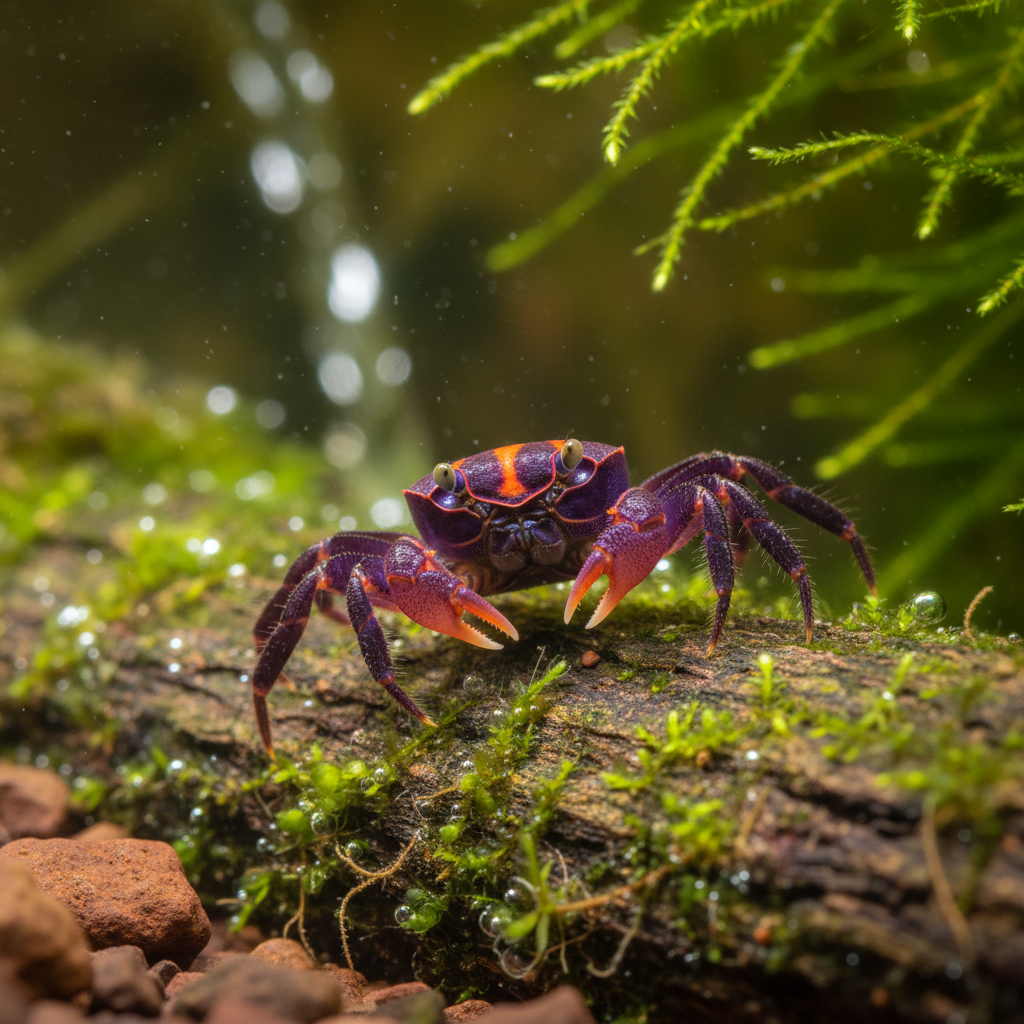
Vampire Crab: Geosesarma spp.
A 5cm semi-terrestrial crab that needs land as much as water. A paludarium species, not an aquarium one — it drowns in a standard tank.
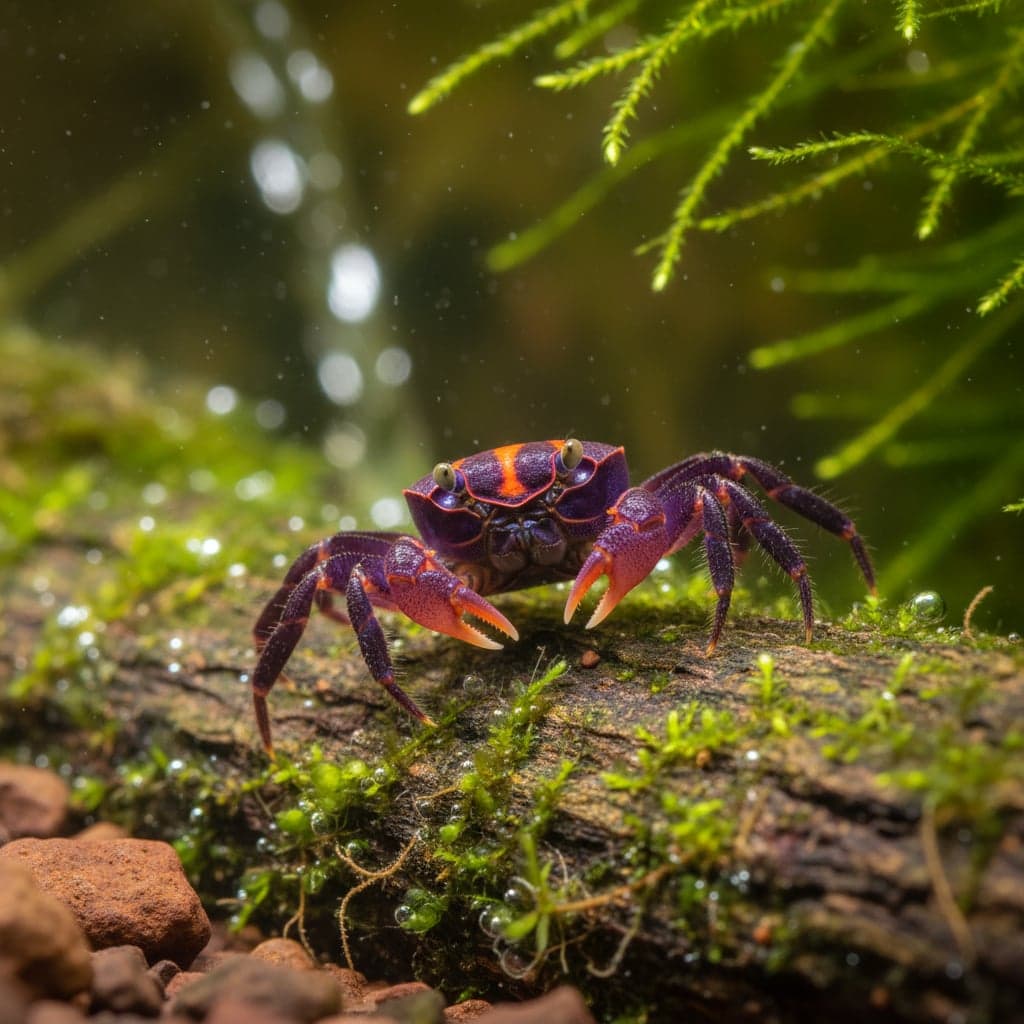
Vampire Crab
The Vampire Crab, scientifically known as Geosesarma spp., is a captivating freshwater crab that has surged in popularity within the aquarium hobby due to its striking appearance and fascinating behaviors. These crabs are easily identifiable by their vibrant coloration, typically featuring bright shades of red, orange, and blue accentuated by distinct black markings, reminiscent of their namesake. Their unique visual appeal, coupled with their intriguing behavior, makes them a sought-after addition to aquariums, where they can be appreciated not just for their looks but also for their active lifestyles. As creatures of the land and water, they exhibit charm through their terrestrial and aquatic antics, enriching the overall dynamic of any community tank.
The significance of the Vampire Crab in the aquarium trade is underscored by its unique adaptations and relatively easy care requirements, which make it an ideal candidate for both novice and experienced aquarists. Unlike many traditional fish, the Vampire Crab thrives in a hybrid environment, often showcasing a remarkable ability to explore both water and land, making them a compelling focus for aqua-terrarium setups. Their charismatic personality—marked by inquisitive exploration and social interaction—adds an extra layer of enjoyment for hobbyists, making them not only a visually stunning specimen but also an engaging one to observe.
Natural Habitat & Origin
Vampire Crabs are native to the tropical regions of Southeast Asia, particularly found in locations such as the mangrove forests of Vietnam and other surrounding countries. They inhabit coastal areas and river estuaries, where they thrive in brackish water that is rich in organic material and decaying plant matter. The water they typically dwell in can be classified as blackwater, characterized by its stained appearance from tannins released by decomposing vegetation. This unique environment not only shapes their physical adaptations but also influences their behavior, feeding, and breeding patterns, providing a holistic example of their natural biological context.
In their native habitats, Vampire Crabs experience a hum of biodiversity, as they share their environment with various fish, amphibians, and other invertebrates. This ecological interplay enhances their ability to adapt and survive through various seasonal changes, ranging from rainfall causing temporary pools of water to dry spells that drive them onto land. Understanding these elements not only aids in providing proper care for these crabs in captivity but also emphasizes the necessity of replicating aspects of their natural habitat for optimal health and longevity.
Care Requirements
When considering the care requirements for Vampire Crabs, several key water parameters must be maintained to provide an optimal living environment. Ideal water conditions include a pH range of 6.5 to 8.0, with a temperature between 75°F to 82°F (24°C to 28°C). A general hardness of 5 to 15 dGH is also recommended. Since these crabs are semi-terrestrial, it's important to create a tank setup that offers both aquatic and terrestrial environments, allowing them the freedom to explore both realms comfortably.
For tank setup, a minimum size of 20 gallons is advisable to provide adequate space for their exploration and to maintain water quality. The substrate should consist of fine sand or a soft, nutrient-rich soil that allows for easy burrowing and foraging. Incorporating hiding spots using rocks, driftwood, and plants not only mimics their natural habitat but also offers security for the crabs. Lighting should be moderate to low, replicating the dappled sunlight found in their native environments. Live plants, such as Java moss or Anubias, are excellent additions that not only enhance the aesthetic appeal but also provide both shelter and food sources.
Diet & Feeding
Vampire Crabs are omnivores, exhibiting a diverse diet in their natural habitat that blends both plant and animal matter. In captivity, it is essential to provide a varied diet to ensure they receive the necessary nutrients. High-quality sinking pellets and specialized crab food are excellent staples for their diet. Supplementing with blanched vegetables, such as zucchini or spinach, can also provide crucial vitamins and minerals. Additionally, offering occasional protein sources such as bloodworms, brine shrimp, or even finely chopped earthworms can enhance their nutritional intake.
Feeding should occur at least every other day, ensuring portions are small enough for the crabs to consume in a short amount of time to minimize waste and maintain water quality. It is essential to monitor how much food is provided and adjust quantities based on their activity levels and growth rates. A well-balanced diet is vital for maintaining their health, colors, and overall vitality.
Behavior & Temperament
Vampire Crabs are known for their curious and active nature, which can be both entertaining and informative for aquarists. They exhibit a semi-terrestrial lifestyle, often spending time exploring both the water and land areas of the aquarium. Their behavior can be characterized by frequent climbing, foraging, and occasional social interactions with tank mates. While they are generally not aggressive, they can show territorial behaviors, especially in confined spaces or during breeding seasons, so it is essential to provide ample hiding spots and territories to minimize potential conflicts.
These crabs do not school in the same way fish do but can be found interacting with one another in small communities. Their ideal placement is often at or near the bottom of the tank; however, they are also adept climbers and enjoy vertical space for exploration. Observing their interactions and eccentric behaviors can provide endless fascination for aquarists, making them a valuable addition to community tanks as long as their behavior is respected and monitored.
Tank Mates
Selecting appropriate tank mates for Vampire Crabs requires careful consideration, as their diet and territory needs can influence compatibility. Ideal companions include small, peaceful fish that inhabit the upper or middle regions of the tank, such as neon tetras, guppies, or small rasboras. Other peaceful invertebrates, like snails, can coexist well with Vampire Crabs as they do not typically pose a threat to these creatures.
Species to avoid include larger or aggressive fish that may view the Vampire Crabs as food, such as bettas or cichlids. Additionally, members of their own species should not be housed in overly crowded conditions, as this can lead to stress and territorial disputes. The careful selection of tank mates will ensure a harmonious environment where all inhabitants can thrive.
Breeding
Breeding Vampire Crabs in captivity can be a rewarding but challenging endeavor, as they require specific conditions to successfully reproduce. To encourage spawning, a brackish water environment mimicking natural conditions is essential, with salinity levels around 1.005 to 1.008. This can be achieved using marine salt mixes to create the right mineral balance. Crabs often display a complex courtship behavior, which includes claw waving and color displays to attract potential mates.
Once mating occurs, the female will carry her fertilized eggs in a brood pouch beneath her abdomen for several weeks until they hatch into larvae. These larvae are initially planktonic before settling to the bottom and requiring brackish water once more to continue their development. For success in breeding, aquarists should be prepared to provide a dedicated tank setup that can accommodate the unique needs of the developing crabs, as traditional freshwater setups are not conducive to raising the larvae. With the right conditions and care, breeding Vampire Crabs can introduce a new generation of these spectacular creatures into the hobby.
Common Health Issues
Vampire Crabs are generally hardy invertebrates when kept in the right paludarium conditions, but they face specific health risks related to humidity and molting. Inadequate humidity (below 75-80%) or low calcium levels can cause failed molts, which are often fatal. They are also extremely sensitive to copper, heavy metals, and chemical medications used for fish. Ensure the land area remains humid with moist moss, maintain clean water with adequate mineral hardness, and provide calcium supplements through cuttlebone or crustacean pellets to support successful shell development and prevent bacterial infections.