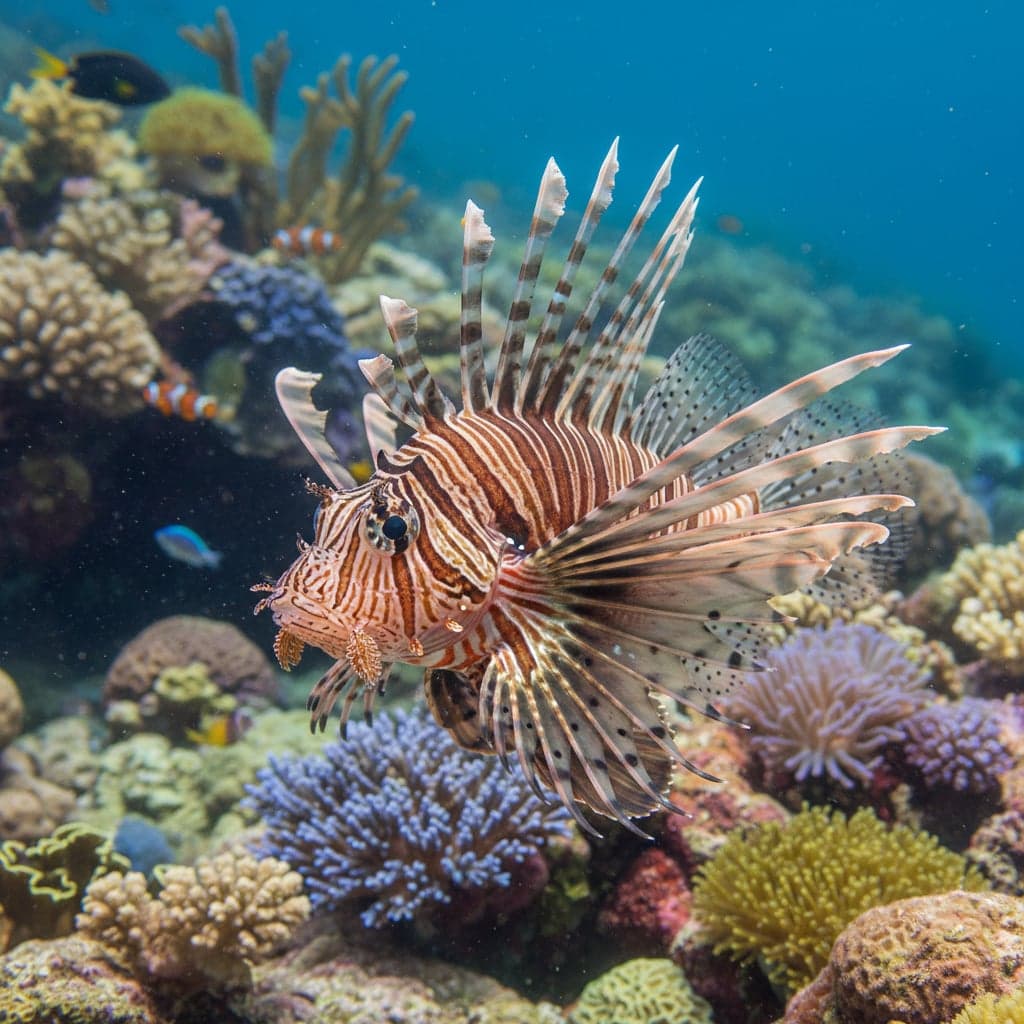
Yellow Goatfish
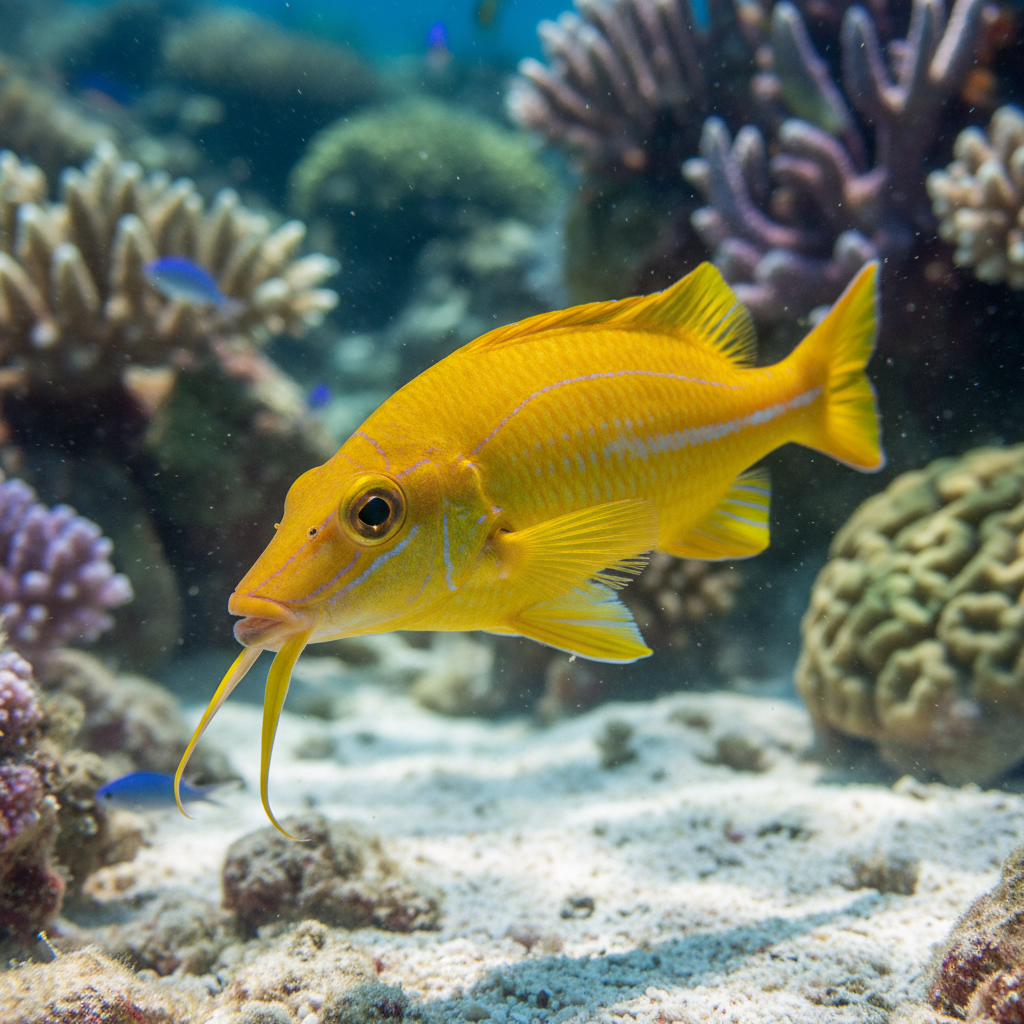
The Yellow Goatfish (Parupeneus cyclostomus), or goldsaddle goatfish, is a hardy, active sand-sifting predator — coral-safe, but it hunts small fish and invertebrates.
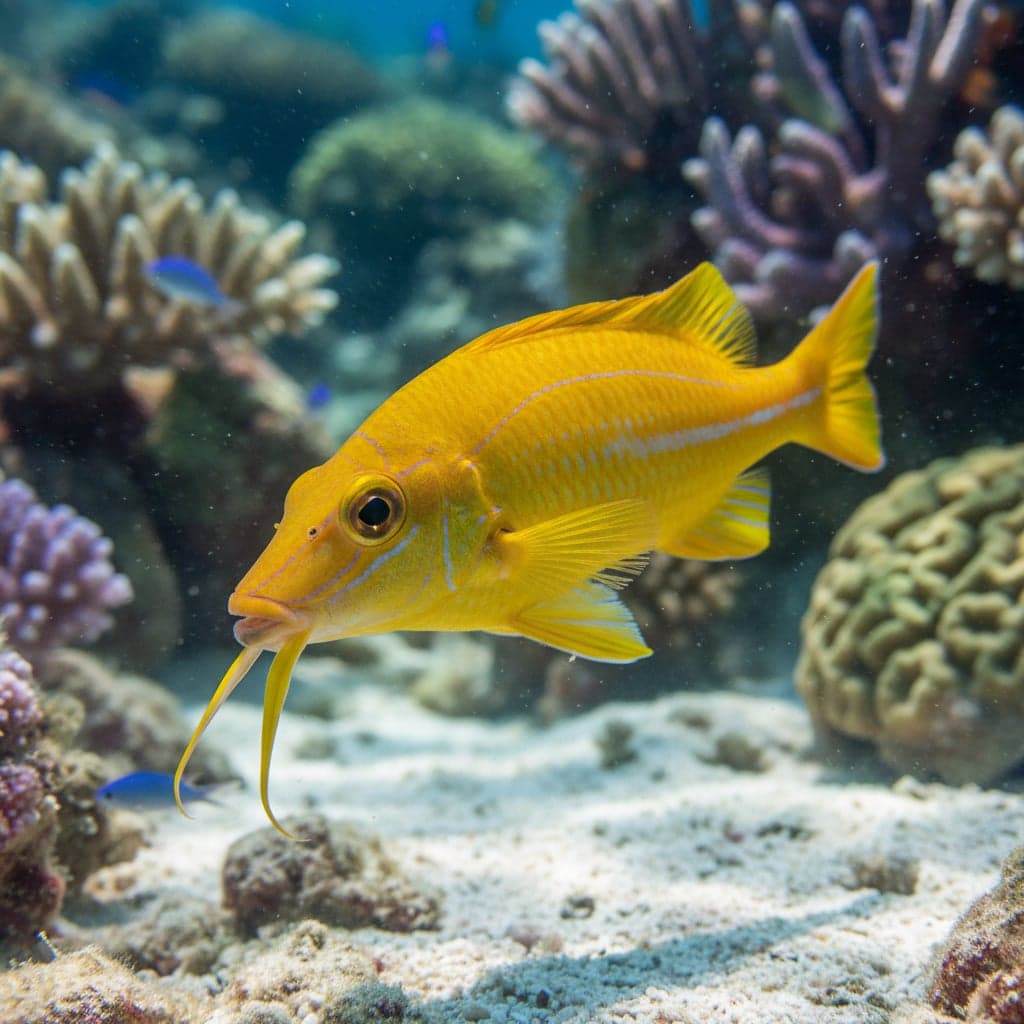
Yellow Goatfish
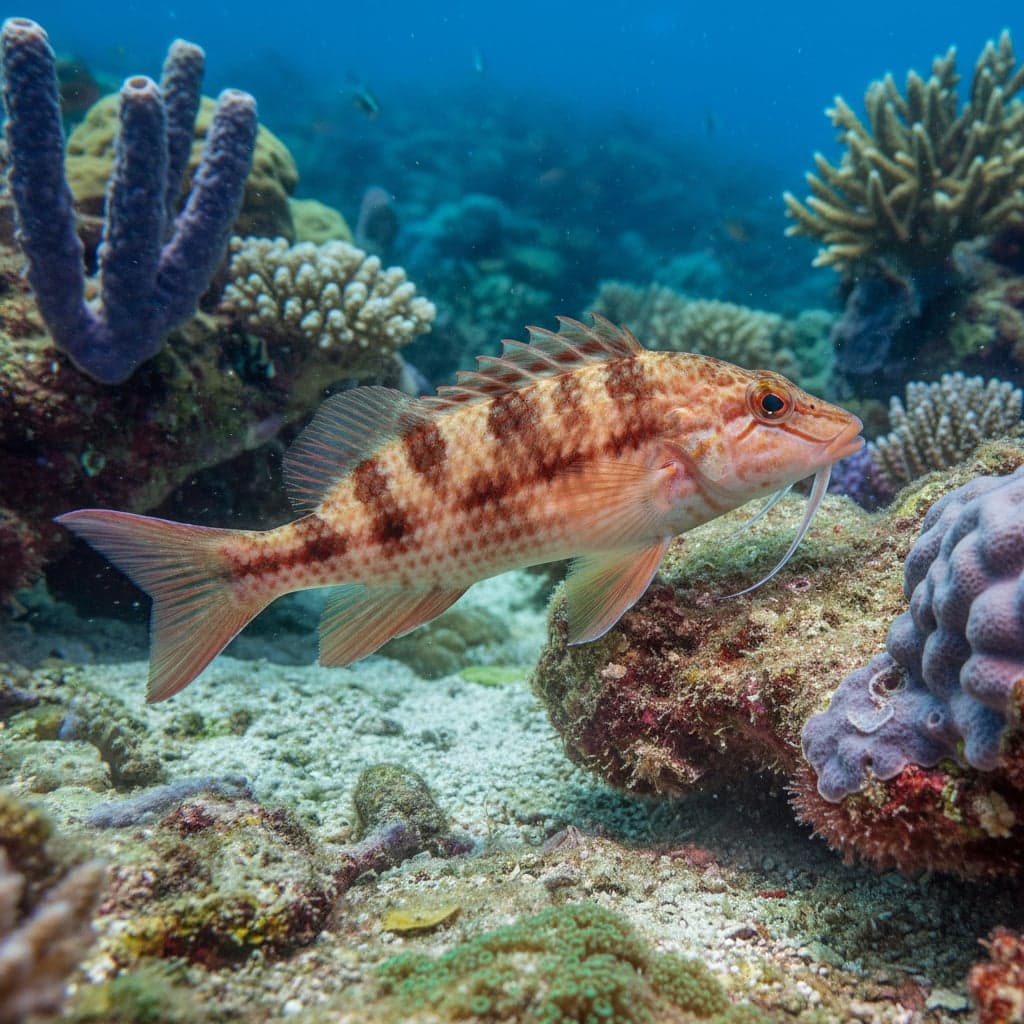
The Yellow Goatfish (Parupeneus cyclostomus), better known as the goldsaddle goatfish, is an active, characterful reef fish — frequently seen in a striking bright-yellow morph as well as more muted forms, and instantly recognised by the pair of long sensory barbels under its chin. It uses those whiskers to probe sand and crevices for prey, working tirelessly across the bottom. Hardy and engaging when established, it is a fish for a large fish-focused aquarium — and it is not a beginner feeder. Newly imported specimens often ignore prepared foods until proven in quarantine, and a large goatfish that refuses to eat is a serious problem, not a quirky settling phase.
Watching an established individual sift the substrate with its barbels is one of the pleasures of keeping it. Getting it to that point takes patience and the right meaty offerings.
Open sand and serious swimming room are the first price of admission. Proving a reliable appetite is the second. Frontmatter lists solitary because one large sand-sifting predator is enough for most home systems.
Natural Habitat & Origin
Parupeneus cyclostomus is widespread across the Indo-Pacific, ranging actively over sand, rubble and reef and using its barbels to detect and dig out small invertebrates and fish. It is a roving hunter that covers a lot of ground. That wild foraging drive is why a bare glass box with a thin sand sprinkle fails this species — and why small ornamental invertebrates disappear from “coral-safe” tanks that still hold a goatfish.
In the aquarium it wants open sand to forage over, rockwork for structure, and plenty of swimming space for an active fish that can approach 50 cm. Recreate a foraging plain, not a fully rock-packed maze with no sand left.
Care Requirements
Stable marine conditions: salinity about 1.024–1.026, pH 8.1–8.4, temperature 24–26°C (75–79°F). Adults can reach about 50 cm (20 inches). Plan on about 570 litres (around 150 US gallons) or more with an open sand bed for natural foraging. It is hardy and adaptable once eating and given the space it requires; the failure mode is usually undersized tanks or unfinished weaning, not fragile chemistry.
Quarantine is where feeding is proven. Do not rush a non-eating goatfish onto a display and hope the sand inspires it. Observe for marine ich (Cryptocaryon irritans) and marine velvet (Amyloodinium ocellatum) while you work through live and frozen meaty foods. Medications belong in hospital tanks if the eventual system holds corals. Use the Aquarium Tracker to log salinity, temperature and feeding responses day by day — appetite history matters more for this fish than for an eager pellet wrasse.
Diet & Feeding
Carnivore that hunts small invertebrates and fish in the wild, sifting sand with its barbels. This is not a beginner feeder. Many specimens need live or very fresh meaty foods at first — live ghost shrimp, small marine feeders where legal and ethical, or dangling seafood on a stick — before they accept frozen mysis, chopped seafood and quality marine pellets. Some wean quickly; others take weeks. Thin body condition after shipping is common; do not wait until the fish is emaciated to escalate feeding strategy.
Once established, offer a varied meaty diet once or twice a day and keep an open sand bed so natural sifting continues between meals. An “enthusiastic feeder” label applies only after weaning succeeds. Until then, treat every meal as a test you record. Avoid relying forever on nutritionally poor freshwater feeders as the sole diet even if they trigger a strike.
Behavior & Temperament
Semi-aggressive and active: generally peaceful toward similarly sized tankmates, but it will eat small fish and invertebrates and may bully smaller fish for food or space. Best kept singly or with robust companions in a large tank. It spends the day roving and probing the substrate — constant motion that looks restless in a tank that is too small.
Toward large wrasses and tangs it is usually manageable; toward gobies, shrimp and tiny damselfish it is a predator. Plan stocking around that mouth, not around the cheerful yellow colour.
Tank Mates
House with robust marine fish of similar or larger size — tangs, large wrasses, angelfish and similar. Avoid small, timid fish. It is coral-safe in the polyp sense, but as an active hunter it will eat ornamental shrimp, small crabs and small fish. Keep it only in systems without prized small mobile invertebrates or tiny fish.
Do not add it to a peaceful nano reef because the colour morph looked soft in the shop. Soft appearance, hard appetite.
Breeding
Parupeneus cyclostomus is a pelagic spawner and is not bred in the home aquarium; trade specimens are wild-collected. Captive breeding is not a realistic home project for this large mulloid.
Common Health Issues
Hardy when eating and housed large, but still vulnerable to ich and velvet under shipping stress, and at high risk of starvation if weaning fails. Quarantine new arrivals, prove feeding before display, keep water quality stable, and provide an open sand bed. Watch barbels and mouth for injury from sharp rock or rough handling — the foraging tools are the point of the fish.
Mindful of its size and of the fact that it is not a beginner feeder, the yellow goatfish is otherwise a hardy, active and fascinating fish for a large marine aquarium. Skip QT feeding work or undersize the system, and the goldsaddle becomes a thin, hungry disappointment rather than a sand-sifting centrepiece.