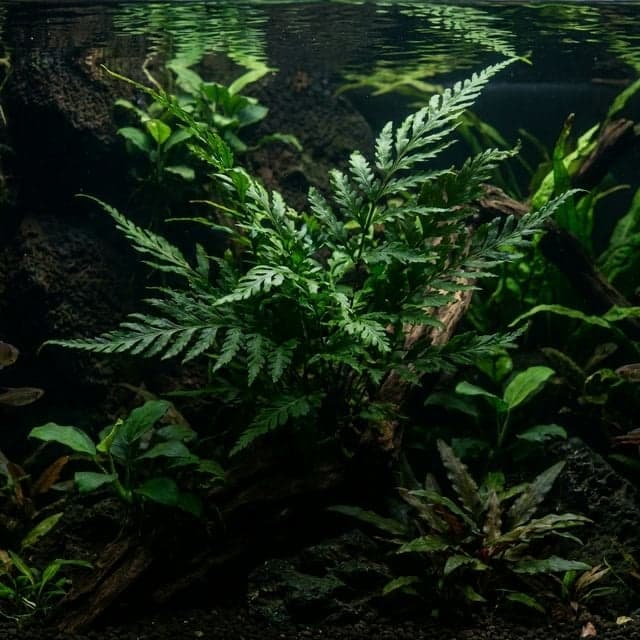
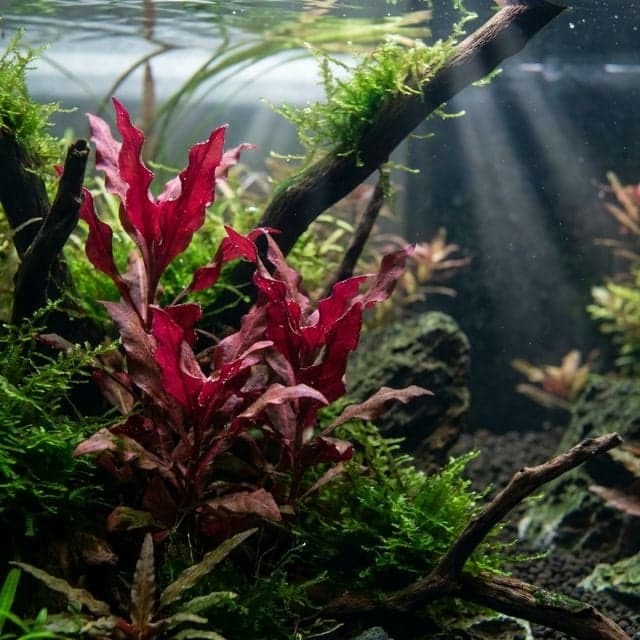
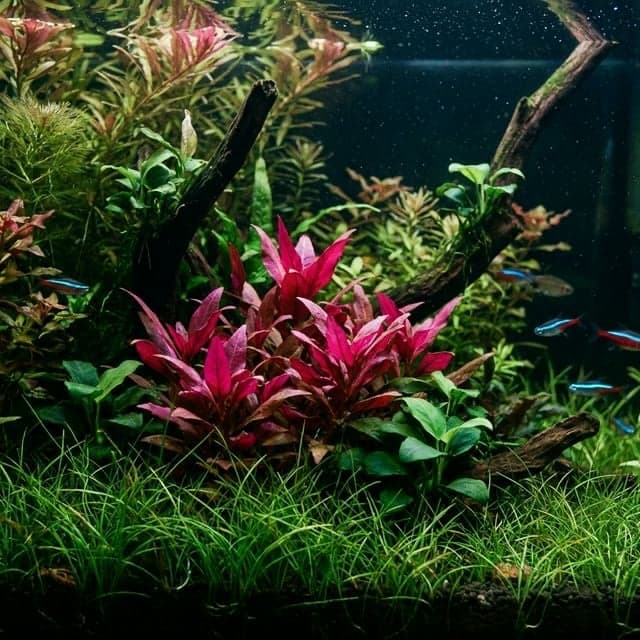
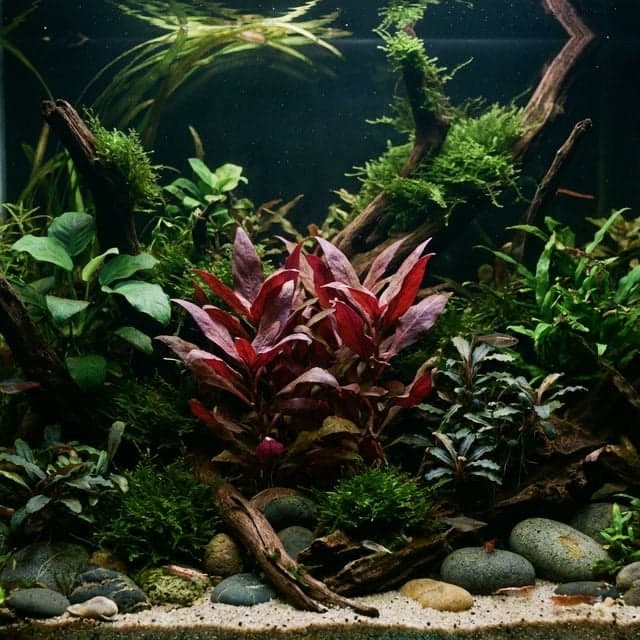
Red Root Floater: Phyllanthus fluitans
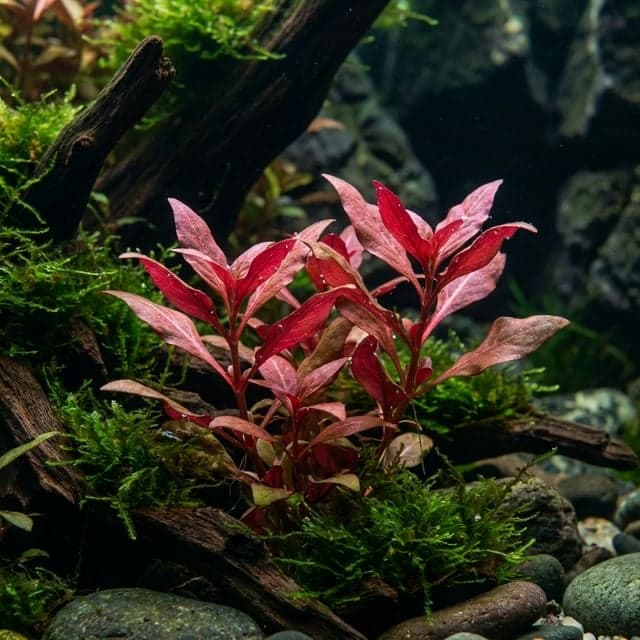
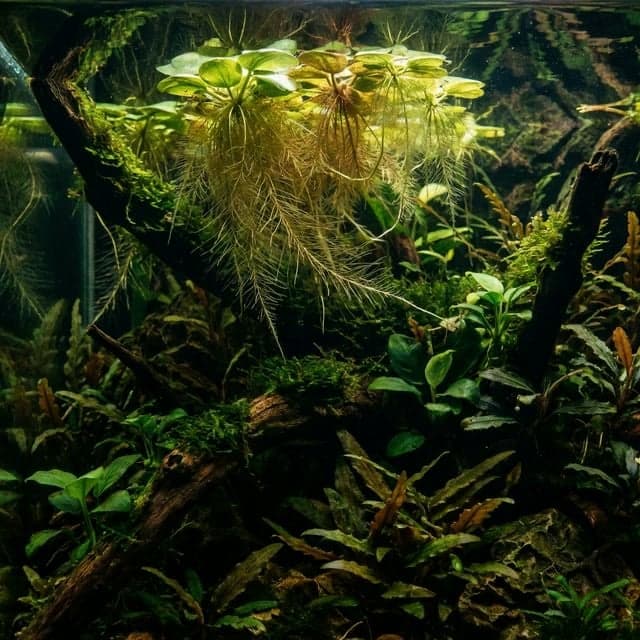
A beautiful floating plant. Under high light, the leaves turn deep red and the roots dangle like red threads.
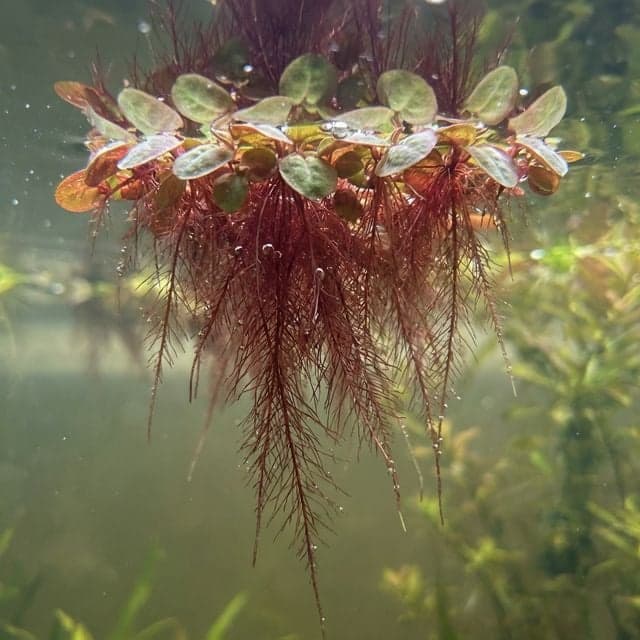
Red Root Floater
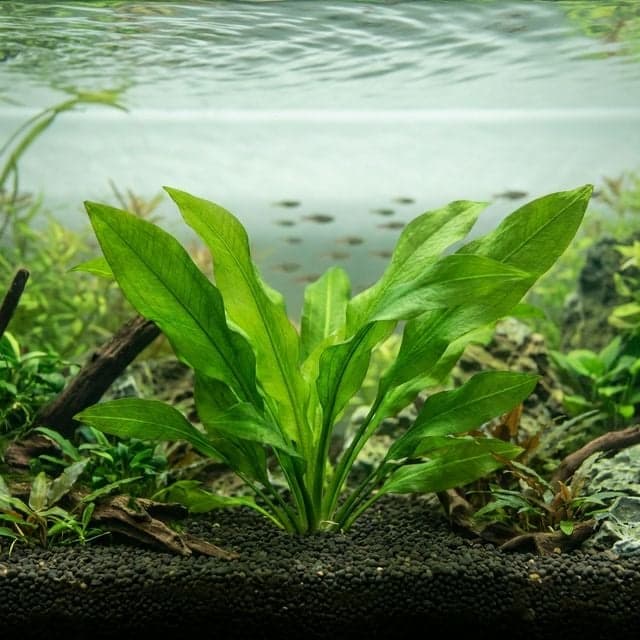
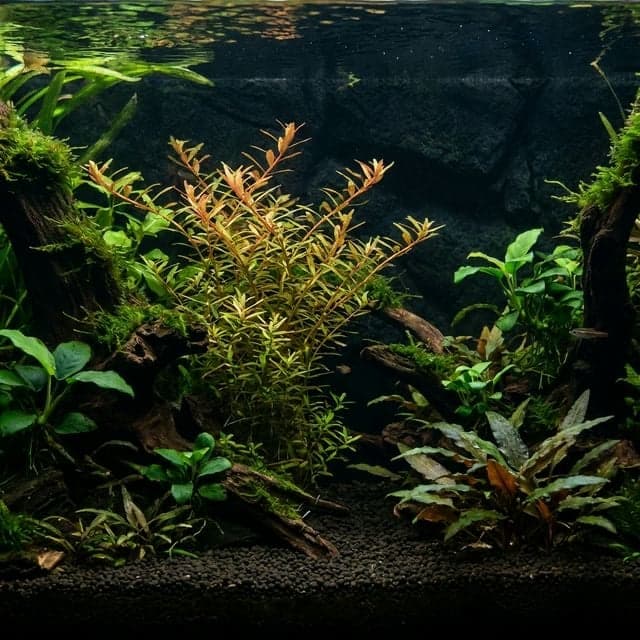
The Red Root Floater, scientifically known as Phyllanthus fluitans, is a captivating aquatic plant known for its vibrant red or purple roots that contrast beautifully with its lush green floating leaves. This versatile plant plays an essential role in aquascaping, providing cover and shade for fish while enhancing the overall aesthetic of the aquarium. Its unique appearance and functionality make it a favored choice among aquascapers looking to create a lively and visually appealing underwater environment.
Care Guide
To ensure optimal growth and health of your Red Root Floater, consider the following maintenance instructions:
- Water Conditions: Maintain a temperature range of 22-28°C (72-82°F) with a pH level between 6.0 and 7.5.
- Lighting: Provide moderate to high lighting, ideally around 6-8 hours daily, to encourage robust growth and vibrant coloration.
- Water Flow: A gentle water movement is recommended, preventing the plant from being disturbed while allowing it to thrive.
- Pruning: Regularly trim back excess growth to maintain a balanced aquascape and prevent overcrowding.
Nutrient Requirements
- Light: Moderate to high lighting is crucial for promoting photosynthesis and vibrant coloration.
- CO2: Supplementing with CO2 can significantly enhance the growth rate and overall health of the plant, especially in high-light setups.
- Fertilization: Monthly fertilization with a complete liquid fertilizer ensures the plant receives essential nutrients to flourish. Consider including trace elements for optimal health.
Natural Biomes
The Red Root Floater thrives in a variety of natural settings, often found in regions such as:
These habitats provide a deep understanding of the plant’s adaptability and ecological significance.
Livestock Compatibility
The Red Root Floater is compatible with a diverse range of aquatic livestock. Fish such as bettas, tetras, and guppies benefit from the cover and shade it provides. Additionally, shrimp species, particularly Neocaridina and Caridina, thrive in environments enriched by this floating plant, as it offers hiding spots and foraging opportunities.