Adolfos Corydoras and Angelfish: Proven Community Staple
Bottom armour versus mid-water cichlids, and what changes when angelfish spawn.

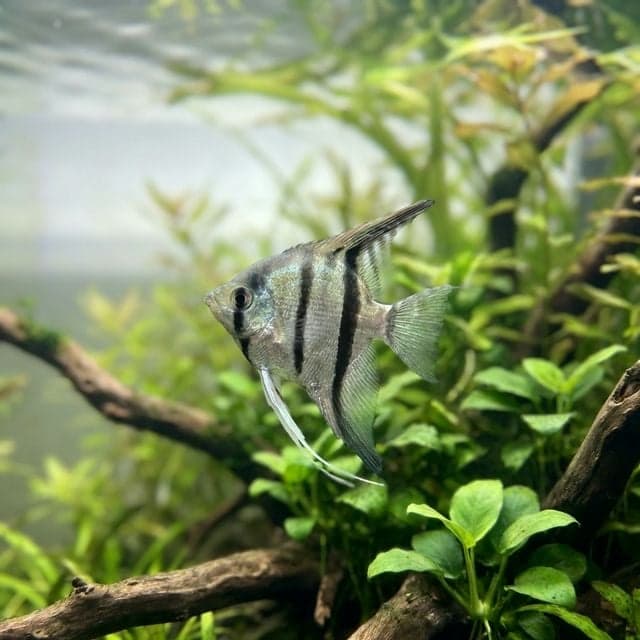
Adolfos corydoras and angelfish suit a classic Amazon layout: corys on sand, angelfish in mid-water. Armoured corys are rarely eaten. Spawning angelfish may chase tank mates—provide caves and be ready to separate a breeding pair.
Scientific names: Adolfos cory (Corydoras adolfoi) · Angelfish (Pterophyllum scalare)
Compatibility summary
| Adolfos cory | Angelfish | |
|---|---|---|
| Typical verdict | Strong | Strong (spawn caveats) |
| Primary zone | Bottom | Mid / tall |
| Main lever | Caves + 6+ | Pair aggression when breeding |
| Phase | Cory stress |
|---|---|
| Peace | Very low |
| Spawn | Chase possible |
Behaviour analysis
Corys armoured and bottom-focused; angels mid-water. Spawning pairs clean vertical surfaces and chase intruders—including corys passing through.
Why this pairing can work
This can be a genuine staple because the daily habitat overlap is low. Corydoras live on the substrate and graze, while angelfish patrol mid-water and use the vertical space above. When both groups have enough numbers and you feed correctly, they mostly pass each other without constant conflict.
Spawning is the exception. Planning multiple caves, keeping cory groups strong (six-plus), and ensuring sinking food reaches the bottom even when angels are excited is what prevents “spawn season” from turning into chronic cory starvation.
Why this pairing often fails
The common failure is unplanned spawning aggression. A guarding angel pair turns a portion of the tank into a protected lane, and corys get pinned away from that lane.
If corys are too few or your feeding is surface-biased, they miss meals during the most important weeks. Once corys start losing condition, they have less buffer against stress and oxygen dips, and problems become harder to reverse.
Environmental comparison
Amazon-style soft water, warmth, regular changes for nitrates.
| Parameter | Adolfos cory | Angelfish | Compromise |
|---|---|---|---|
| Temperature | 22–26 °C | 24–30 °C | 25–27 °C |
| pH / hardness | Soft | Soft–neutral | Stable soft |
| Flow | Gentle O₂ | Moderate | Tall + length |
Tank setup guidance
This pairing can be a genuine staple because the zones mostly stack—angelfish mid-water, corys on the substrate—until spawning behaviour changes the map.
Minimum viable setup: sand, 6+ Adolfos cory, vertical wood/tall plants, multiple caves away from likely spawn sites, and a feeding plan that gets sinking food to the bottom even when angels are excited.
Stocking order: cycle → establish cory group first → add angelfish later. If angels pair and begin guarding a site, be ready to divide or rehome; “spawn season” can turn a calm tank into a chase tank overnight.
Risks
- Spawn-season chasing: trigger is angel pairing and egg guarding. Signs: angels pin corys away from half the tank. Mitigation: divider, move pair, or restructure territories.
- Corys missing meals: trigger is surface-only feeding or angels intercepting sinks. Signs: cory weight loss. Mitigation: feed after lights dim, scatter multiple tablets, use feeding caves.
- Warm-water oxygen dips: trigger is higher angel temps with low surface movement. Signs: frequent surface gulping. Mitigation: gentle ripple and temperature discipline.
Tips
- Start with the hubs: Adolfos cory tank mates · angelfish tank mates.
- If you want angels with smaller schooling fish, read first: neon tetra + angelfish (time-limited risk).
- If you want angels without bottom-fish spawn issues, compare: guppy + angelfish.
- If you want corys without angel spawning drama, compare: neon tetra + Adolfos cory.
- Feed corys after lights dim; keep caves away from vertical spawn slates.
- Care sheets: Adolfos cory · Angelfish
FAQ
Will angelfish eat the corys? Adult corys are rarely eaten, but they can be harassed—especially during spawning. Eggs may be eaten if the fish overlap at the wrong time.
What are spawn signs? Cleaning a vertical surface, guarding one “lane,” and sudden chasing of any passer-by.
Should I separate a spawning pair? If corys are pinned away from food or half the tank, yes—dividing is often the humane answer.
Are neons safe with angelfish instead? Read neon tetra + angelfish—that’s a size/predation timer.
Does tank height matter? Yes for angelfish comfort, but footprint and sight breaks still matter for community stability.
Watching the first month
Corys rest under angels’ line of sight; first month, confirm angels are not descending to pin corys at glass. Angels spawning on a leaf or vertical slate can make the whole tank hostile—corys may stop eating. Offer multiple caves and leaf litter on opposite end from nest site.
Temperature upper-26s °C suits angels; corys accept it if oxygen is high—surface agitation matters. Cory barbels eroding while angels are fat and bright usually means dirty substrate or aggression stress—test and vacuum.
If this pair feels hot or tense, neon tetra and Adolfos cory drops top-water pressure, or guppy and angelfish adds mid-water motion instead of bottom specialists.
Chemistry, feeding rhythm, and when to split the tank
Warm angel water plus heavy feeding demands oxygen—surface agitation is not optional. Corys eating angel spawn is possible; angels may batter corys near eggs—expect tension seasonally. Mulm under wood fuels cory foraging but angers angels if it clouds the display—balance aesthetics with husbandry.
Split if angels guard a vertical slate and stop corys from crossing half the tank, or if cory barbels fail to regrow between cleans. Sometimes lowering temperature one degree and feeding angels more often reduces spawn frequency and whole-tank aggression. Other stacks: neon tetra and Adolfos cory, guppy and angelfish. Hubs angelfish · Adolfos cory.
Dedicated cory feeding zones opposite the angel nest reduce crossfire; mirror backing sometimes increases angel aggression—matte backgrounds calm sight lines. Seasonal spawn can coincide with summer heat—watch dissolved oxygen when room AC cycles.
Long-term management (weeks 5–12)
Spawn cycles repeat; corys learn to avoid one end of the tank or stop eating until eggs fungus. Long-term harmony often means accepting seasonal tension or rehoming one party. Cory groups of six or more spread risk when angels bluff-charge; three corys in a 200-litre angel tank can become targets. Wood and leaf litter on the non-nest end gives corys value even when angels claim the centre.
If angels win every stare-down, neon tetra and Adolfos cory removes the top predator. If you want angels with livelier mid-water, guppy and angelfish is the contrast article. Adolfos cory hub · angelfish hub complete the internal link set for this five-species compatibility project.
Extra month-one note: run the filter on a timer you can hear—dead silence from a canister that should hum means corys and angels both suffer overnight. Algae scrapers disturb angels less if you work glass when lights are on and angels are fed.
Pre-purchase and add-order checklist
Sand, caves, and oxygen-first thinking before angels arrive. Cory group size six+ where possible; angels as juveniles in a tank you will not outgrow in four months. Add corys and hardscape first; angels after feeding territories exist. Spawn aggression is inevitable in some pairs—budget divider or second display. Also read neon tetra and Adolfos cory and guppy and angelfish.
Spawn calendar: when angels clear a vertical slate, expect corys to lose half the tank for days—pre-place caves on the far end. Oxygen: 27–28 °C angel breeding temps demand ripple; corys gasping while angels fan eggs is a common photo and a bad sign. Barbel audit: photograph cory barbels at purchase and monthly—erosion is husbandry feedback. Angel pair or group: pairs are more dangerous to bottom fish than a loose juvenile group; know which you bought. Medication: angel-safe copper wrecks invertebrates and stresses corys—plan hospital for either party. Betta and angelfish and neon tetra and angelfish complete the angelfish-centric triangle in this guide.
One-minute recap
Adolfos cory under angelfish needs spawn-season planning, oxygen at warm temps, six-plus corys, and caves away from the angel nest. Angels win stare-downs; corys lose condition first—test, vacuum, split early. Neon tetra and Adolfos cory drops angels; guppy and angelfish adds mid-water instead of bottom specialists.
Spawn weeks are not “personality”—they are predictable hardware problems: divide, raise flow, or move angels. Cory barbel photos month-on-month beat guessing. Neon tetra and angelfish keeps angelfish ego fed with dither fish instead of bottom specialists.
Two angel pairs in one tank multiply spawn aggression onto corys—know your stock. Leaf litter and alder cones stain water mildly; angels often colour up; corys forage biofilm—balance tannin with your pH target.
Return policy clarity: if you bought angels for a cory tank and spawn turns violent, shops rarely refund ethics—budget rehome routes before purchase. Corydoras ID mix-ups happen; Adolfos stripes should be crisp—blended bars suggest hybrid bag sales.
Final verdict
Recommended centrepiece + bottom combo. Compare small-fish risk in neon + angelfish.
Recommended still includes spawn-season homework: caves away from nests, oxygen at temperature, and willingness to divide or rehome when pairs turn the tank hostile. Cory groups under four in large angel tanks skew fragile—bulk buys matter. Read neon + Adolfos cory if you want the same bottom guild without angel breeding theatre. Guppy + angelfish contrasts mid-water predation if you drop corys entirely. The Adolfos cory hub stays the index for bottom-safe alternatives. Spawn weeks are temporary; chronic cory hunger is a setup error.
Also in this guide: neon tetra angelfish · betta angelfish. Species: Adolfos cory · Angelfish. Hubs: Adolfos cory · Angelfish.










