Neon Tetra and Adolfos Corydoras: Biotope-Friendly Match
Why neons above corydoras is one of the cleanest zone splits in the five-species test.
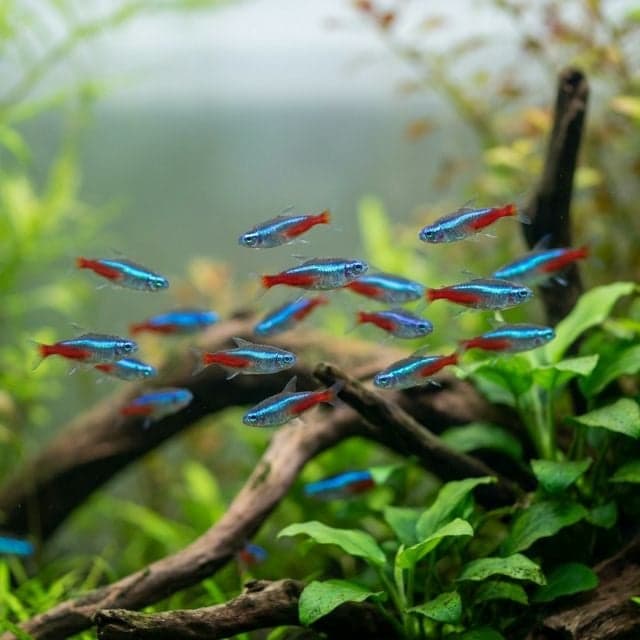

Neon tetras and Adolfos corydoras split the tank cleanly: neons above the substrate, corys sifting sand below. Competition stays low with proper school and group sizes and sinking foods for corys after mid-water feeds. Cooler tropical temperatures favour neon longevity.
Scientific names: Neon tetra (Paracheirodon innesi) · Adolfos cory (Corydoras adolfoi)
Compatibility summary
| Neon tetra | Adolfos cory | |
|---|---|---|
| Typical verdict | Excellent | Excellent |
| Primary zone | Mid | Bottom |
| Main lever | Strong school | 6+ sand sifters |
| Layer | Occupant |
|---|---|
| Mid | Neon school |
| Bottom | Cory group |
Behaviour analysis
Neons rarely interact with the substrate long enough to annoy corys. Corys do not compete for mid-water. The pairing fails only when corys are too few, on gravel, or starved because every meal happens at the surface.
Why this pairing can work
This works because the pairing naturally stacks by habitat. Neons use the mid-water column, while Adolfos corydoras are bottom grazers on sand. When you keep a real school and a real cory group, competition is mostly indirect (water quality), not constant food stealing.
Success depends on two beginner-friendly basics: enough neons (so the school stays defensive) and enough corys on fine sand (so they feed confidently in daylight). Then use tiered feeding: feed neons during lights-on mid-water, and feed sinking food after lights dim so corys get their share.
Why this pairing often fails
It fails when the “stack” breaks: gravel replaces sand, corys are underfed, or the neon school is too tiny to hold shape. Underfed corys become visible and stressed quickly, which can trigger disease even if no one looks aggressive.
Another frequent beginner mistake is medicating the whole tank without checking scaleless catfish safety. A correct quarantine/hospital approach protects both groups, because the problems are not always the same species-by-species.
Environmental comparison
Cooler end of tropical (around 23–25 °C) benefits neon lifespan; corys tolerate that band. Soft, clean water and gentle flow.
| Parameter | Neon tetra | Adolfos cory | Compromise |
|---|---|---|---|
| Temperature | 20–26 °C long-term | 22–26 °C | 23–25 °C |
| pH / hardness | Soft acidic | Soft–neutral | Stable; botanicals OK |
| Flow | Gentle | O₂ + gentle | Baffle if needed |
Tank setup guidance
This is the cleanest “stacked community” in the five-species test when you commit to the two non-negotiables: a real neon school and a real cory group on sand.
Minimum viable setup: fine sand, 6+ Adolfos cory, 10+ neons, plants for cover, and a feeding plan that reaches the bottom. Cycle first, add corys first (so they establish feeding), then add neons as one batch.
Feeding rhythm: mid-water micro foods for neons during lights-on; sinking foods for corys after lights dim. The only common “conflict” is accidental starvation from surface-only feeding.
Risks
- Barbel wear / substrate injury: trigger is gravel or dirty sand. Signs: shortened barbels, redness. Mitigation: sand and gentle maintenance.
- Disease introduction: trigger is skipping quarantine in a mixed community. Signs: multiple fish clamp fins or refuse food after new arrivals. Mitigation: quarantine and treat in a hospital tank.
- Oxygen dips in warm water: trigger is high temp with low surface movement. Signs: frequent surface gulping plus lethargy. Mitigation: gentle surface ripple and temperature discipline.
Tips
- Start with the hubs: neon tetra tank mates · Adolfos cory tank mates.
- If you want a surface fish later, compare: neon tetra + guppy and betta + Adolfos cory.
- Keep sand clean enough for barbels, but don’t deep-strip the tank and crash the biofilter.
- Feed corys where neons can’t steal it: after lights dim and in multiple spots.
- Care sheets: Neon tetra · Adolfos cory
FAQ
Is sand required? For long-term Adolfos cory care, yes. Gravel is the common “works for a month, fails later” issue.
How many neons should I keep? 10+ keeps the school cohesive; 12+ is better if the tank length supports it.
Can I add a betta too? Possible, but it changes the risk profile—read betta + neon tetra before you turn a calm stack into a territory test.
Can I add angelfish later? Read neon tetra + angelfish first—angelfish growth makes this time-limited.
Cloudy water after feeding corys—normal? A small dust cloud can be normal. Persistent cloudiness means you’re overfeeding or disturbing substrate too aggressively—vacuum gently and reduce tablet size.
Watching the first month
Corys stir substrate; neons need clean mid-water—first month, gravel-vac gently so you do not collapse biofilter in new tanks. Watch neons after every substrate disturbance; a dust cloud stresses gills. Adolfos corys should plump slightly, not hollow-bellied; neons should hold blue-red contrast.
Evening feeds: sinking food for corys first, then mid-water for neons so neither is out-competed. If corys only eat after lights-out, that is acceptable; if neons only eat after lights-out, increase daytime cover.
Cooler end of the shared range (24–25 °C) often suits neons long-term while still acceptable for corys—avoid baking the tank for “tropical default.” Pair pages neon tetra and angelfish and guppy and Adolfos cory show how zone stacking changes outcomes.
Chemistry, feeding rhythm, and when to split the tank
Substrate mulm feeds corys but clouds water for neons—vacuum front glass zone weekly, leave back corners for foraging. If you dose fertilizers for plants, dose after water change and watch neons for rapid breathing; some formulations spike TDS sharply. Corys need mineral content in very soft water—rinse food well and consider a small crushed coral bag in filter if pH collapses.
Split if neons fade after every gravel clean (suspect bacterial bloom) or if corys develop red blotches on belly (bacterial; vet). A species tank for neons at 24–25 °C often outlives forced hot community. Alternatives: neon tetra and angelfish, guppy and Adolfos cory. Neon tetra hub links every pair.
Wood boils release tannin fast; leaf litter releases slow—choose based on whether you want instant dim or gradual. Cory whiskers dragging on glass 24/7 means flow or aggression, not “personality.” Betta and neon tetra is your hot-water warning article if you ever raise temperature for other stock.
Long-term management (weeks 5–12)
Substrate ecology matures between weeks five and twelve: beneficial films help corys graze but can clog gill rakers if stirred violently—vacuum in passes, not one aggressive plunge. Neons reward consistency; corys reward varied sinking diet (tablet, worm-shaped, occasional frozen). If neons begin nipping cory eyes (rare), it is usually crowding—widen swimming lanes before blaming species.
Long tanks age better than tall narrow ones for this pair. If angels tempt you later, read neon tetra and angelfish before committing—many keepers move corys forward and delay angels. Guppy and Adolfos cory contrasts warmer, busier surface activity with your calmer mid-and-bottom stack.
Pre-purchase and add-order checklist
Order: cycle tank, plant and scape with sand, add Adolfos cory group, then neons once substrate feeding is calm. Neons added before corys sometimes claim mid-water and spook bottom fish in bare tanks—plants fix that. Budget for a quarantine tank; wild-caught corys and farmed neons carry different pathogen profiles. See also guppy and Adolfos cory and neon tetra and angelfish.
Sand depth: shallow is easier to keep aerobic; deep sand without burrowers risks pockets—vacuum gently on a schedule. Cory count: five or six Adolfos cory minimum for confidence; duos often hide and fail to thrive. Neon batch: one purchase, one acclimation—staggered neons rarely school. Lighting: dim first week after neons arrive; bright open glass plus new corys equals shy bottom fish. Pathogens: if corys show red streaks after neon add, test ammonia first—shared symptom, different causes. Betta and neon tetra contrasts a hotter, territorial surface layer.
One-minute recap
Neons mid-water, Adolfos cory on sand: shared need for clean water, gentle flow, and calm light. Cory group first, neons in one batch, sand not gravel, evening tablets—then you earn a peaceful stack. Guppy and Adolfos cory warms the surface; neon tetra and angelfish replaces calm with centerpiece risk.
Avoid blasting light the week neons arrive; corys need dim confidence to eat while neons need open water—stem plants split the difference. If ammonia spikes after substrate work, stop feeding until readings recover. Neon tetra and guppy adds surface busyness and faster nitrate if you under-change.
Dither logic: neons calm when they see corys foraging confidently; shy corys mean neons hug glass. Fix bottom confidence before buying more tetras. Seasonal room heating can creep tank temps—adjust heater seasonally.
CO₂ injection for plants can drop pH fast at lights-on; corys and neons both hate crashes—dose in daylight only with drop checker discipline. Snail explosions after overfeeding cory tablets signal uneaten food—cut tablet size, not frequency, first.
Final verdict
Highly recommended. Strong baseline before adding guppy or risky angelfish.
It earns that label because zones stack instead of compete, not because either species tolerates neglect. Sand husbandry and neon school integrity are the two levers—fail either and the article reads like fiction. When you outgrow calm, the same hub links every riskier step explicitly so you choose with eyes open. Betta + neon is the heated, territorial contrast if you ever add labyrinth fish.
Also in this guide: neon tetra guppy · neon tetra angelfish. Species: Neon tetra · Adolfos cory. Hubs: Neon tetra · Adolfos cory.










