Betta and Adolfos Corydoras: One of the Safer Betta Pairings
How sand, group size, and evening feeding make bettas and Adolfos corydoras one of the most repeatable betta communities.
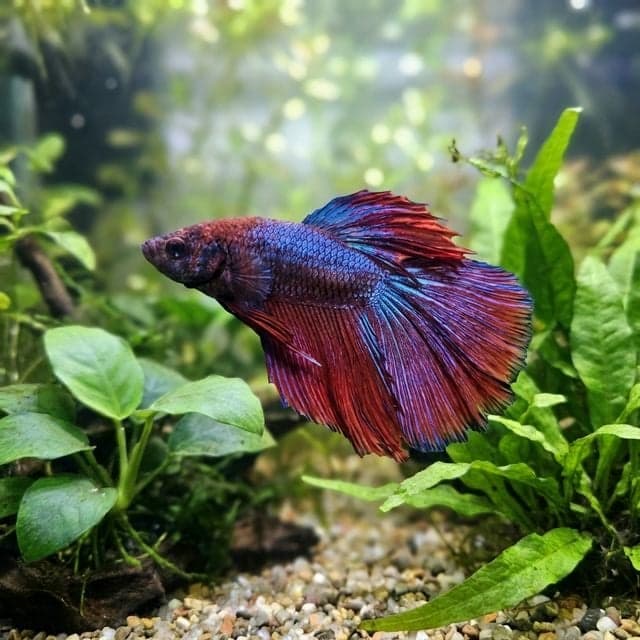

Bettas and Adolfos corydoras are among the more reproducible betta communities. Corys stay on sand and rise only briefly for air; bettas patrol the surface. Success needs six or more corys, fine sand, sinking food after dark, and avoiding sharp gravel. Most failures are husbandry, not aggression.
Scientific names: Betta (Betta splendens) · Adolfos cory (Corydoras adolfoi)
Compatibility summary
| Betta | Adolfos cory | |
|---|---|---|
| Typical verdict | Usually works | Usually works |
| Primary zone | Surface / mid | Bottom |
| Main lever | Avoid fin-nippy betta rare | 6+ on fine sand |
| Requirement | Detail |
|---|---|
| Cory group | Six or more |
| Substrate | Fine sand |
| Cory food | Sinking after lights dim |
Behaviour analysis
Corydoras sift sand and breathe air in quick trips to the surface. Bettas rarely spend time on the substrate. That vertical separation removes most day-to-day conflict. A sudden cory dash can startle a betta once; repetition usually habituates. True failures are often barbel damage from gravel, thin corys from stolen food, or copper-based meds—not chasing.
Why this pairing can work
This pairing is often repeatable because corydoras and bettas usually do not “compete for the same moment.” Corys are bottom foragers on sand, and they only rise briefly for air. That vertical separation removes most of the everyday conflict.
When you keep a real group (six or more) on fine sand and you feed sinking food after lights dim, you make sure corys actually get their meal. Gentle flow and stable water then protect barbel health, which is what keeps the corys confident instead of hiding until they are already thin.
Why this pairing often fails
Bettas and corys can both look “fine” for a week while the setup quietly fails. The most beginner-friendly ways it fails are rough substrate (gravel that wears barbels), too few corys (so they do not feed confidently), and food schedules that happen only at the surface (where guppies, bettas, or the strongest fish can steal it).
Another common tipping point is medication. Some treatments that are safe for bettas can be risky for scaleless catfish. If you dose the display without checking labels and cory sensitivity, the aquarium can crash quickly after a period of normal behaviour.
Environmental comparison
Standard tropical parameters. Sand is the non-negotiable for long-term cory health. Do not push temperature to extremes solely for one species.
| Parameter | Betta | Adolfos cory | Compromise |
|---|---|---|---|
| Temperature | 24–28 °C | 22–26 °C typical | 25–26 °C |
| pH / hardness | Wide | Soft–neutral | Stable; clean substrate |
| Flow | Gentle | Oxygen-rich; gentle | Surface ripple + sand care |
Tank setup guidance
This is one of the most repeatable betta pairings because the water column is naturally split—if you build for the corys first. Sand is non-negotiable, and group size is the lever that makes corys confident enough to feed in daylight.
Minimum viable setup: fine sand, 6+ Adolfos cory, caves/shade, gentle surface ripple for oxygen, and a feeding plan that reaches the bottom. Cycle first, add corys first, then add the betta last under dim light once corys are already eating well.
Feeding rhythm: surface foods for betta during the day; sinking foods after lights dim for corys. If the betta steals tablets, fix the system (feeding caves, multiple tabs, timing), not the corys.
Risks
- Barbel damage: trigger is gravel or dirty substrate. Signs: shortened/eroded barbels, redness. Mitigation: sand, gentle vacuuming, clean water.
- Cory starvation: trigger is surface-only feeding or one tablet in one spot. Signs: hollow bellies, frantic dashing at lights-out. Mitigation: feed after dark, scatter multiple tablets, use caves.
- Medication incompatibility: trigger is dosing the display for guppy/betta issues. Signs: cory distress after dosing. Mitigation: hospital tank treatment and label-checking (scaleless fish sensitivity).
Tips
- Start here: betta tank mates · Adolfos cory tank mates.
- Keep the bottom safe: sand, caves, and sinking food that the betta can’t monopolise.
- If you want to add a schooling mid-layer later, compare: neon tetra + Adolfos cory.
- If you want a busy surface alternative, compare: guppy + Adolfos cory.
- Care sheets: Betta · Adolfos cory
FAQ
How many corys should I keep? Treat six as the minimum. More usually means bolder feeding and less “hiding all day.”
Is sand required? For long-term Adolfos cory health, yes. Gravel is the common barbel failure mode.
My betta pecks at a cory on the glass—panic? One investigation isn’t a failure. Sustained stalking, repeated nips, or corys refusing to feed is your threshold to separate.
Can I medicate the display tank? Be cautious: many meds that are fine for bettas can be risky for scaleless catfish. Prefer a hospital tank when treatment is non-trivial.
Corys gulp air—what does it mean? Some air-gulping is normal. If it’s frequent and paired with lethargy, check oxygenation, temperature, and water quality.
Watching the first month
Corydoras often look “fine” while the betta claims the bottom during lights-on. First month: watch the substrate line at dawn and dusk—Adolfos corys are crepuscular; if they only surface-gasp or hide until lights-off, dissolved oxygen or flow may be wrong, or the betta is blocking feeding zones. Sand should stay clean enough that barbels stay smooth; rough gravel plus betta debris equals infection risk.
Feed sinking tablets after lights dim; count corys eating. If the betta steals every tablet, use a feeding ring at the surface simultaneously or a coconut cave with a tablet inside. Weekly weigh behaviour: one blocked feed session is adjustment; a week of thin corys is failure. Temperature mid-25s °C is the honest compromise—do not run hot for the betta alone.
Bubbles at the surface from corys are normal occasionally; constant gasping with clamped betta fins suggests parameter crash—test immediately. Explore neon tetra and Adolfos cory for a cooler, less territorial top-water picture, or betta and neon tetra if you want mid-water colour instead.
Chemistry, feeding rhythm, and when to split the tank
Corydoras ammonia exposure shows as twitching barbels and shimmy; bettas show clamped fins and surface hanging—test both symptoms the same day. Sand beds need gentle disturbance so hydrogen sulphide does not pocket; thin sand in a betta-cory tank is easier to manage than deep anaerobic layers. If you use botanicals, remove them before they pulp and crash pH overnight.
Split if corys lose weight while the betta looks obese from stolen tablets, or if the betta camps the only cave entrance. A second small tank for the betta preserves the cory group. Compare neon tetra and Adolfos cory and betta and angelfish for different stress geometries; Adolfos cory tank mates hub lists bottom-safe alternatives.
Long-term management (weeks 5–12)
Weeks five to twelve are when barbel wear either heals on clean sand or becomes chronic. If barbels shorten again after a full clean, suspect repeated substrate insult or aggression blocking cave access. Corydoras group dynamics matter—singletons stress; three or more Adolfos corys distribute risk. Betta long-term mood often tracks feeding: predictable tablet placement after dark keeps both species on schedule.
Planning upgrades: taller tanks do not automatically add bottom footprint; if you upsize for the betta, ensure floor area for cory patrol. Cross-read neon tetra and Adolfos cory for a cooler community without labyrinth fish overhead, and betta and angelfish if you are weighing a very different centrepiece. Adolfos cory tank mates hub stays the index for bottom-oriented alternatives.
Pre-purchase and add-order checklist
Buy Adolfos cory as a group of five or six, not one “cleanup” individual. Sand should be on hand before fish arrive; rough gravel voids the plan. Cycle with ammonia method; add corys only when nitrite has been zero for a week. Betta last, after caves and plants exist. Fallback: neon tetra and Adolfos cory without a betta, or betta and angelfish if you are still choosing a centerpiece.
One-minute recap
Betta overhead plus Adolfos cory on sand works only when corys eat after dark, barbels stay smooth, and the betta cannot monopolise every cave mouth. Group corys, gentle flow, mid-25s °C, and theft-proof sinking feeds are the non-negotiables. Else split. Neon tetra and Adolfos cory and betta and angelfish bracket your other centerpiece options.
Never buy a single cory as a “test”; duos hide and starve quietly. If the betta blocks every cave, add more hardscape before blaming the fish. Betta and neon tetra trades bottom fish for mid-water colour with similar temperature politics.
Filter intake sponges reduce betta fin snags and keep cory fry from vanishing if guppies were ever in the tank. Two feeding stations on opposite ends reduce line-of-sight theft.
If medication targets the betta, remove activated carbon per label but remember corys are scaleless-sensitive—when in doubt, hospital the sick fish instead of dosing the community. Seasonal daylight length changes room temperature near windows; move tanks off sills if summer swings exceed two degrees.
Final verdict
Recommended within this test for betta communities. Still read betta + guppy for what to avoid and neon + cory for mid-water + bottom combos.
Also in this guide: betta guppy · neon tetra adolfos cory. Species: Betta · Adolfos cory. Hubs: Betta · Adolfos cory.










