African Blue Diamond Tetra: Alestopetersius smykalai
A dazzling African tetra with iridescent blue scales. A stunning addition to planted biotopes and African river setups.
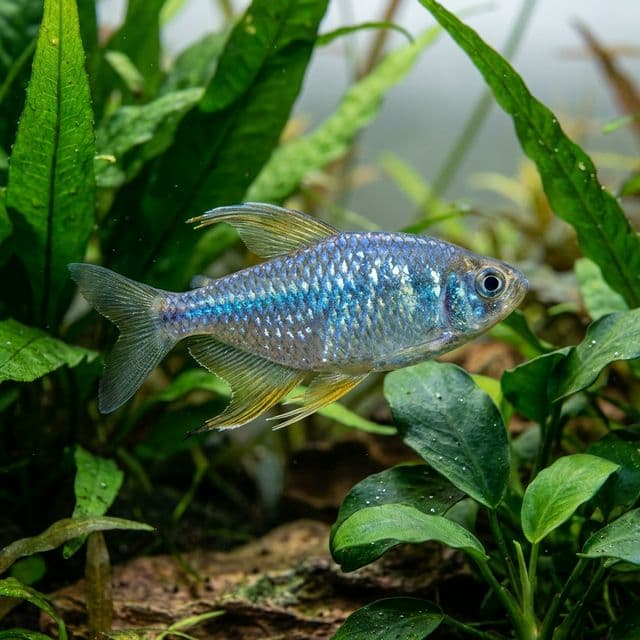
African Blue Diamond Tetra
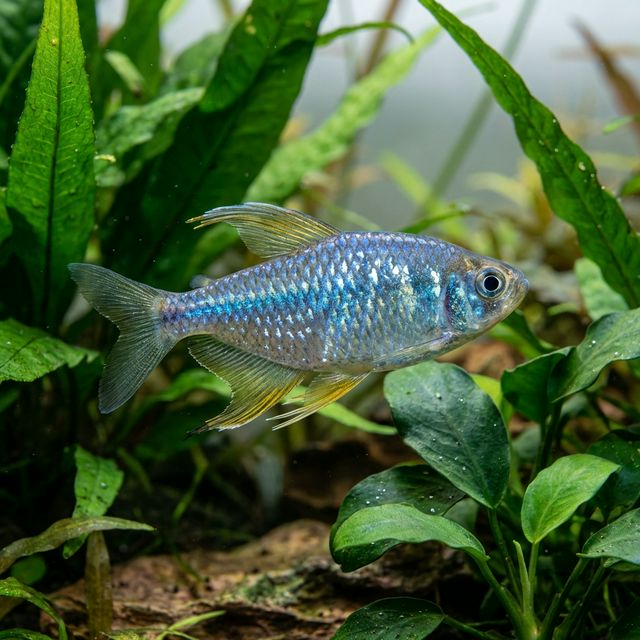
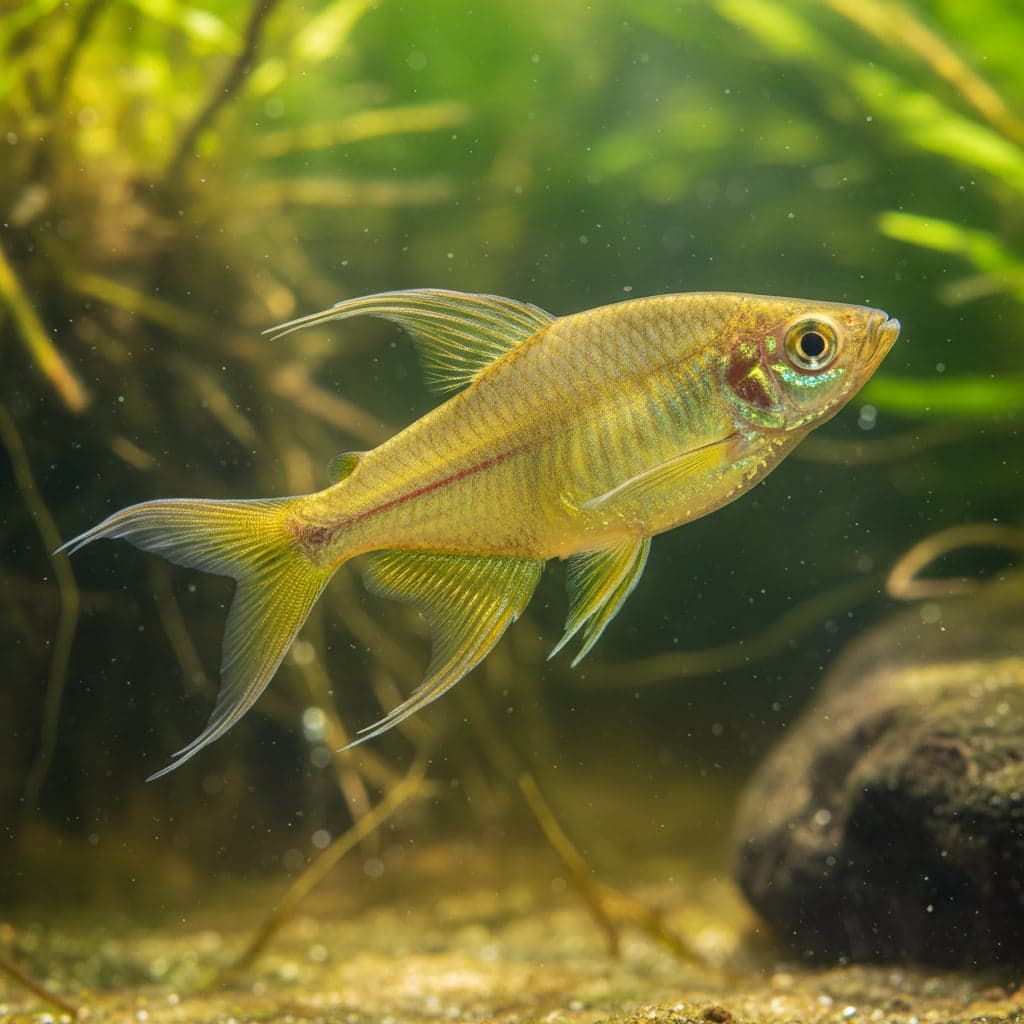
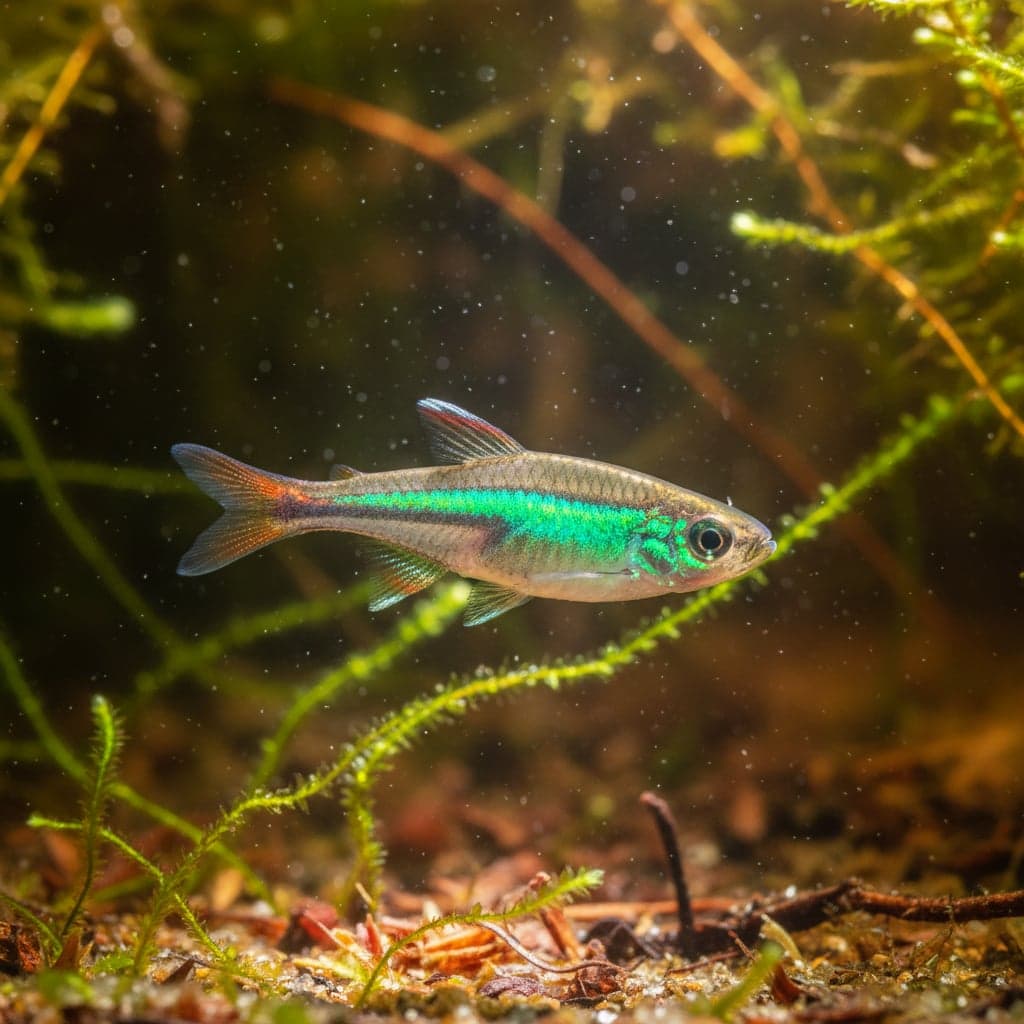
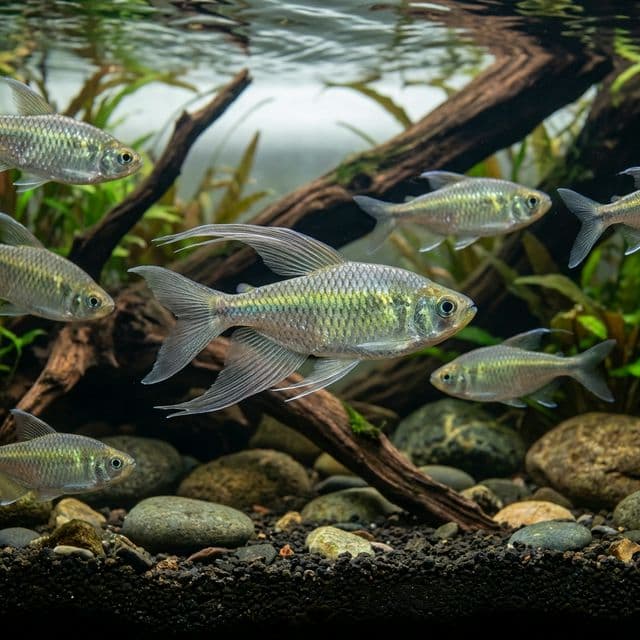
The African Blue Diamond Tetra, scientifically known as Alestopetersius smykalai, is a stunningly captivating freshwater fish that has become a prized addition to aquariums worldwide. This small tetra species showcases an array of vibrant colors, with its iridescent blue and green hues resembling precious gemstones, which significantly enhances its visual appeal. These fish are not only admired for their beauty but also bring a sense of dynamic movement to tank environments, as they gracefully swim and engage with their surroundings. Their shimmering bodies are complemented by delicate fins that flutter gently, making them a delightful centerpiece in any aquarium setup.
In the aquarium hobby, the African Blue Diamond Tetra represents the diversity and beauty found in aquatic life. As a relatively hardy species, it provides both novice and experienced aquarists with the opportunity to appreciate their unique display. Moreover, their peaceful nature fosters an engaging community tank environment, allowing for the cohabitation of several species. This tetra species serves as a testament to the importance of sustainable aquarium practices, as their stunning aesthetics capture the interest of fish keepers, encouraging responsible sourcing and care.
Natural Habitat & Origin
The African Blue Diamond Tetra originates from the Congo River Basin in Central Africa, a region characterized by its intricate waterways and rich biodiversity. These fish inhabit mainly blackwater environments, where the water is stained with tannins from decaying vegetation, resulting in lower pH levels. The dense vegetation of their natural habitat provides these tetras with both shelter and foraging opportunities, allowing them to thrive in their ecosystem. This specific environmental context plays a crucial role in their coloration and overall health, mimicking the conditions they require as they are introduced to successful aquarium life.
Typically found in slow-moving streams and tributaries, the African Blue Diamond Tetra prefers slightly acidic to neutral waters. The presence of submerged logs, leaf litter, and plenty of plant life creates a refuge for these fish, who are naturally inclined to seek cover when threatened. Understanding their natural habitat is essential for aquarists that want to replicate these conditions to ensure the health and well-being of their aquatic pets.
Care Requirements
To provide optimal care for the African Blue Diamond Tetra, it is crucial to replicate the parameters of their natural habitat. A stable water temperature between 75°F to 82°F (24°C to 28°C), a slightly acidic to neutral pH level between 6.0 and 7.5, and a water hardness of 2 to 10 dGH are recommended for their health. Maintaining these conditions can be achieved through regular water testing and using quality water conditioners.
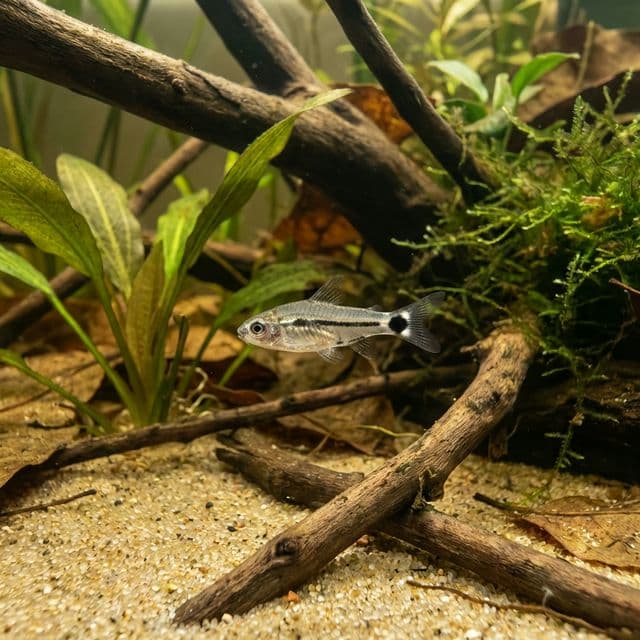
In terms of tank setup, a minimum aquarium size of 20 gallons is recommended to accommodate a small school of these fish. A soft, dark substrate, such as sand or fine gravel, will help to bring out their vibrant colors. Additionally, incorporating dense plant cover, driftwood, and leaves will not only enhance their natural habitat but also provide necessary hiding spots to promote their comfort. Given their preference for dim lighting, using low-intensity LED lights with floating plants can help to diffuse light, creating a suitable environment that encourages active and healthy behavior in these tetras.
Diet & Feeding
As omnivores, African Blue Diamond Tetras require a well-balanced diet that includes both plant and animal matter. A quality staple flake food specifically designed for tetras will ensure they receive essential nutrients. To promote their vibrant colors, incorporating color-enhancing pellets is also beneficial. These fish thrive on a varied diet, so supplementing their meals with frozen or live foods such as brine shrimp, daphnia, and bloodworms will keep them engaged and healthy.
Feeding should occur 1-2 times daily, offering small portions that can be consumed within a few minutes to prevent overfeeding and maintaining water quality. Observing their feeding habits can help aquarists identify any potential dietary deficiencies and adjust their regimen accordingly to maintain optimal health.
Behavior & Temperament
The African Blue Diamond Tetra is known for its peaceful nature, making it an excellent candidate for community tanks. These fish exhibit schooling behavior, so it is advisable to keep them in groups of six or more to mimic their natural social structure and reduce stress levels. In addition, they are typically non-aggressive and interact harmoniously with a variety of tank mates.
As these fish tend to occupy the middle and upper levels of the tank, creating an environment that encourages vertical swimming, with plenty of open swimming space interrupted by plants and decorations, is ideal. This will not only promote their natural behavior but also reduce territorial disputes and provide refuge when needed.
Tank Mates
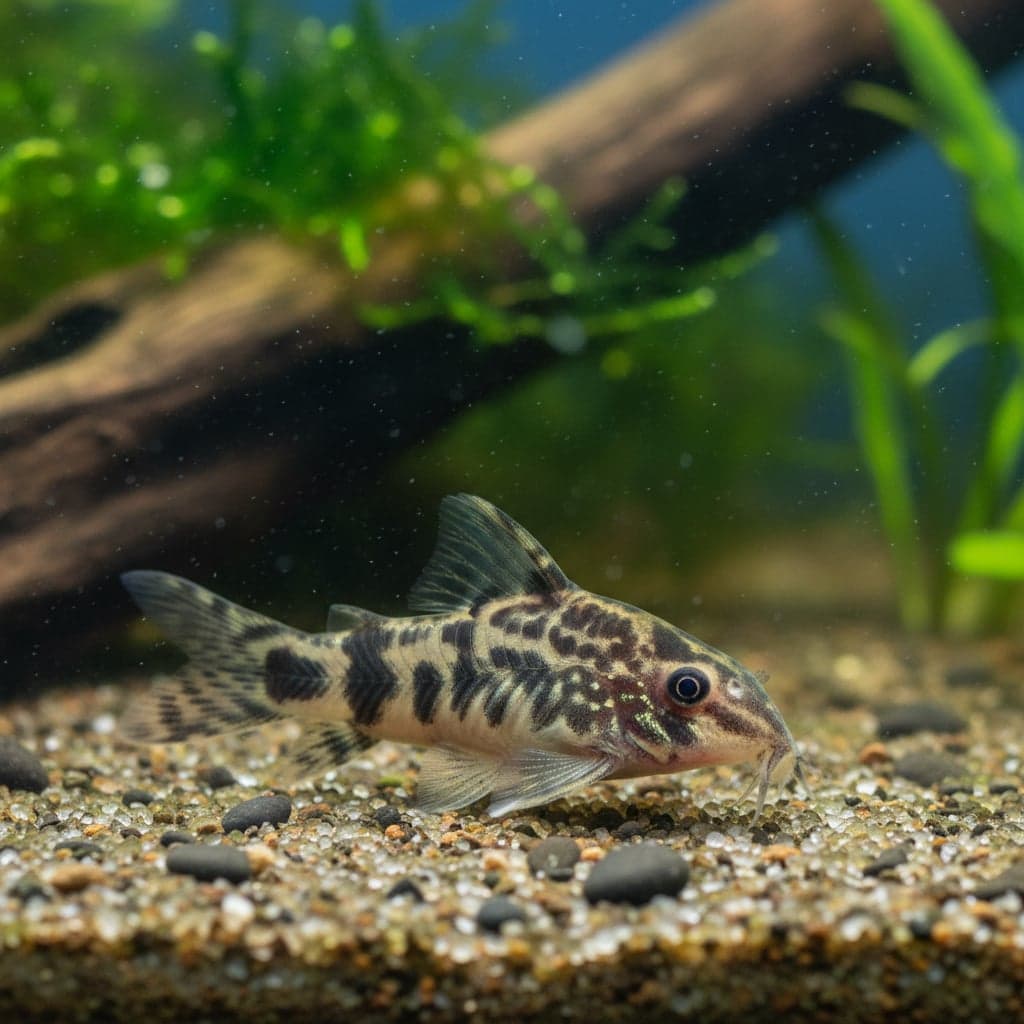
When selecting tank mates for the African Blue Diamond Tetra, it's vital to choose peaceful species that can thrive under similar water conditions. Suitable companions include small to medium-sized fish such as the Neon Tetra, Corydoras Catfish, Rummy Nose Tetra, and various Rasboras. Additionally, shrimp like Cherry Shrimp and snails are excellent choices that coexist harmoniously with these tetras.
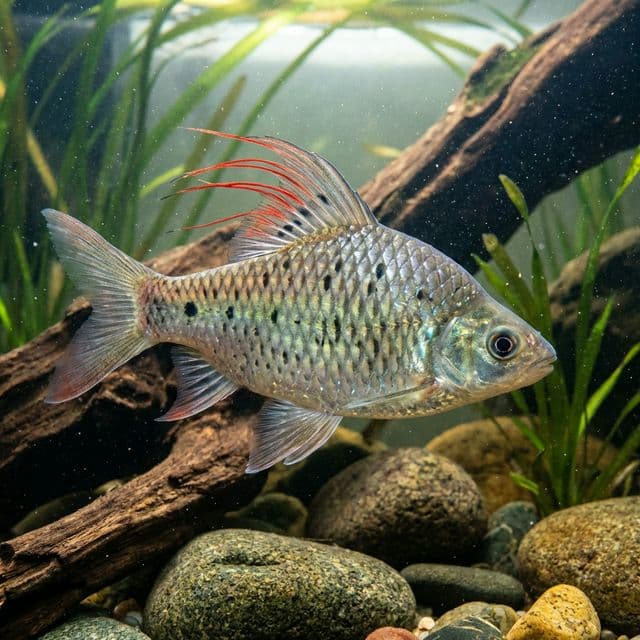
Conversely, avoiding larger or aggressive fish like Cichlids, larger Barbs, and Betta Fish is crucial, as these species may outcompete the African Blue Diamond Tetra for food and territory, leading to stress or injury. Opt for gentle, community-friendly fish to maintain equilibrium in the aquarium environment.
Breeding
Breeding the African Blue Diamond Tetra in captivity can be a rewarding experience, but it necessitates specific conditions. To encourage spawning, create a separate breeding tank with soft, dark substrate and plenty of fine-leaved plants where the female can lay eggs. The ideal water parameters for breeding should include slightly acid pH, temperature around 78°F (25°C), and a dimly lit environment.
Spawning generally occurs early in the morning, with the female laying eggs among the plant leaves, while the male fertilizes them. After spawning, it’s advisable to remove the adults from the breeding tank, as they may consume the eggs. The eggs typically hatch within 24 to 36 hours, and fry should be provided with infusoria or finely crushed flake food to support their growth during the initial stages. With the right conditions and care, hatching and raising African Blue Diamond Tetra fry can be successfully achieved.
Common Health Issues
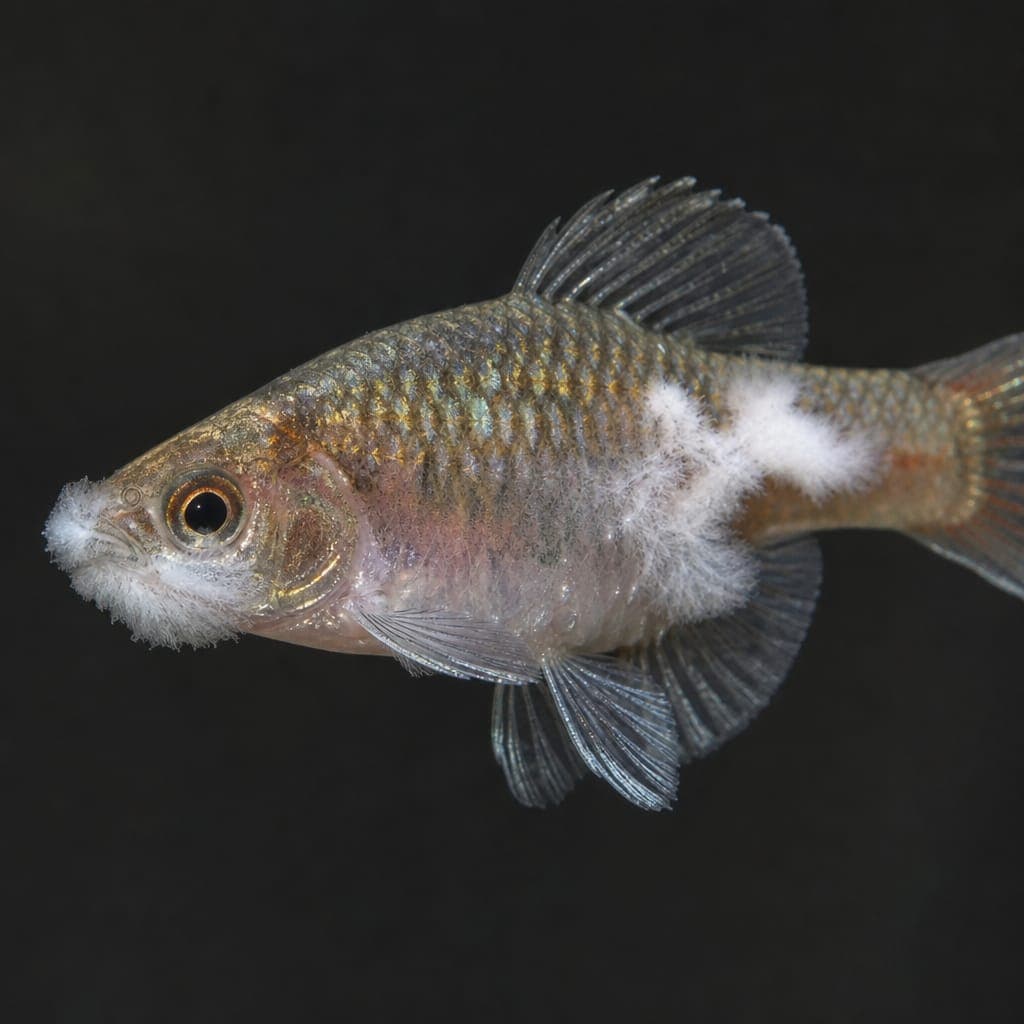
While the African Blue Diamond Tetra is relatively hardy, they can be susceptible to certain health issues, including Ich (white spot disease), fin rot, and other fungal and bacterial infections. Maintaining proper water quality and ensuring that tank parameters remain stable is the best preventive measure. Regular water changes, monitoring for signs of stress or illness, and providing a balanced diet will significantly decrease the likelihood of health problems.
In the event of any health concerns, addressing the issue promptly with appropriate treatment can help alleviate symptoms. Keeping the tank clean and observing for early signs of disease enables aquarists to take action before any illness becomes serious, ensuring the longevity and wellness of these vibrant fish.