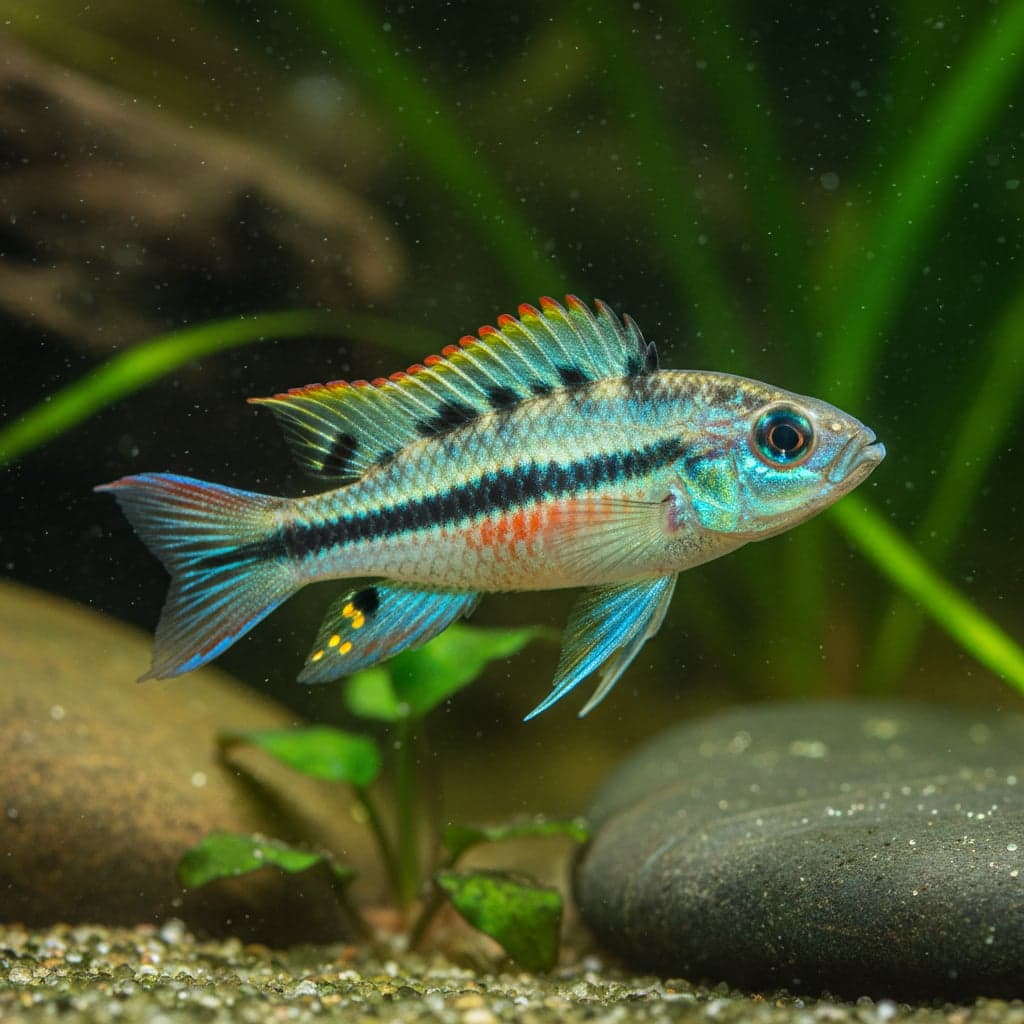
The Cockatoo Dwarf Cichlid: Apistogramma cacatuoides
A colorful South American dwarf cichlid with dramatic dorsal fin spikes. Personality-packed and small enough for planted community tanks.
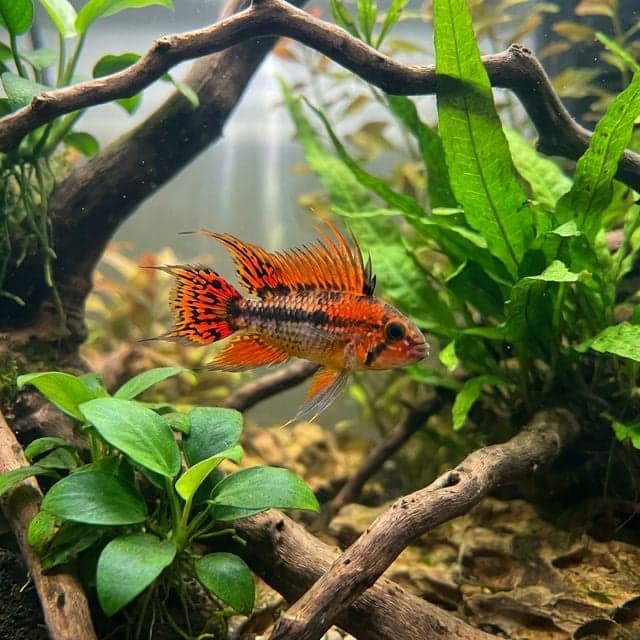
Cockatoo Dwarf Cichlid
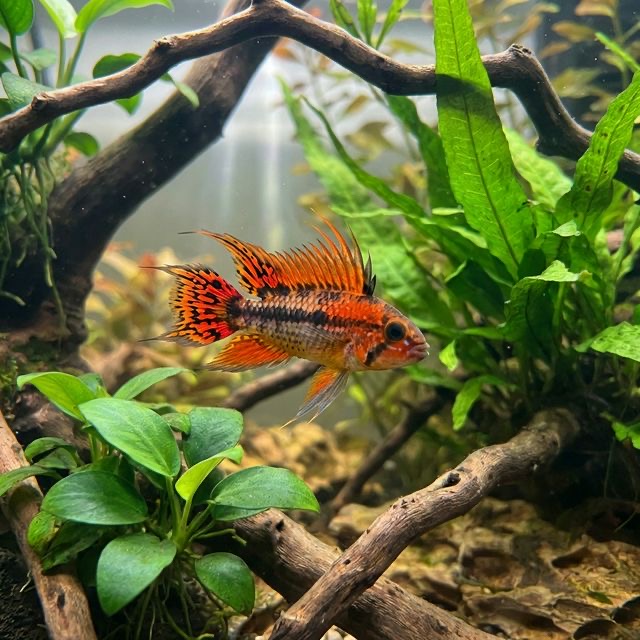
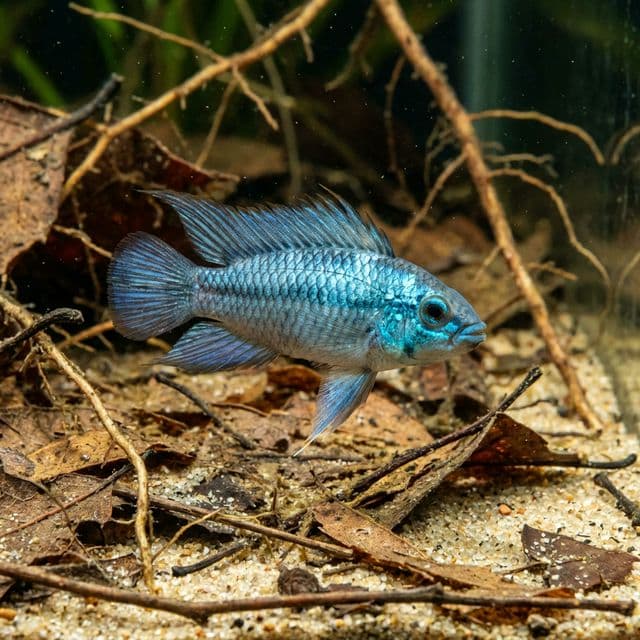
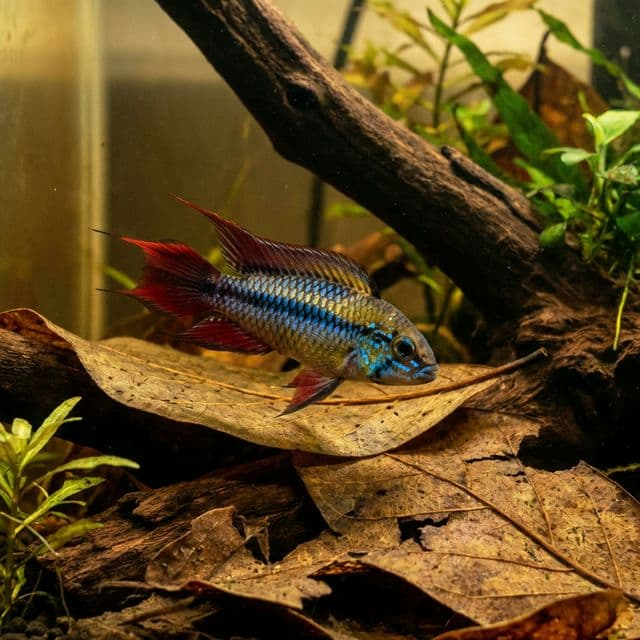
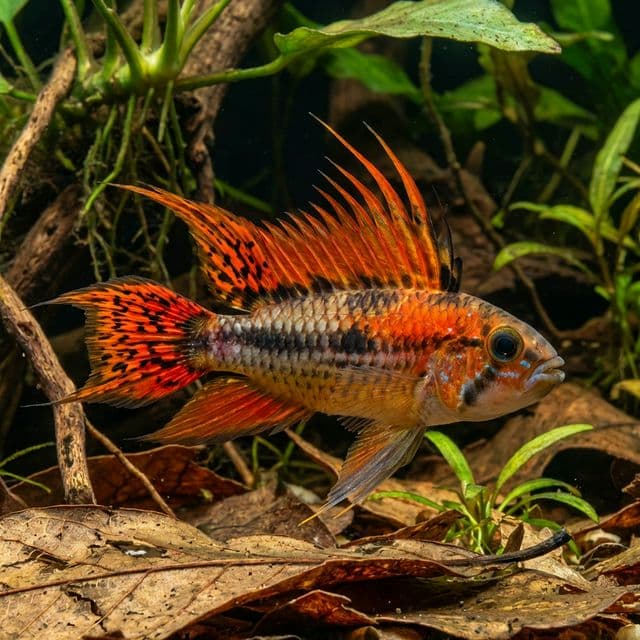
The Cockatoo Dwarf Cichlid (Apistogramma cacatuoides) is a captivating species that has earned its place as a jewel in the freshwater aquarium hobby. Renowned for its striking coloration, this small cichlid showcases vibrant hues of yellow, orange, and blue, often highlighted by an intricate pattern of vertical stripes and prominent fins resembling a cockatoo's crest, which gives it its name. This visually stunning fish provides a dynamic presence in aquariums and serves as an excellent introduction to the world of cichlids for both novice and experienced aquarists alike.
Beyond its aesthetic allure, the Cockatoo Dwarf Cichlid holds significant importance within the aquarium community. Its relatively peaceful nature and manageable size make it suitable for community tanks, while also offering enthusiasts the opportunity to observe intriguing behaviors, such as territorial displays and breeding rituals. This species stands as a testament to the diverse beauty and behaviors of freshwater fishes, enriching aquarists' understanding and appreciation of aquatic life.
Natural Habitat & Origin
The Cockatoo Dwarf Cichlid originates from the shallow waters of the Amazon River basin, specifically in countries such as Colombia and Peru. These tropical fish inhabit a variety of environments, primarily consisting of slow-moving streams, small rivers, and flooded forests. The water bodies they occupy are typically characterized as blackwater, which results from the decomposition of organic matter, leading to stained, tea-colored waters rich in humic substances. This unique habitat plays a critical role in shaping the species' characteristics, including their coloration and behavior.
In their natural environment, Cockatoo Dwarf Cichlids are often found among dense vegetation, leaf litter, and submerged roots. The presence of these structural elements provides essential cover from predators and creates suitable breeding grounds. The submerged wood and plants are vital for their well-being, as they mimic their natural habitat and help reduce stress levels in captivity.
Care Requirements
When it comes to the care of Cockatoo Dwarf Cichlids, maintaining optimal water parameters is crucial for their health and longevity. Ideal water conditions include a pH range of 6.0 to 7.5, a temperature between 75°F to 82°F (24°C to 28°C), and moderate hardness levels around 5 to 15 dGH. These requirements mimic their native blackwater habitats, thereby facilitating a smoother transition into aquariums.
In terms of tank setup, a minimum tank size of 20 gallons is recommended to provide ample swimming space and territory for each fish. A soft substrate, such as fine sand or smooth gravel, is best to replicate their natural environment and prevent injury to their delicate fins. Lighting should mimic natural conditions, with moderate levels that allow for plant growth but are not overly bright, preventing stress. Adding live plants, driftwood, and caves not only serves as decoration but also provides hiding spaces that promote comfort and security for the Cockatoo Dwarf Cichlid.
Diet & Feeding
Cockatoo Dwarf Cichlids are omnivorous, which means their diet consists of both plant and animal matter. In captivity, a varied diet should include high-quality flakes, pellets specifically formulated for cichlids, frozen foods like brine shrimp or bloodworms, and occasional live foods such as daphnia or small insects. Incorporating vegetable matter, such as blanched zucchini or spinach, can also be beneficial for their overall health and well-being.
Feeding should be done multiple times a day in smaller portions, ensuring that all food is consumed within a few minutes to prevent water quality issues. Providing a balanced diet will not only ensure optimal growth and coloration but also promote longevity in captivity.
Behavior & Temperament
The behavior of the Cockatoo Dwarf Cichlid can be described as generally peaceful, although they can display a degree of territoriality, especially during mating or when establishing dominance in the tank. These fish are known for their complex social behaviors and can exhibit interesting displays of aggression among themselves, but usually remain compatible with other non-aggressive species. They tend to prefer vertical placement in the tank, finding comfort in the upper regions when feeling secure, while also exploring lower areas where they can hide.
Social dynamics can shift based on tank conditions and the presence of other species; thus, it’s essential to provide enough space and hiding spots to minimize stress and aggression. Observing their behaviors can be an exciting aspect of keeping Cockatoo Dwarf Cichlids, as they exhibit unique interactions in both solitary and community environments.
Tank Mates
Choosing suitable tank mates for Cockatoo Dwarf Cichlids involves selecting species that share similar water requirements and exhibit compatible temperaments. Ideal companions include small, peaceful fish such as tetras (e.g., Neon Tetras, Rummy-nose Tetras), rasboras, and other non-aggressive cichlids like the Bolivian Ram and Microgeophagus species. Consideration should also be given to invertebrates, such as snails and shrimp, which can thrive in their environment.
Species to avoid include larger or aggressive fish, such as barbs, certain livebearers, and other larger cichlids, which may intimidate or bully the Cockatoo Dwarf Cichlid. Additionally, it's best to avoid overly active fish that could disturb their natural behavior, ensuring a harmonious community tank environment.
Breeding
Breeding Cockatoo Dwarf Cichlids can be a rewarding experience for aquarists willing to provide the right conditions. To initiate spawning, a breeding pair should be established, with males often displaying bright colors and more pronounced fins to attract females. Providing a suitable breeding environment, such as a flat surface or a cave, is critical for successful spawning, alongside maintaining optimal water conditions.
The female typically deposits eggs onto the selected surface, ranging from 50 to 100 eggs, which she and the male will guard fiercely. The eggs generally hatch within 48 to 72 hours, with the fry becoming free-swimming about a week later. It is advisable to provide infusoria or finely crushed flakes for the fry upon becoming free-swimming, ensuring they receive the necessary nutrients for healthy growth.
Common Health Issues
Cockatoo Dwarf Cichlids, like many aquarium fish, can be susceptible to several common health issues, including ich, fin rot, and water quality-related stressors. Ich is characterized by small white spots on the fish, often requiring treatment with medication or elevated tank temperatures. Fin rot can develop due to poor water conditions or injuries, so maintaining optimal water quality and hygiene practices is paramount.
Preventative measures to minimize health issues include regular water changes, proper tank maintenance, and a balanced diet. Monitoring fish behavior and appearance will also help detect potential problems early, allowing for swift interventions. Providing a stress-free environment with adequate hiding places and appropriate tank mates will further reduce the risk of disease and promote overall health in Cockatoo Dwarf Cichlids.