Crosshatch Triggerfish
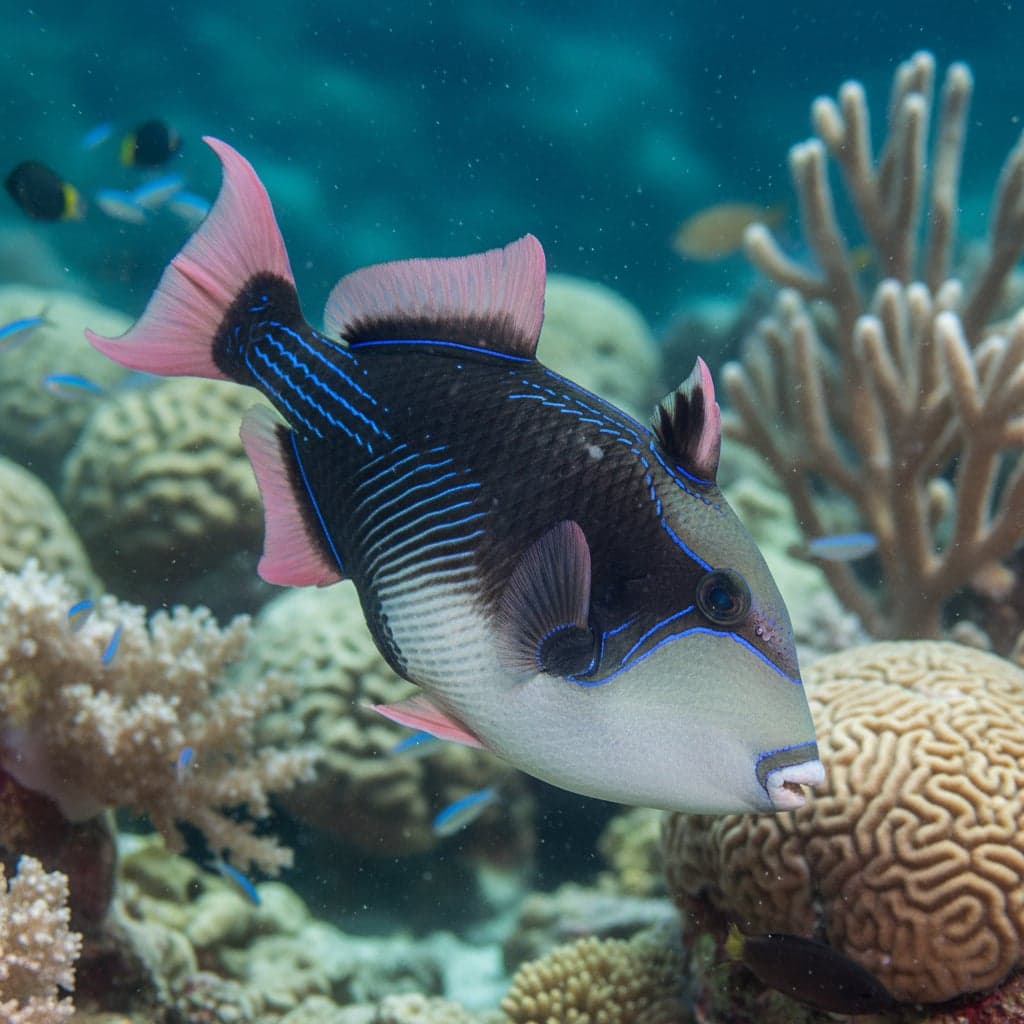
The Crosshatch Triggerfish (Xanthichthys mento) is a stunning, reef-safe plankton-feeding trigger — peaceful for its family and prized for its cross-hatched markings.
Crosshatch Triggerfish
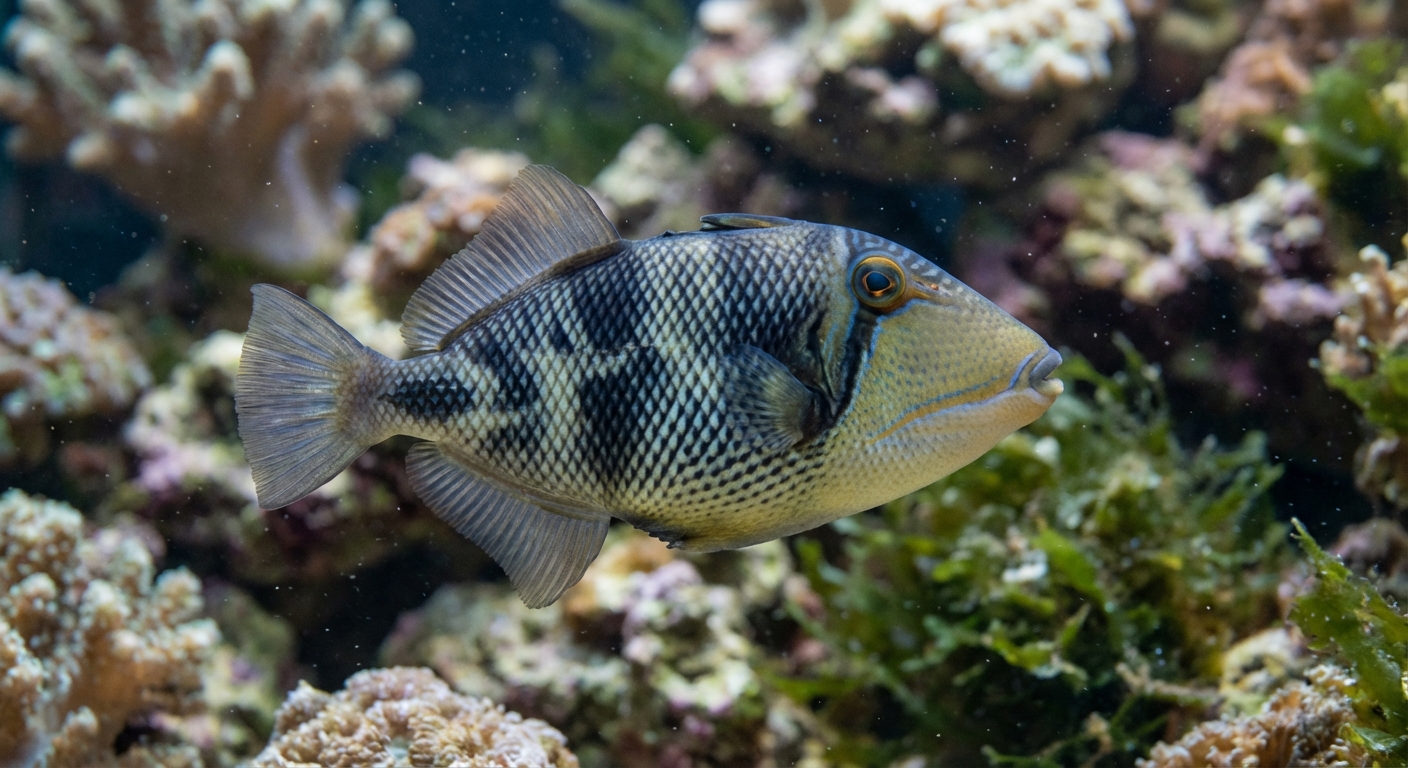
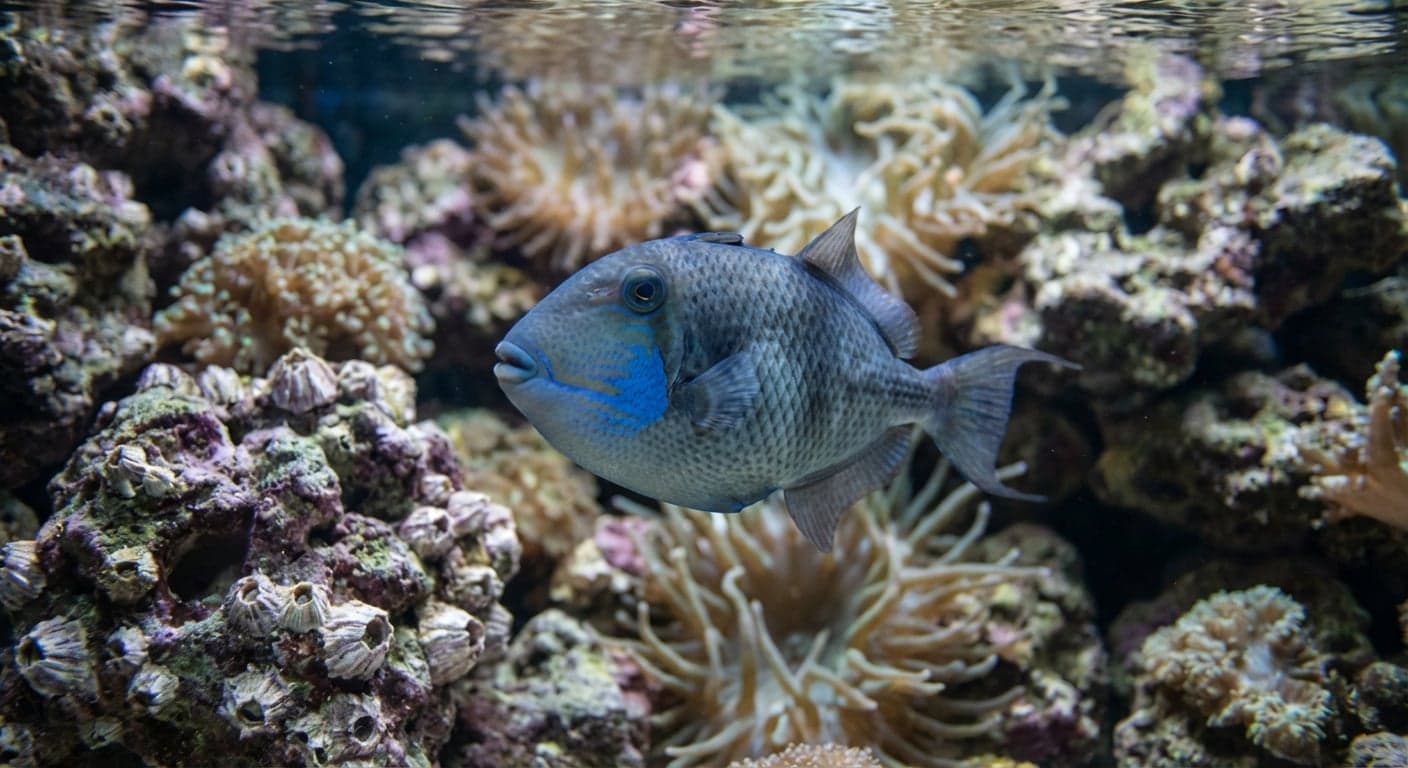
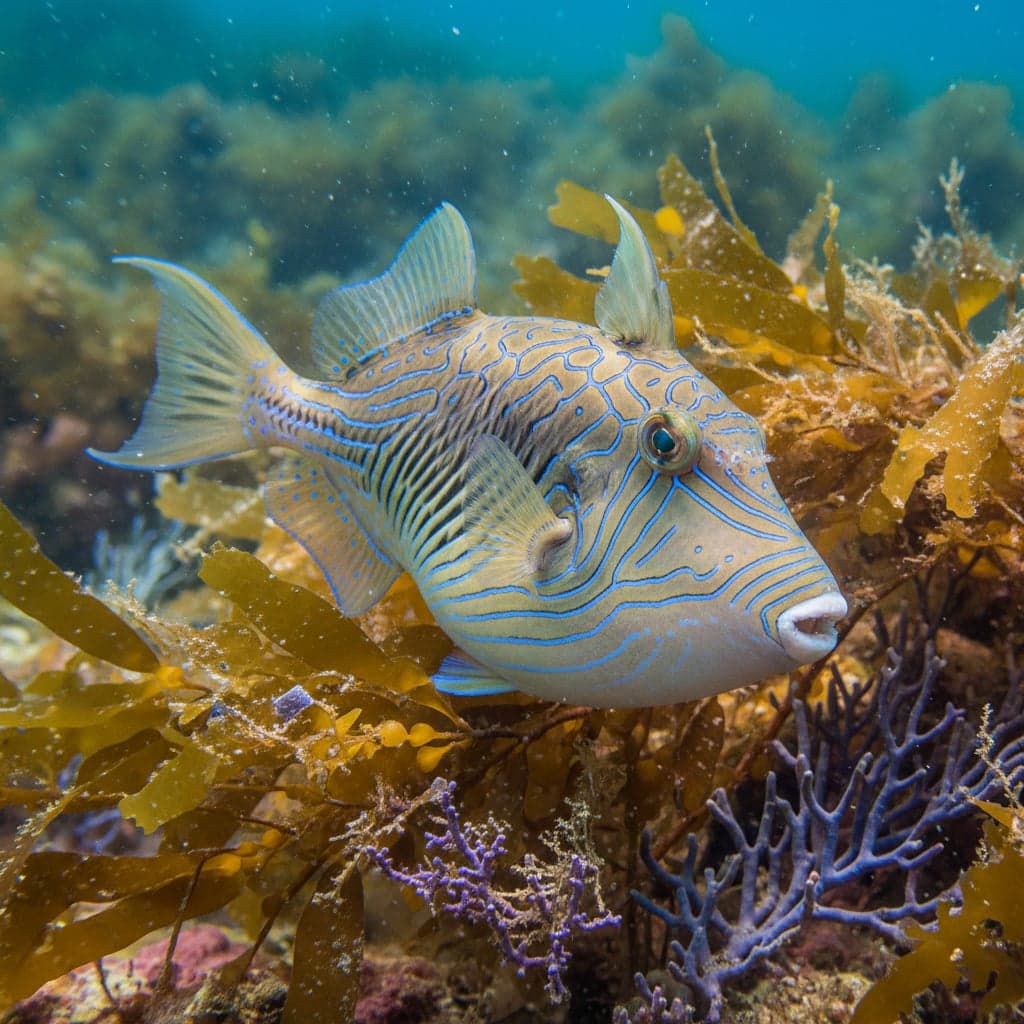
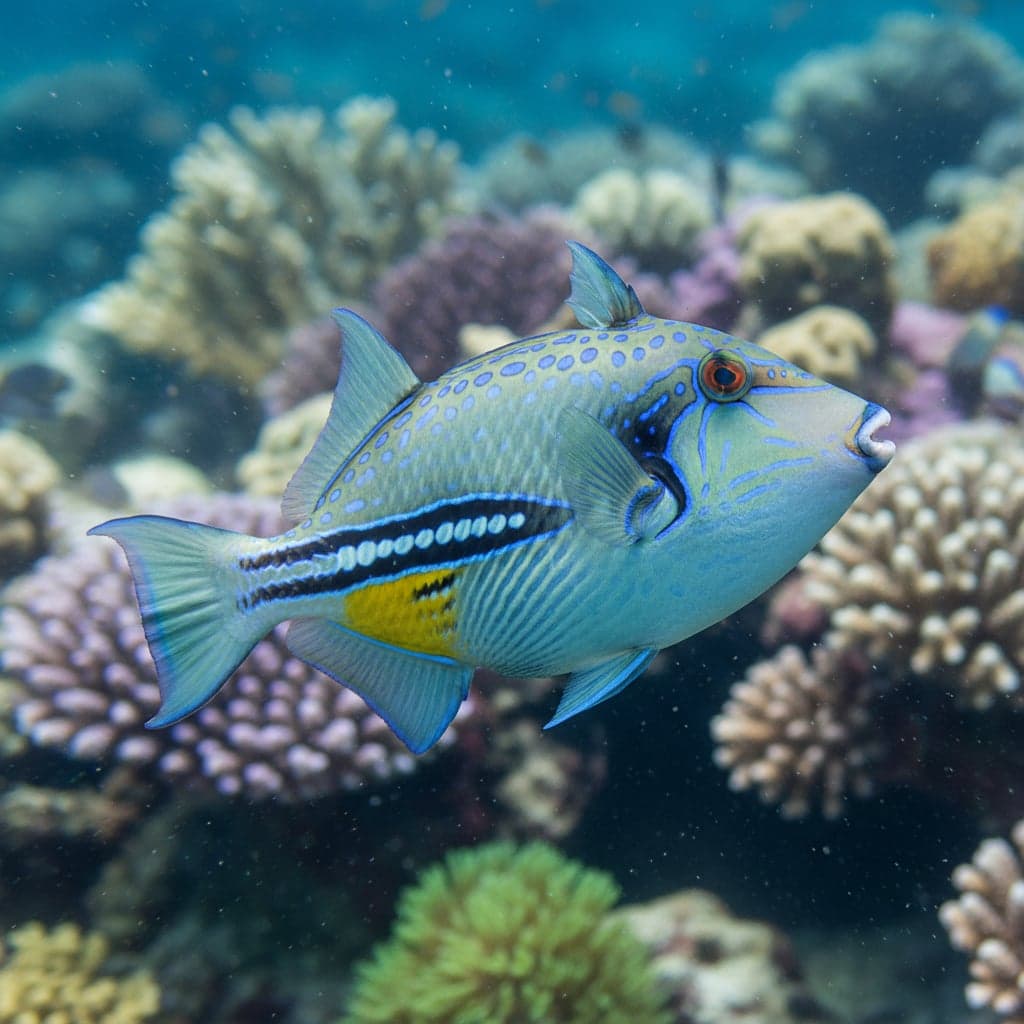
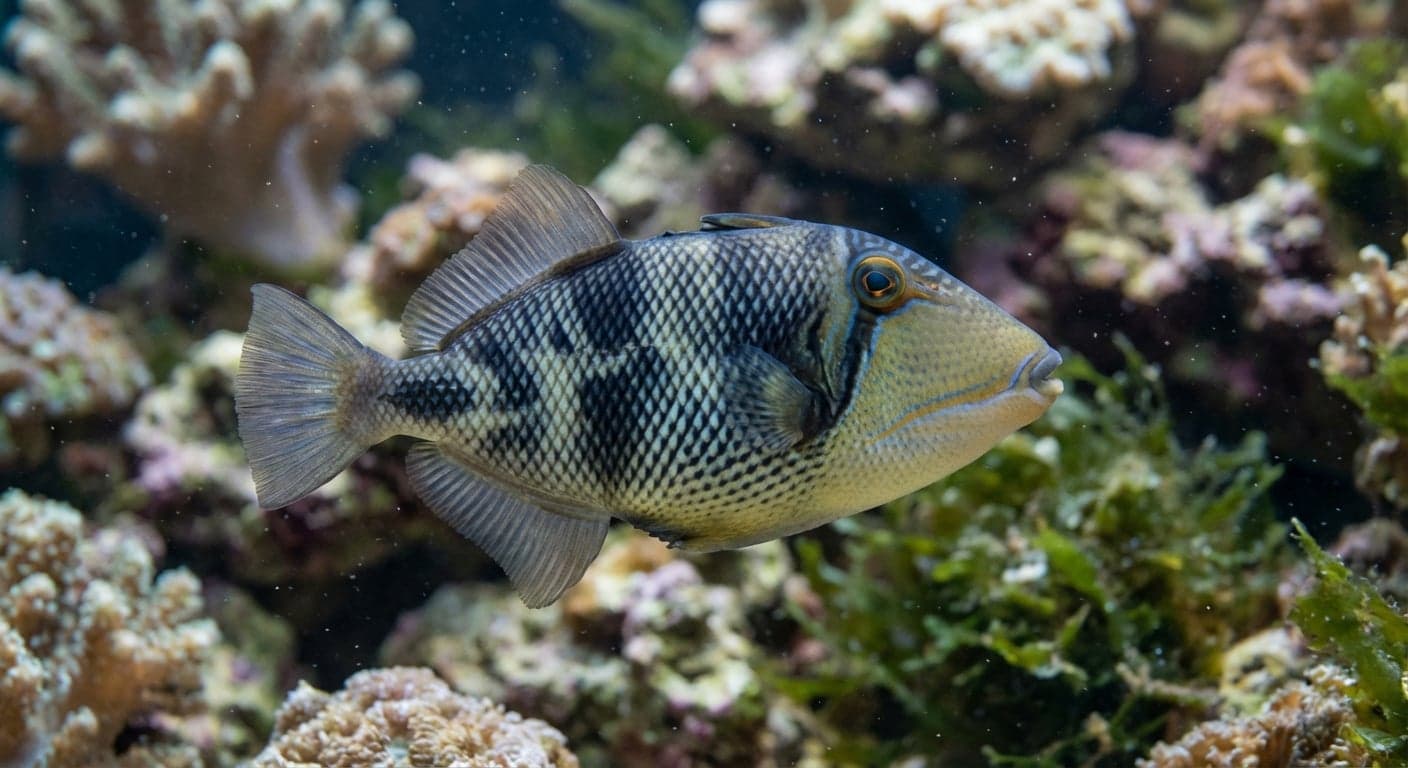
The Crosshatch Triggerfish (Xanthichthys mento) is the trigger people buy when they want Balistidae colour without the clown-trigger wrecking crew. Males wear a neat blue-grey cross-hatch over the flanks, yellow-edged fins and a yellow-margined caudal; females are plainer but still handsome. Like other Xanthichthys, it feeds mainly on drifting plankton in open water rather than crushing snails and crabs on the rock — which is why this genus earns a reef reputation that most triggers do not deserve.
“Reef-safe for a trigger” still needs honesty. Soft and LPS corals are usually ignored because the fish is not a polyp picker. Tiny ornamental shrimp and the smallest crabs remain a risk as the fish matures, even when juveniles leave them alone. It is also a cooler-water, current-loving species — not a tropical nano mascot sold at 8 cm and expected to stay that size.
Natural Habitat & Origin
Xanthichthys mento is an eastern Pacific and Hawaiian fish of offshore reefs, rocky drop-offs and current-swept slopes. Adults hover in the water column picking zooplankton; when threatened they wedge into holes and lock the dorsal spine like any trigger. Wild temperatures often sit cooler than a typical home-reef setpoint, which is why frontmatter lists 23–26°C rather than a warm 28°C tropical default.
In the aquarium recreate that open-water cruise plus a real bolt-hole: long swimming lanes, strong turbulent flow, and stable rock with caves large enough for a 30 cm body. A heavily branched maze with no straight run produces a paced, frustrated trigger. Loose rock gets levered — secure the aquascape before the fish arrives, not after the first cave-in.
Care Requirements
Stable marine water with serious turnover: salinity about 1.024–1.026, pH 8.1–8.4, temperature toward the cooler reef end at 23–26°C (73–79°F). Adults reach around 30 cm (12 inches). Plan on about 450 litres (around 120 US gallons) or more — and prefer tanks that are long, not just tall. Volume without length still fails a mid-water cruiser. A shop specimen at half that length is not a half-size fish; it is an adult in progress, and the tank must be sized for the end point.
Strong flow and surface agitation matter. Planktivores from current-swept reefs are high-oxygen fish; warm, stagnant corners invite disease and short temper. Aim for turbulent, well-aerated water rather than a single gentle gyre that leaves dead spots behind rock. A tight lid helps — startled triggers bolt and can clear the rim.
Quarantine is mandatory. Wild triggers still import marine ich (Cryptocaryon irritans) and marine velvet (Amyloodinium ocellatum) through the trade chain. A proper QT period with observation or prophylactic treatment before the display saves reefs from copper emergencies later — medications belong in hospital tanks, not on sessile inverts. Hypersalinity, hyposalinity and copper each have a place in QT design; none of them belong as panic doses dumped on a mixed reef after spots appear.
Filtration must match appetite. A settled crosshatch eats often and messily for its “peaceful trigger” reputation. Skim hard, keep mechanical media clean, and do not treat a lightly filtered FOWLR like a nano reef. Use the Aquarium Tracker to log salinity, temperature and your change schedule; chronic nitrate climb shows up as dull colour and edge before the fish stops swimming.
Diet & Feeding
Planktivore first, omnivore on the label. Wild fish spend the day picking zooplankton from the current. In captivity the staple is frequent small meaty meals: frozen mysis, enriched brine shrimp, finely chopped seafood, krill and quality marine pellets, with some marine algae or spirulina content so the diet is not all pure protein. Two or more modest feeds beat one large dump that spikes nutrients and leaves the fish hunting tankmates between meals.
Conversion is usually easy — Xanthichthys are enthusiastic feeders once settled — but prove eating in QT before display. A thin fish that only chases live pods in the shipping bag is not ready for a reef full of expensive ornamental shrimp. If the rock is bare of film fauna and you only feed once a day, you have built artificial hunger; hunger is what turns a mild trigger into an opportunistic invert hunter. Body shape tells the truth: a pinched dorsal profile is a diet problem, not a “lean athletic” phase.
Behavior & Temperament
Semi-aggressive in the honest hobby sense: peaceful for Balistidae, not a community clownfish. Juveniles are often placid mid-water cruisers; adults can claim open water and push fish that invade the favourite swim lane. Toward unrelated robust tankmates it is usually manageable if space and food are adequate. Toward other triggers, and especially other Xanthichthys, plan for territory — a male–female pair can work in a large system; two males often will not.
It spends much of the day cruising rather than excavating substrate the way some triggers do. That does not mean the aquascape is safe from rearrangement; the jaws and spine are still trigger hardware. Introduce thoughtfully — last among similarly assertive fish often works better than first. Hunger and crowding turn mild pacing into chasing.
Tank Mates
House with robust fish in different niches: tangs, larger wrasses, angelfish, anthias in big enough systems, and similar fish that hold their own at feeding time. Avoid very small, shy fish that get outcompeted or harassed in open water. Do not mix with other large triggers unless the system is truly huge and territory is split by aquascape and sight breaks.
Reef compatibility is the selling point and the trap. It is coral-safe in the usual sense — it does not graze polyps the way a butterflyfish or some angels do — because the wild diet is plankton, not coral tissue. Sessile inverts and most soft/LPS displays are fine. Small mobile invertebrates are a different story: ornamental shrimp, tiny hermits and snails are safer with juveniles than with a hungry adult. If the reef’s identity depends on a cleaning crew of expensive shrimp, this is a poor choice; pick a true planktivore wrasse or anthias instead. If the reef is fish-and-coral focused with tough inverts only, the crosshatch is one of the few triggers that belongs there.
Breeding
Xanthichthys mento is a pelagic spawner with a planktonic larval stage and is not bred in the home aquarium. Trade specimens are wild-collected. Captive pairs may show courtship colour and chasing in large systems; that is display behaviour, not a path to home-raised fry. Sexual dimorphism helps pairing — select a clearly marked male with a plainer female rather than two similar fish and hoping.
Common Health Issues
Hardy once settled, but still a wild marine import. Ich and velvet ride stress from capture, shipping and warm, low-oxygen holding water. Quarantine every fish. Keep flow high, temperature on the cool side of the listed range, and nitrates in check. Jump injuries and torn fins happen when lids are decorative rather than sealed.
A crosshatch sold as a “reef nano trigger” in a 200 litre box is marketing, not husbandry — the adult needs open water, cooler stable chemistry and honest volume. Prove feeding in QT, give the 30 cm body the swimming room it requires, and this plankton-feeding Xanthichthys is one of the most beautiful and best-behaved triggers in the hobby. Undersize the system, warm it like a tropical clown tank, or stock it beside prized cleaner shrimp, and it becomes another trigger story with a prettier pattern.