Green Tiger Loach
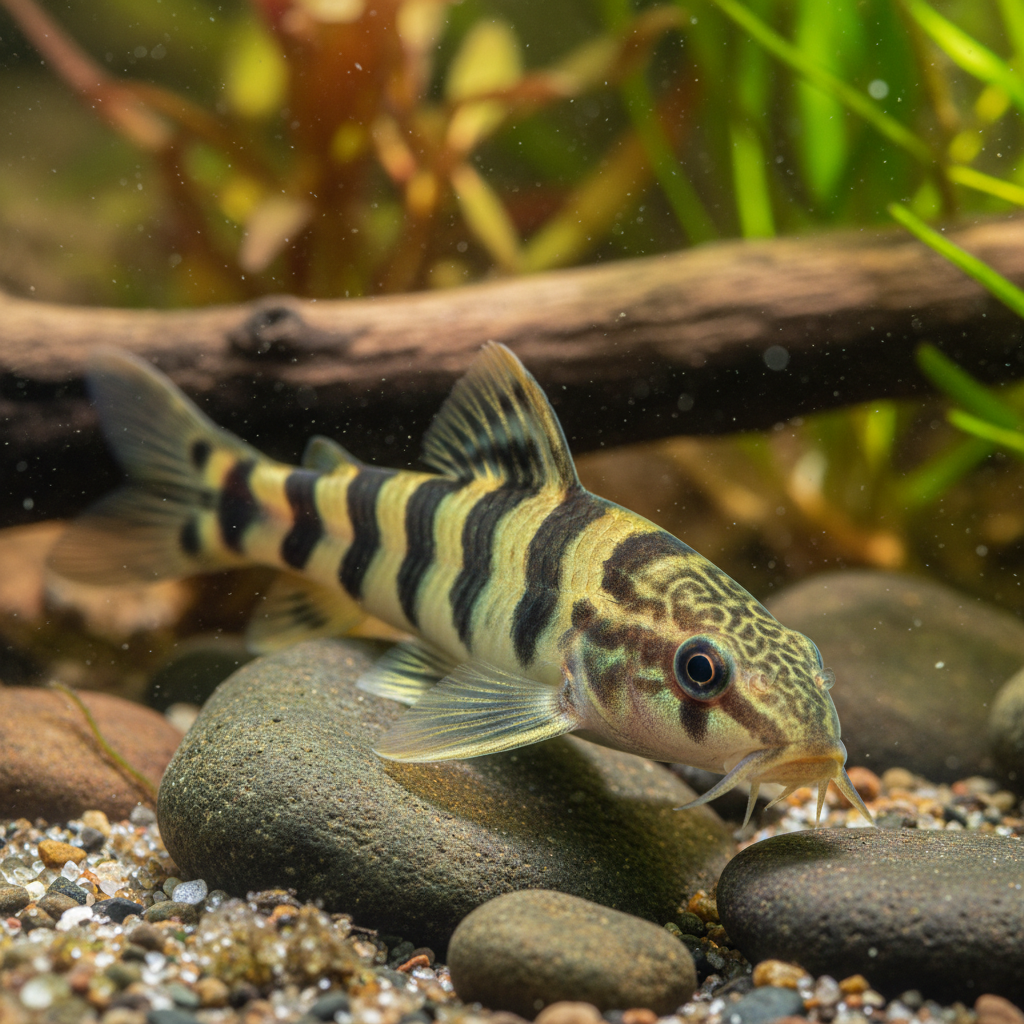
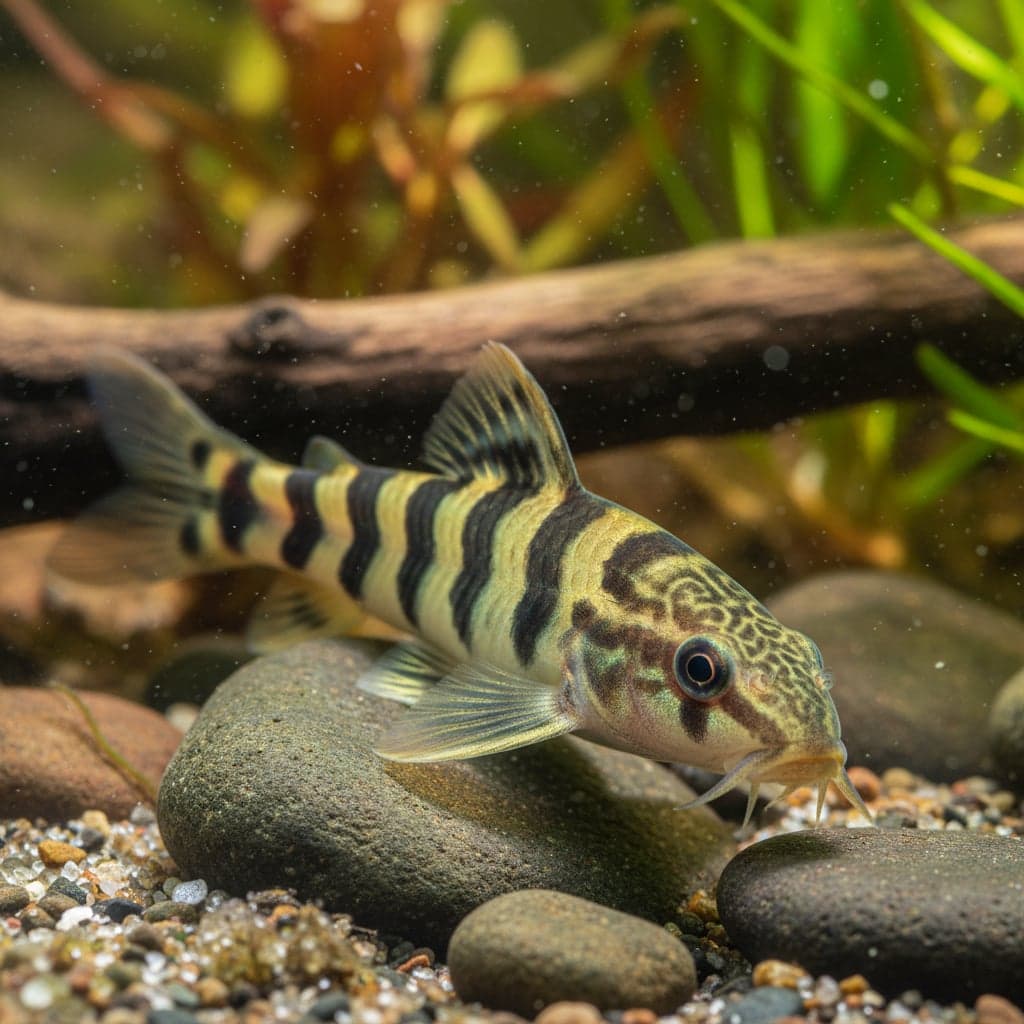
The Green Tiger Loach (Syncrossus hymenophysa) is a large, strikingly beautiful, and highly aggressive loach from Southeast Asia, known for its bold vertical bands and powerful personality.
Green Tiger Loach
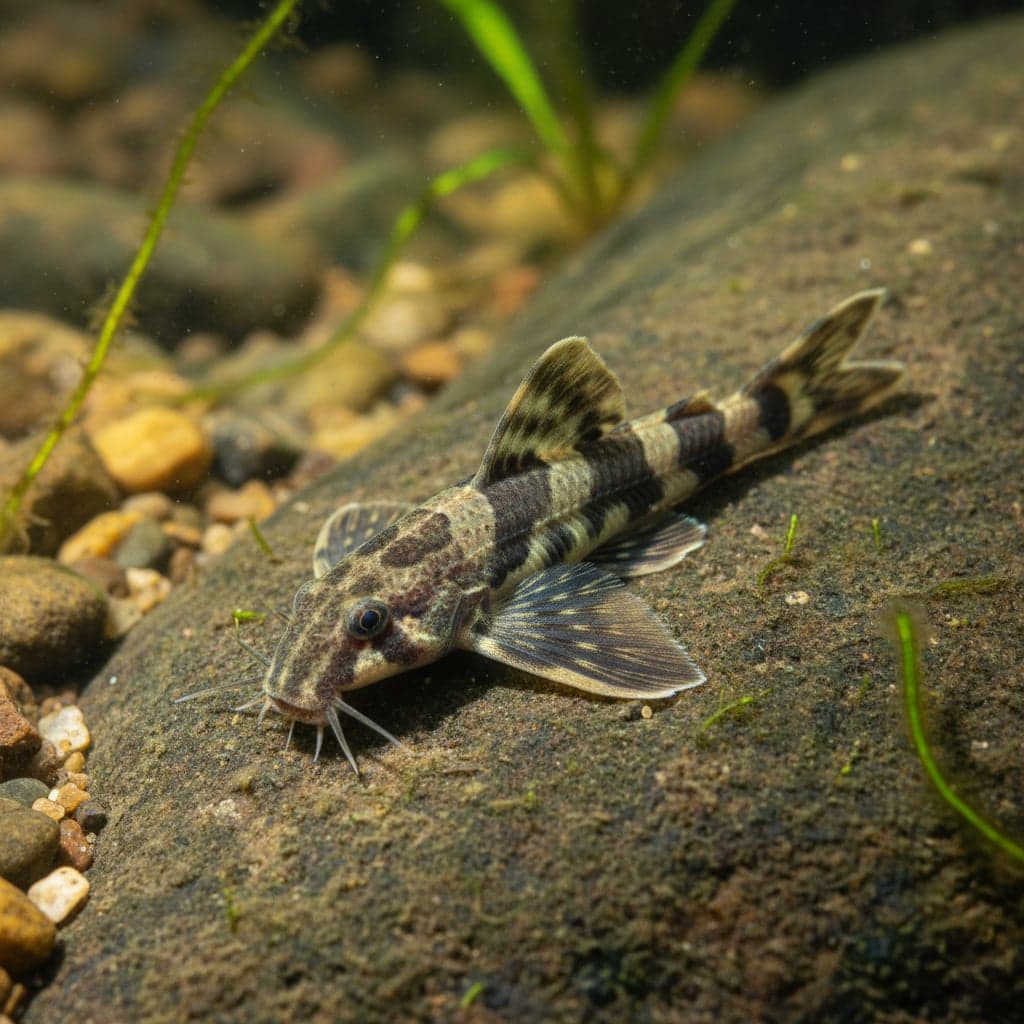
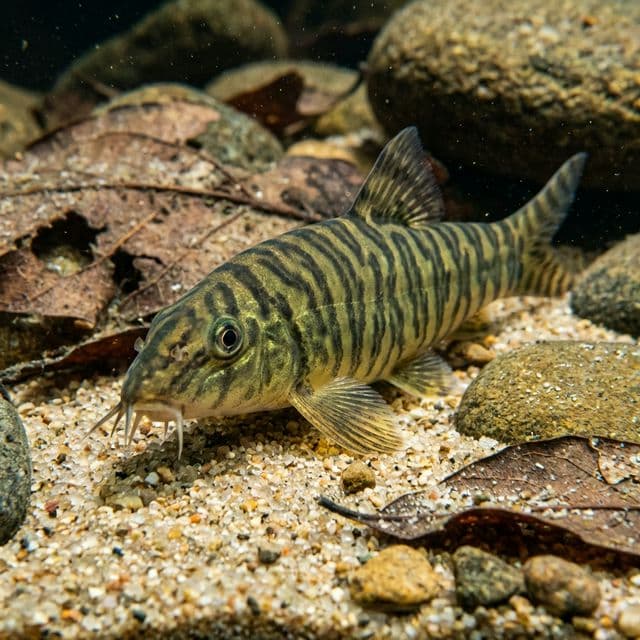
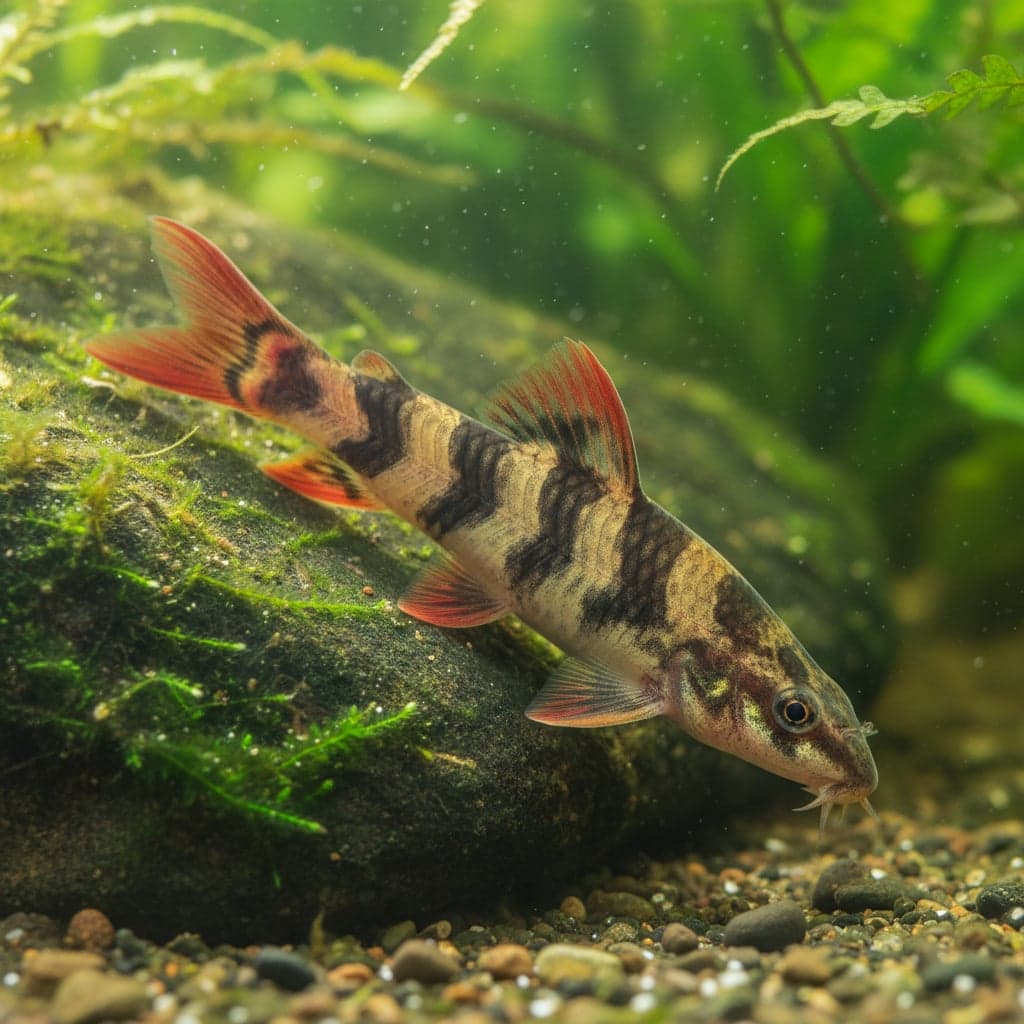
The Green Tiger Loach (Syncrossus hymenophysa), also known as the Tiger Botia, is one of the most visually impressive loaches in the hobby. It features an elongated, powerful body with a silvery-green to olive base color, marked by 12-15 bold vertical black bands.
It is a member of the "Tiger Loach" group (Syncrossus), which are known for being far more aggressive and boisterous than the more common Clown Loaches. They possess sharp, retractable sub-ocular spines (located just beneath their eyes) that they can flick out as weapons when threatened or during social disputes. They are also known to make audible "clicking" sounds when excited or fighting over territory.
Natural Habitat & Origin
This species is native to the rivers and streams of the Malay Peninsula and the islands of Sumatra and Borneo. They are typically found in clear, fast-flowing forest streams with high dissolved oxygen levels and rocky or sandy substrates. They depend on the complex structures of submerged logs and boulders for protection from the current and from predators.
Care Requirements
The Green Tiger Loach is a high-energy fish that requires a large, specialized setup. A minimum tank size of 75-80 gallons (300L) is required for a small group, with a 6-foot (180 cm) tank being ideal for long-term care. They require strong water movement and exceptionally clean, well-oxygenated water.
The aquarium should be decorated with a mix of smooth river stones, large boulders, and heavy driftwood to create numerous caves and tunnels. Providing multiple hiding spots is critical for reducing stress and aggression within the group. A soft sand substrate is preferred to protect their sensitive barbels while they forage.
Diet & Feeding
They are naturally carnivorous, feeding on a variety of aquatic invertebrates, insect larvae, and small crustaceans.
In the aquarium, they should be fed a protein-rich diet. Sinking carnivore pellets and "loach wafers" should be the staple, but they must have regular access to frozen or live foods such as bloodworms, mysis shrimp, and chopped earthworms. They are also excellent at controlling aquarium snails, as they will readily consume almost any snail that fits in their mouths.
Behavior & Temperament
The Green Tiger Loach is not a community fish in the traditional sense. They are highly aggressive, boisterous, and territorial. They establish a very strict social hierarchy (pecking order) and can be quite nasty even to their own kind.
Because of this, they must be kept in groups of at least 5-6 individuals. Keeping only one or two usually results in the dominant fish harassing the weaker one to death. In a larger group, the aggression is spread out. They should only be housed with equally robust and active tank mates.
Tank Mates
Suitable tank mates are limited to other large, aggressive, or very fast-moving species:
- Larger Barbs (Tinfoil Barbs, Spanner Barbs)
- Large Danios or Rainbowfish
- Robust Cichlids (only those that won't be irritated by the loach's hyper behavior)
- Other Syncrossus loaches (if the tank is massive)
- Large Loricariids (Plecos)
Avoid housing them with any small, slow-moving, or long-finned fish (like Gouramis, Guppies, or Goldfish), as the loaches will almost certainly nip their fins and harass them relentlessly.
Breeding
Breeding Syncrossus hymenophysa in the home aquarium is essentially unknown. Like most large loaches, they undergo seasonal migrations in the wild to spawn, and these conditions are extremely difficult to replicate in captivity. Most specimens for sale are wild-caught.
Common Health Issues
They are susceptible to "Skinny Disease" (internal parasites), which is common in wild-caught loaches and causes them to lose weight despite eating. They are also highly sensitive to "Ich" (white spot) and, because they are "scale-less" (having very small, embedded scales), they are more sensitive to traditional copper-based medications than other fish. Maintaining high water quality and quarantine is essential.