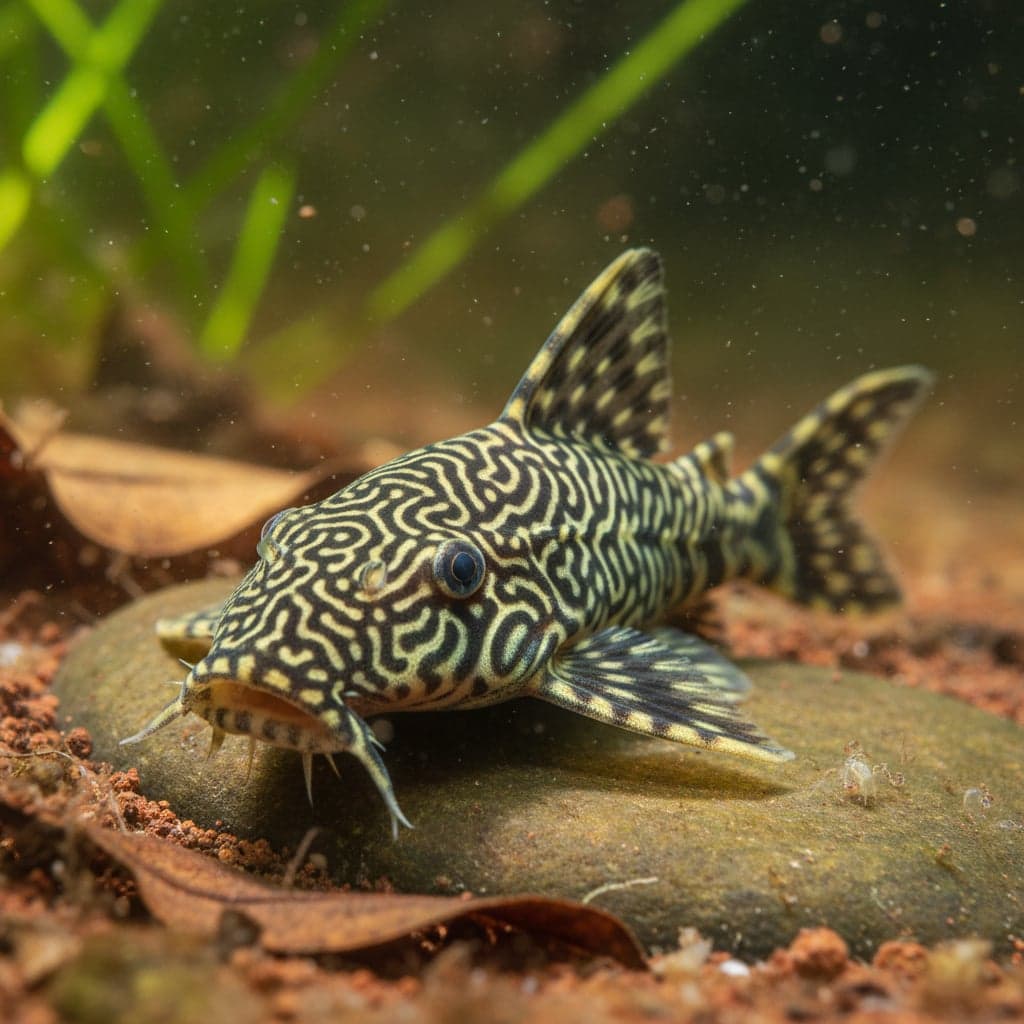
Half-banded Spiny Eel
The Half-banded Spiny Eel (Macrognathus circumcinctus) is a charming, manageable species of spiny eel from Southeast Asia, prized for its peaceful nature and fascinating burrowing behavior.
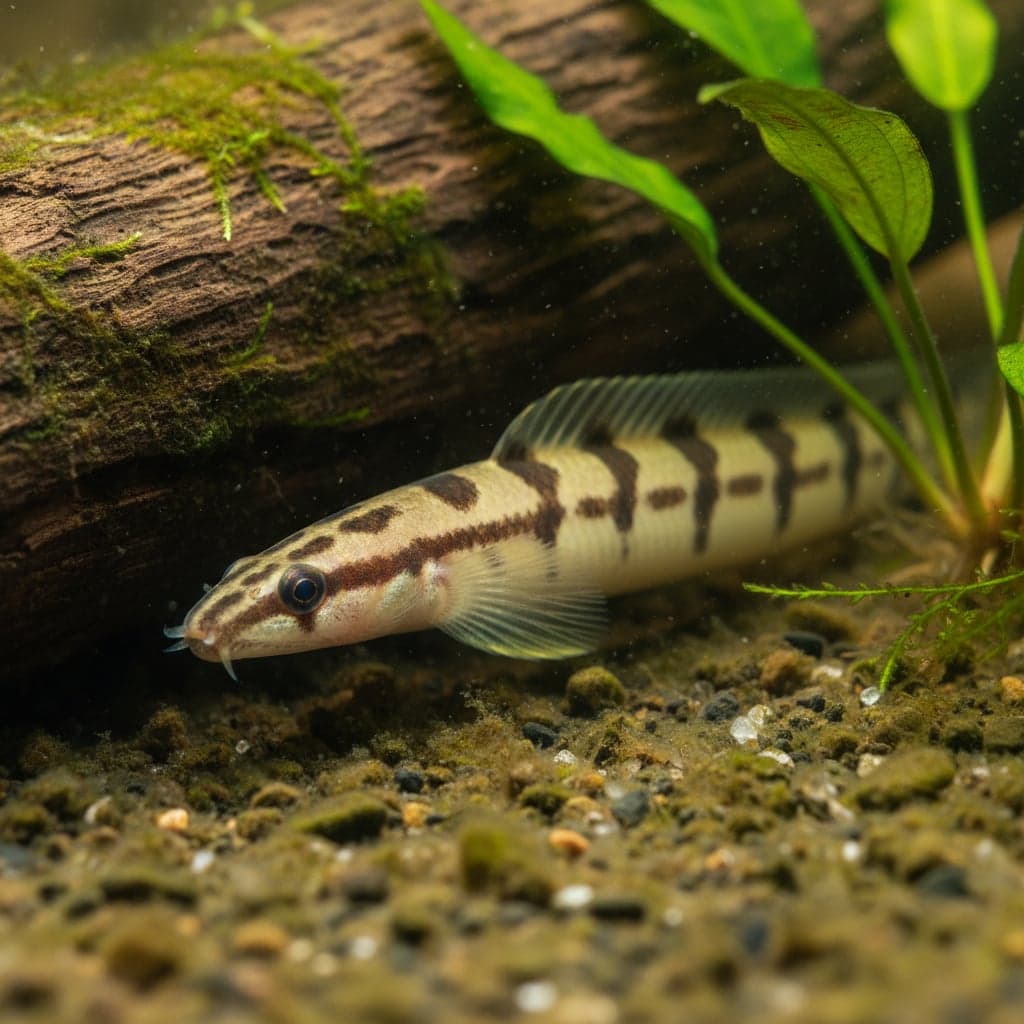
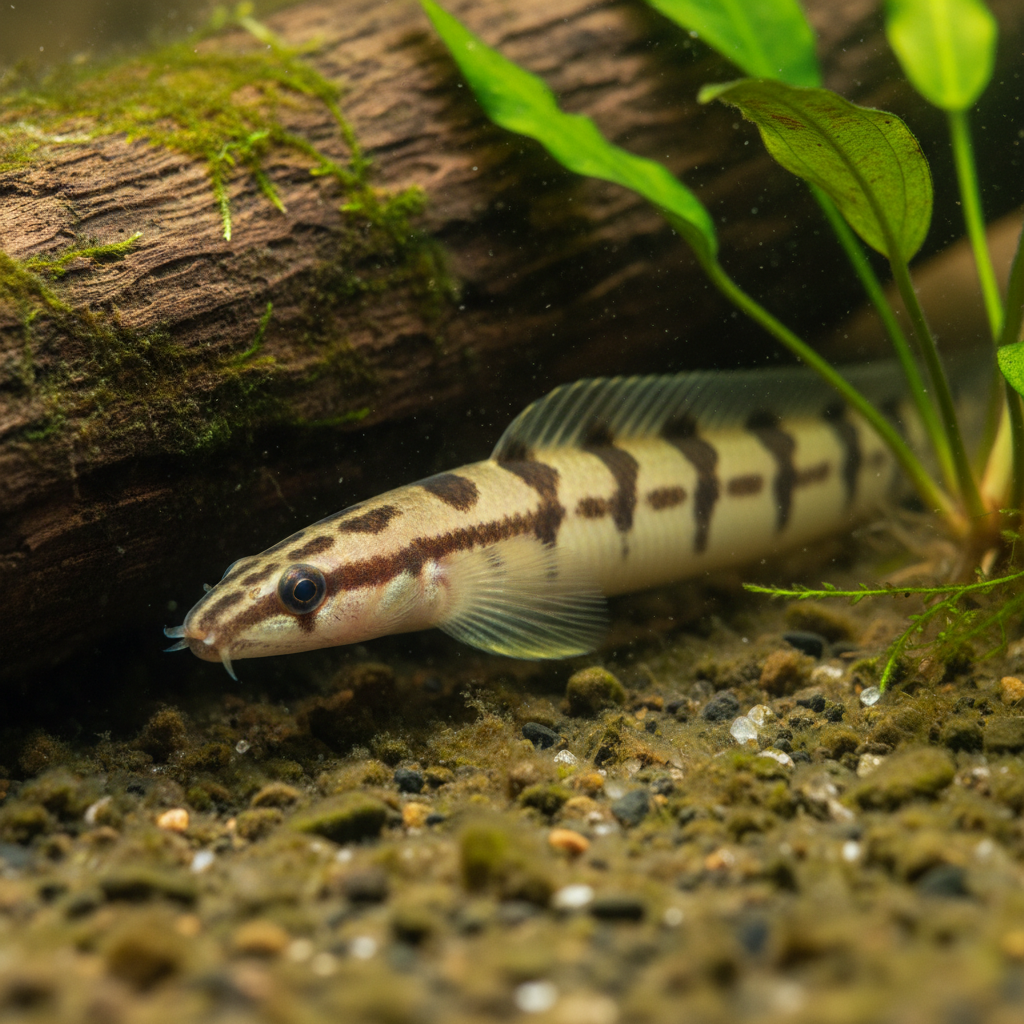
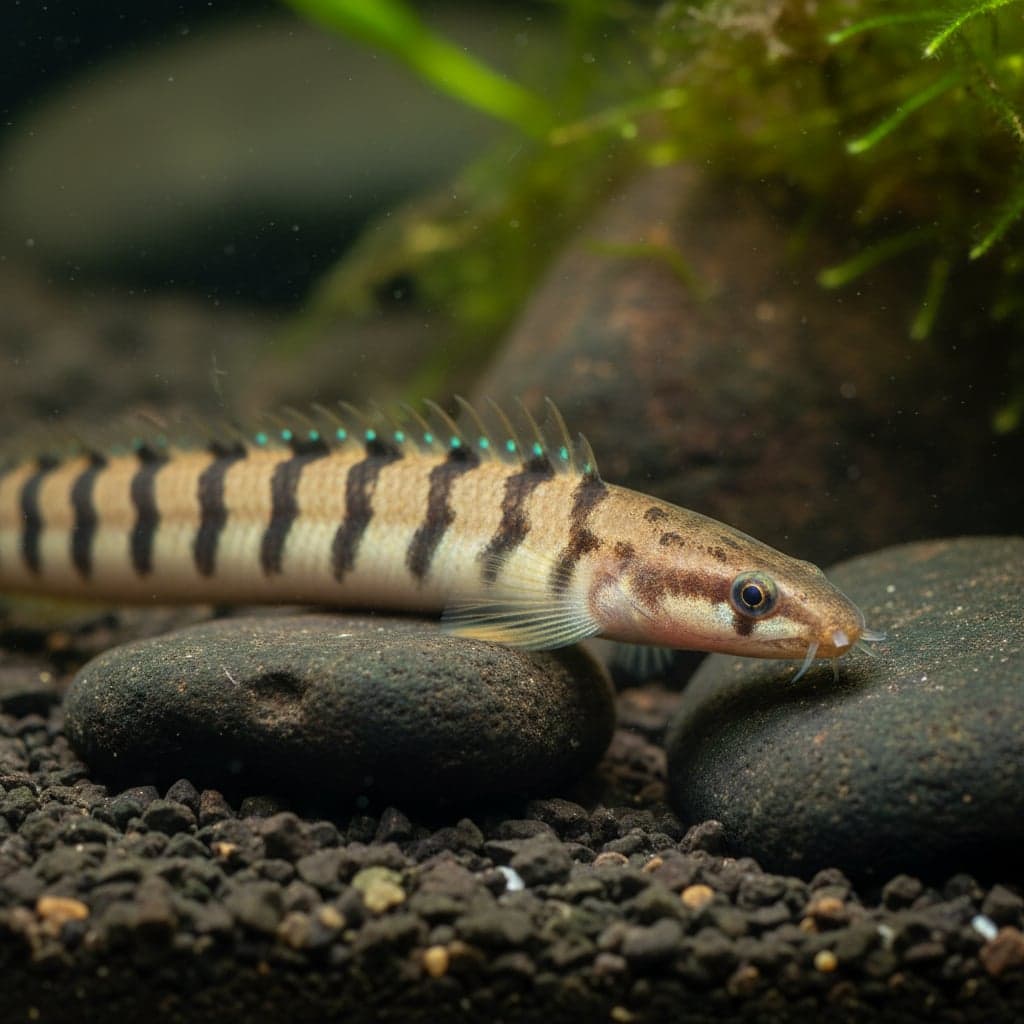
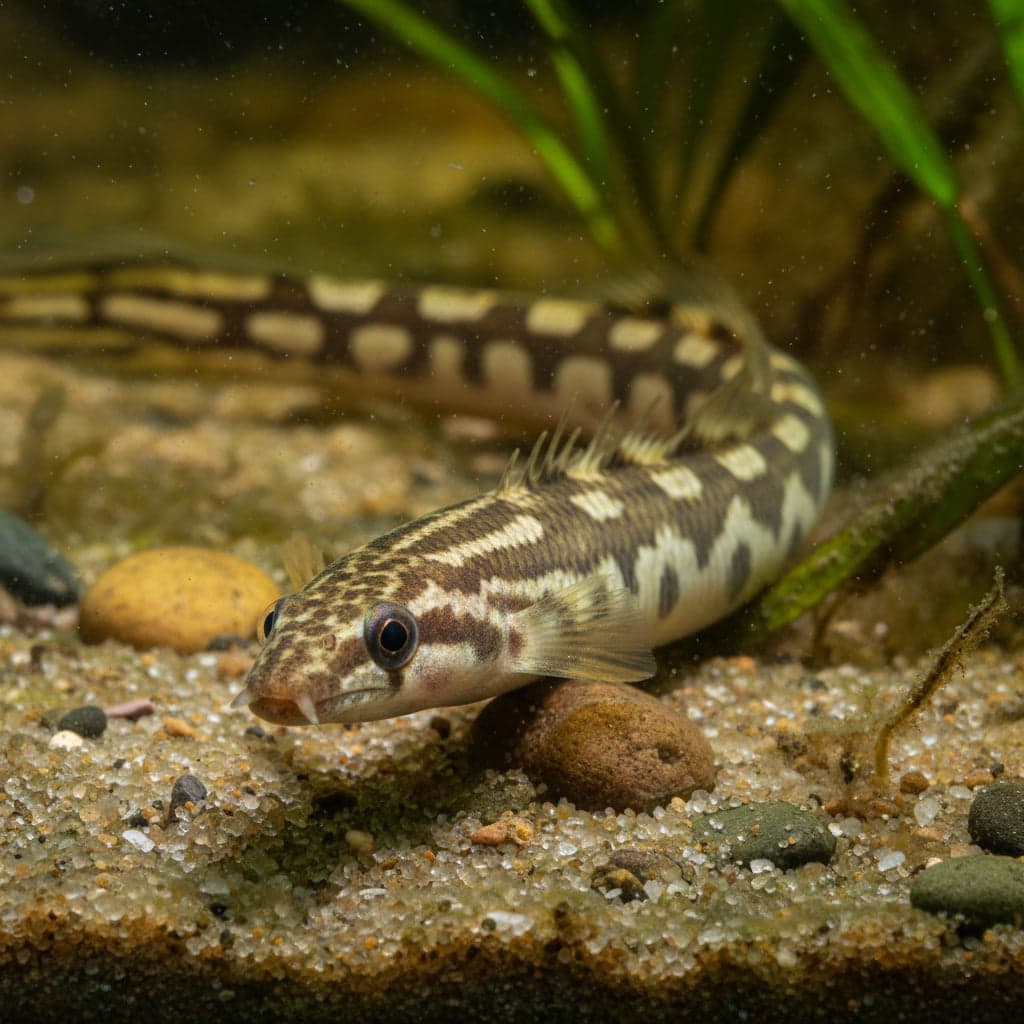
The Half-banded Spiny Eel (Macrognathus circumcinctus) is one of the best-suited "eels" for the home aquarium. Unlike its massive cousins like the Fire Eel, the Half-banded remains small and manageable, reaching a maximum length of about 6-8 inches (15-20 cm). It features a long, slender body with a distinctive "trunks snout" and a series of dark vertical bands that extend only halfway down its flanks.
It is a nocturnal predator with a shy but inquisitive personality. Once acclimated, they often become quite bold, peering out from their hiding spots or even learning to take food from their owner's hands.
Natural Habitat & Origin
This species is native to Southeast Asia, specifically the Malay Peninsula, Thailand, and the islands of Sumatra and Borneo. They are found in a variety of freshwater habitats, including slow-moving rivers, canals, and flooded fields. They prefer areas with soft, silty or sandy bottoms and plenty of submerged leaf litter and driftwood where they can hide during the day.
Care Requirements
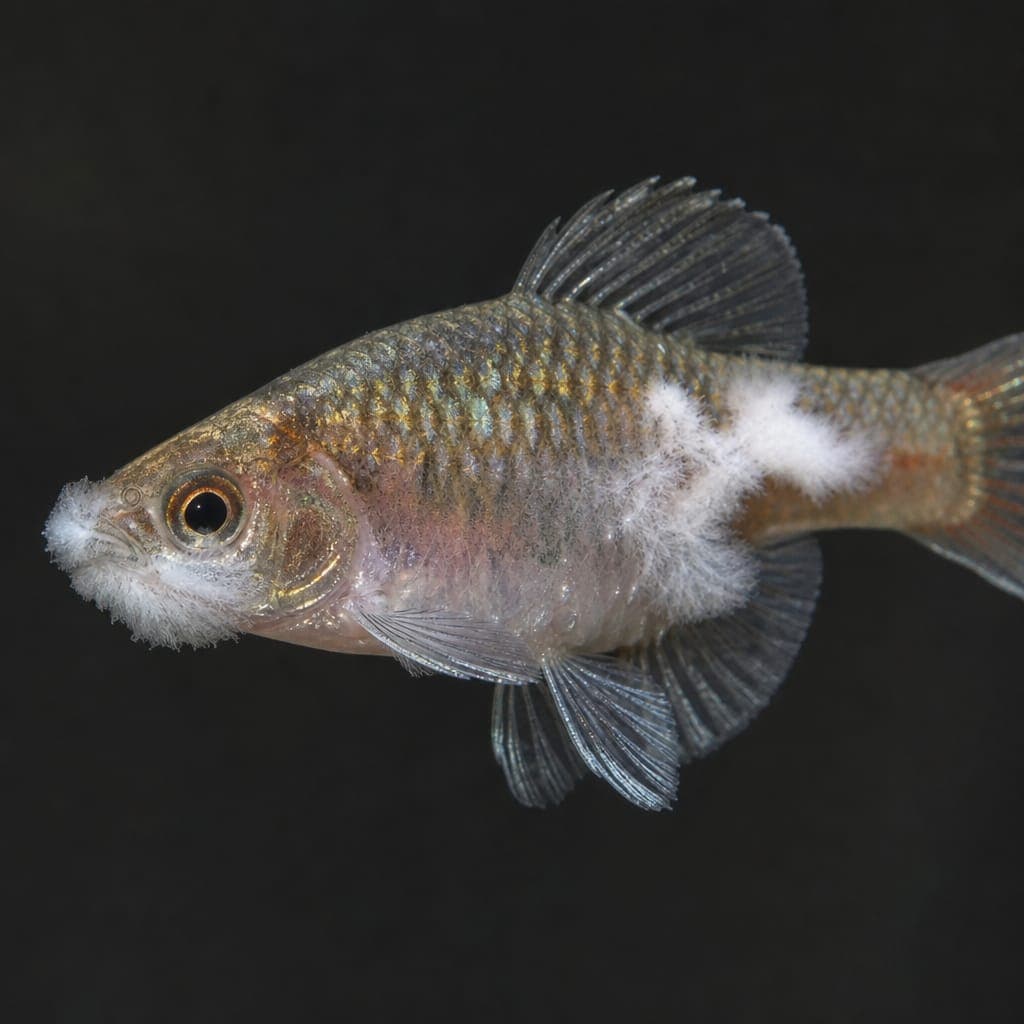
The most critical requirement for the Half-banded Spiny Eel is a soft sand substrate. These fish spend much of their time burrowed in the substrate with only their snout visible. If kept with coarse or sharp gravel, they will scratch their delicate, scale-less skin while trying to burrow, which almost inevitably leads to fatal bacterial or fungal infections.
A minimum tank size of 30 gallons (120L) is sufficient for an adult. The aquarium must be escape-proof. Like all eels, they are notorious escape artists and can find even the smallest opening in a lid. Every hole for pipes or wires must be plugged with sponge or mesh. They prefer subdued lighting and plenty of hiding places in the form of driftwood, PVC pipes, or rocky crevices.
Diet & Feeding
Half-banded Spiny Eels are specialized carnivores, feeding on small invertebrates, insect larvae, and worms in the wild.
In the aquarium, they can be finicky eaters and often refuse dry flakes or pellets. They should be fed a variety of frozen or live foods, such as:
- Bloodworms (a favorite)
- Mysis shrimp
- Brine shrimp
- Small pieces of chopped prawns or earthworms
They are shy feeders and are easily outcompeted for food by fast-swimming tank mates like Barbs or Danios. Feeding them at night or using a "feeding tube" to deliver food directly to their hiding spot is often necessary.
Behavior & Temperament
They are exceptionally peaceful and generally shy. They spend most of the day buried or hidden, becoming active primarily at night. They are not aggressive toward other fish, provided those fish are not small enough to be eaten. While they can be territorial with their own kind in small tanks, they are generally peaceful if provided with enough hiding spots.
Tank Mates
Suitable tank mates include any peaceful, medium-sized fish that share their preference for soft water and subdued lighting:
- Larger Tetras (Congo Tetras, Bleeding Heart Tetras)
- Rasboras and Danios
- Gouramis
- Peaceful Cichlids (like Angelfish or Keyhole Cichlids)
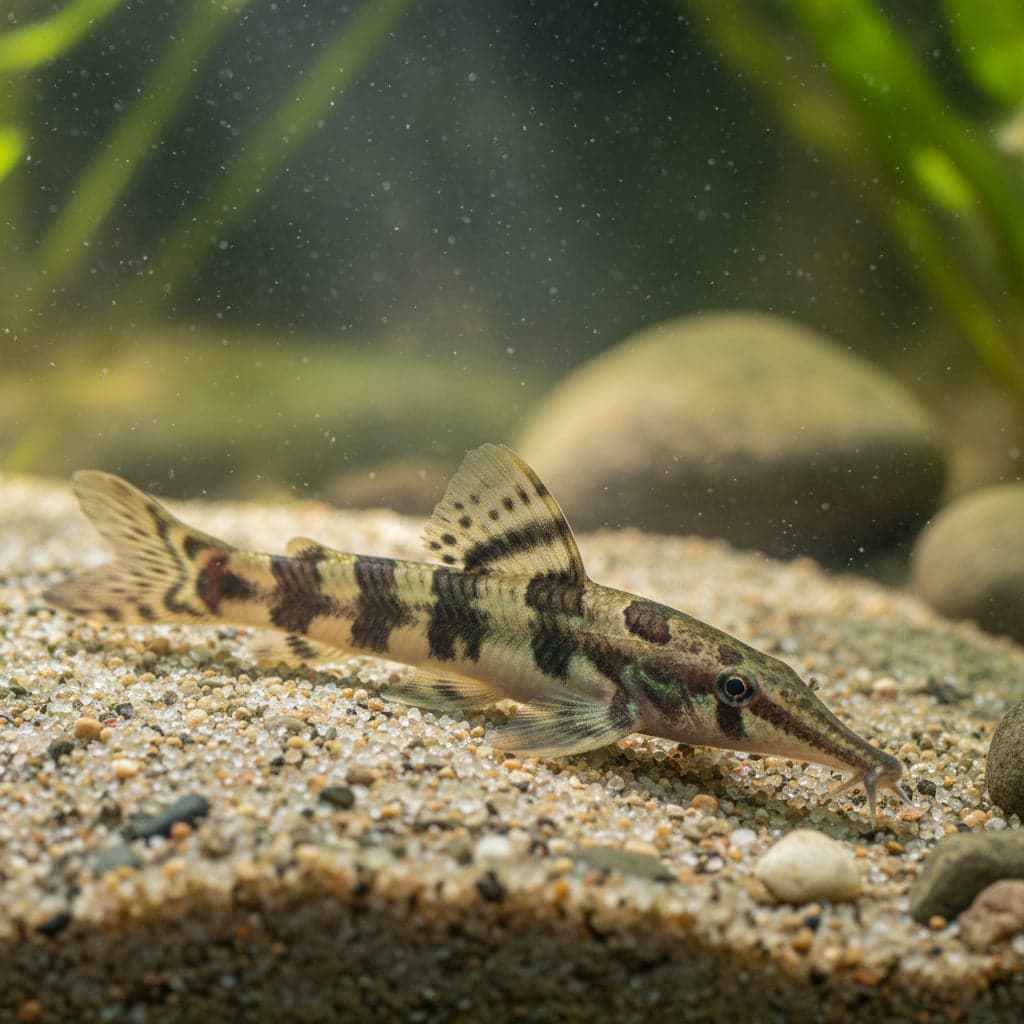
- Larger, peaceful catfish (Corydoras are safe)
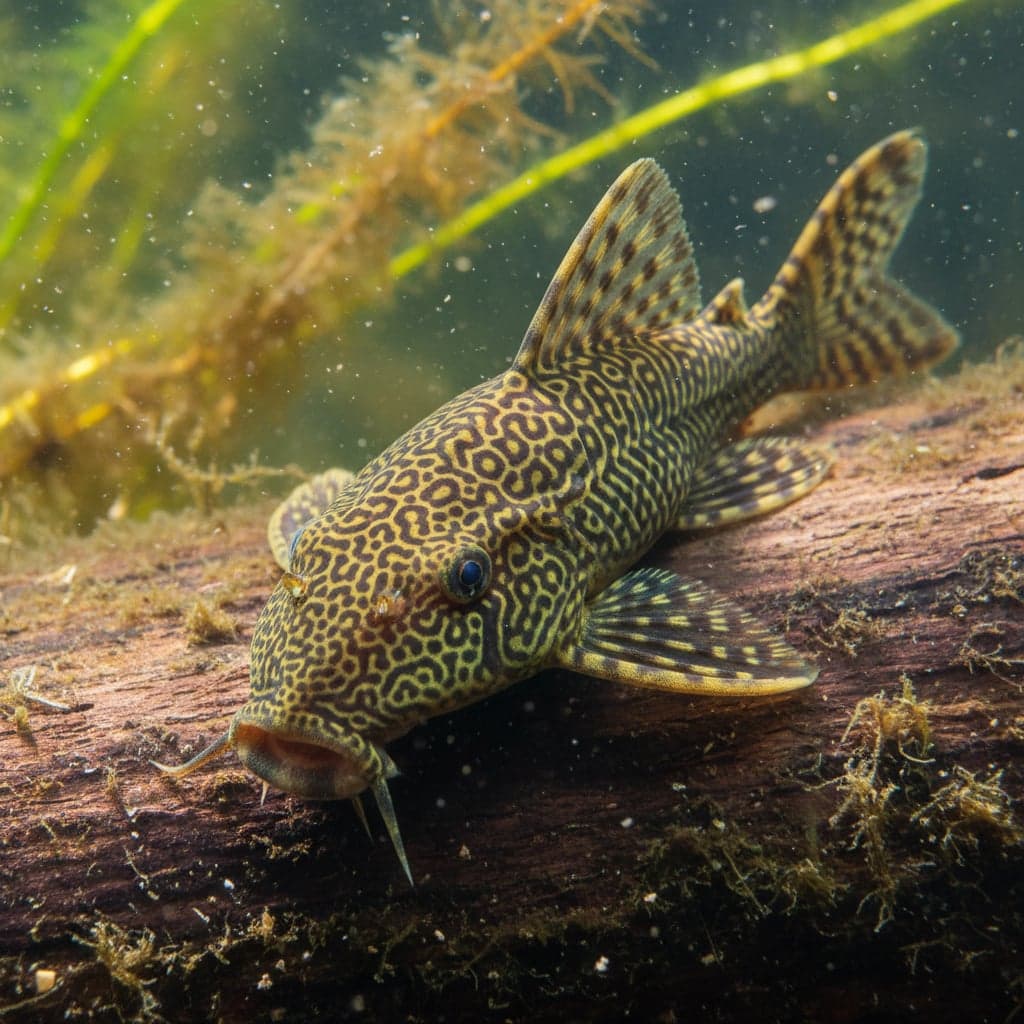
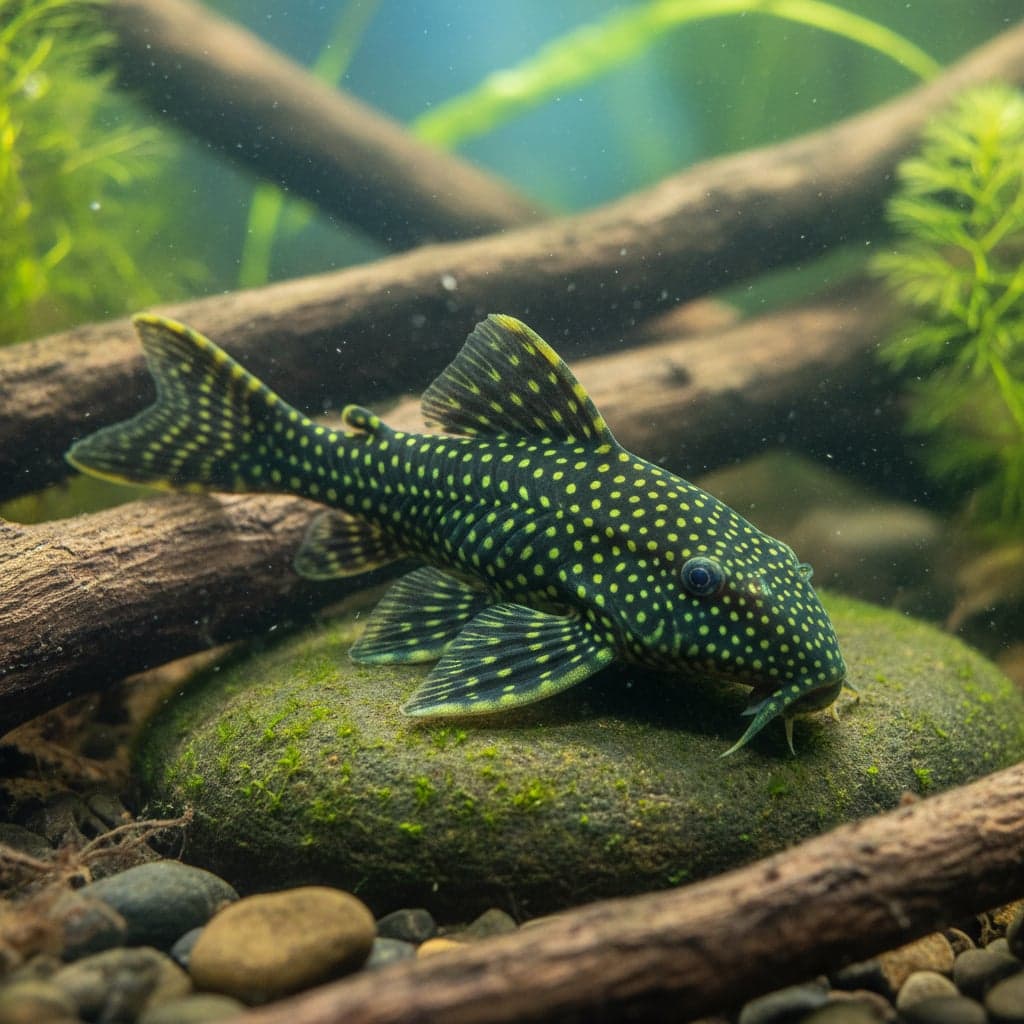
Avoid very small fish like Neon Tetras or baby guppies, as the eel may attempt to eat them at night. Also, avoid housing them with aggressive bottom-dwellers that might compete for the same hiding spots.
Breeding
Breeding Macrognathus circumcinctus in captivity is extremely rare and usually only occurs in large, mature setups. They are believed to be egg-scatterers, laying eggs among dense vegetation or spawning mops. Like most spiny eels, they require a simulated "rainy season" (large, cool water changes) to trigger spawning.
Common Health Issues
The most common health issue is skin infections (fungal or bacterial) caused by inappropriate substrate. They are also highly sensitive to medications, particularly those containing copper or malachite green, due to their lack of traditional scales. Maintaining a very clean sand bed and performing regular water changes is the best way to ensure their health.