Horsefaced Loach: Acantopsis dialuzona
The Horsefaced Loach (Acantopsis dialuzona) is a bizarre, highly specialized sand-dweller from Southeast Asia, famous for its elongated, equine snout and its ability to vanish instantly into the substrate.
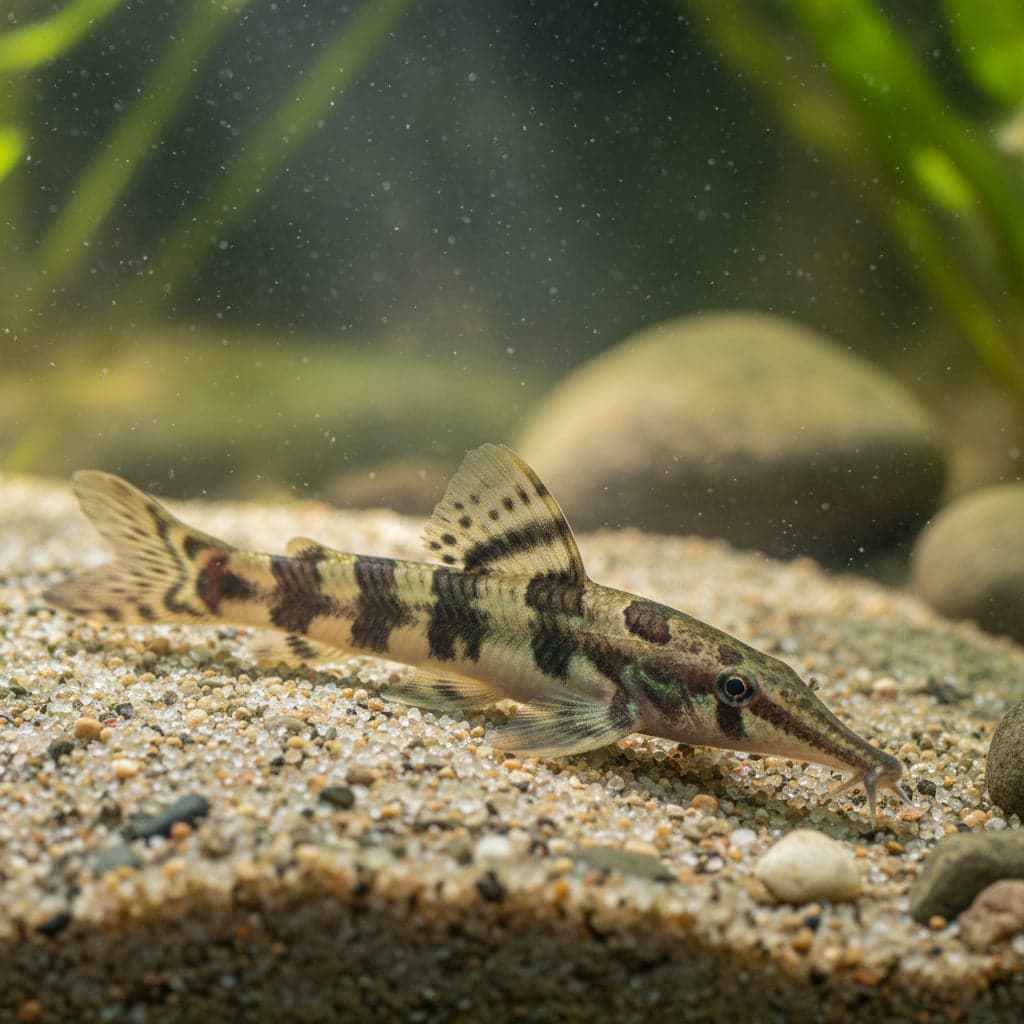
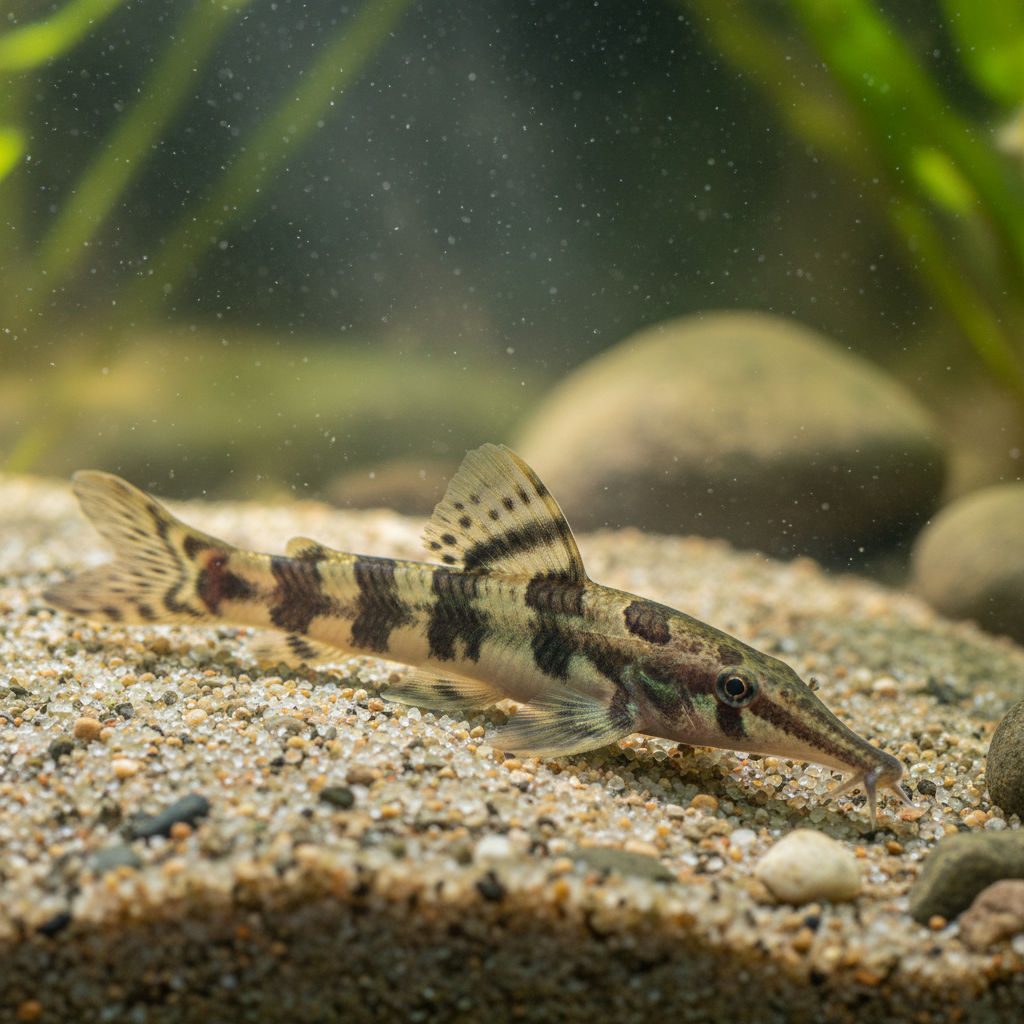
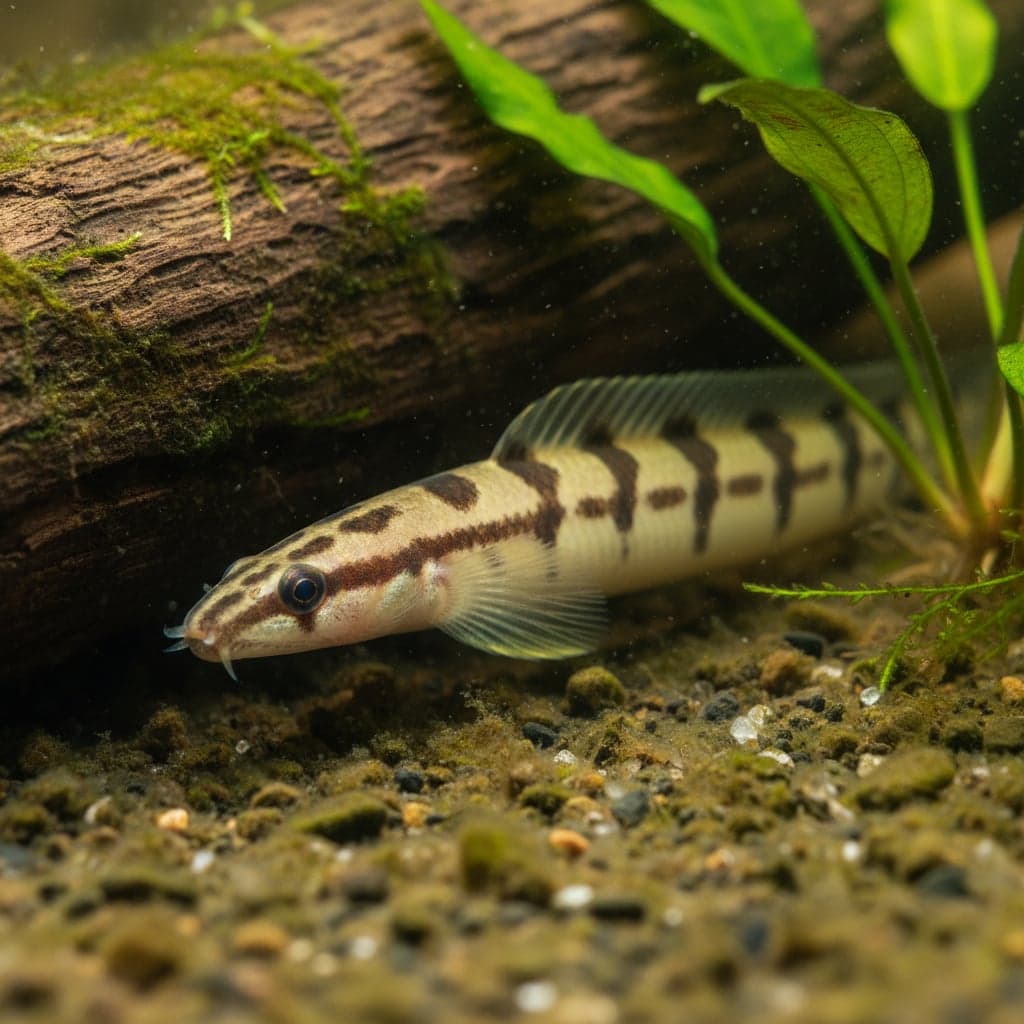
The Horsefaced Loach (Acantopsis dialuzona), also known as the Long-nosed Loach or Banana Loach, is one of the most anatomically unique species in the loach family. It possesses an exceptionally elongated, down-turned snout and a slender, snake-like body that is perfectly adapted for a life spent almost entirely within the substrate. Its coloration is a cryptic mosaic of sandy-grey and dark brown mottling, allowing it to blend seamlessly with the riverbed.
In the aquarium, they are prized for their "magic trick" behavior: catching a glimpse of one is a treat, as they can bury themselves in the sand in the blink of an eye, often leaving only their curious, elevated eyes peek out from the surface.
Natural Habitat & Origin
This loach is widely distributed across Southeast Asia, including Thailand, Malaysia, Indonesia (Sumatra, Java, and Borneo), and Vietnam. They are exclusively found in rivers and streams with deep, sandy substrates, often in areas with moderate current. They avoid rocky or muddy areas, as their specialized gill structure and burying behavior require clean, fine sand to function.
Care Requirements
The single most important requirement for the Horsefaced Loach is a thick layer (at least 2-3 inches) of fine, smooth silica sand. Gravel or coarse sand should NEVER be used, as it will cause severe physical injury to their delicate snout and skin as they attempt to burrow. A minimum tank size of 40 gallons (150L) is recommended, with a large horizontal footprint being more important than height.
Maintain stable parameters: a pH of 6.0 to 7.5 and a temperature of 74°F to 82°F (24°C to 28°C). Filtration should be excellent with moderate water flow to mimic their riverine homes. Scape the tank with smooth river stones and driftwood, but leave large expanses of open sand for the loaches to explore and inhabit. Floating plants are beneficial as they provide the subdued lighting these shy fish prefer.
Diet & Feeding
Horsefaced Loaches are "sand-sifters." They take mouthfuls of sand, sift out micro-organisms and organic matter, and then expel the clean sand through their gill openings.
In captivity, they are not picky but must be fed at the bottom:
- High-quality sinking tablets and pellets
- Frozen foods (Bloodworms, Mysis shrimp, and Blackworms)
- They will eat almost any uneaten food that reaches the substrate
- Note: Ensure they get enough food if they share a tank with more aggressive bottom-feeders like larger catfishes.
Behavior & Temperament
They are peaceful and deeply social. To reduce their natural shyness and encourage more frequent appearances, they should be kept in a group of 3 or more. They are completely non-aggressive toward other species and will coexist peacefully with even the smallest shrimps or fish. During the day, they are mostly inactive and buried, but they become surprisingly active and agile swimmers at night.
Tank Mates
Suitable tank mates include other peaceful Southeast Asian or community species:
- Rasboras, Danios, and Barbs
- Gouramis and Glass Catfish
- Peaceful bottom dwellers like Kuhli Loaches or Corydoras
- They are also excellent companions for Discus and Angelfish due to their peaceful nature and sand-cleaning habits.
Avoid keeping them with very large, aggressive, or predatory fish that might try to "dig them up" or view their slender bodies as prey.
Breeding
Breeding Acantopsis dialuzona in the home aquarium is extremely rare and virtually undocumented. They are likely seasonal spawners that migrate within river systems to spawn. Most individuals available in the hobby are wild-caught.
Common Health Issues
They are relatively hardy if their substrate requirement is met. However, they are sensitive to poor water quality occurring within the substrate. If the sand is not occasionally stirred (though the loaches do some of this themselves), "gas pockets" can form which can lead to skin infections and barbel erosion. Like all loaches, they are sensitive to medications containing copper or high levels of salt.