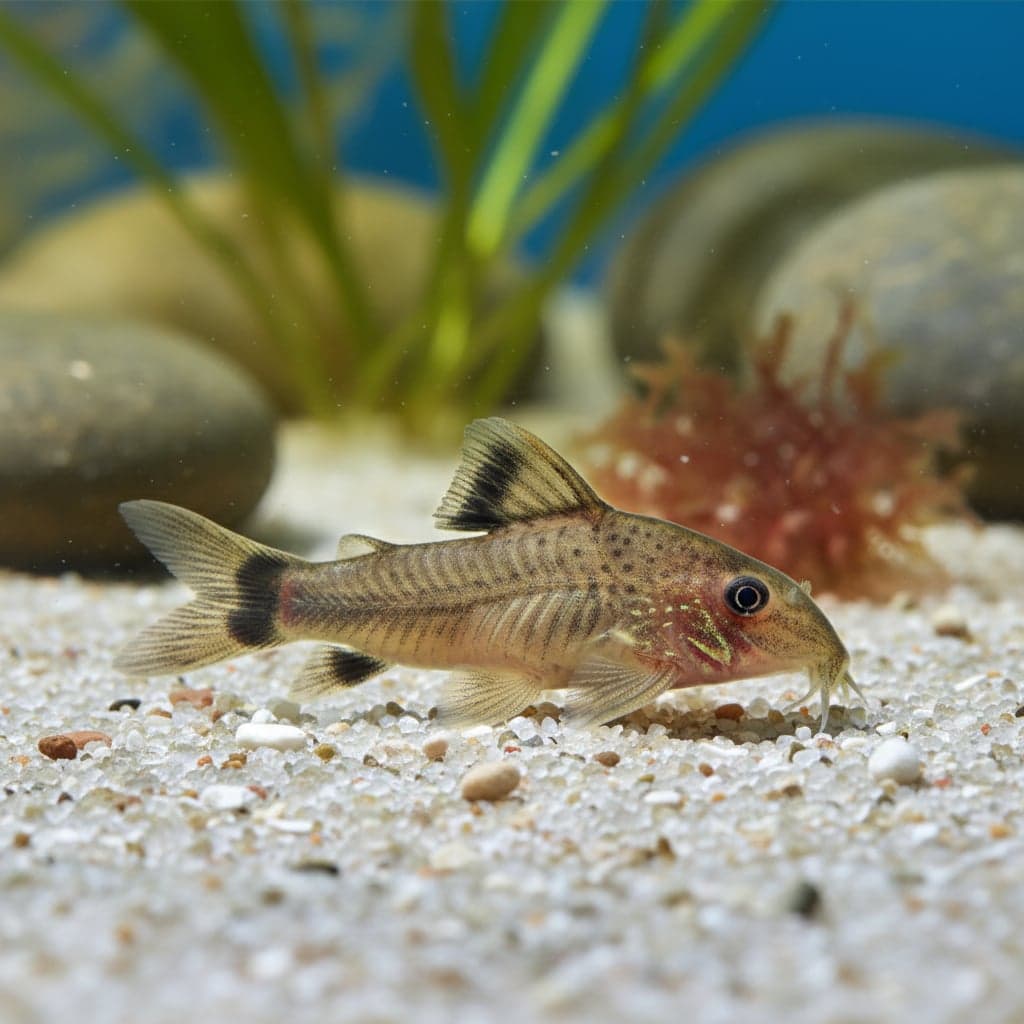
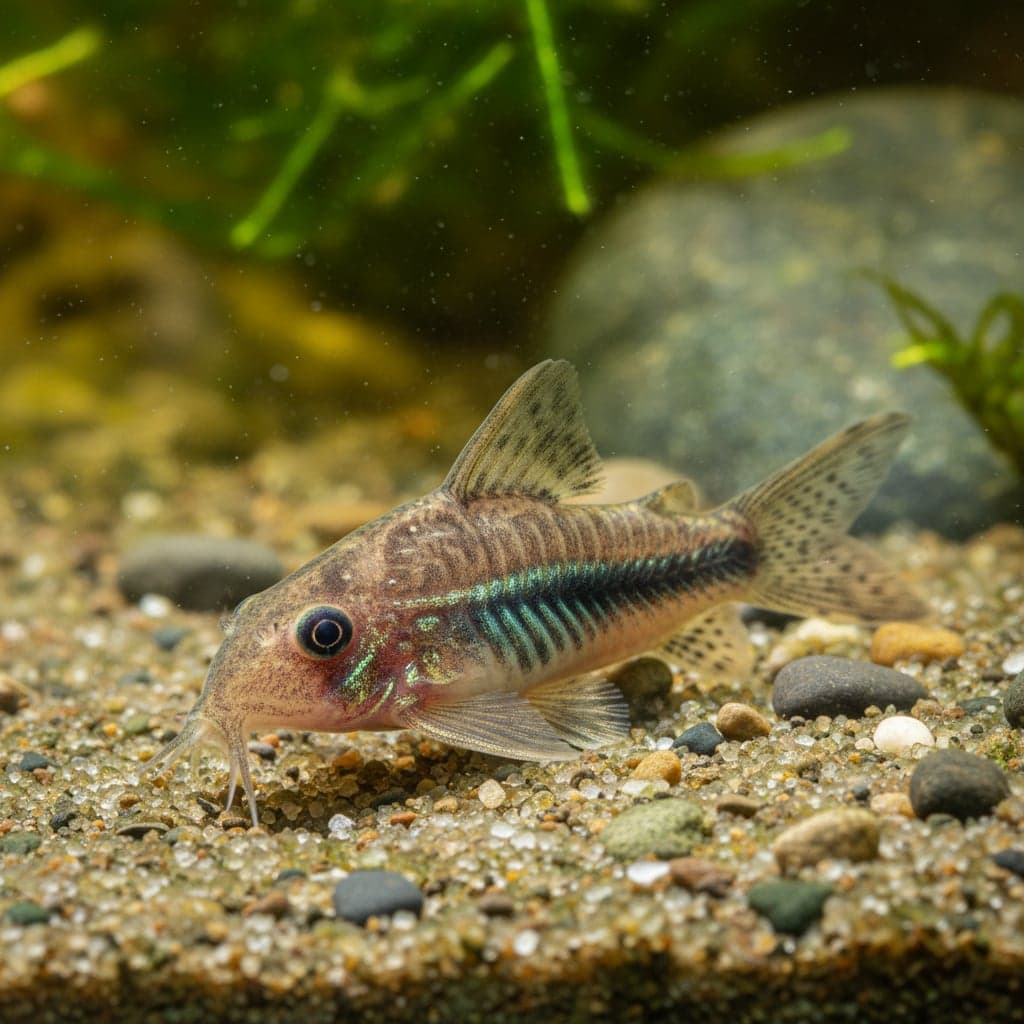
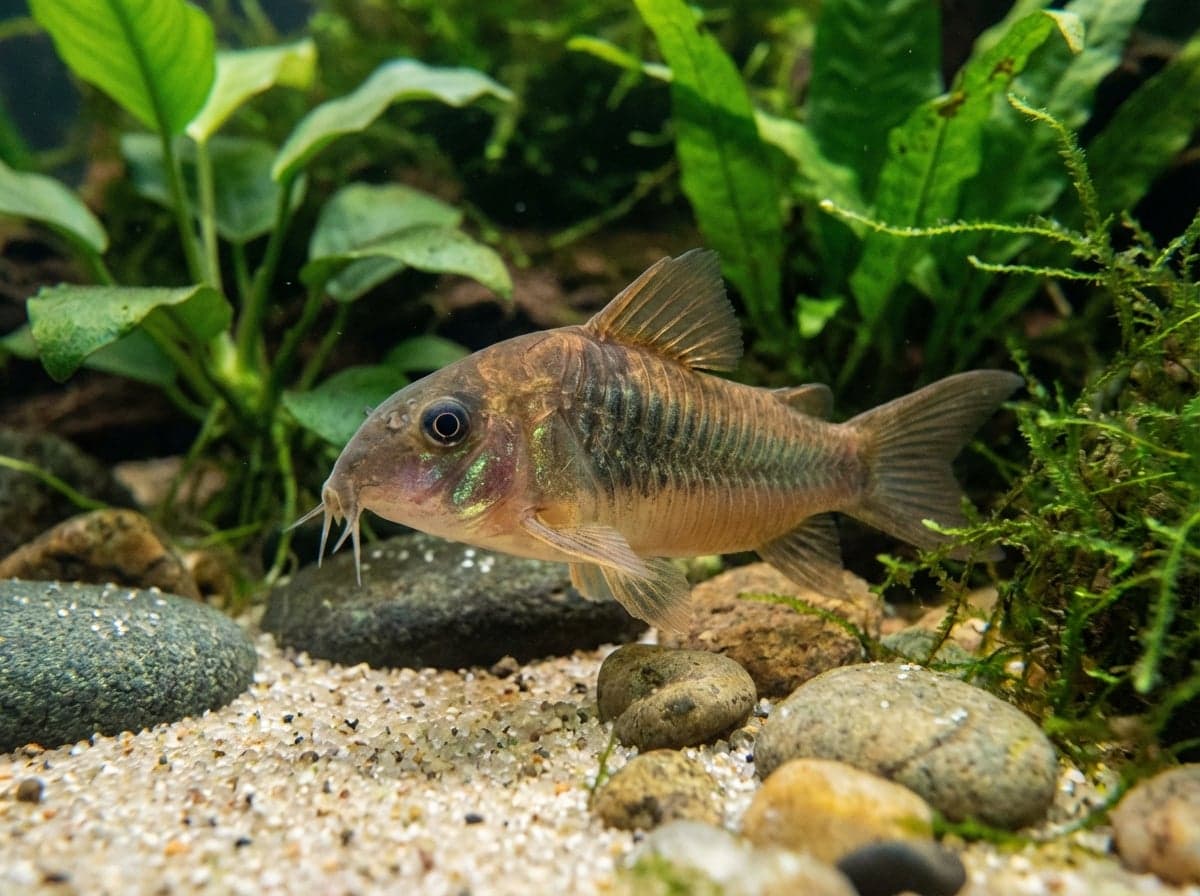
Julii Corydoras: Corydoras julii
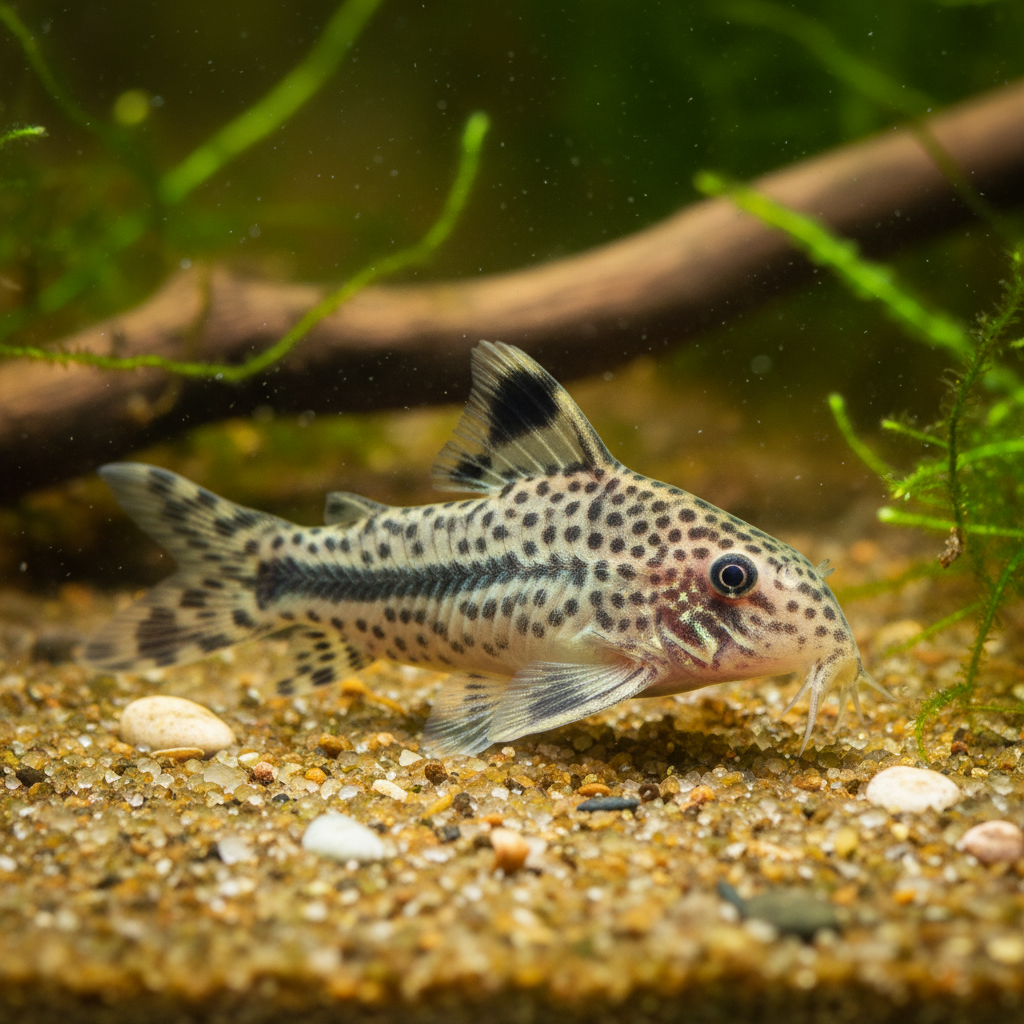
The Julii Corydoras (Corydoras julii) is a celebrated bottom-dweller, renowned for its intricate leopard-like spotting and its peaceful, industrious nature.
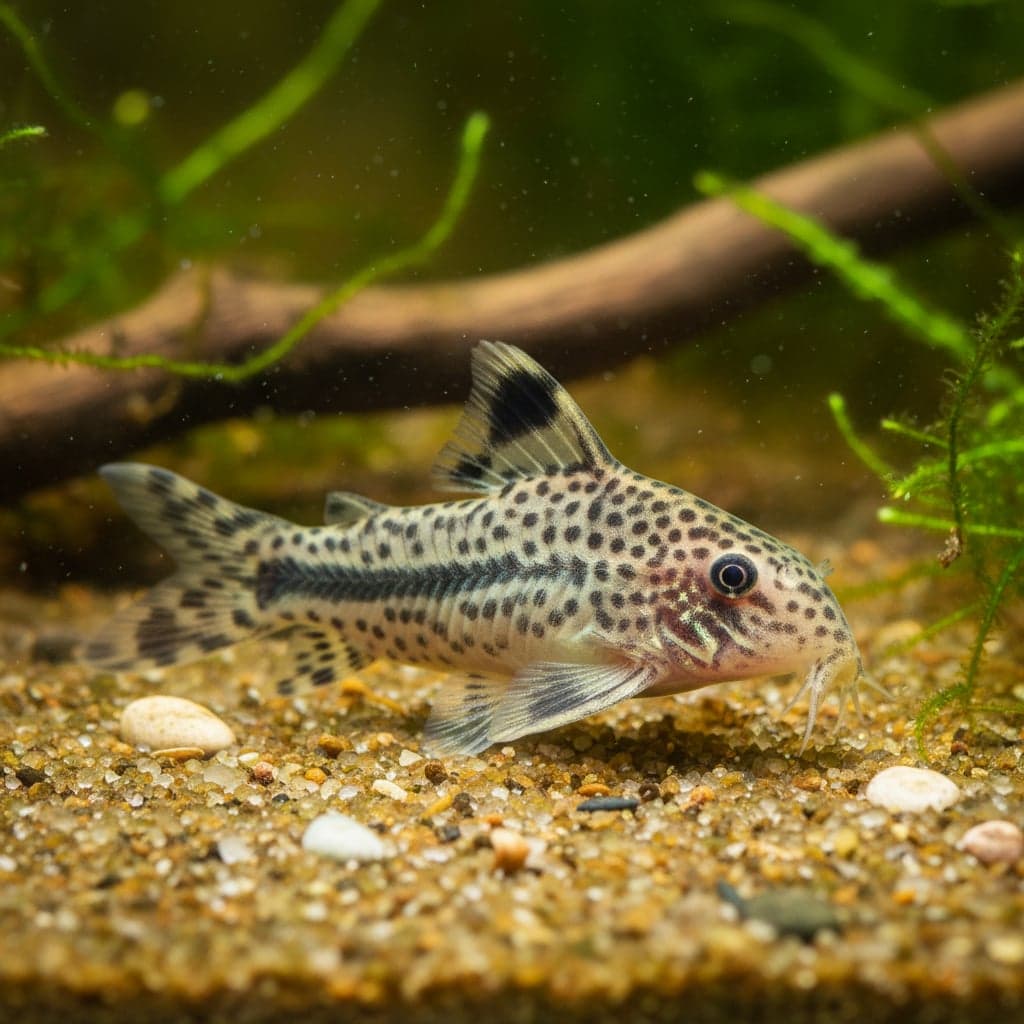
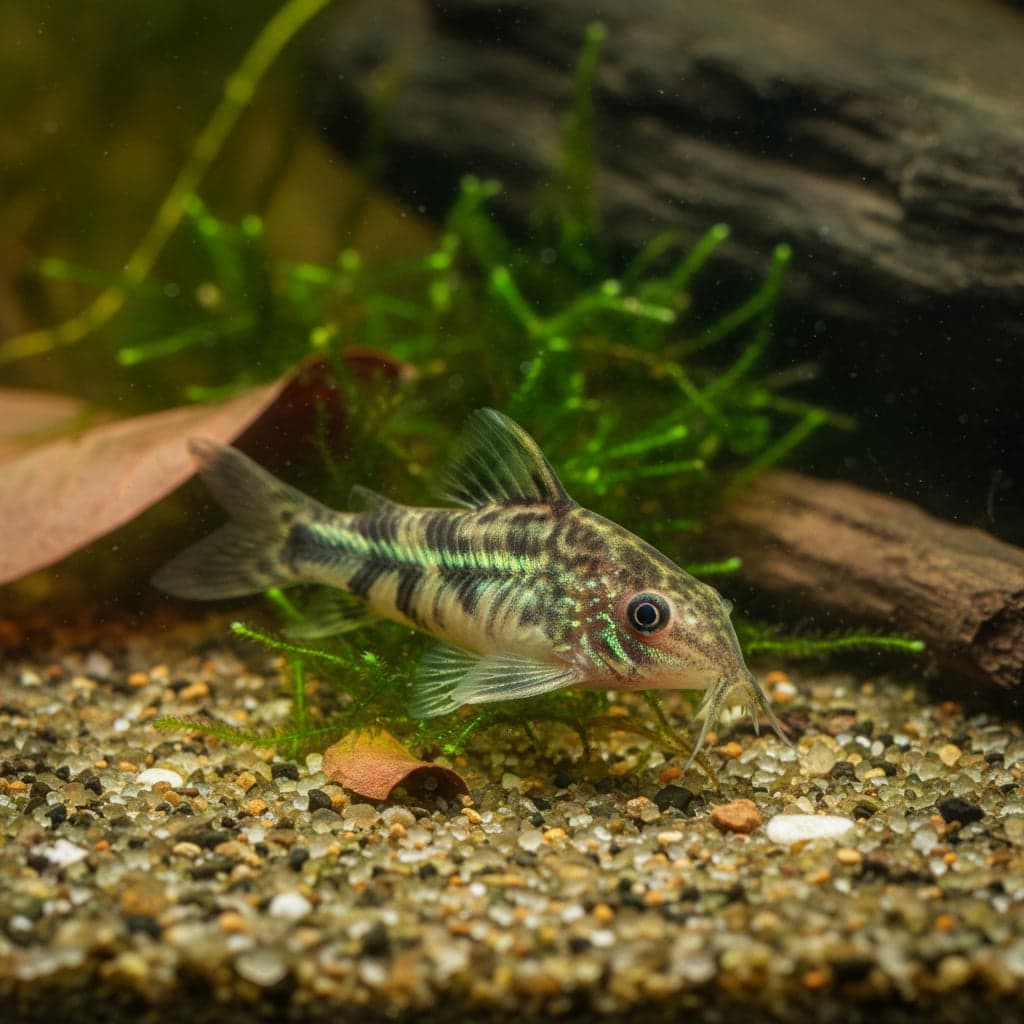
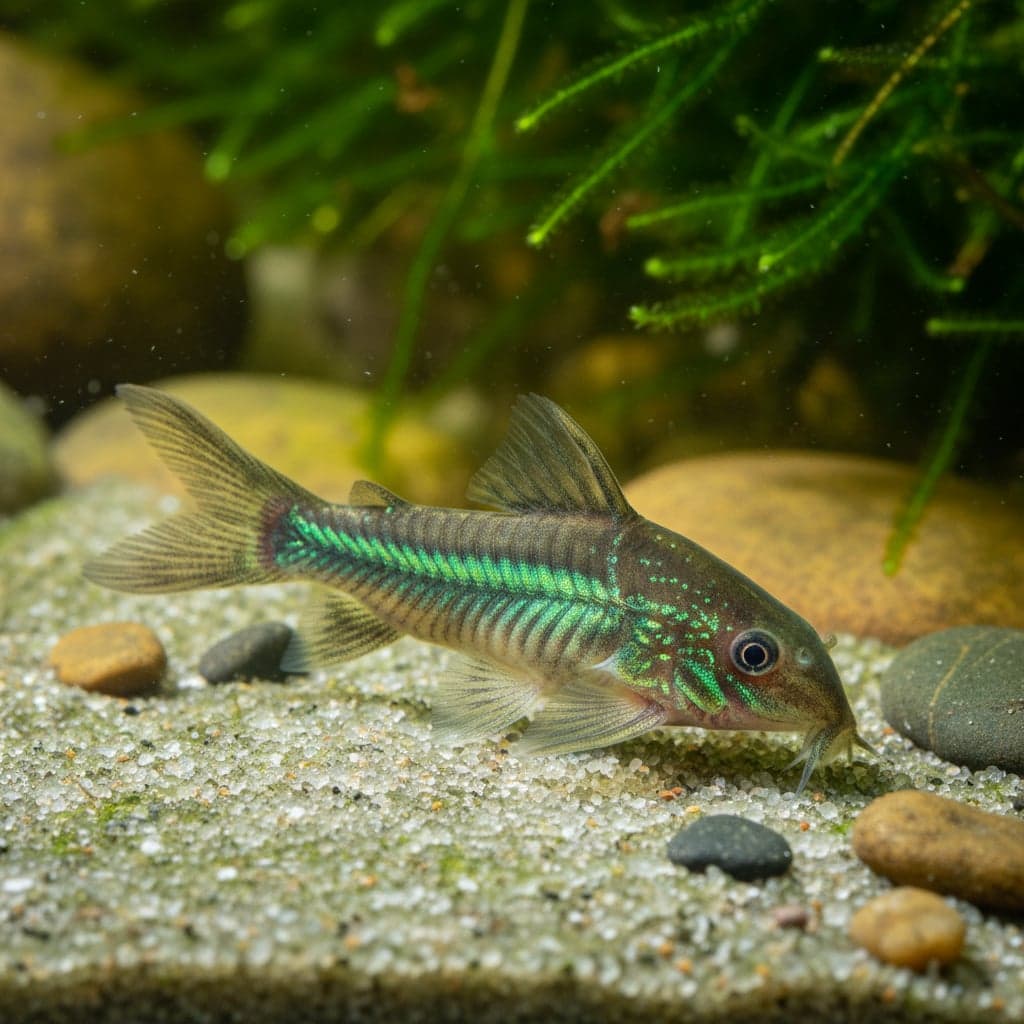
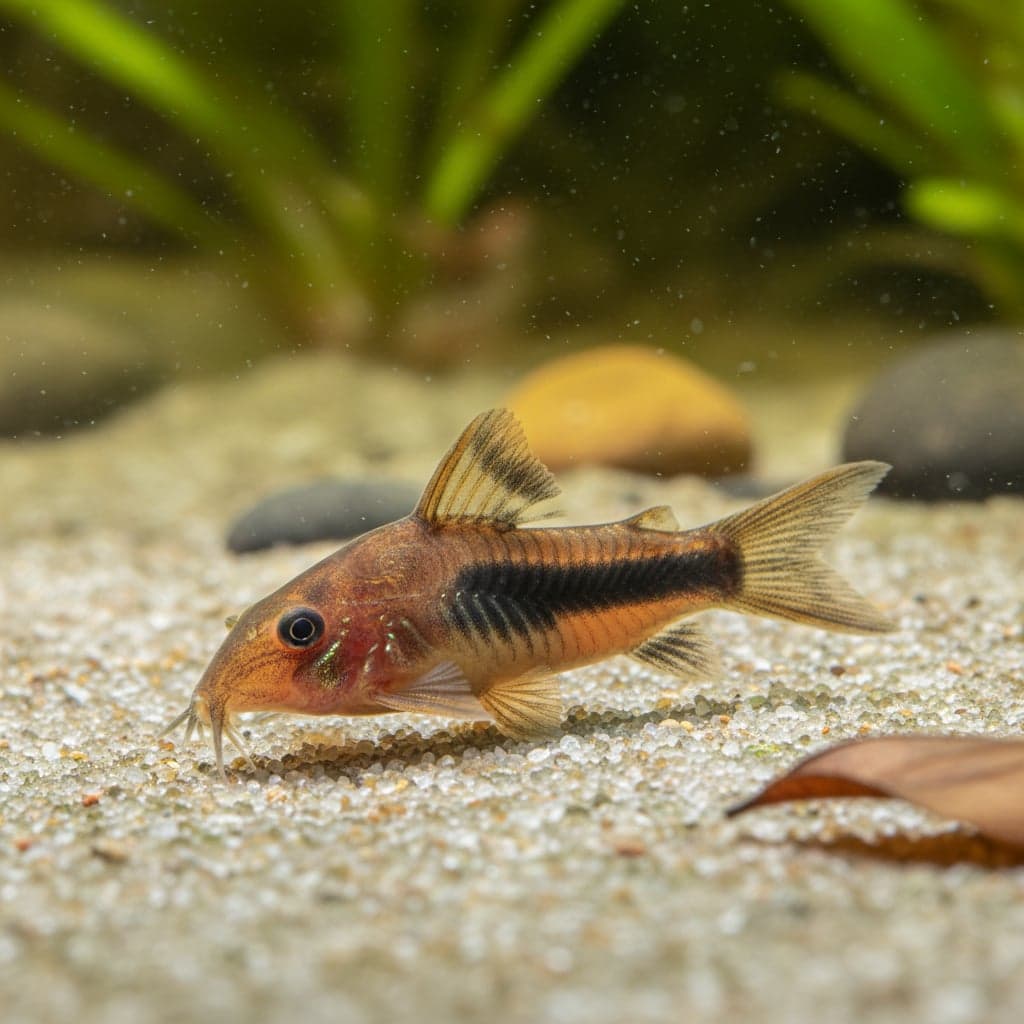
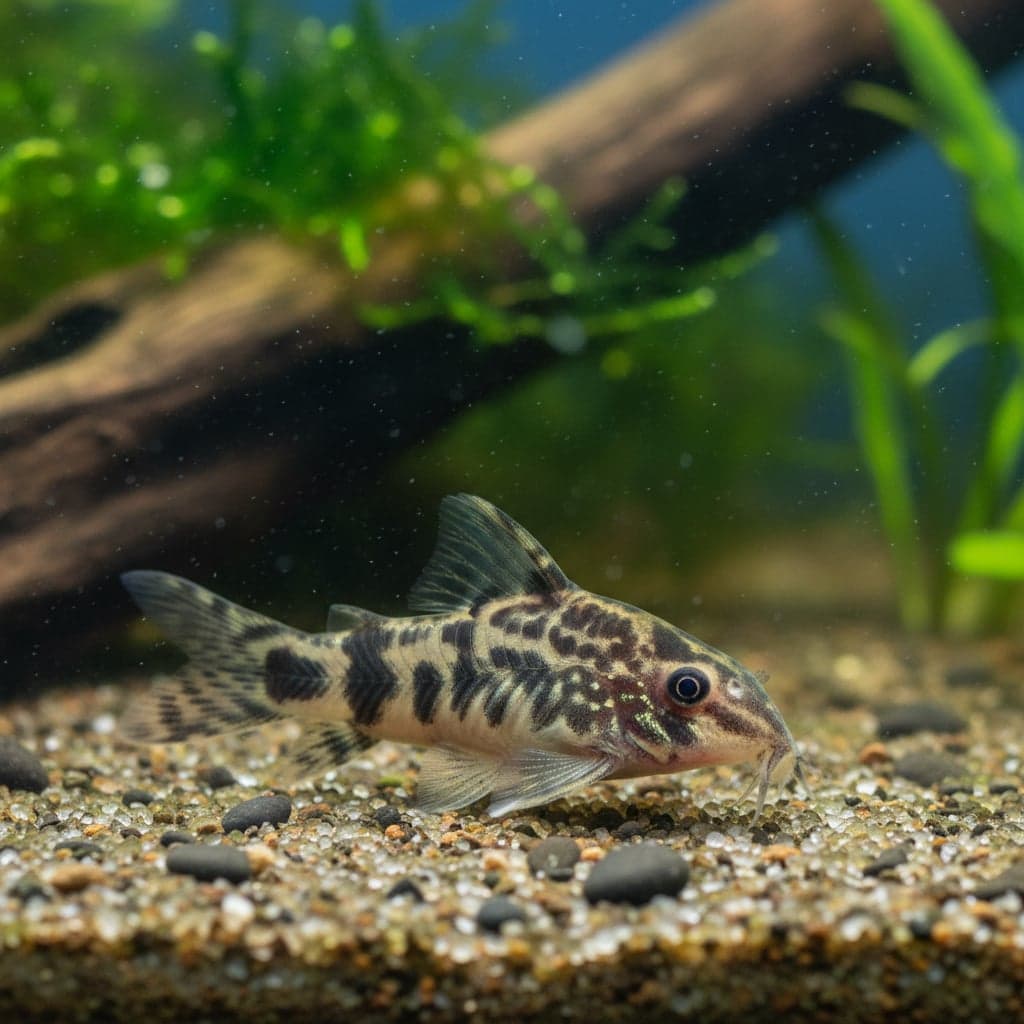
The Julii Corydoras (Corydoras julii) is a true gem of the Amazonian riverbeds. It is defined by its stunning, intricate pattern: a soft, silver-white body adorned with a dense galaxy of fine, jet-black spots that are particularly distinct on the head. Unlike many other Corydoras, the Julii is a master of "fine-detail" camouflage. It is often confused with its close relative, C. trilineatus (the Three-stripe Cory); however, the true Julii features separate, fine dots on its face, whereas the Trilineatus has connected, maze-like lines. In the aquarium, they are the ultimate "cleaning crew," spending their lives sifting through the substrate with their delicate barbels, adding a layer of constant, peaceful motion to the bottom of the tank.
They are social animals that thrive in groups, where they can be seen "winking" at their keepers—a unique behavior where they rapidly tilt their eyes downward. For any community aquarist, a school of Julii Corys is a charming and essential addition that brings high-contrast beauty and functional utility to the aquascape.
Natural Habitat & Origin
Corydoras julii is native to northeastern Brazil, specifically the coastal river systems of the Parnaíba and Itapicuru basins. They inhabit a variety of environments, from slow-moving streams to faster-flowing, clear-water rivers. They are primarily found in the shallow margins of rivers where the substrate is composed of fine, siftable sand and is littered with fallen branches and leaf litter. These areas are characterized by stable, well-oxygenated water and an abundance of small microorganisms hidden within the sand.
Care Requirements
The Julii Corydoras is a hardy and beginner-friendly species, but it has one non-negotiable requirement: fine, soft sand. Their delicate barbels are essential for sensory perception and feeding; sharp gravel or rough substrate will quickly abrade them, leading to infection and the eventual death of the fish. A minimum tank size of 20 gallons (75L) is recommended for a school.
Maintain stable parameters: a pH of 6.0 to 7.5 and a temperature of 72°F to 79°F (22°C to 26°C). They thrive in well-filtered, well-oxygenated water. The tank should be heavily planted with plenty of open sand areas and shaded retreats provided by driftwood or leaf litter. They are sensitive to salt and many copper-based medications, so caution is required when treating the tank.
Diet & Feeding
They are active omnivores and dedicated scavengers. While they will eat leftover flakes that reach the bottom, they should not be treated as "garbage disposals."
To ensure long-term health, provide a specialized diet:
- High-quality sinking catfish pellets and wafers are the staple.
- They relish live or frozen foods: Bloodworms, Tubifex, and enriched Brine Shrimp.
- Tip: Feeding just before the lights go out is an excellent way to ensure they receive adequate food without competition from faster mid-water fish.
- Variety is key to maintaining their high-contrast spotting and overall vigor.
Behavior & Temperament
They are peaceful and highly social. They should never be kept alone; a group of 6 or more is essential for them to feel secure and exhibit their natural behaviors. When kept in a group, they will forage together, often moving in a synchronized "line" across the sand. They are entirely non-aggressive and can be kept with even the smallest and most delicate of tank mates. They are active during the day and are famous for their "mad dashes" to the surface to gulp air—a completely normal behavior for all Corydoras.
Tank Mates
Suitable tank mates are virtually any small to medium-sized peaceful species:
- Tetras (Neons, Cardinals, Rummy-noses)
- Rasboras
- Dwarf Cichlids (Apistogramma)
- Livebearers (Guppies, Platies)
- Shrimp and Snails
Avoid keeping them with large, aggressive fish or with boisterous bottom-dwellers that might outcompete them for space and food.
Breeding
Breeding Corydoras julii in captivity is a rewarding project. They are egg-depositors; after a heavy water change with slightly cooler water (simulating the rainy season), the pair will engage in a "T-position" spawning ritual. The female will carry a few eggs between her pelvic fins and deposit them onto a flat surface, such as a large leaf or the glass of the tank. The eggs hatch in 3 to 5 days. The tiny fry can be raised on liquid fry food and later baby brine shrimp.
Common Health Issues
The primary health concern is barbel erosion and infection caused by improper substrate. They are also sensitive to poor water quality, specifically high nitrate levels, which can lead to stress and a weakened immune system. Maintaining a clean environment with a soft, sandy substrate and performing regular water changes is the best way to ensure their fine leopard spots remain radiant and their interactive personalities continue to charm.