Jurupari Eartheater: Satanoperca jurupari
The Jurupari Eartheater (Satanoperca jurupari) is a majestic and peaceful South American cichlid, legendary for its elegant, long-nosed profile and its constant, hypnotic sand-sifting behavior.
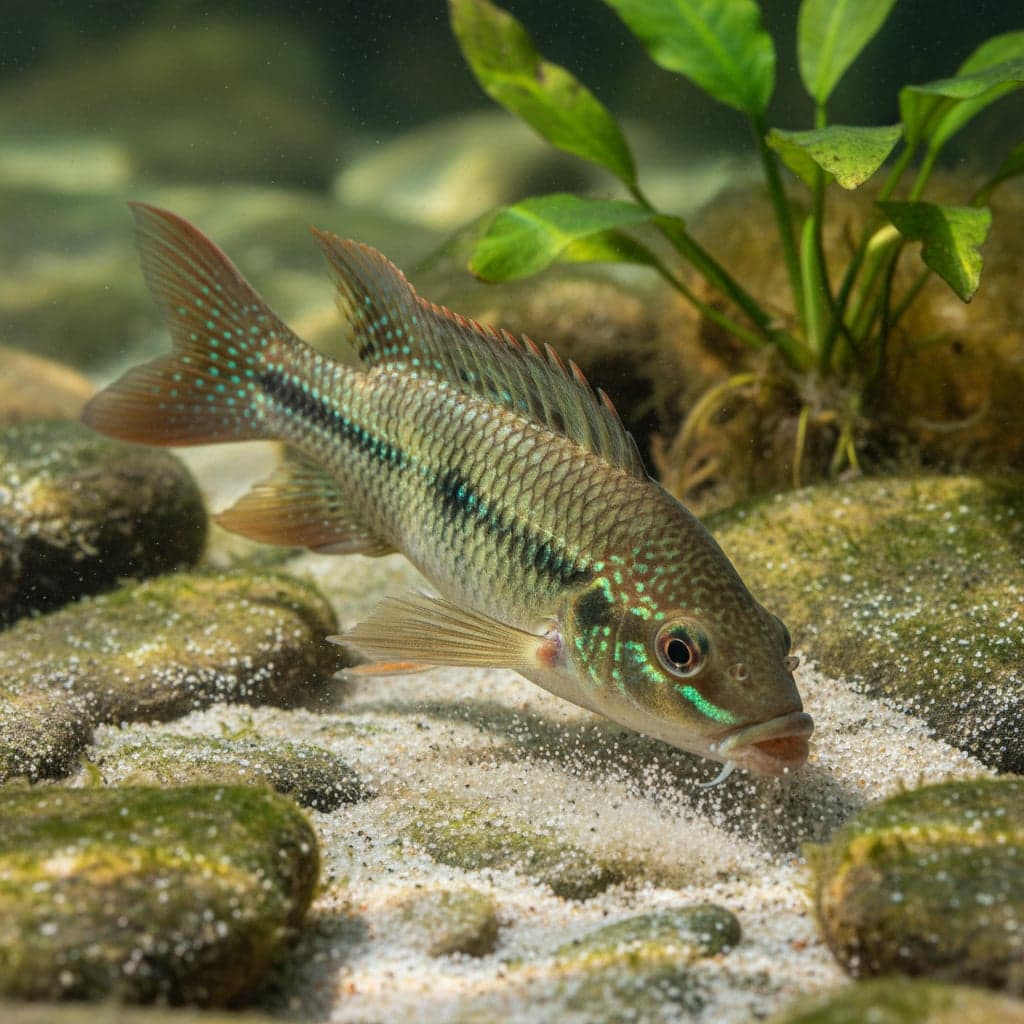
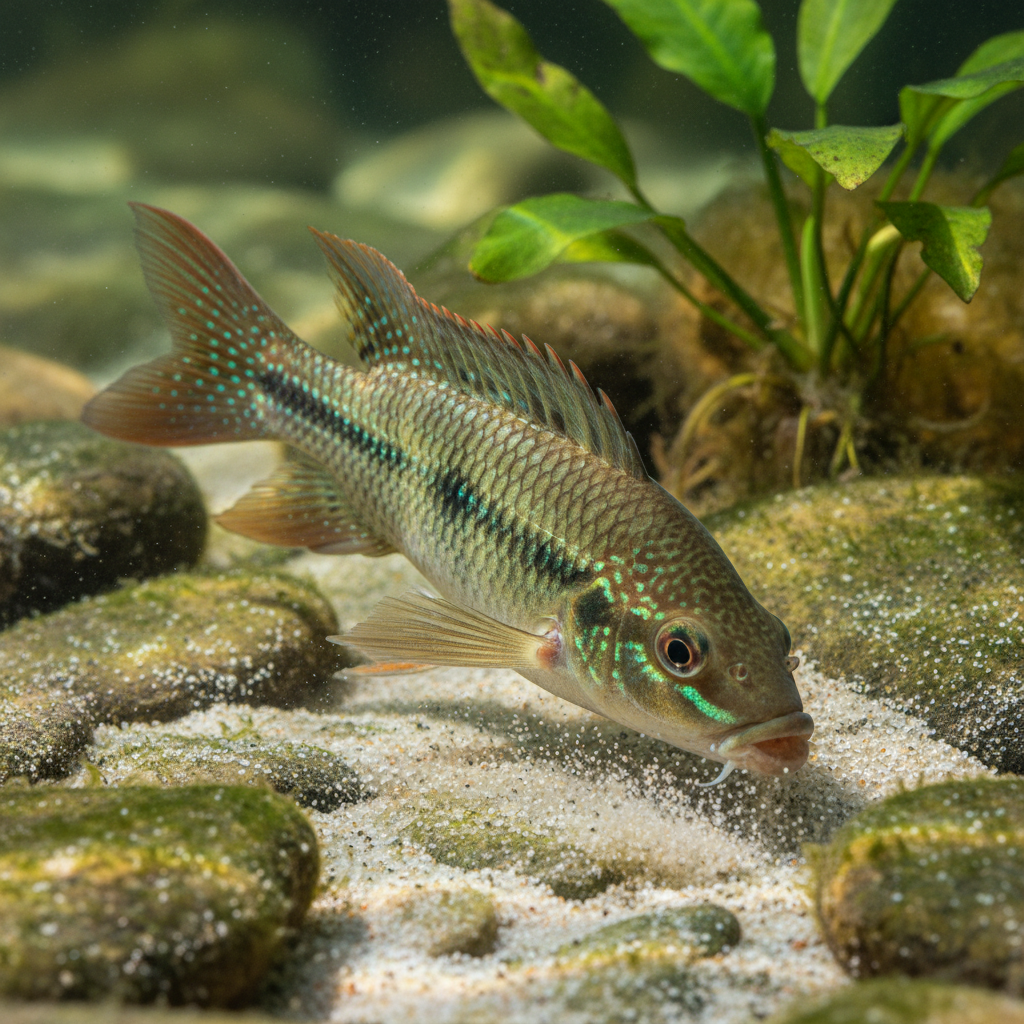
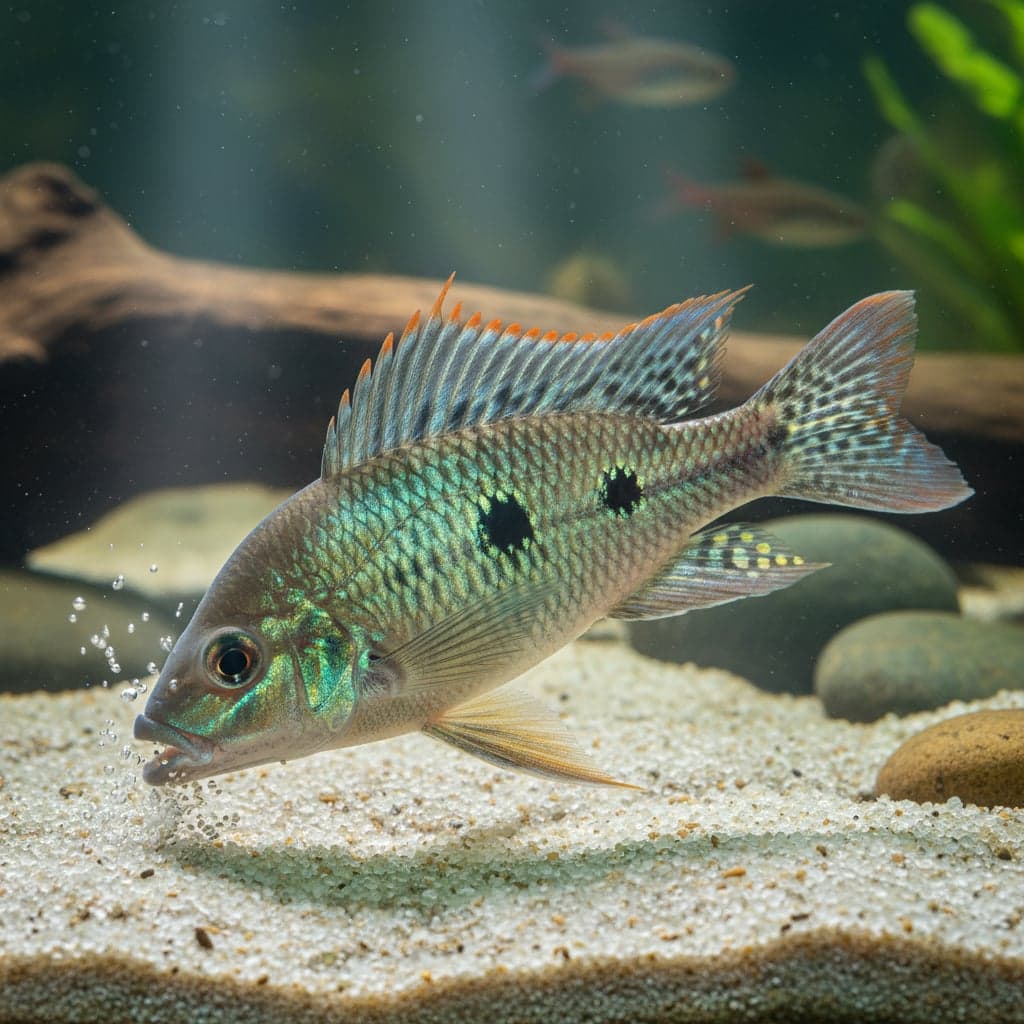
The Jurupari Eartheater (Satanoperca jurupari) is a portrait of elegance and tranquility. Known as the "Demon Fish" (a misinterpretation of its local name "Jurupari," which refers to a forest spirit), it is ironically one of the most peaceful and social cichlids in the Amazon. It is defined by its incredibly long, pointed snout and high-set, expressive eyes. Its most famous trait is its feeding method: it takes large mouthfuls of sand, carefully sifts out tiny organisms and food particles through its gills, and then expels the clean sand in a graceful plume. Adorned with subtle metallic spangles and a soft, olive-to-golden body, it is a mesmerizing centerpiece that adds a unique vertical and behavioral dynamic to large, peaceful aquascapes.
In the aquarium, they are prized for their social complexity and their gentle nature. Unlike many cichlids, they do not tear up plants or harass smaller fish. They are true "specialists" of the substrate, turning over the sand with a rhythmic, hypnotic efficiency that keeps the bottom of the tank clean and oxygenated.
Natural Habitat & Origin
Satanoperca jurupari has a massive distribution across the Amazon and Orinoco River basins, including parts of Brazil, Peru, and Colombia. They are found in a variety of environments, from fast-flowing clear-water rivers to slow-moving blackwater lagoons. Their preferred habitat is always defined by a thick layer of very fine, white sand along the river margins, often sheltered by massive tangles of driftwood and fallen trees. These areas are characterized by very warm, soft, and slightly acidic water, rich in tannins and organic matter.
Care Requirements
The Jurupari Eartheater is a robust species, but its environment must be carefully considered. The most critical requirement is exceptionally fine sand substrate. They are specialized sifters; any coarse gravel or abrasive substrate will cause severe damage to their delicate mouth and gills, leading to secondary infections and a failure to thrive. A minimum tank size of 55 gallons (200L) is recommended for a pair or small group.
Maintain stable, warm parameters: a pH of 6.0 to 7.5 and a temperature of 78°F to 86°F (26°C to 30°C). They are highly sensitive to nitrates and dissolved organics, so oversized filtration and large, frequent water changes are essential. The tank should be decorated with massive pieces of driftwood and smooth river stones, leaving large areas of the floor open for sifting. While they do not intentionally eat plants, their constant sifting can uproot delicate species; hardy plants like Anubias or Java Fern attached to wood are the best choices.
Diet & Feeding
They are active omnivores with a focus on small benthic organisms. In the wild, they consume insect larvae, small crustaceans, and organic detritus filtered from the sand.
In captivity, they require a varied diet that settles on the bottom:
- High-quality sinking Cichlid pellets and wafers should be the staple.
- They relish live or frozen foods: Bloodworms, Mysis shrimp, and Daphnia.
- Tip: Because they are slow, meticulous sifters, ensure that faster-moving surface-dwellers do not consume all the food before it reaches the bottom.
- They will benefit from multiple small feedings throughout the day to mimic their natural "grazing" behavior.
Behavior & Temperament
They are peaceful and highly social. They should ideally be kept in small groups of 3 to 5 individuals to observe their natural social hierarchy. Unlike many other cichlids, they are remarkably non-aggressive and will rarely bother even the smallest of tank mates (like Tetras). They spend almost their entire lives on the bottom, in a constant state of sifting. They are highly intelligent and can become quite tame, often recognizing their keeper and approaching the glass during feeding times.
Tank Mates
Suitable tank mates are other peaceful South American species:
- Congo Tetras or large Bleeding Heart Tetras
- Angelfish or Discus
- Corydoras (though ensure they have enough space for sifting)
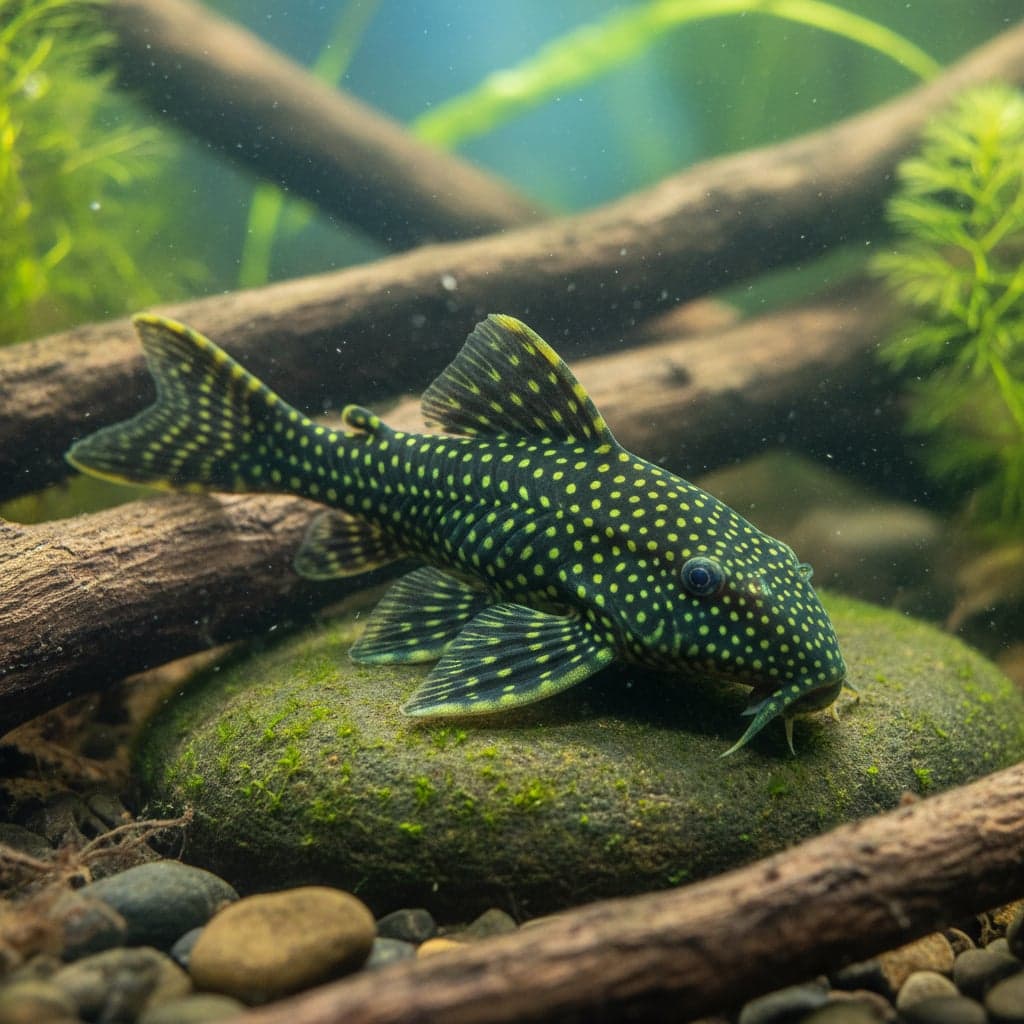
- L-number Plecos
- Other peaceful Eartheaters (Geophagus or Biotodoma)
Avoid keeping them with high-aggression cichlids (like Oscars) or with very fast, boisterous species that will outcompete them for food or stress them with constant activity.
Breeding
Breeding Satanoperca jurupari is a fascinating process. They are delayed mouthbrooders. The pair will clean a flat stone or leaf where the female lays her eggs. Both parents guard the site for about 24-48 hours. Once the eggs are close to hatching, the parents pick them up and carry them in their mouths until they are fully developed and ready to swim. This "mouthbrooding" protects the fry from predators. The fry can be raised on baby brine shrimp once they are released by the parents.
Common Health Issues
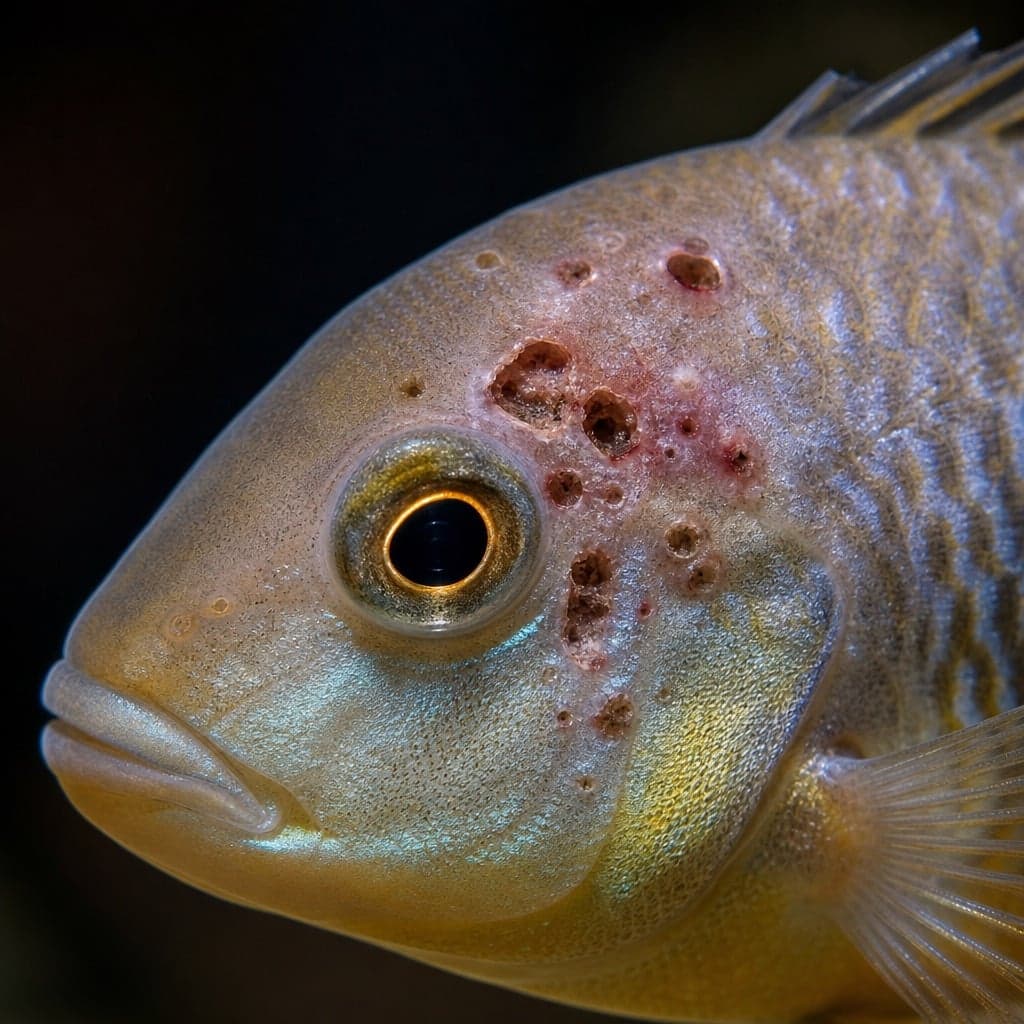
The primary health concern is "Hole-in-the-Head" disease (HITH), which is almost always linked to poor water quality, high nitrate levels, and nutritional deficiencies. They are also prone to gill infections if kept on improper substrate. Maintaining a pristine environment with a soft, sandy substrate and providing a nutrient-dense, varied diet is the best way to ensure their long, elegant snouts and soft metallic spangles remain a highlight of the aquarium.