Kuda (Common) Seahorse: Hippocampus kuda
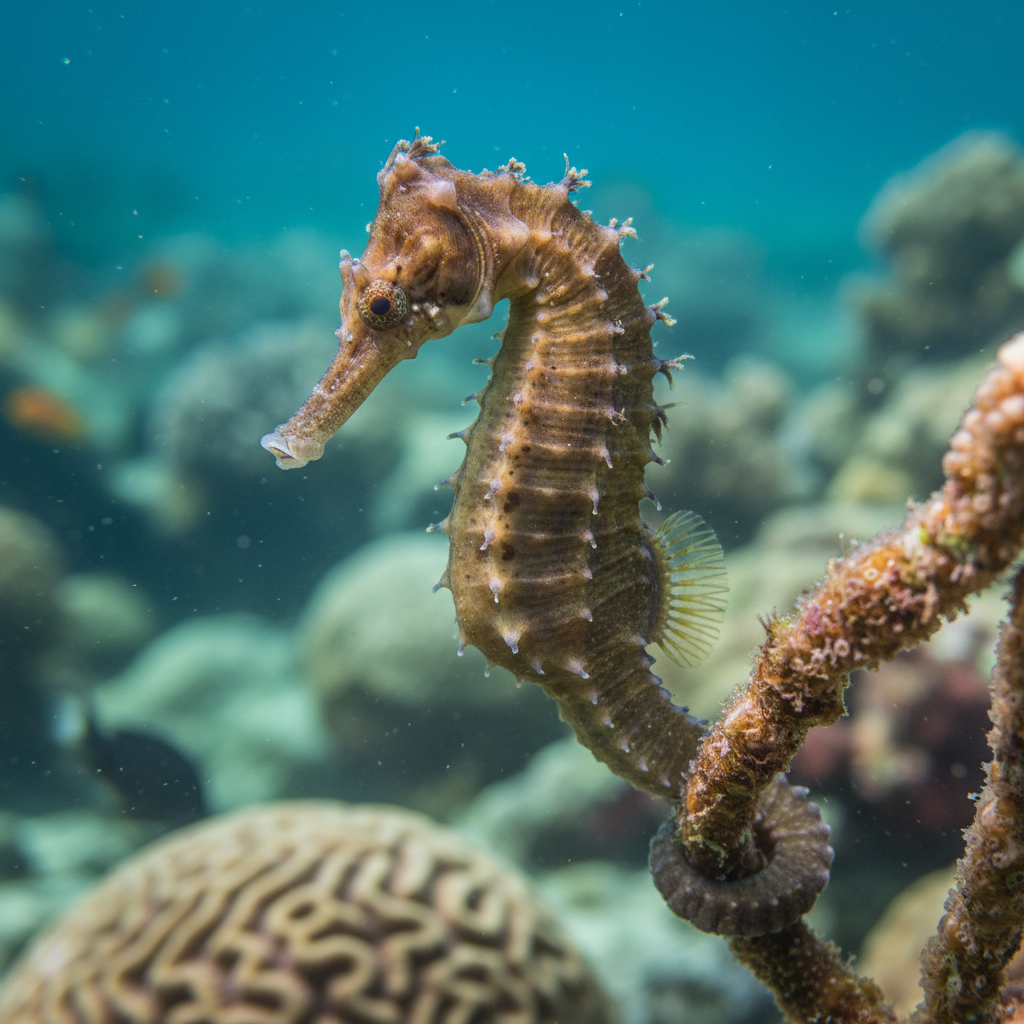
The Kuda Seahorse (Hippocampus kuda) is a master of patient survival, defined by its extraordinary "prehensile" tail and its ability to perfectly mimic the colors of its environment.
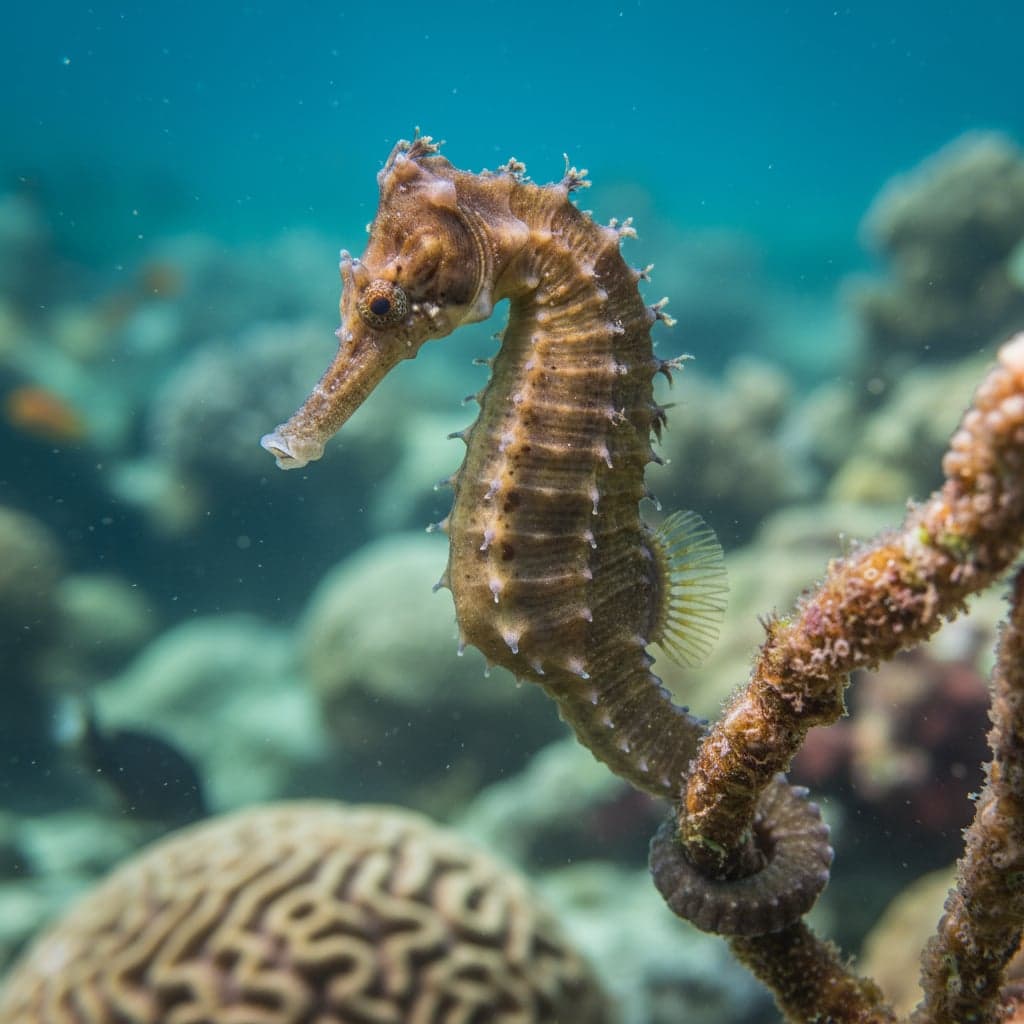
The Kuda Seahorse (Hippocampus kuda), often known as the Spotted or Common Seahorse, is one of the most mesmerizing and biologically unique residents of the ocean. Native to the shallow coastal waters of the Indo-Pacific, it is defined by its legendary upright posture and anatomical specialization. It possesses a horse-like head, an armored body made of bony plates, and a powerful prehensile tail that it uses as an anchor in the variable currents of its habitat. Perhaps its most remarkable trait is its chameleonic ability to change color—ranging from jet black and muddy brown to brilliant yellow and creamy white—to perfectly match the seagrass or coral it is clinging to. For the dedicated marine keeper, the Kuda Seahorse is a delicate masterpiece that requires a slow-paced, specialized environment to flourish.
In the aquarium, they are the epitome of "slow life." They spend most of their day anchored to a branch or seagrass blade, using their independently moving eyes to scan the water for tiny prey while remaining almost perfectly still.
Natural Habitat & Origin
Hippocampus kuda is widely distributed across the Indo-West Pacific, ranging from the Red Sea and East Africa to Japan, Hawaii, and the Society Islands. They are shallow-water specialists, inhabiting coastal bays, lagoons, and estuaries where they are found among seagrass beds, mangroves, and floating macroalgae. They are often found in brackish environments near river mouths, showing a remarkable tolerance for salinity fluctuations. Their reliance on seagrass and mangrove roots makes them highly vulnerable to habitat destruction and climate change in their native tropical waters.
Care Requirements
The Kuda Seahorse is a sensitive species that requires a dedicated "seahorse-only" or highly specialized reef system. A minimum tank size of 30 gallons (120L) is required, but the height of the aquarium is more important than the length, as they require vertical space for their unique swimming and mating rituals.
Maintain stable marine parameters: a pH of 8.1 to 8.4, a specific gravity of 1.021 to 1.025, and a cooler temperature than a standard reef—ideally 72°F to 78°F (22°C to 26°C). High temperatures can lead to rapid bacterial infections. The aquarium must be filled with "hitching posts": synthetic seagrass, dried gorgonians, or smoothed driftwood branches are essential. Water flow should be gentle and diffuse; they are extremely weak swimmers and can be easily exhausted by high-powered wavemakers. An efficient protein skimmer is essential, as seahorses have no stomach and produce significant waste for their size.
Diet & Feeding
They are specialized ambush carnivores with a high metabolism. In the wild, they consume thousands of tiny crustaceans per day.
In captivity, they require frequent and high-quality feedings:
- Frozen Mysis shrimp are the staple diet. It is critical that they are trained to eat frozen food, as providing live food exclusively is difficult to sustain.
- They have a "passive" feeding style, often spending several minutes inspecting a piece of food before sucking it in with their tubular snout.
- Tip: Use a "feeding station"—a specific shell or bowl in the tank where food is placed. The seahorses will learn to anchor themselves nearby and wait for their meal, which prevents food from being lost in the rockwork.
- They require small feedings 2 to 3 times per day.
Behavior & Temperament
They are extremely peaceful, social, and monogamous. They are almost entirely defenseless and must never be kept with aggressive or fast-moving fish. They form strong bonds with their mates and will often engage in a "morning greeting," where the pair changes color and dances together while intertwined. They are silent, thoughtful observers that rarely venture far from their favorite hitching post.
Tank Mates
Suitable tank mates are limited to the most peaceful, slow-moving species:
- Pipefish (close relatives)
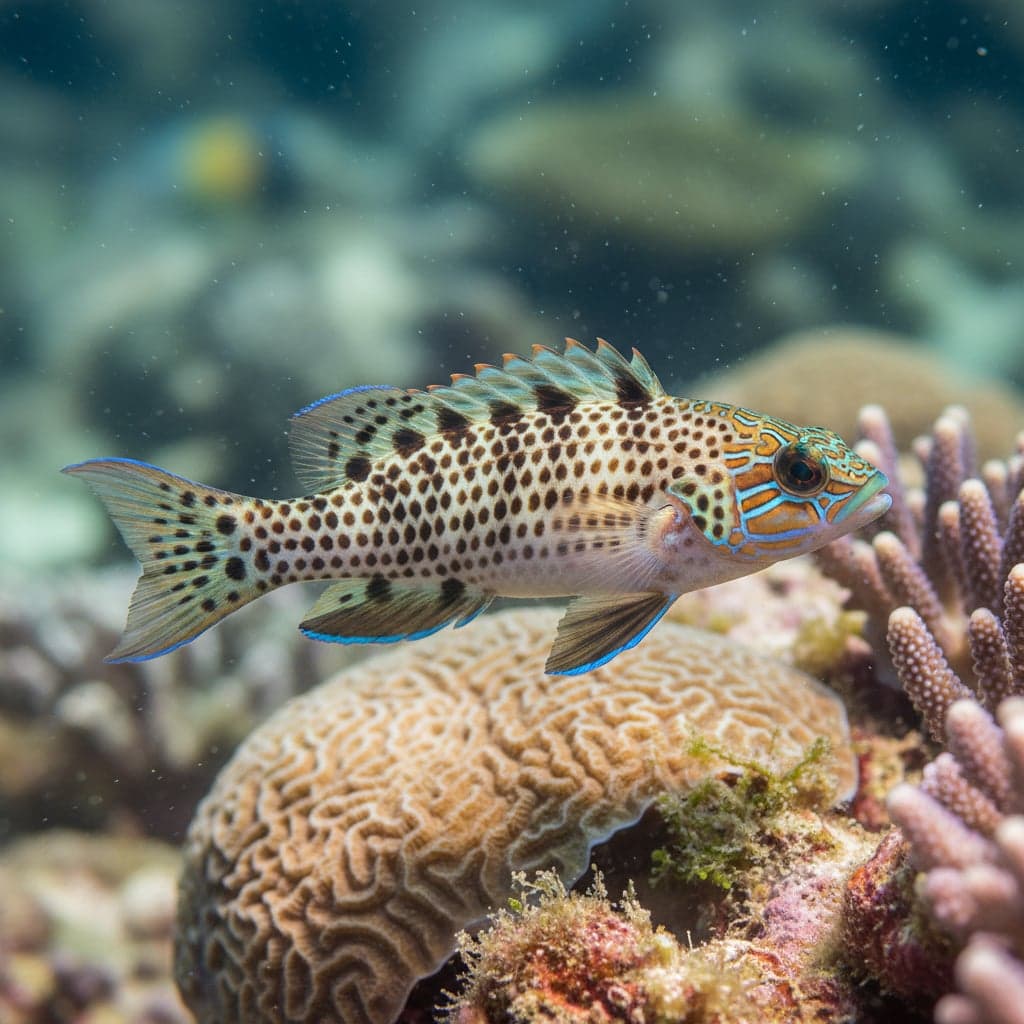
- Mandarin Dragonets
- Small Gobies (like the Court Jester Goby)
- Cardinalfish
- snails and small, peaceful hermit crabs
Avoid keeping them with almost every "standard" reef fish: Tangs, Wrasses, Damselfish, and Clowns will outcompete them for food and may accidentally strike them during feeding frenzy. Corals with stinging tentacles (like LPS or anemones) should also be avoided, as the seahorse may try to "hitch" to them and be stung.
Breeding
The Kuda Seahorse is world-famous for its reversed parental roles. After a complex courtship dance, the female transfers her eggs into the male's brood pouch. The male then fertilizes and incubates the eggs, providing them with oxygen and nutrients for several weeks. Once developed, he will undergo "labor" and release fully-formed, miniature seahorses into the water. Raising the fry is a major challenge, requiring a constant supply of live rotifers and copepods.
Common Health Issues
The primary health concern is Gas Bubble Disease, where bubbles form under the skin or in the brood pouch due to environmental stress or bacterial imbalances. They are also highly susceptible to Vibriosis (bacterial infection) if water quality is poor or temps are too high. Maintaining a clean, specialized environment and ensuring they are eating a vitamin-enriched diet is the only way to successfully keep the majestic and mysterious Kuda Seahorse.