Court Jester Goby
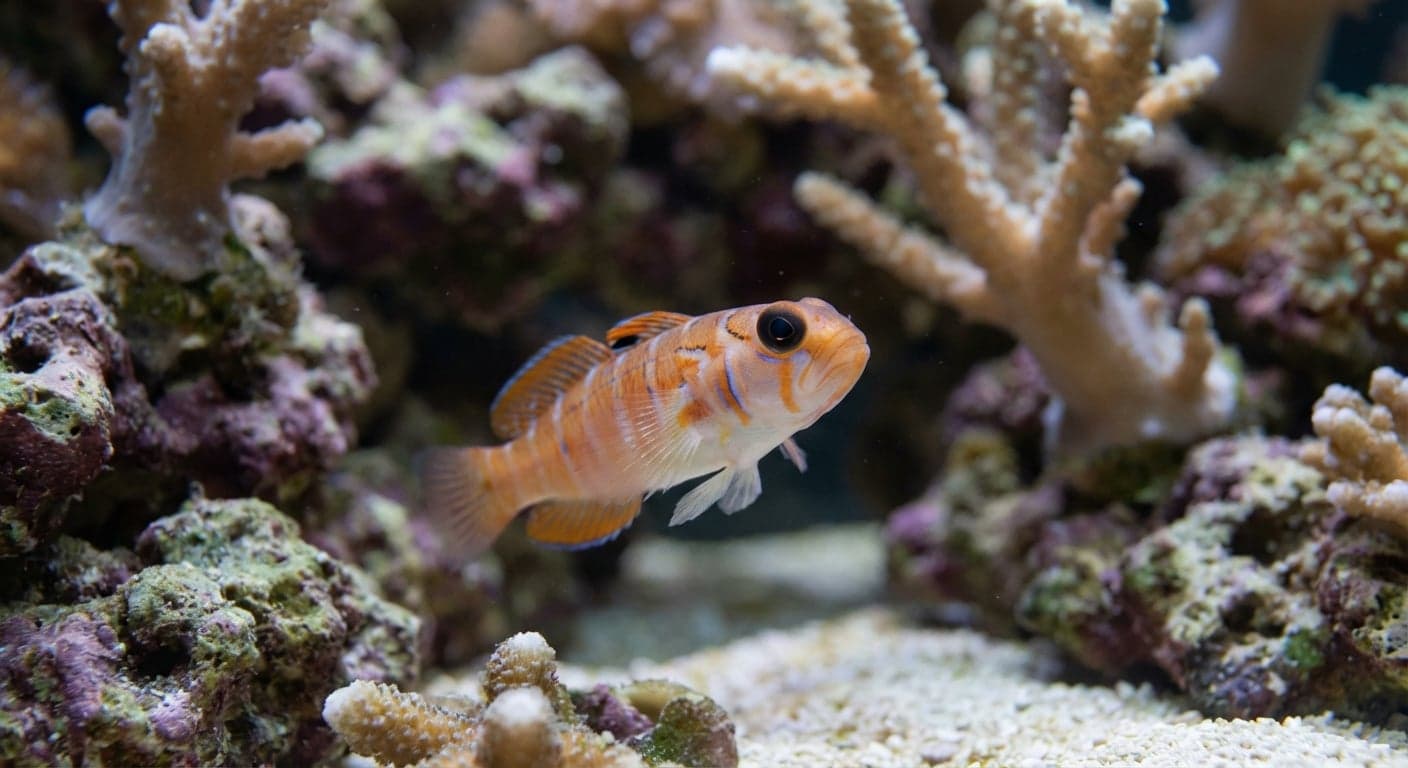
The Court Jester Goby (Koumansetta rainfordi), or Rainford's goby, is a small, colourful Western Pacific micro-grazer — peaceful and reef-safe, but needs a mature tank to feed.
Court Jester Goby
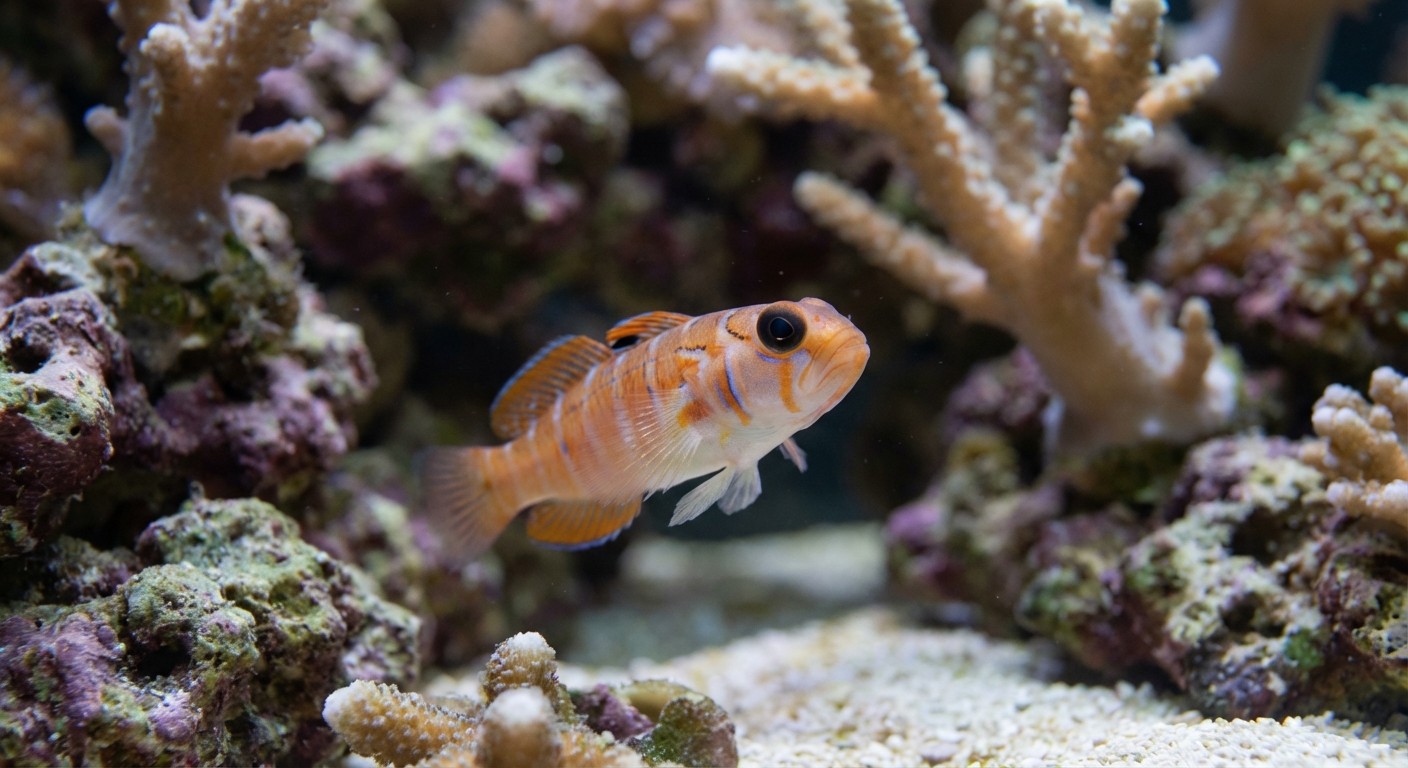
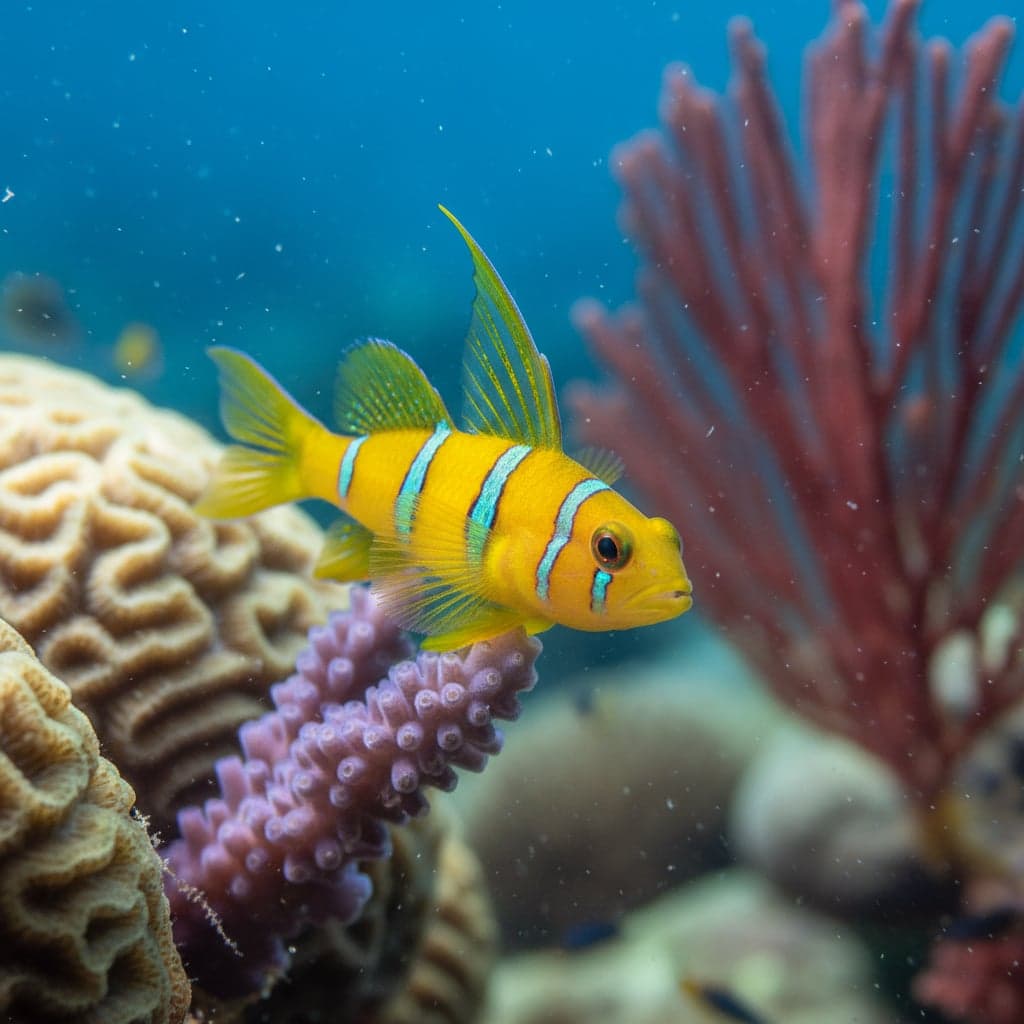
The Court Jester Goby (Koumansetta rainfordi), also widely known as Rainford's goby, is a small and strikingly patterned reef fish — its body striped lengthwise in orange and electric blue, often with a distinct eyespot near the tail. Peaceful, reef-safe and full of character, it spends its day picking continuously at rock and sand for film algae and microfauna.
That same grazing habit is the catch: the Court Jester Goby relies heavily on natural foods, and in a young or sterile tank it can slowly waste away. It is an excellent fish for a mature, well-established system and a poor choice for a brand-new one.
Natural Habitat & Origin
Koumansetta rainfordi is native to tropical reefs of the Western Pacific, occurring at depths of roughly 2 to 30 metres (6.5–98 feet). It lives close to the substrate among rock and rubble, grazing the algal films and tiny invertebrates that coat reef surfaces.
In the aquarium it wants the same: plenty of live rock and an established sand bed rich in microalgae and microfauna to forage over throughout the day.
Care Requirements
Maintain stable marine conditions — salinity around 1.024–1.026, pH 8.1–8.4, and a temperature of about 24–26°C (75–79°F). Although it reaches only about 8 cm (3 inches), it does best in a mature tank of around 75 litres (20 US gallons) or more, where there is enough established grazing surface to help sustain it. A secure lid helps prevent jumping.
The age and biological maturity of the tank matter more than raw size: an older system with abundant natural food is the single biggest factor in long-term success.
Diet & Feeding
The Court Jester Goby is an omnivorous micro-grazer, feeding on film algae, diatoms and small invertebrates it picks from rock and sand. The key husbandry challenge is supplementing this natural grazing before the fish runs out of food. Offer frequent small meals of meaty marine foods — frozen mysis, enriched brine shrimp and finely chopped seafood — and encourage acceptance of prepared foods early.
Monitor the fish's belly: a hollow or pinched abdomen is the warning sign of a goby not getting enough, and calls for more frequent targeted feeding.
Behavior & Temperament
This is a peaceful, retiring fish that bothers no one and tends to stay low among the rockwork. It can be kept singly or as a compatible pair; two unpaired individuals may bicker in a small tank. It is easily out-competed at feeding time, so it should not be housed with greedy or aggressive tankmates.
Tank Mates
Pair it with other calm, non-aggressive reef fish — clownfish, firefish, smaller gobies, cardinalfish and the like — that won't monopolise food. Avoid boisterous or aggressive species. The Court Jester Goby is fully reef-safe, leaving corals and ornamental invertebrates alone, and its constant grazing can even help keep film algae in check.
Breeding
Koumansetta rainfordi has been bred in aquaria, with pairs depositing eggs in a sheltered spot that are guarded until hatching. Rearing the larvae is demanding and uncommon in the home aquarium, so most trade specimens are wild-collected.
Common Health Issues
The overriding risk for this species is gradual starvation in an immature tank — prevent it with an established system and diligent supplemental feeding. Otherwise it is reasonably hardy, though like all marine fish it can be affected by marine ich (Cryptocaryon irritans) and marine velvet (Amyloodinium ocellatum) when stressed. Quarantine new arrivals, keep water quality stable, secure the lid, and choose a visibly well-fed specimen to give this charming little grazer the best start.