Kuhli Loach: Pangio kuhlii
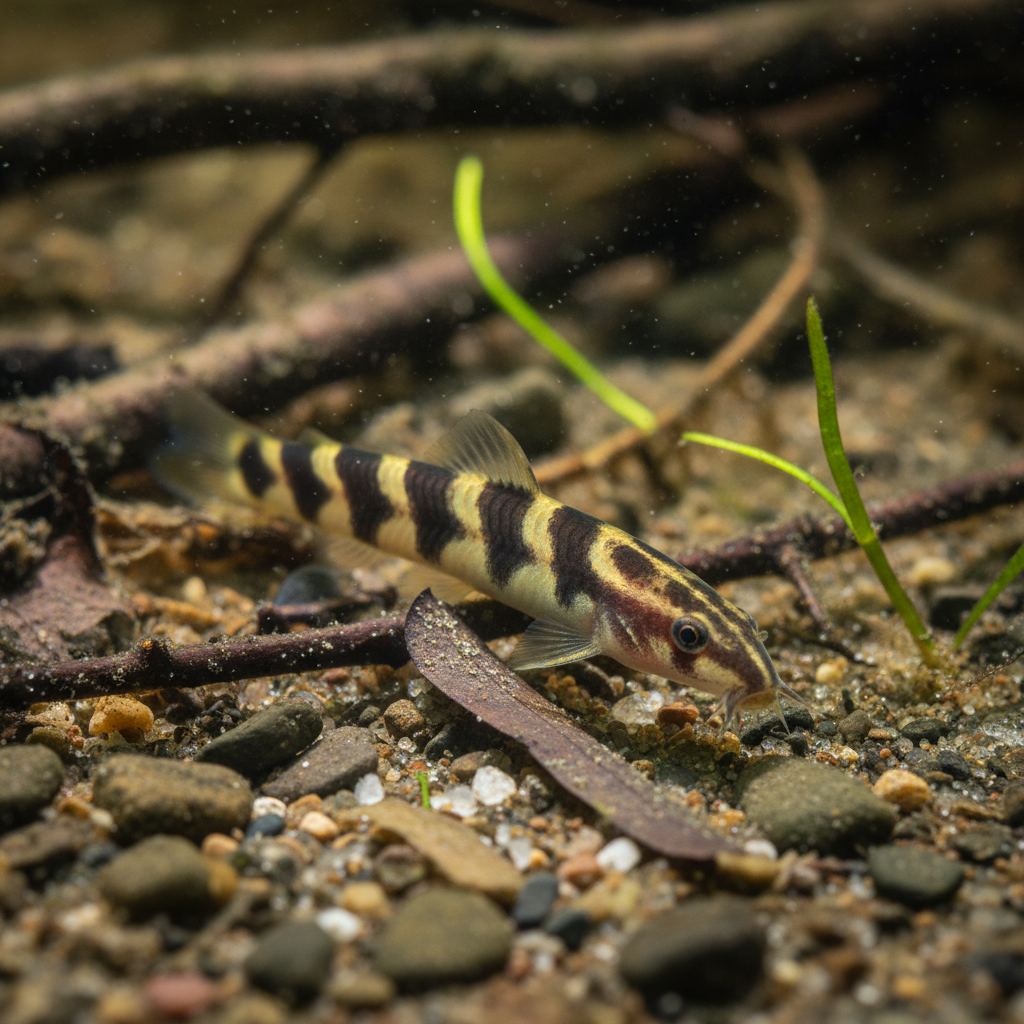
The Kuhli Loach (Pangio kuhlii) is the world's most popular "aquarium eel," famous for its wiggly, striped body and its tireless work as a peaceful, nocturnal scavenger.
Also known as: coolie loach · Pangio kuhlii
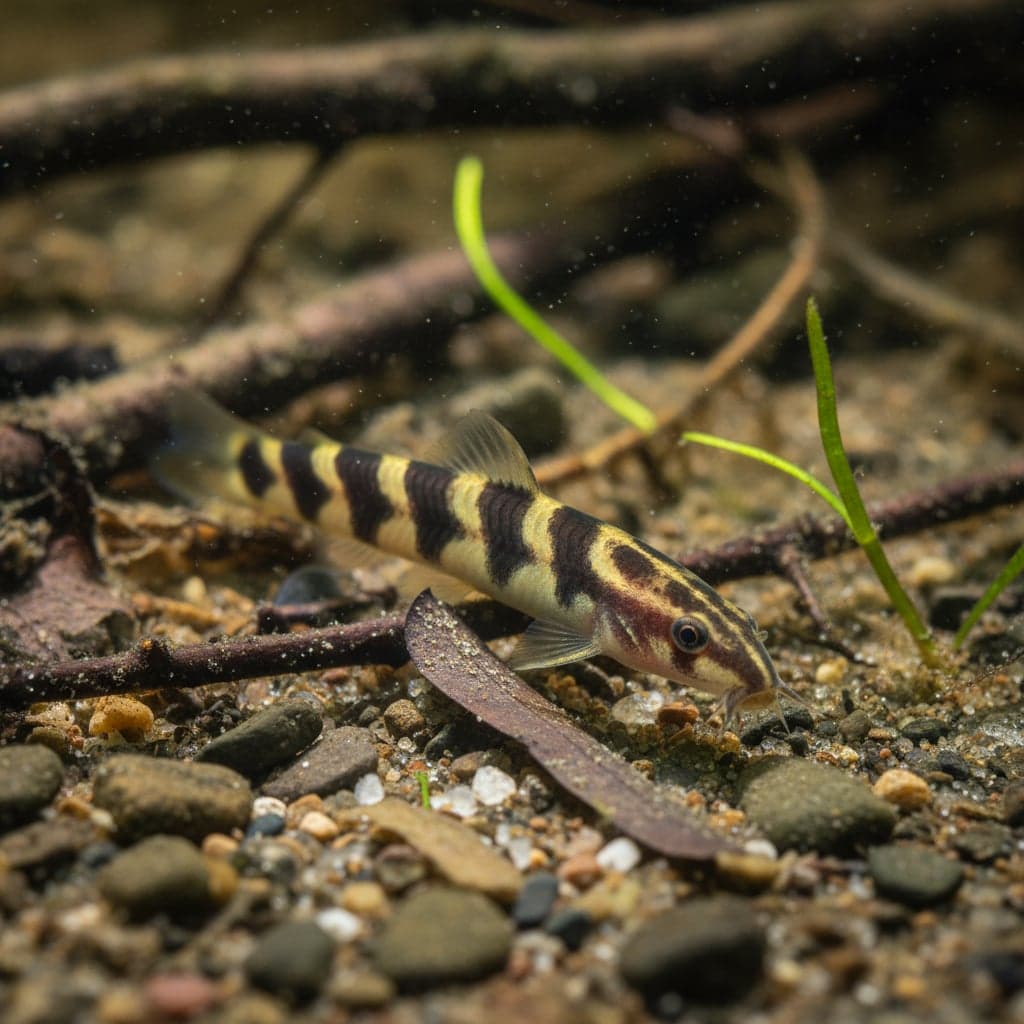
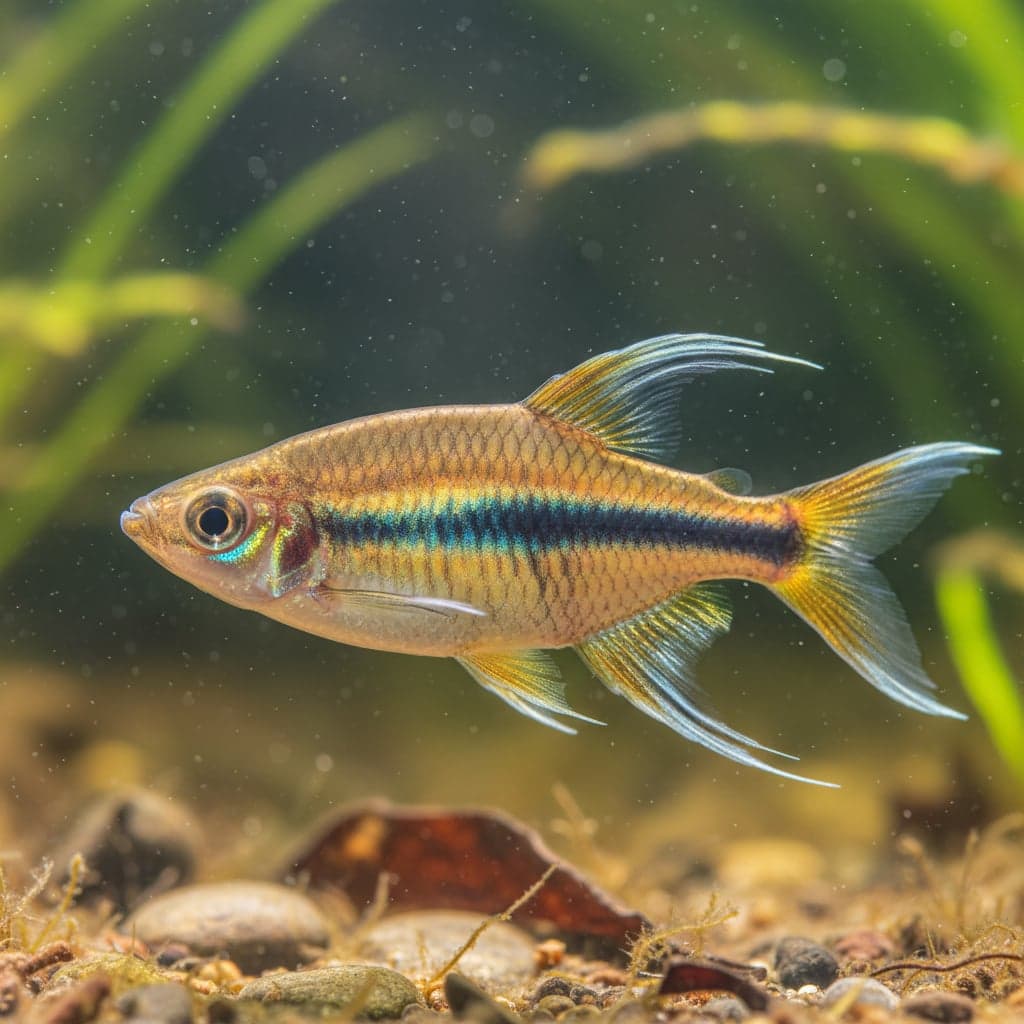
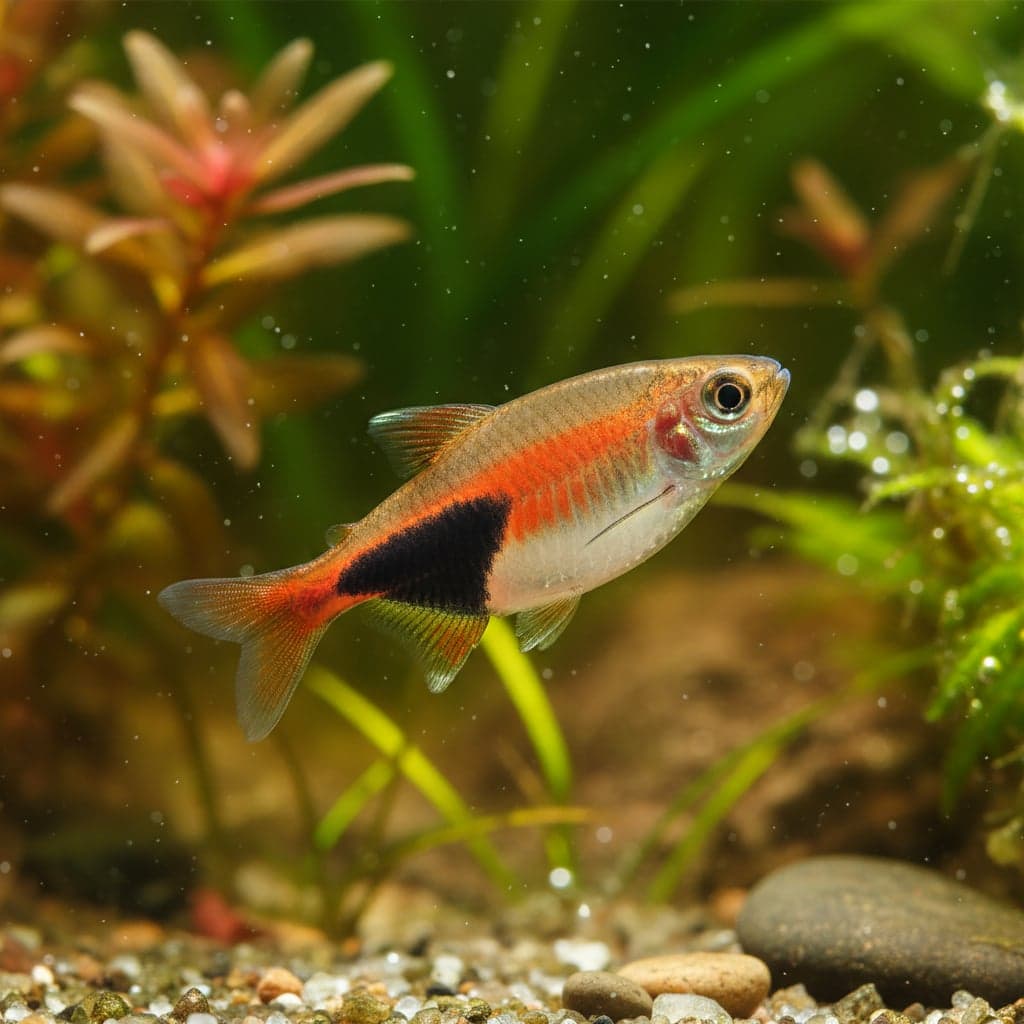
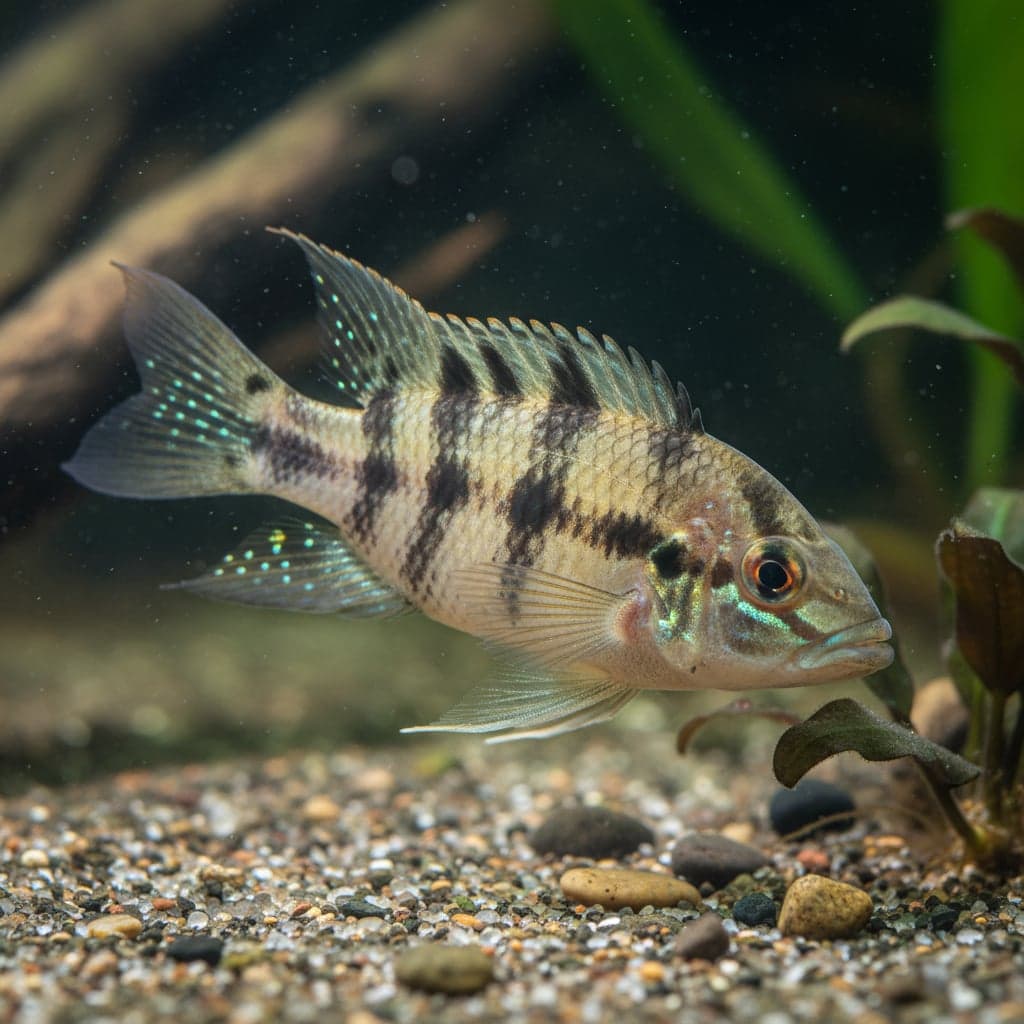
The Kuhli Loach (Pangio kuhlii), also known as the Coolie Loach or Leopard Loach, is a quirky and charismatic favorite of the freshwater hobby. Native to the slow-moving, leaf-littered streams of Southeast Asia, it is defined by its extraordinary, eel-like anatomy and playful wiggling motion. Its flexible body is typically a warm orange or golden-yellow, vertically banded with deep chocolate-brown or black stripes that rarely match perfectly from fish to fish. Unlike many other loaches that can be aggressive or territorial, the Kuhli is strictly peaceful and deeply social, often found in comical "piles" or "noodle heaps" within the safety of a favorite cave. For the community aquarist, the Kuhli Loach is a beneficial nocturnal scavenger that adds a unique vertical and behavioral dynamic to the tank bottom.
In the aquarium, they are nocturnal "janitors." They spend the daylight hours hidden in the substrate or behind decor, emerging at dusk to rhythmically sift through the sand for leftover food and organic detritus.
Natural Habitat & Origin
Pangio kuhlii is native to Southeast Asia, specifically found in the river systems of Indonesia (Java, Sumatra), Malaysia, and Thailand. They inhabit shallow, slow-moving blackwater streams and peat swamps where the forest canopy provides deep shade. These environments are characterized by soft, acidic water and a floor covered in thick layers of decaying leaves, submerged roots, and organic silt. Their slender, smooth-scaled bodies are perfectly adapted for "slithering" through the tightest crevices and burrowing into the soft sediment to escape predators or find food.
Care Requirements
The Kuhli Loach is a hardy species but has one non-negotiable requirement: soft substrate. A minimum tank size of 75 litres (20 gallons) suits a group of six or more — soft sand footprint matters more than swimming volume for these 10cm shoaling burrowers.
Maintain stable parameters: a pH of 6.0 to 7.5 and a temperature of 75°F to 82°F (24°C to 28°C). The aquarium MUST feature a substrate of fine sand; sharp gravel can easily damage their delicate underbellies and sensory barbels. They thrive in "low-light" setups with heavy planting and a complex network of hiding places. Smooth rocks, driftwood, and PVC pipes hidden behind plants are excellent tools for making them feel secure enough to show themselves. Note: They are notorious for finding their way into filters; ensure all intakes are covered with fine mesh or sponges.
Diet & Feeding
They are flexible omnivorous scavengers that primarily feed on micro-crustaceans and organic matter on the riverbed.
In captivity, they require a varied and protein-rich diet:
- High-quality sinking catfish pellets and shrimp wafers should be the staple.
- They must have frequent feedings of live or frozen foods: Bloodworms, Tubifex, and Brine Shrimp.
- They serve as excellent "cleaners" for the rest of the community, finding food that has fallen into cracks where other fish cannot reach.
- Tip: Because they are nocturnal, it is best to feed them just as the aquarium lights go out. This ensures they get their fair share before the faster-moving tetras or barbs consume everything.
Behavior & Temperament
They are strictly peaceful and highly gregarious. They should never be kept alone; a minimum group of 5 to 6 individuals is required to see their natural "noodle" behaviors. When kept in a group, they are much bolder and more likely to be active during the early evening. They are not territorial and will share their "home cave" with other Kuhlis and even other peaceful bottom-dwellers like Corydoras. They have a quirky habit of "Glass Dancing" (swimming rapidly up and down the glass), which is often triggered by changes in barometric pressure or upcoming water changes.
Tank Mates
Suitable tank mates are other peaceful, small-to-medium community species:
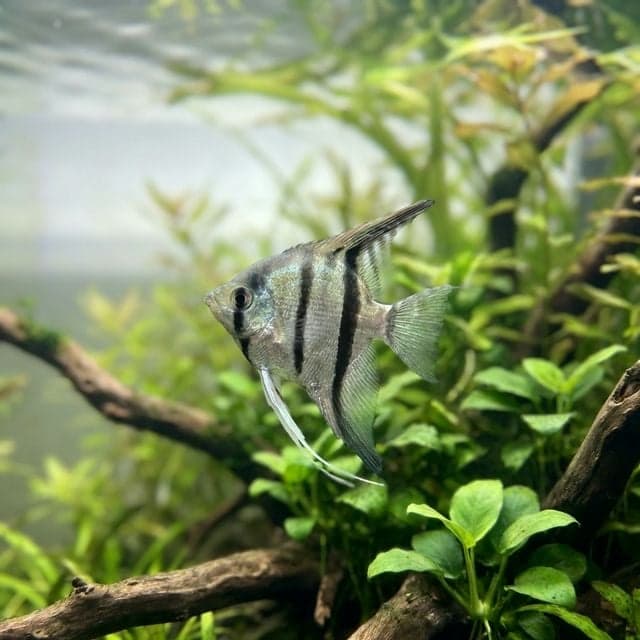
- Tetras and Rasboras (all varieties)
- Corydoras catfish
- Gouramis (especially Honey or Dwarf varieties)
- Livebearers (Guppies, Mollies)
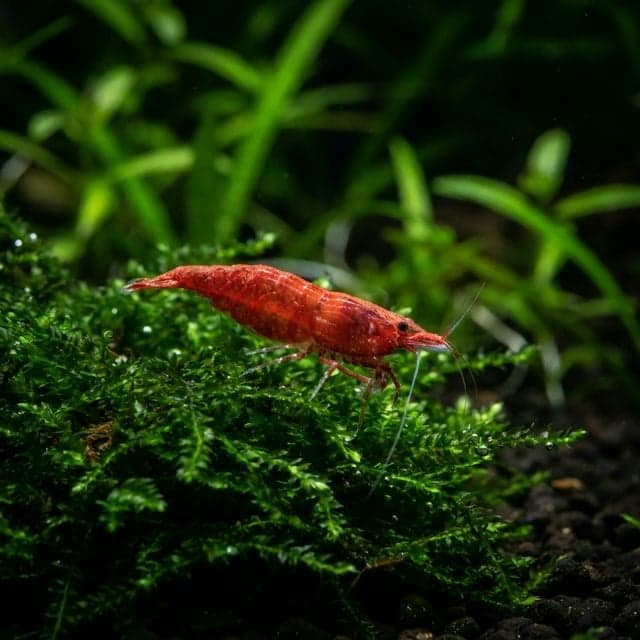
- peaceful shrimp (like Cherry or Amano shrimp, though they may eat tiny shrimplets)
Avoid keeping them with large, aggressive fish like Oscars or large Cichlids that might view the slender Kuhli as a "worm-like" meal.
Breeding
Breeding the Kuhli Loach in the home aquarium is rare and usually accidental. They are egg scatterers. Spawning is often triggered by massive water changes and a drop in temperature that mimics the monsoon season. They release bright green adhesive eggs, usually near the surface among the roots of floating plants. Most successful breedings occur in densely planted "neglected" tanks with massive amounts of Java Moss, where the eggs can be protected from the adults.
Common Health Issues
The primary health concern is physical injury from rough substrate, leading to secondary bacterial or fungal infections. They are also highly susceptible to Marine Ich because they are "scaleless" or have very fine scales; care must be taken when dosing medications, often requiring half-strength treatments. Maintaining a soft sand substrate and pristine water conditions is the best way to ensure your "aquarium eels" remain a wiggly and healthy part of your ecosystem.