Lesser Spiny Eel: Macrognathus aculeatus
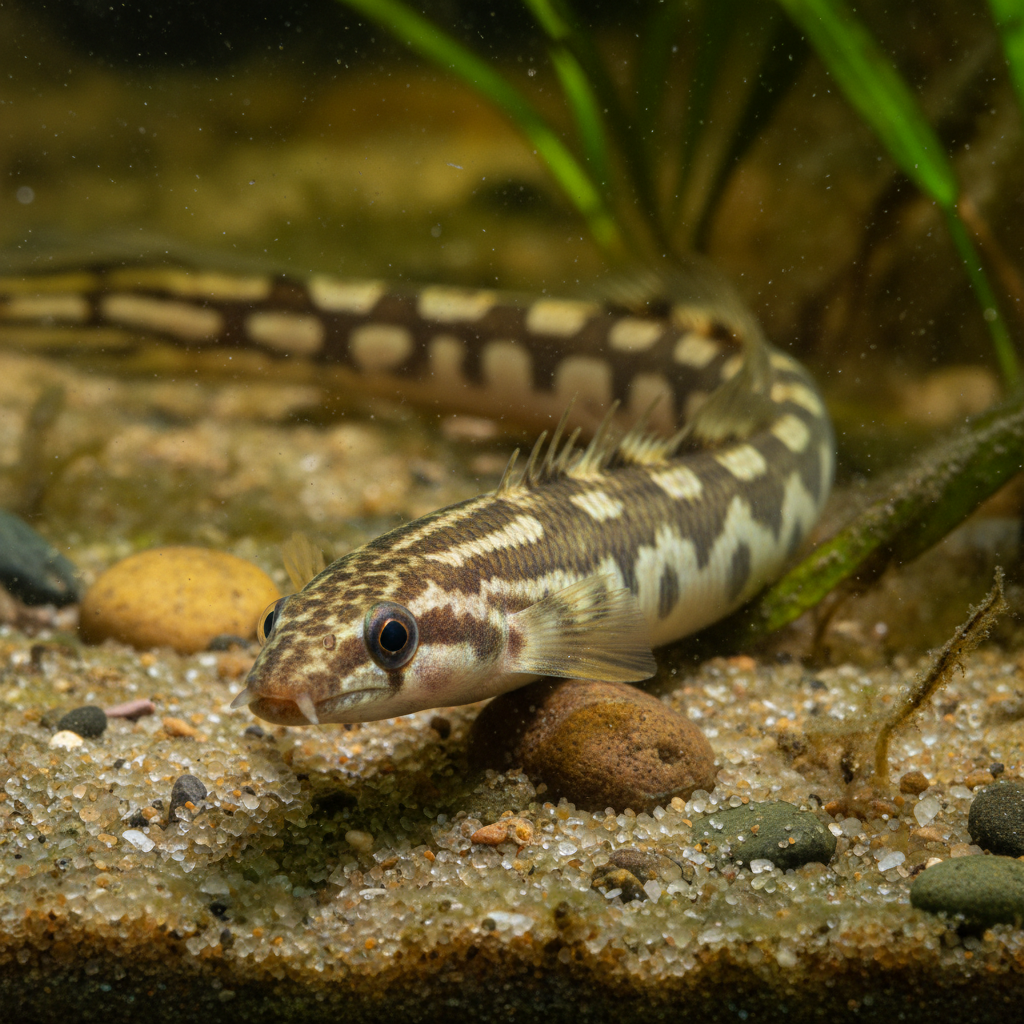
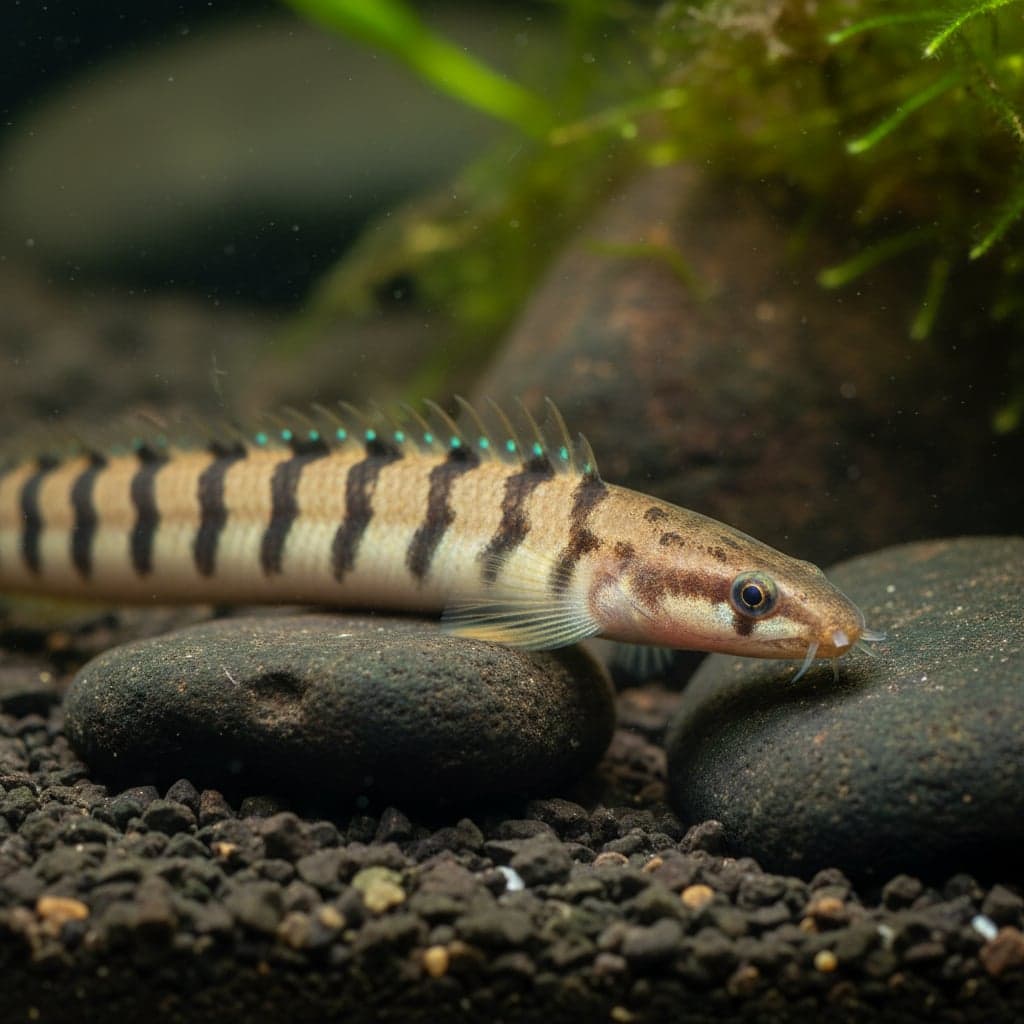
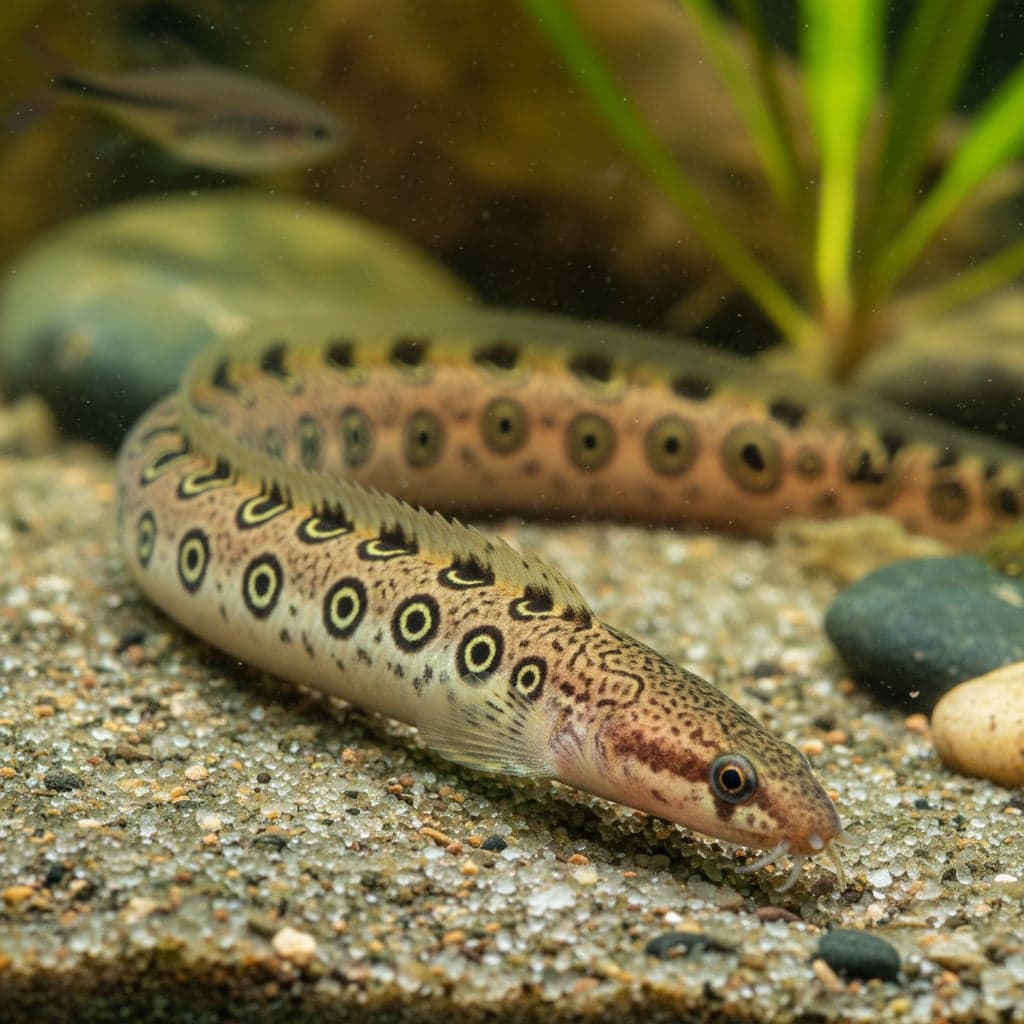
The Lesser Spiny Eel (Macrognathus aculeatus) is a slender, reclusive master of disguise, defined by its mottled earthy tones and a highly sensitive, pointed snout used to navigate the riverbeds of Southeast Asia.
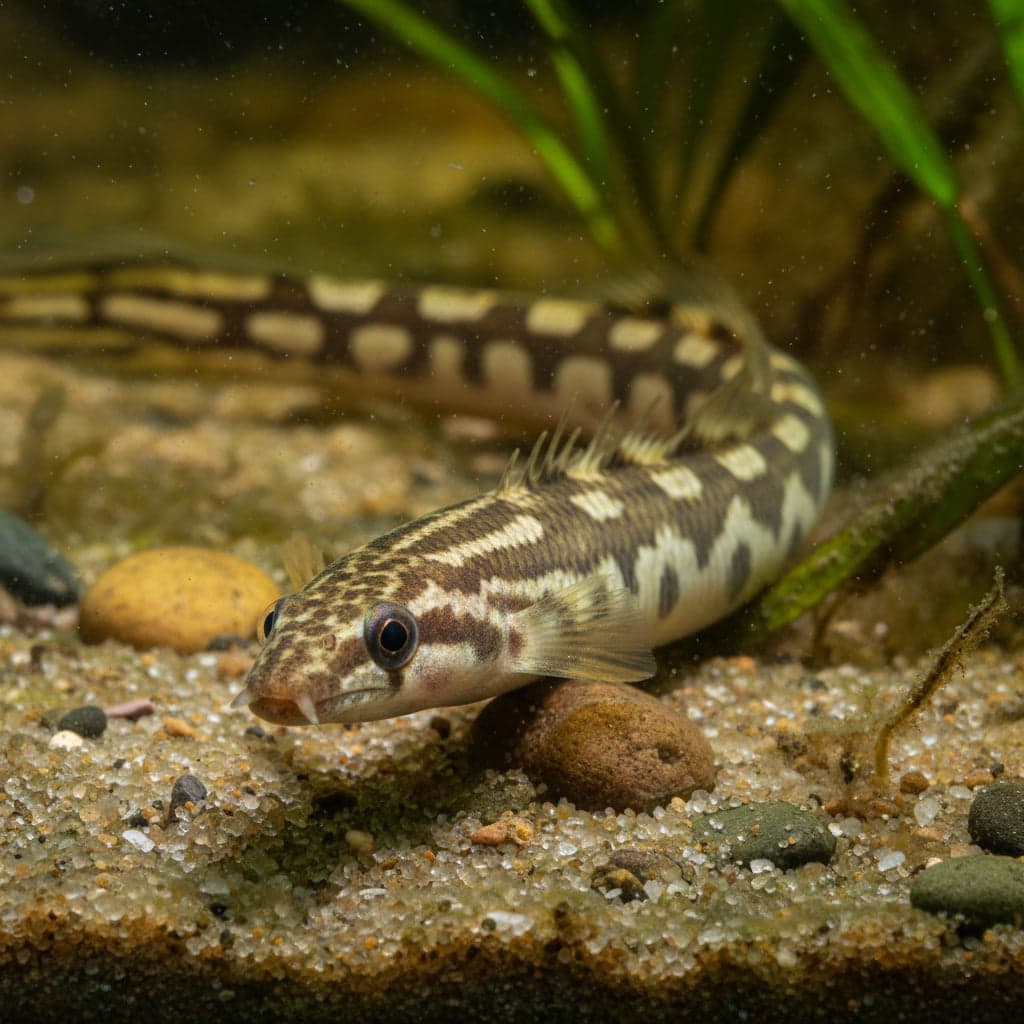
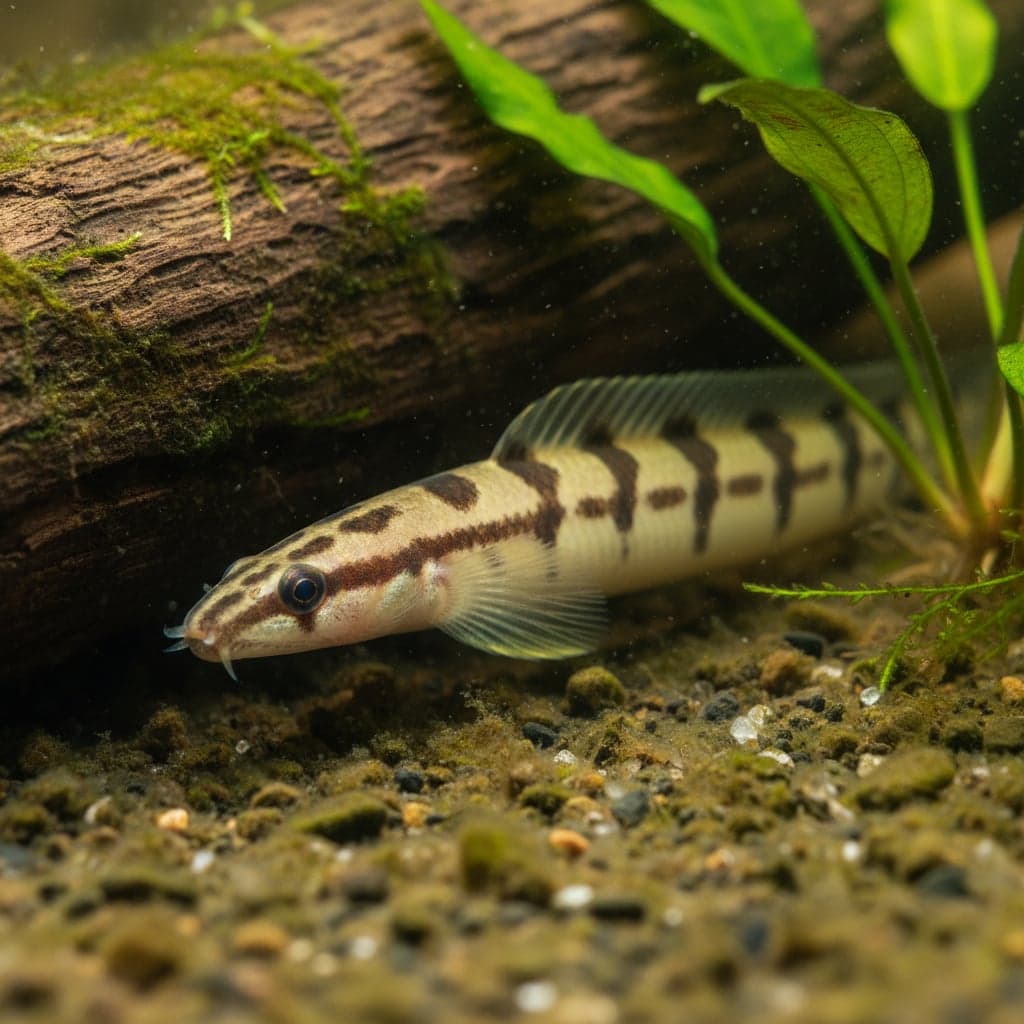
The Lesser Spiny Eel (Macrognathus aculeatus) is a species that brings a sense of ancient mystery to the aquarium. It is defined by its serpentine, elongated body and a series of sharp spines along its dorsal ridge. Unlike the more common Peacock Eel, the Lesser Spiny Eel features a complex, mottled pattern of dark brown and tan, resembling a piece of driftwood or decaying vegetation. For the patient aquarist, this eel is a fascinating "shadow inhabitant"—a strictly nocturnal specialist that spends its days buried in the sand with only its sensitive, twitching snout visible, waiting for the cover of darkness to explore.
In the aquarium, they are the silent observers of the bottom. They do not swim with the flow of the tank; instead, they "snake" through the substrate or glide along the floor with a methodical, predatory grace. They are exceptionally shy and require a specialized environment where they feel secure enough to hunt.
Natural Habitat & Origin
Macrognathus aculeatus is native to the freshwater systems of Southeast Asia, including the Mekong and Chao Phraya basins in Thailand, Malaysia, and Indonesia. They are habitat specialists, typically found in slow-moving or standing waters with abundant leaf litter and soft, silty bottoms. These areas are often tea-colored (blackwater) and rich in organic matter. In the wild, they are nocturnal ambush predators, using their elongated, sensory snouts to detect tiny crustaceans and worms hidden deep within the mud and detritus.
Care Requirements
The Lesser Spiny Eel is a hardy species but has uncompromising substrate requirements. A minimum tank size of 30 gallons (110L) is required, but a larger footprint is essential for their health.
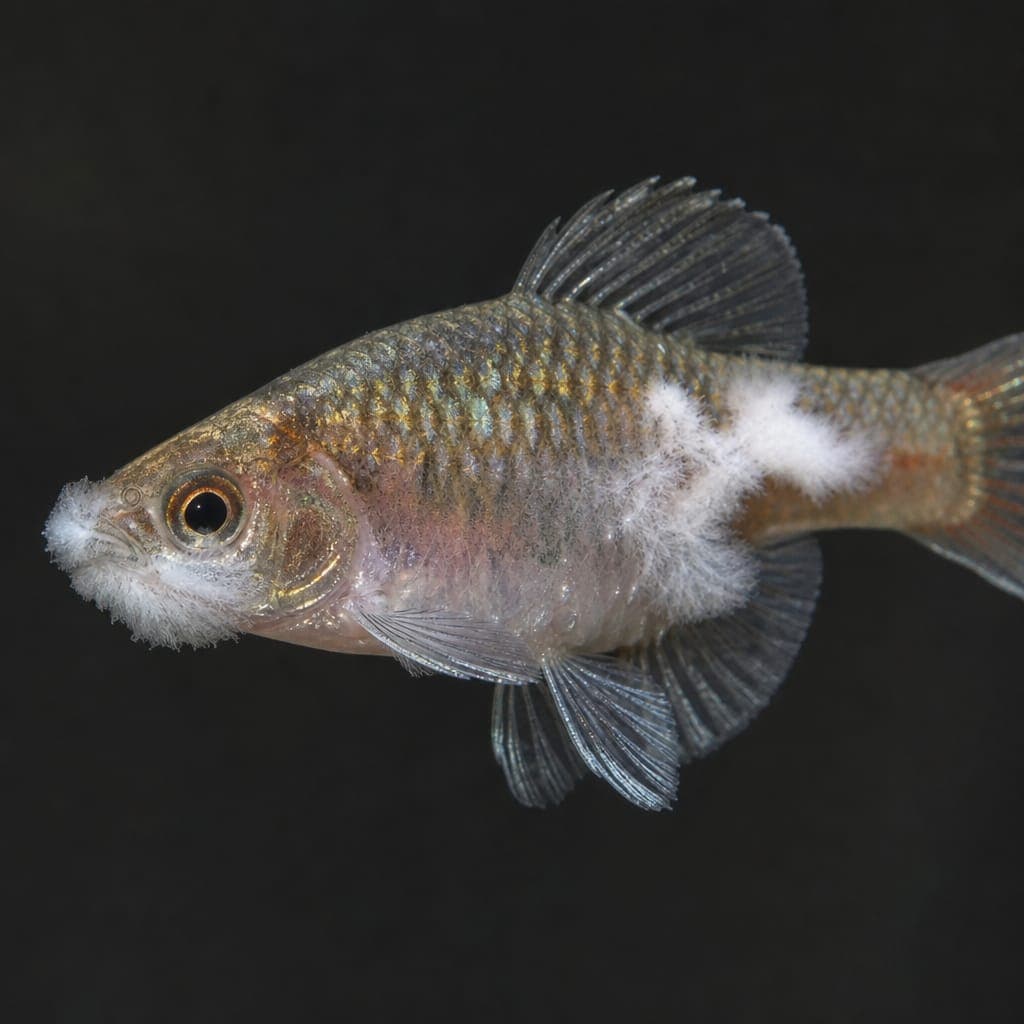
Maintain stable parameters: a pH of 6.5 to 7.5 and a temperature of 75°F to 82°F (24°C to 28°C). CRITICAL REQUIREMENT: You MUST provide a fine, soft sand substrate. These eels are obligate burrowers; if kept on gravel or coarse sand, their delicate, scaleless skin will be damaged, leading to fatal bacterial or fungal infections. The aquarium should feature plenty of driftwood and caves, along with dense planting (like Java Fern or Anubias) to provide the shadows they crave. TIP: They are famous escape artists; even the smallest gap in the lid must be sealed.
Diet & Feeding
They are strictly carnivorous and can be exceptionally picky when first introduced. They rarely accept dry flakes or pellets.
Their diet should consist of high-quality live and frozen foods:
- Live Blackworms or Tubifex are usually the best first food to trigger their hunting instinct.
- They MUST be transitioned to frozen meaty options: Bloodworms, Mysis shrimp, and finely chopped earthworms or pieces of market shrimp.
- Tip: Feed them at night or shortly after the lights go out. They are shy and may be outcompeted by faster fish during the day.
- Using a "feeding tube" to deliver food directly to their cave or burial spot is a highly effective way to ensure they are getting enough to eat.
Behavior & Temperament
They are peaceful but predatory. They will generally ignore any fish that they cannot fit into their mouths. However, they are lone hunters and can be territorial toward other spiny eels in smaller systems. They are "intelligent" fish that can eventually learn to recognize their owner and even take food from tongs once they feel secure in their environment.
Tank Mates Mates
Suitable tank mates are peaceful, mid-to-top water species:
- Larger Tetras (Bleeding Heart, Congo Tetras)
- Gouramis and Angelfish
- Ancistrus and larger Corydoras (though very small Corys might be nipped at)
- Most larger community fish
Avoid keeping them with very small fish (like Neon Tetras or fry) which may be viewed as easy nighttime meals. Also avoid aggressive cichlids that might harass the shy eel.
Breeding
Breeding the Lesser Spiny Eel in captivity is extremely rare. They are egg scatterers. In the wild, spawning is triggered by the onset of the monsoon season and changes in water chemistry. While courtship behaviors (active chasing and snout-touching) are occasionally observed in large, well-planted systems, rearing the tiny, delicate fry requires specialized live foods and highly stable, pristine water conditions.
Common Health Issues
The primary health concern is skin infections (saprolegnia or bacterial) caused by abrasive substrates. They are also prone to internal parasites if fed low-quality live foods. Because they are scaleless, they are highly sensitive to many common medications, especially those containing copper or malachite green. Maintaining a pristine sand bed and a stress-free, shadowed environment is the best way to ensure the mysterious Lesser Spiny Eel thrives for its full lifespan of 10+ years.