Red-spot Cardinalfish
The Red-spot Cardinalfish (Ostorhinchus parvulus) is a small, peaceful nocturnal reef fish — reef-safe, shoaling and easy to keep.
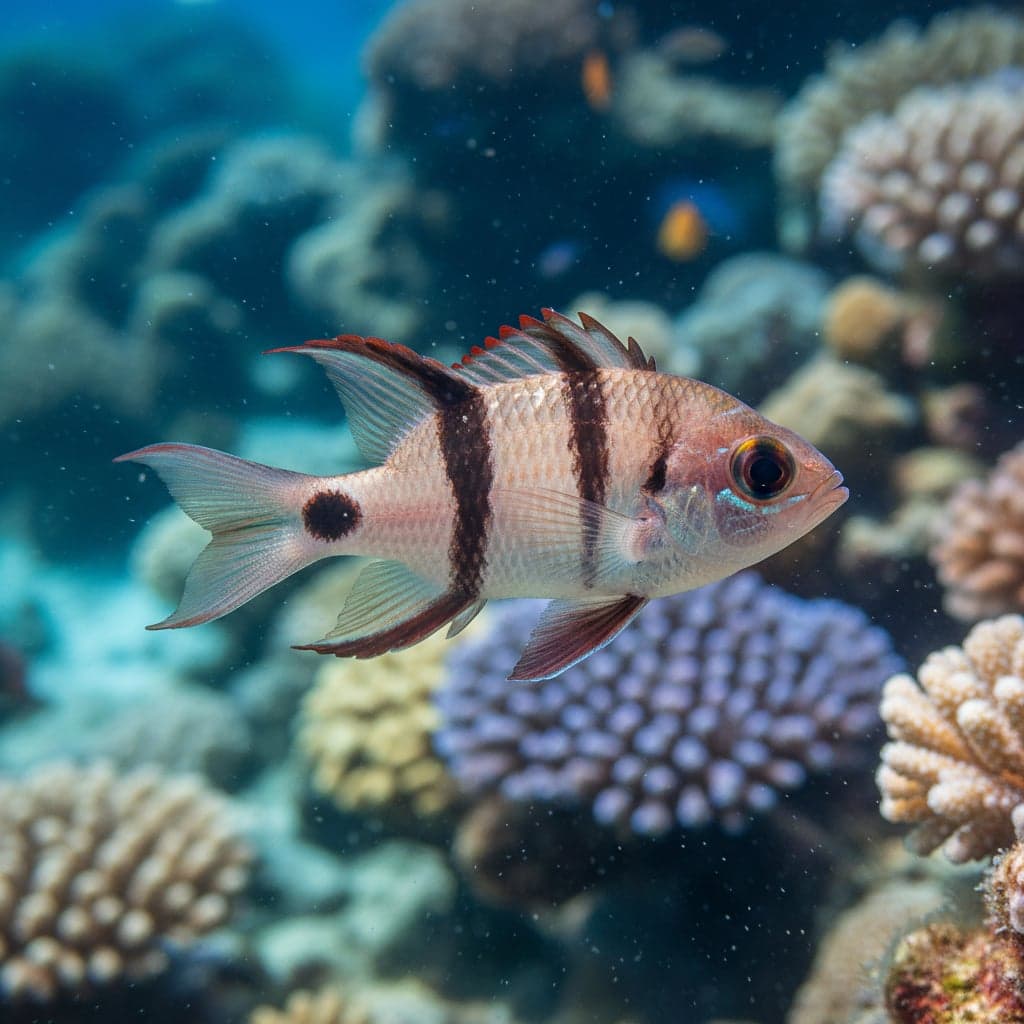
Red-spot Cardinalfish
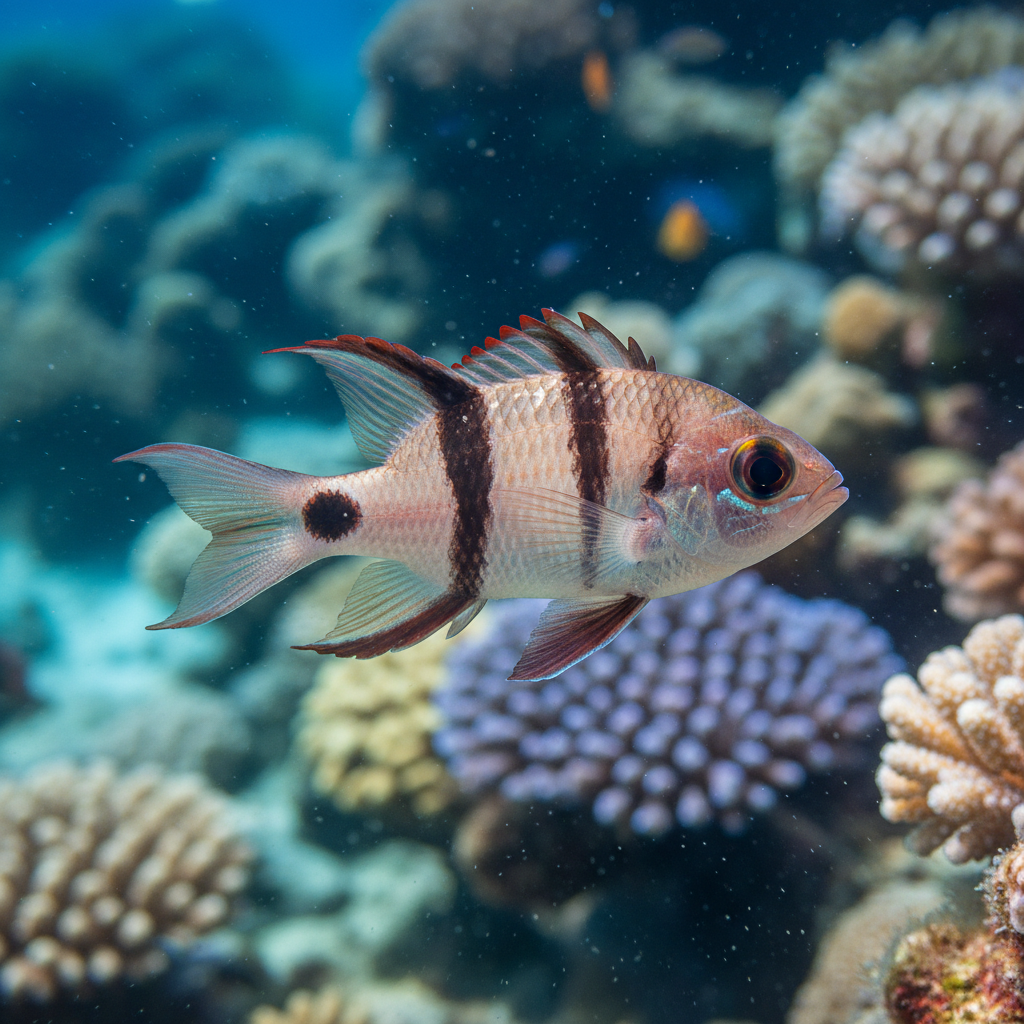
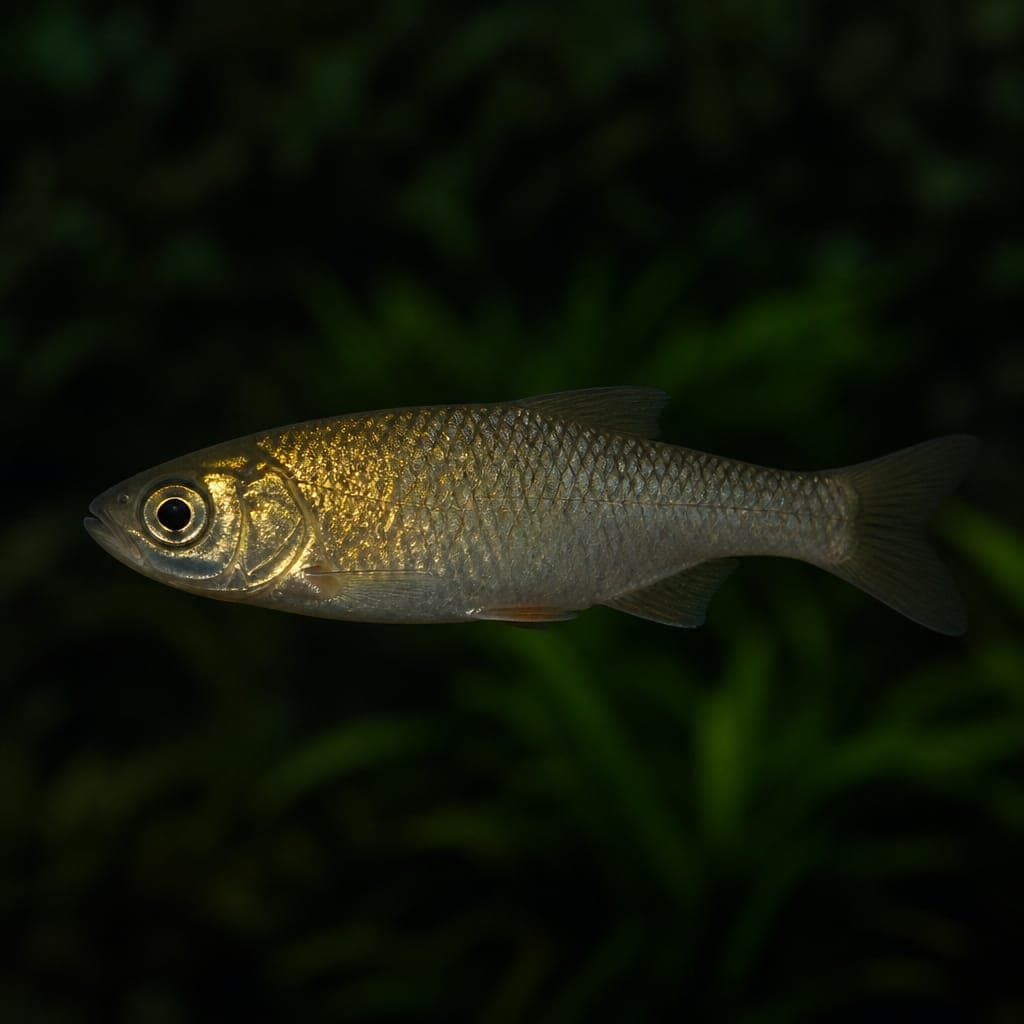
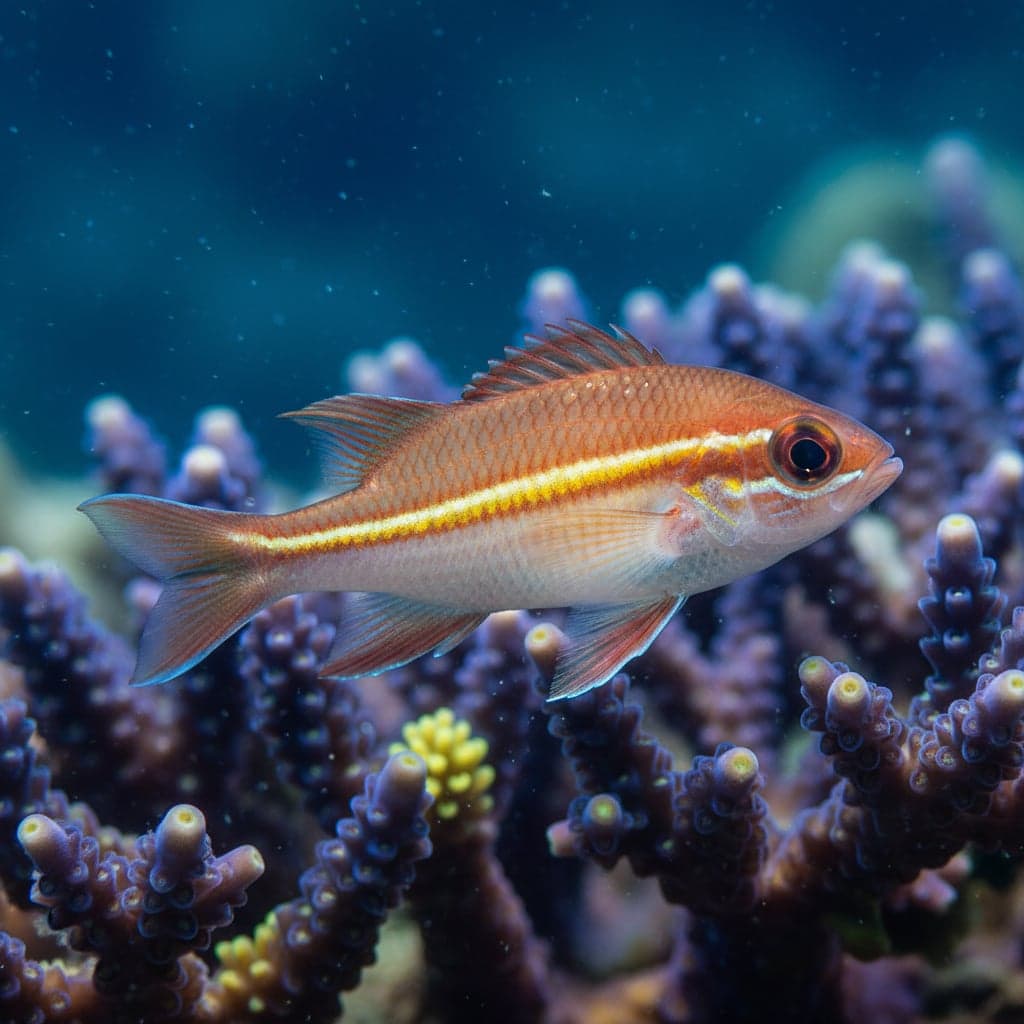
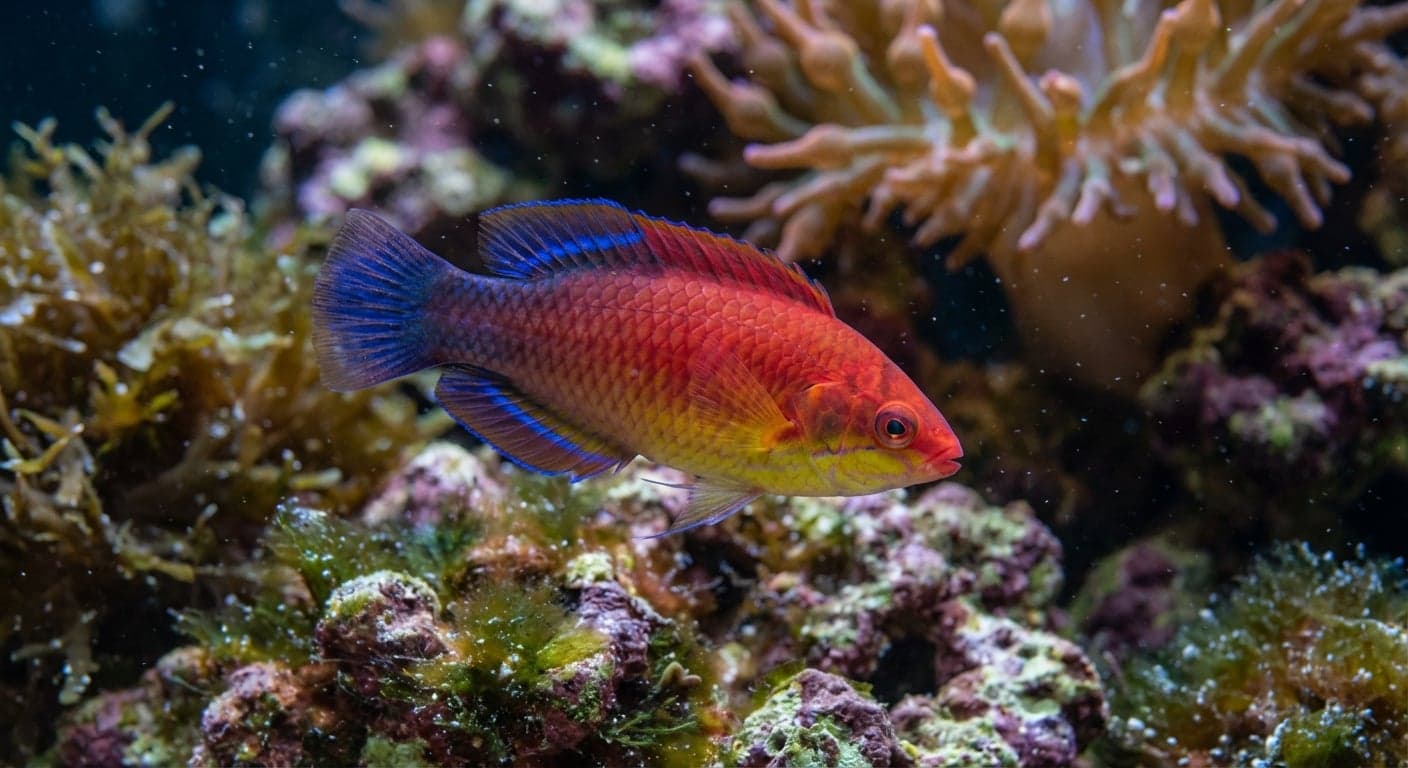
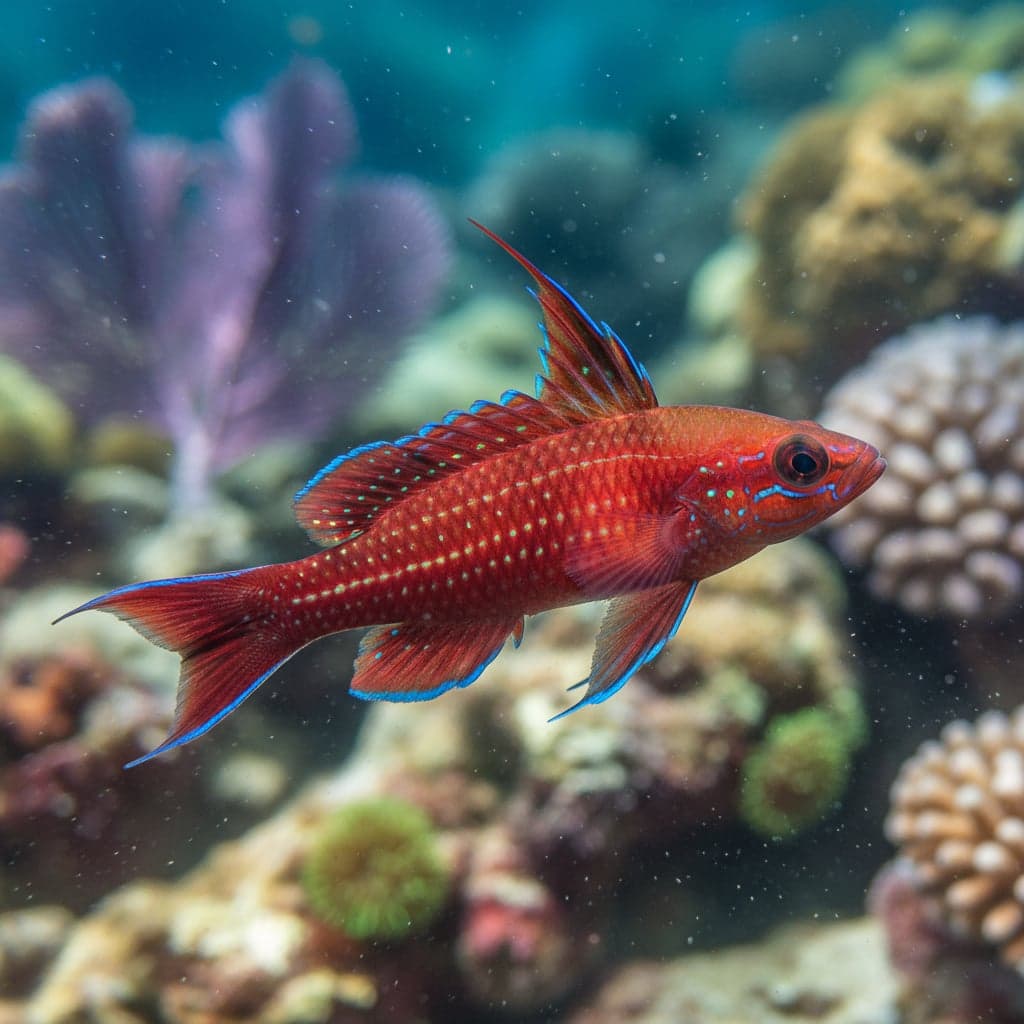
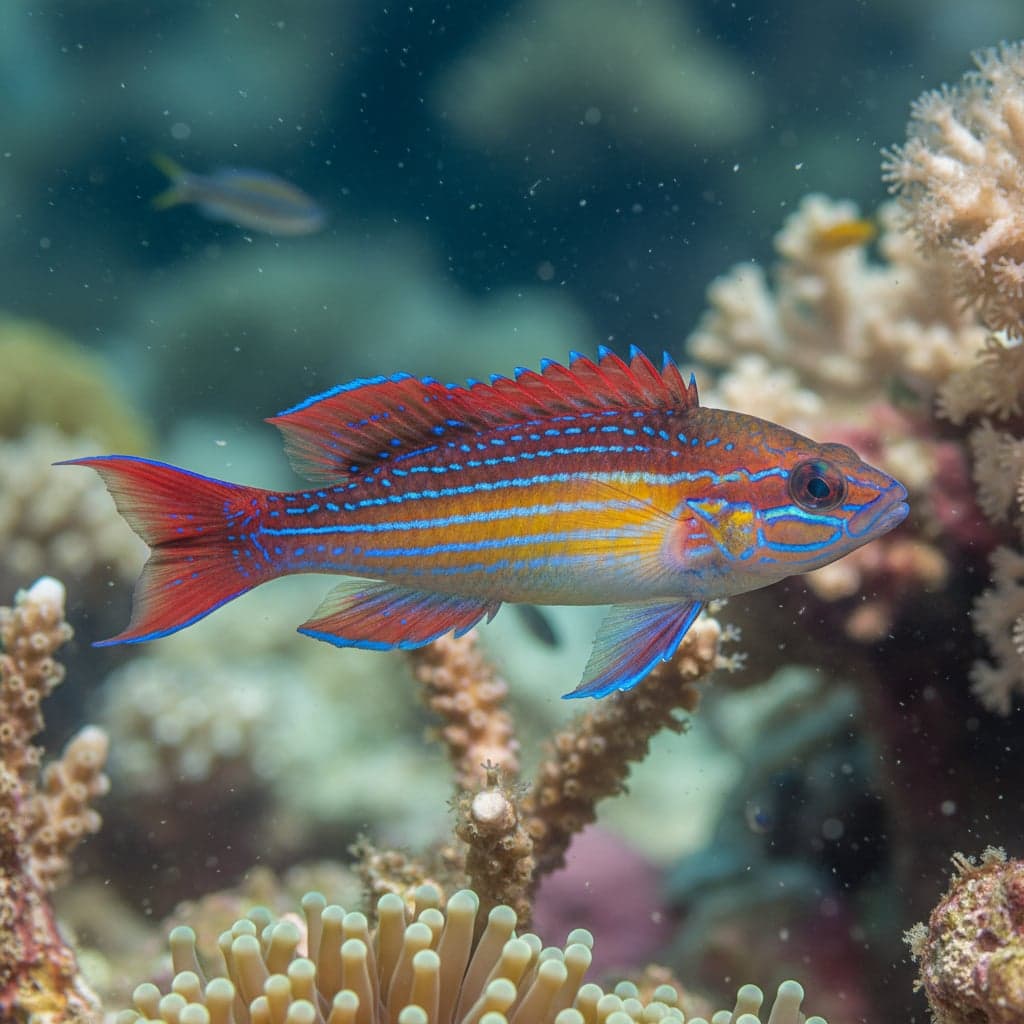
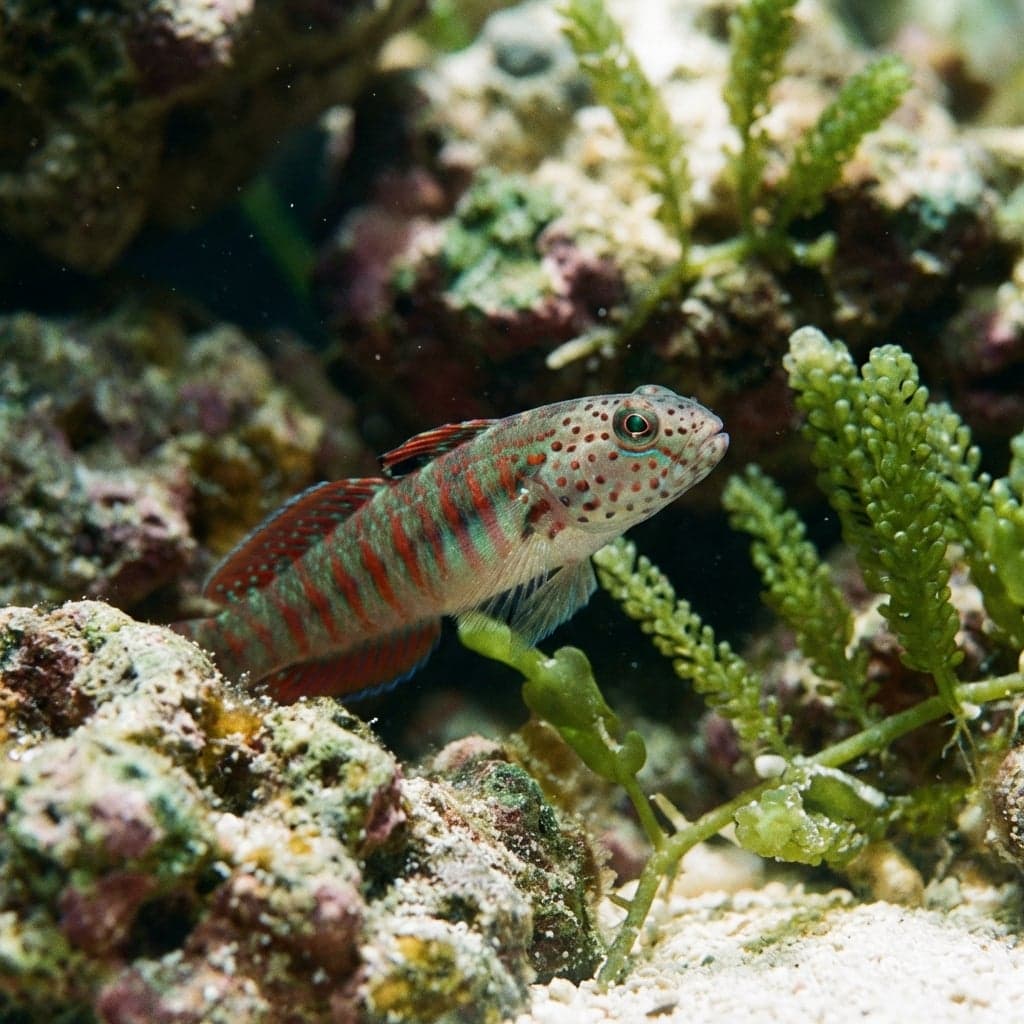
The Red-spot Cardinalfish (Ostorhinchus parvulus) is a small, gentle reef fish — semi-translucent with fine markings and a small dark spot near the caudal peduncle that gives it the common name. Like other apogonids, it is largely nocturnal: hovering quietly among rock and coral by day, then more active as the lights dim. Peaceful, hardy and sociable, it is an undemanding fish that can be kept in a calm shoal, bringing soft movement to a community reef without the drama of damsels or large wrasses.
Its quiet, hovering presence and tolerance of its own kind make it a low-key addition for keepers who want life in the rockwork rather than a mid-water showpiece. Frontmatter lists shoaling because wild fish aggregate; in a home aquarium that usually means a small group of three or more in a calm system — not a single specimen forced to live alone in a high-energy tank, and not a crowd packed into the absolute minimum volume.
Natural Habitat & Origin
Ostorhinchus parvulus occurs on Indo-Pacific reefs, sheltering among coral, rock and crevices in loose groups by day and emerging to feed on zooplankton and small crustaceans as light falls. It stays close to structure; open sand with nowhere to hide is not how this fish lives on the reef.
In the aquarium recreate that geometry: plenty of live rock with shaded nooks, overhangs and caves for daytime rest, plus open water nearby so the fish can feed when it becomes active. Bright, barren aquascapes produce skulking cardinals that never settle into the soft hovering that makes the species appealing.
Care Requirements
Stable marine water: salinity about 1.024–1.026, pH 8.1–8.4, temperature 24–26°C (75–79°F). Adults reach only about 6 cm (2.5 inches). The listed minimum of around 75 litres (20 US gallons) suits a single fish or a very small group with serious cover; a proper shoal wants a somewhat larger footprint so fish can space themselves without constant bumping.
It is hardy and adaptable — a genuine beginner marine fish on chemistry and feeding once settled — but quarantine still matters. New cardinals import marine ich (Cryptocaryon irritans) and velvet (Amyloodinium ocellatum) like everything else in the chain. Run a quarantine protocol before the display; medications belong in hospital tanks, not on sessile inverts.
Use the Aquarium Tracker to log salinity and temperature. Slow drift plus a nocturnal feeder that only rushes the glass at dusk is how problems hide until the fish look thin at lights-on.
Diet & Feeding
Carnivore. Wild intake is zooplankton and small crustaceans, mostly when the reef darkens. In captivity it accepts aquarium foods readily: frozen mysis and enriched brine shrimp, finely chopped seafood, and quality small marine pellets or flakes. Feeding toward evening — or offering a second meal as lights dim — helps ensure shy individuals get their share before daytime hogs clear the water.
Small amounts once or twice a day beat one large dump. Watch belly fullness; cardinals can look “fine” while losing the food race to anthias, damsels and wrasses. Target-feed into the rock if needed. Marine diets and feeding schedules cover timing for nocturnal and crepuscular feeders.
Behavior & Temperament
Peaceful and retiring. It poses no threat to tankmates and tolerates its own kind well, so it can be kept singly or — preferably — in a small group that settles into shared daytime shelter. By day it hovers or wedges among rock; at night and dusk it feeds more boldly in open water.
It is easily out-competed and harassed by boisterous fish. A calm community is not a preference; it is the difference between a visible, healthy shoal and a set of shadows that only appear when everything else is asleep. Avoid large predators and aggressive damsels in small systems.
Tank Mates
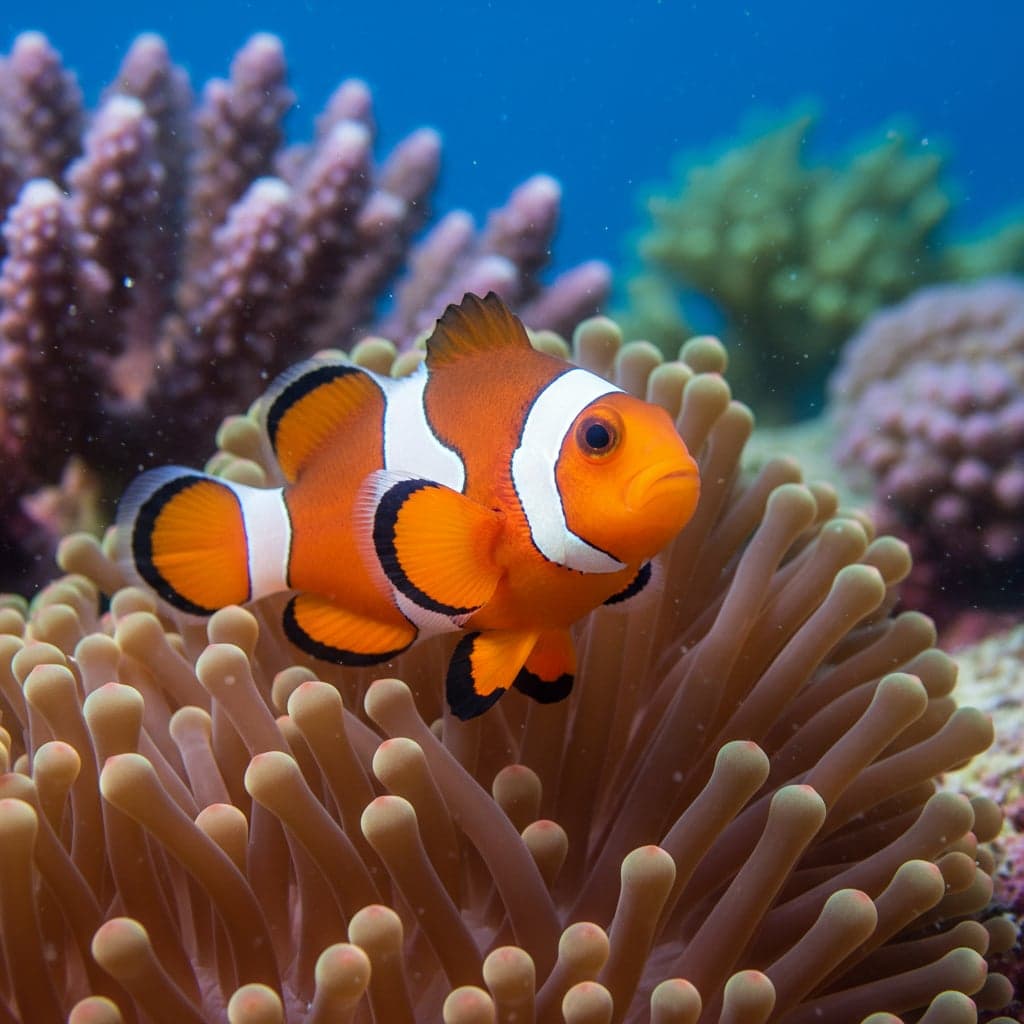
Good companions are other peaceful reef fish — common clownfish, gobies, smaller wrasses, other cardinalfish (including species such as the Banggai cardinalfish in appropriately planned systems) and similar calm stock. Avoid large predators and species that claim every cave.
It is fully reef-safe: it leaves corals and ornamental invertebrates alone. That makes it an easy, gentle addition to soft- or stony-coral reefs where temperament and feeding access, not diet risk, are the planning constraints.
Breeding
Cardinalfish such as Ostorhinchus parvulus are paternal mouthbrooders: after spawning, the male holds the eggs in his mouth until they hatch. Some cardinalfish are bred in captivity, and a calm, well-fed pair or group may spawn in a mature reef. Rearing the young still requires dedicated larval culture; do not buy the species expecting a casual home breeding project, but know that mouthbrooding behaviour is part of what makes apogonids interesting to watch.
Common Health Issues
Hardy but not parasite-proof. Ich and velvet follow shipping stress and poor oxygen. Thin fish after introduction usually point to food competition or inadequate evening feeding, not a mysterious “cardinal disease.” Quarantine new arrivals, keep water quality stable, and provide shaded daytime shelter.
Given a calm community, rock to hide in and regular meals when the lights are low, the red-spot cardinalfish is a peaceful, dependable and beginner-friendly reef fish — soft motion and a night shift without the husbandry drama of larger carnivores.