Red Stripe Angelfish
The Red Stripe Angelfish (Centropyge eibli), or Eibl's angelfish, is a hardy, pinstriped dwarf angel — a popular reef-with-caution fish for medium tanks.
Red Stripe Angelfish
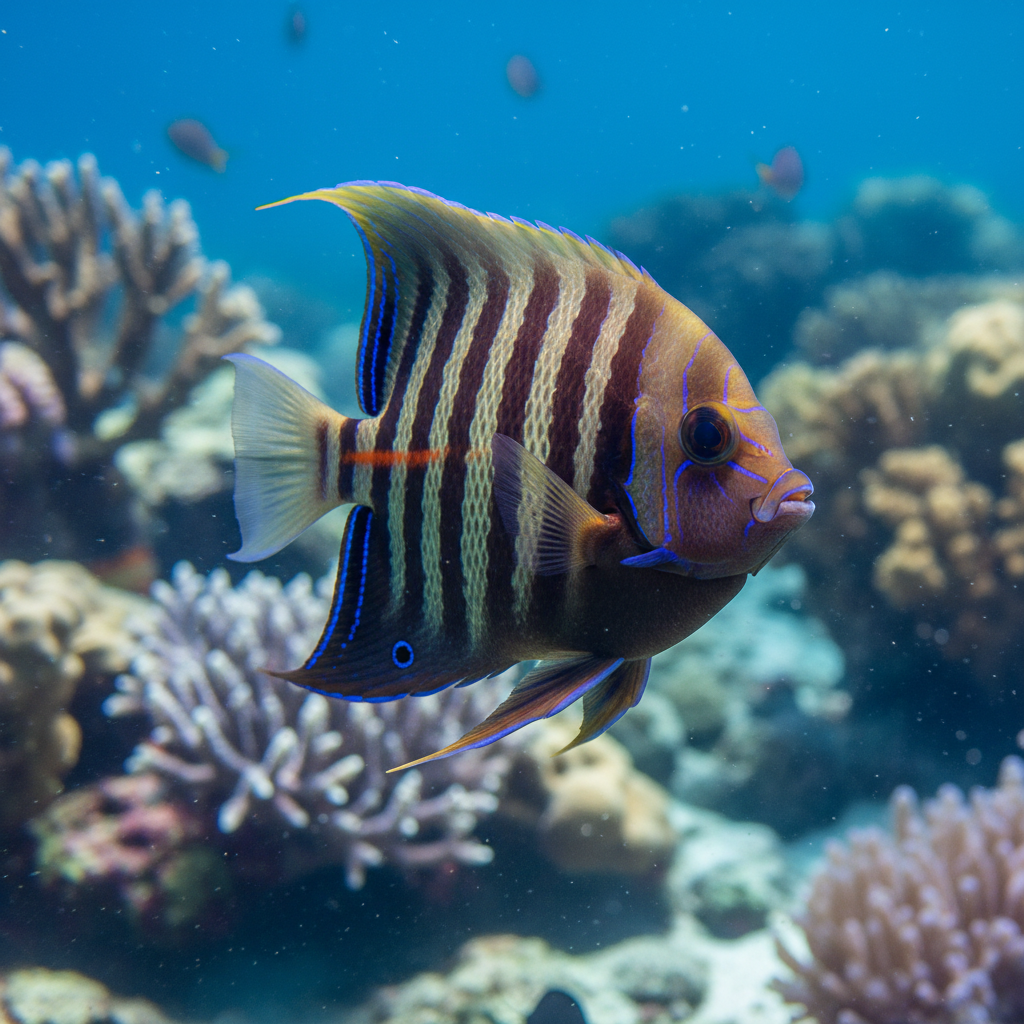
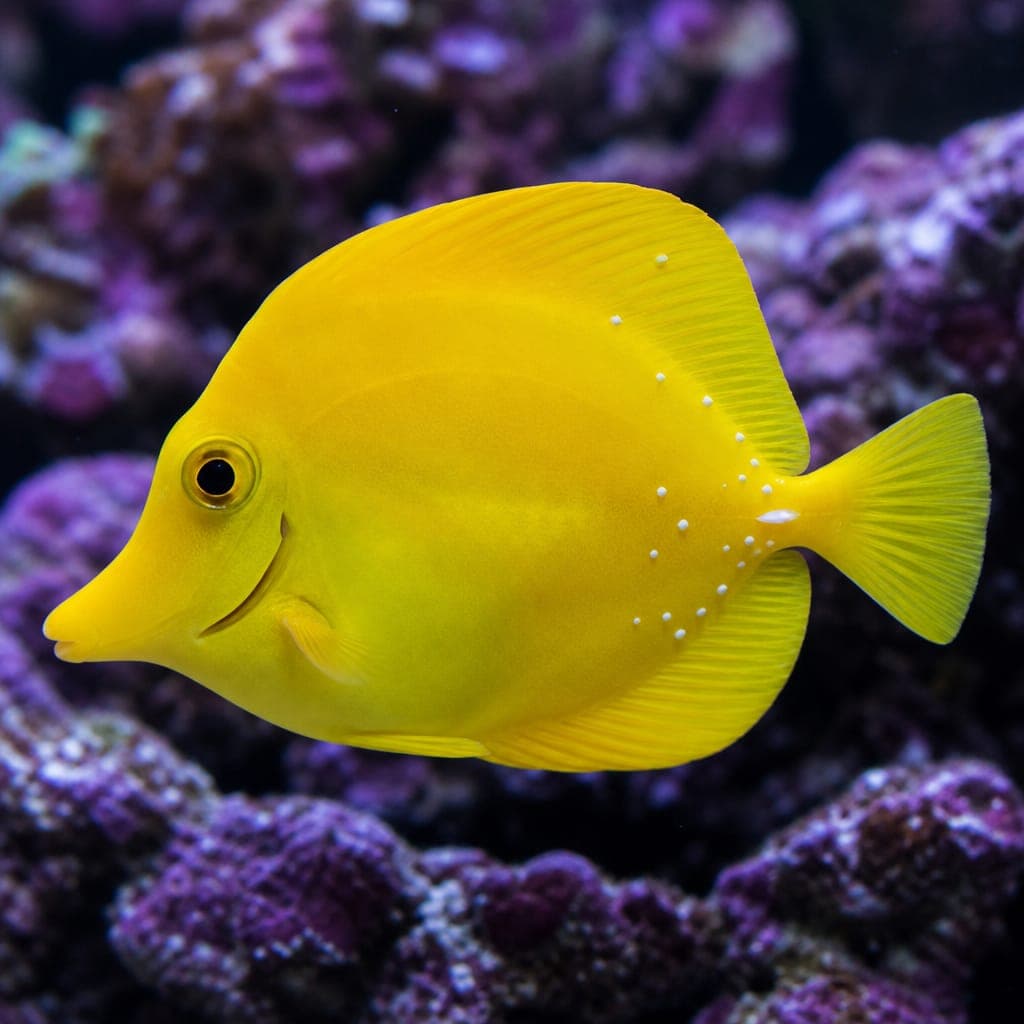
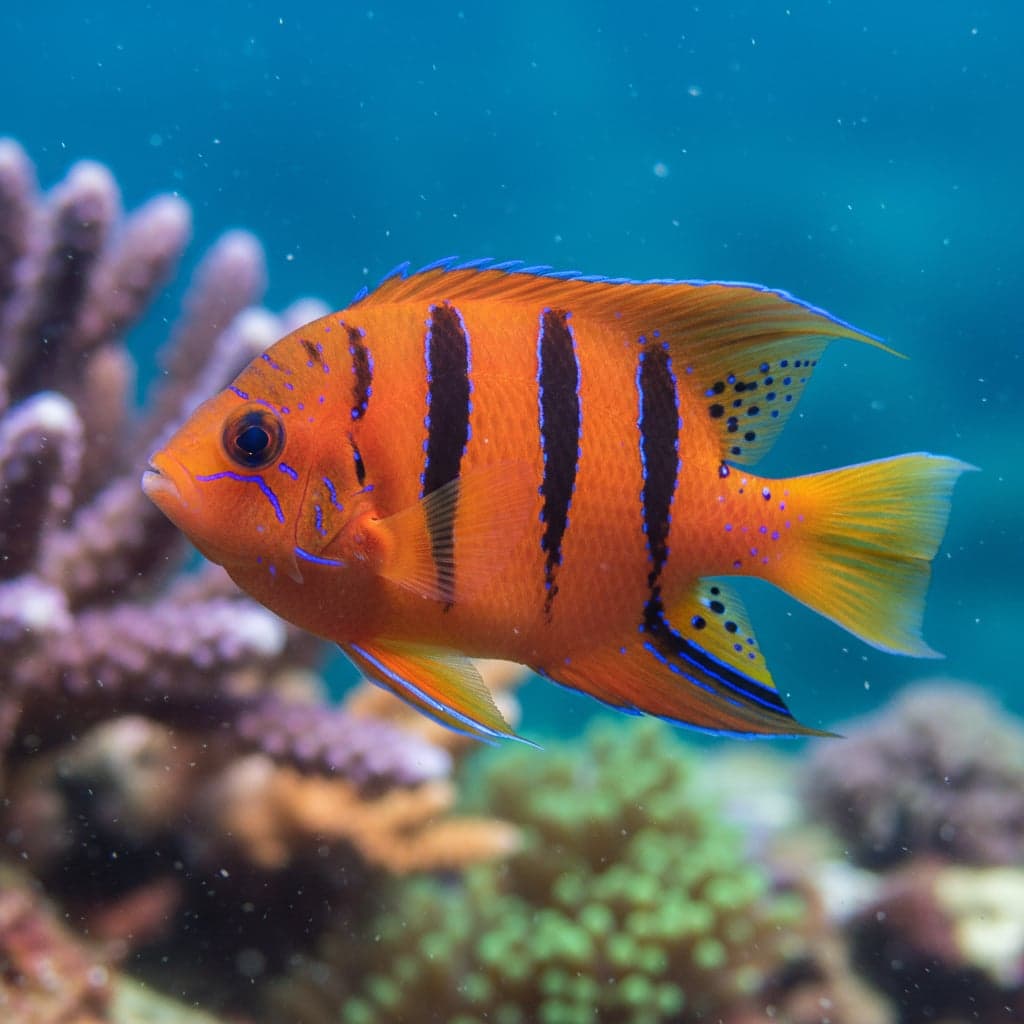
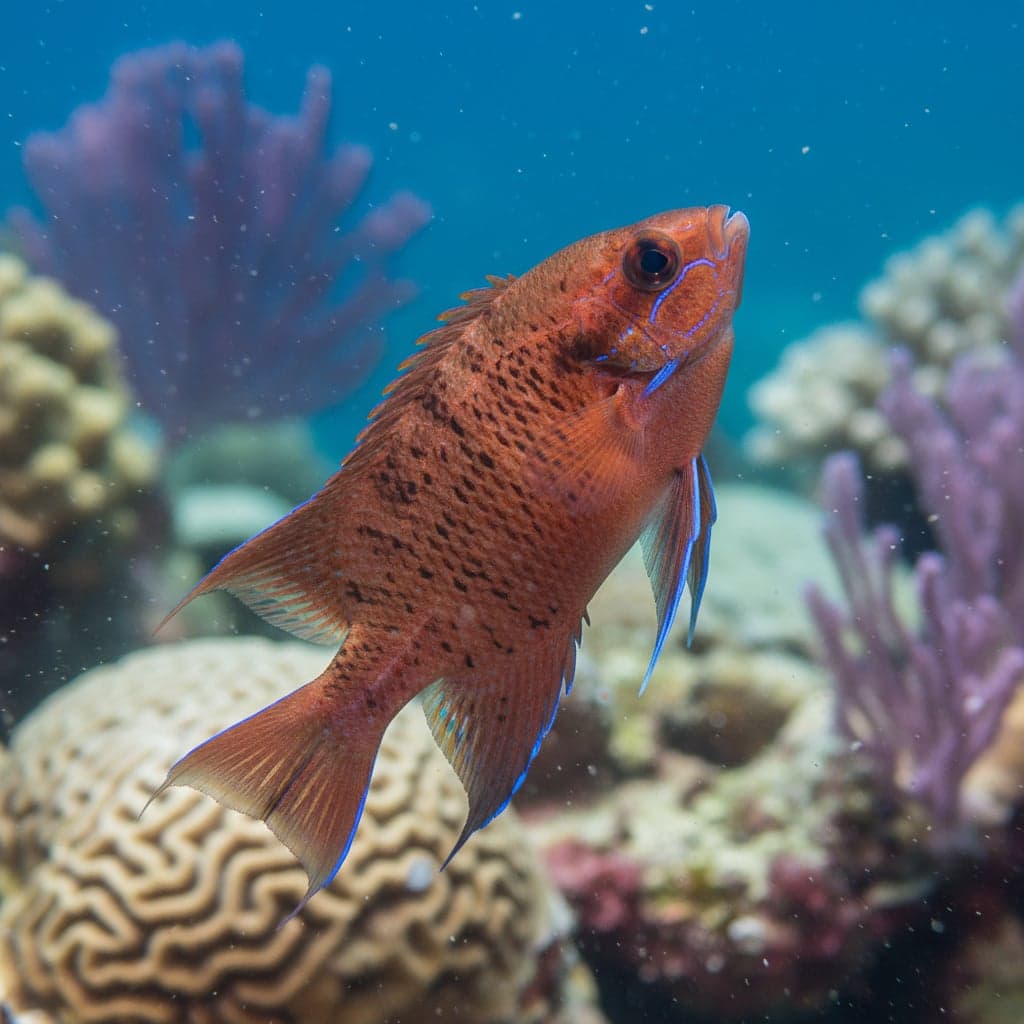
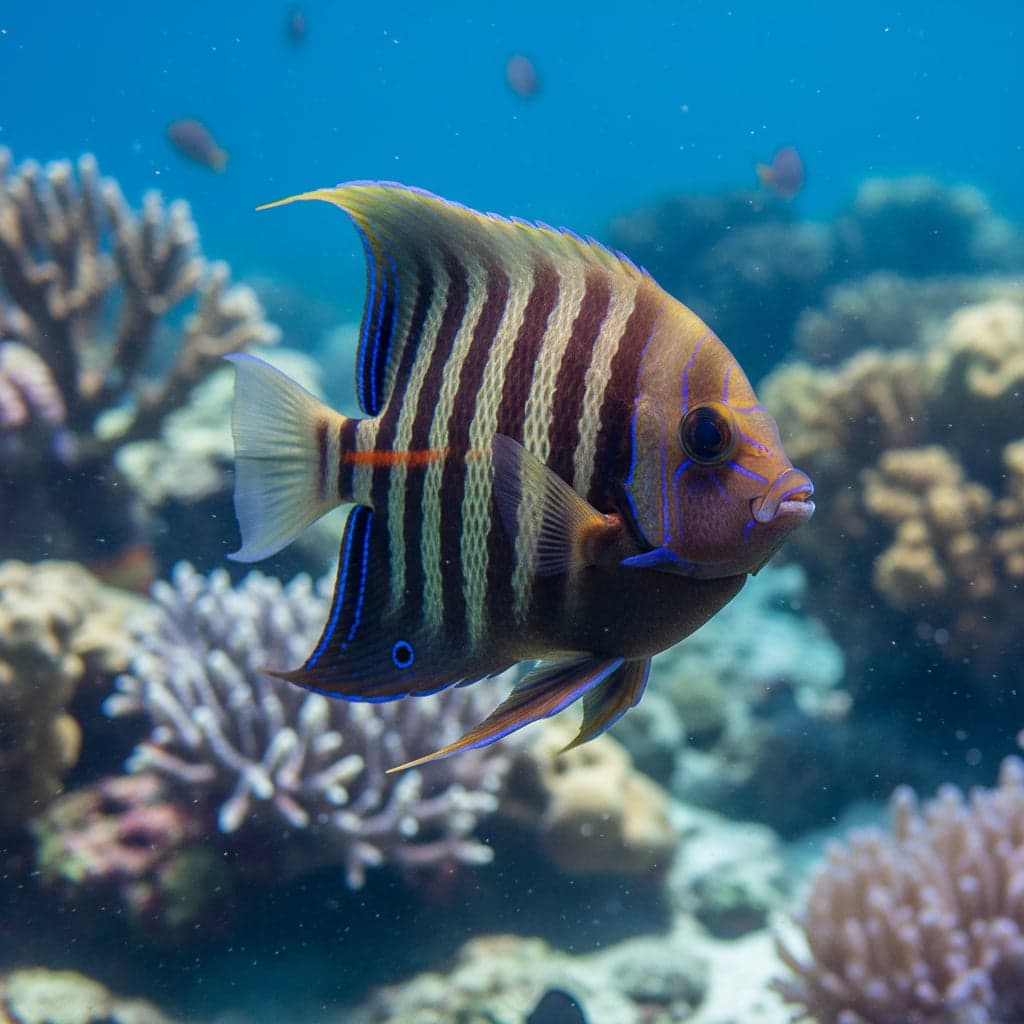
The Red Stripe Angelfish (Centropyge eibli), better known as Eibl's angelfish, is a larger dwarf angel with a pale grey-tan body finely pinstriped in orange-red, a yellow-rimmed eye and a dark-edged caudal. It looks delicate. It is not. Among Centropyge, this is one of the hardier trade species, and the one whose juvenile colouration is copied so closely by a surgeonfish — Acanthurus tristis — that shops regularly mix the two up. The tell is the mouth and the caudal peduncle spine: the tang has both, the angel has neither.
At roughly 15 cm (6 inches) it sits at the top of the dwarf-angel size range. That is the number that drives tank choice, not the "dwarf" label. A 200-litre system with continuous live-rock surface is the practical floor; anything smaller leaves a territorial fish with nowhere to turn when it decides the whole rockscape is its claim.
Natural Habitat & Origin
Centropyge eibli is an eastern Indian Ocean and adjacent western Pacific fish, ranging from Sri Lanka and the Andamans through Indonesia and into parts of the western Pacific fringe. Adults work coral-rich rock and rubble slopes, rarely far from cover, picking film algae and the microfauna living in it. They are not open-water swimmers. Territory is a cave plus the grazing surfaces around it, patrolled in short dashes rather than long circuits.
That habitat is why aquarium rockwork matters more than open swimming room. Give it holes it can fully enter, overhangs it can sit under, and rock faces with established film algae. A sterile, newly aquascaped tank with polished rock and no biofilm is a diet problem dressed up as a habitat problem — the fish settles badly because there is nothing to graze between feedings.
Care Requirements
Hold marine parameters steady rather than chasing perfect numbers: specific gravity about 1.024–1.026, pH 8.1–8.4, temperature 24–26°C (75–79°F). Alkalinity and calcium matter if you keep stony coral in the same system, but the angel itself fails more often from ammonia spikes, nitrate climbing unchecked, and shipping stress than from a tenth of a pH unit.
The size-versus-tank rule for this species is simple. Fifteen centimetres of territorial Centropyge needs linear rock to claim, not just volume. A tall, narrow 200 L box with a single rock pile concentrates aggression; a longer footprint of the same volume spreads it. Add the fish after the quieter community is already established — never as the first resident that then decides every later arrival is an invader.
A mature system with months of biofilm growth on the rock is worth waiting for. Fresh rock and brand-new sand leave an omnivore that evolved to rasp surfaces all day with nothing to rasp. That gap shows up as weight loss in the first fortnight even when frozen food is offered on schedule.
Use the Aquarium Tracker to log salinity, temperature and nitrate against your own readings — drift that looks small on paper is what pushes a newly imported angel into disease.
Diet & Feeding
In the wild C. eibli is a continuous grazer: filamentous and film algae, sponges and tunicates in small amounts, plus the amphipods, copepods and other microfauna living in that film. The wild diet is therefore omnivorous with a heavy plant and detritus bias, not a pure meat diet and not a pure herbivore diet either.
Captivity collapses that into two or three scheduled meals, which is why so many dwarf angels waste on flake alone. Build the staple around marine angelfish or herbivore preparations that include spirulina and marine algae, then rotate frozen mysis, enriched blends and finely chopped seafood. Clip-on nori or similar dried algae fills the grazing gap between meals. A tank that already grows green film on the rock does more for this fish than any single premium pellet.
Feed small amounts two to three times a day rather than one large dump. A hungry Centropyge samples coral polyps and clam mantles more readily; a well-fed one still might, but the risk drops. Watch the belly outline behind the pectoral — a pinched look after a week of "eating everything offered" means the offerings are wrong, not that the fish is fine.
Behavior & Temperament
Semi-aggressive and territorial, especially toward other dwarf angels and toward similarly shaped, similarly coloured fish. One Centropyge per tank is the default rule under about 400 litres. In larger systems a second may work if added together as juveniles and given separated rock territories, but most home reefs do better with a single fish.
Toward unrelated tankmates it is usually manageable once settled: it works the rock, ducks into cover when startled, and claims a cave it returns to at night. The bold streak shows at feeding time and when a new fish is introduced into its established rock. That is mechanism, not mood — the fish defends the grazing surfaces that keep it alive.
Tank Mates
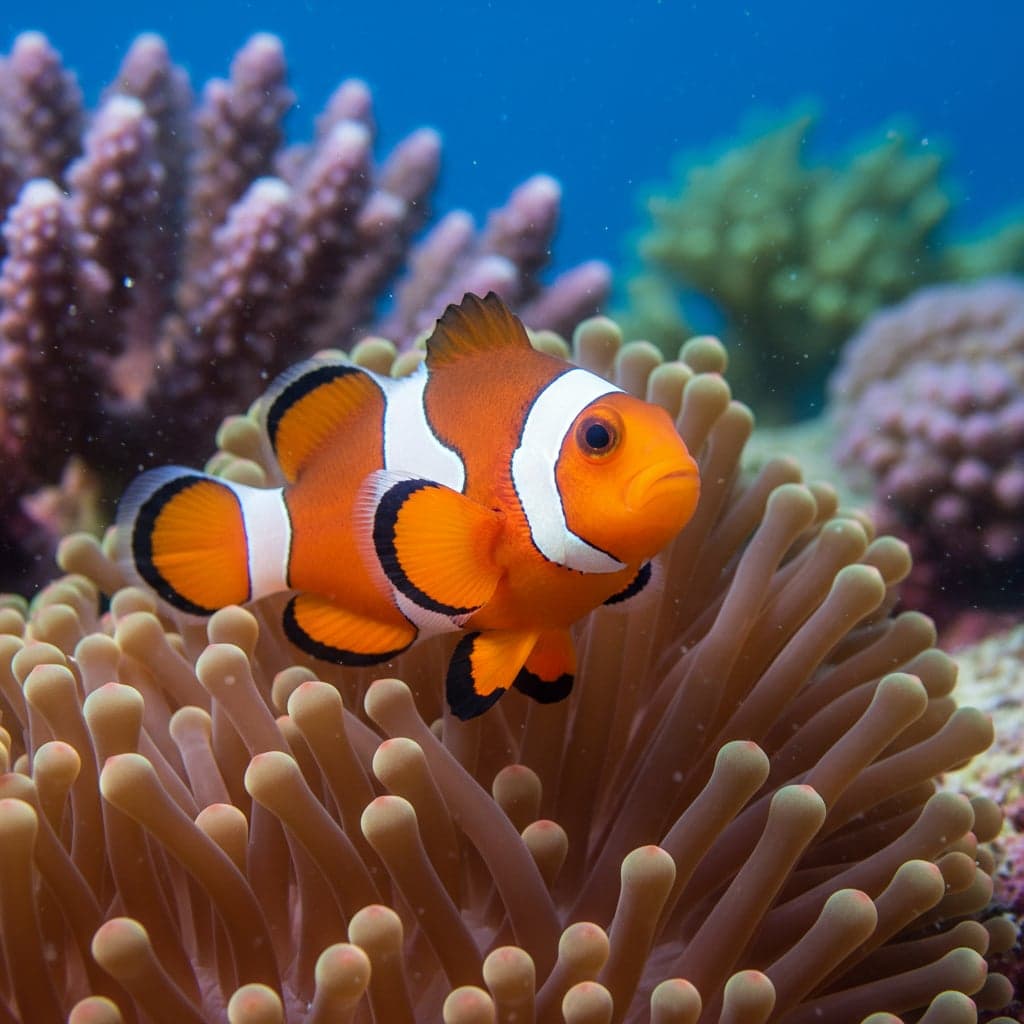
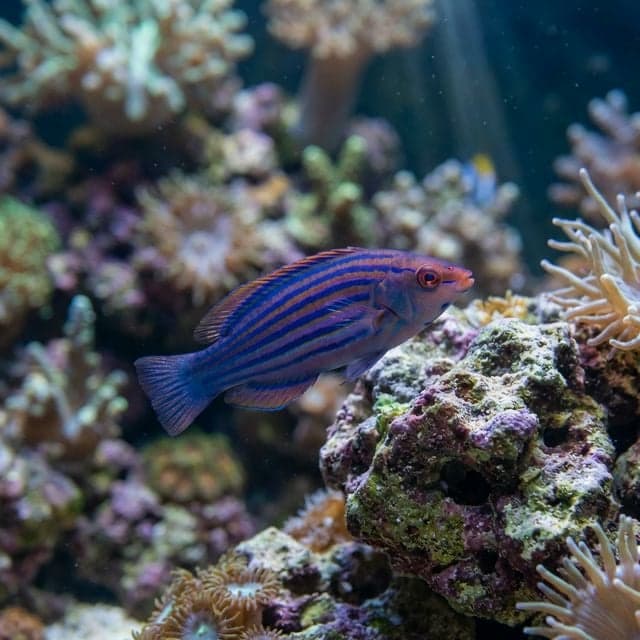
Peaceful to semi-aggressive reef fish in different niches work: clownfish, gobies, blennies, most wrasses, anthias and larger tangs in systems big enough for the tang. Avoid other dwarf angels unless the tank is genuinely large. Avoid very aggressive dottybacks and triggers that will pin a dwarf angel in its cave until it stops eating.
Reef safety is the real decision point, and the mechanism is dietary, not malice. Centropyge jaws and behaviour evolved to pick sessile invertebrates and algae off hard surfaces. Coral polyps, zoanthid mats and Tridacna mantles are sessile soft tissue on hard surfaces. Some individuals never touch them; others systematically crop LPS flesh and clam mantles within weeks. There is no reliable colour or locality test that predicts which. Treat every C. eibli as reef-with-caution: feed heavily, watch for the first week after introduction, and have a fish-only or soft-coral backup plan if it starts nipping. SPS-only systems sometimes tolerate them better than LPS-heavy ones, but that is a tendency, not a guarantee.
Do not assume a pinstriped juvenile in a shop bag is the angel — check for the caudal spine; the mimic tang carries one.
Breeding
Centropyge eibli is a protogynous hermaphrodite: fish mature as females, and the dominant individual in a social unit can change to male. They are pelagic spawners; rearing planktonic larvae is specialised work, so almost every trade specimen is still wild-collected. Buy a feeding, alert fish with intact fins rather than a bargain that has already stopped eating.
Common Health Issues
Like most wild-caught marine fish, C. eibli is exposed to marine ich (Cryptocaryon irritans) and velvet (Amyloodinium ocellatum) during collection and shipping. Stress strips the mucus barrier; the parasites take hold; the fish arrives looking fine and breaks out ten days later in the display. That timeline is why a bare-bottom quarantine of at least four weeks is not optional theatre — it is the difference between treating one fish in a hospital tank and tearing down a reef to chase tomonts through live rock.
Copper and many other ich medications kill invertebrates and damage biological filtration — treat in quarantine, never in the display. Watch for flashing, clamped fins, heavy breathing and white spots; velvet can look like a dusty film and kills faster than classic ich. Stable salinity and temperature, cover and continuous grazing reduce stress once the fish is clean. HLLE (head and lateral line erosion) tracks poor diet, stray voltage and chronic organics — fix the environment rather than chasing a miracle supplement.
A feeding, quarantined C. eibli in a 200 L+ mature system with real rock surface is a hardy, characterful dwarf angel. Skip quarantine or starve the grazing surface and "hardy" stops meaning anything.