Red Tailed Red Eyed Puffer: Carinotetraodon irrubesco
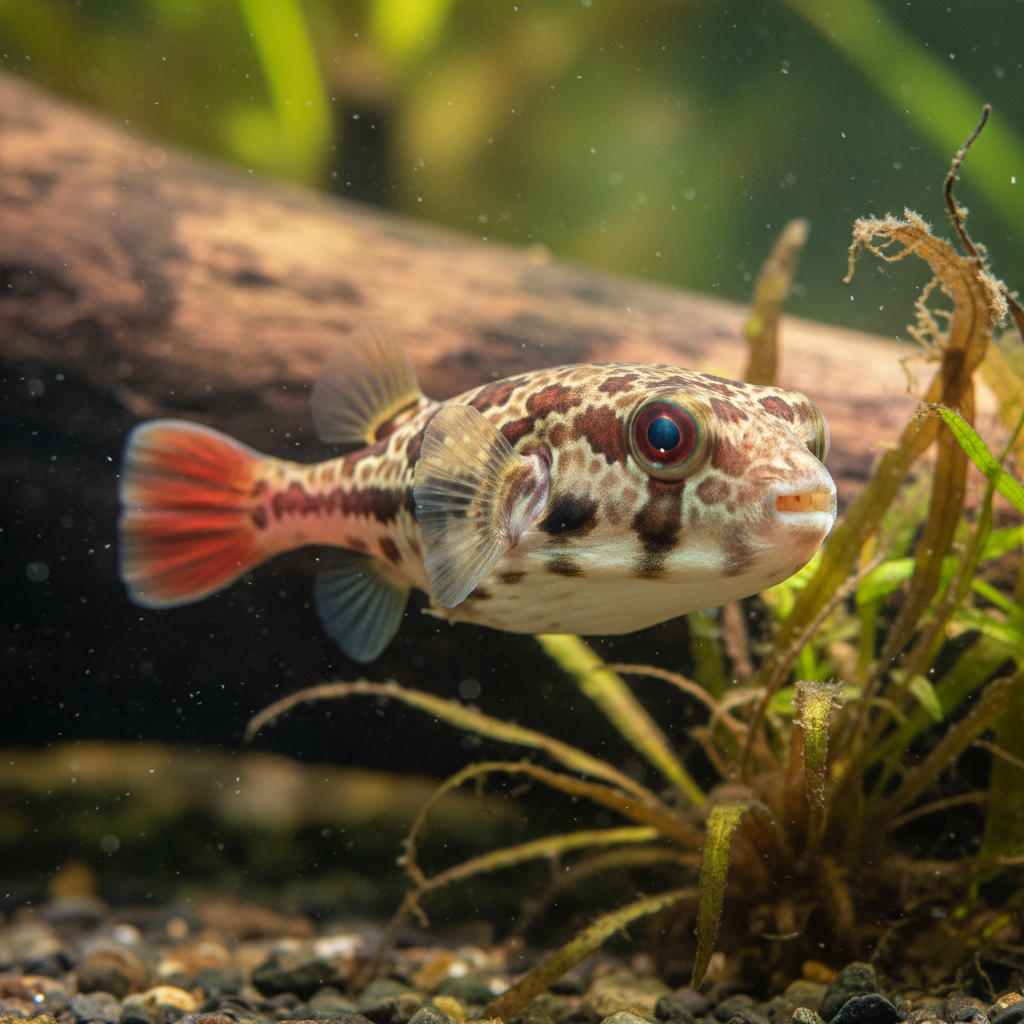
A striking, slightly larger cousin of the Dwarf Puffer featuring demonic red eyes and a bright crimson tail on the males.
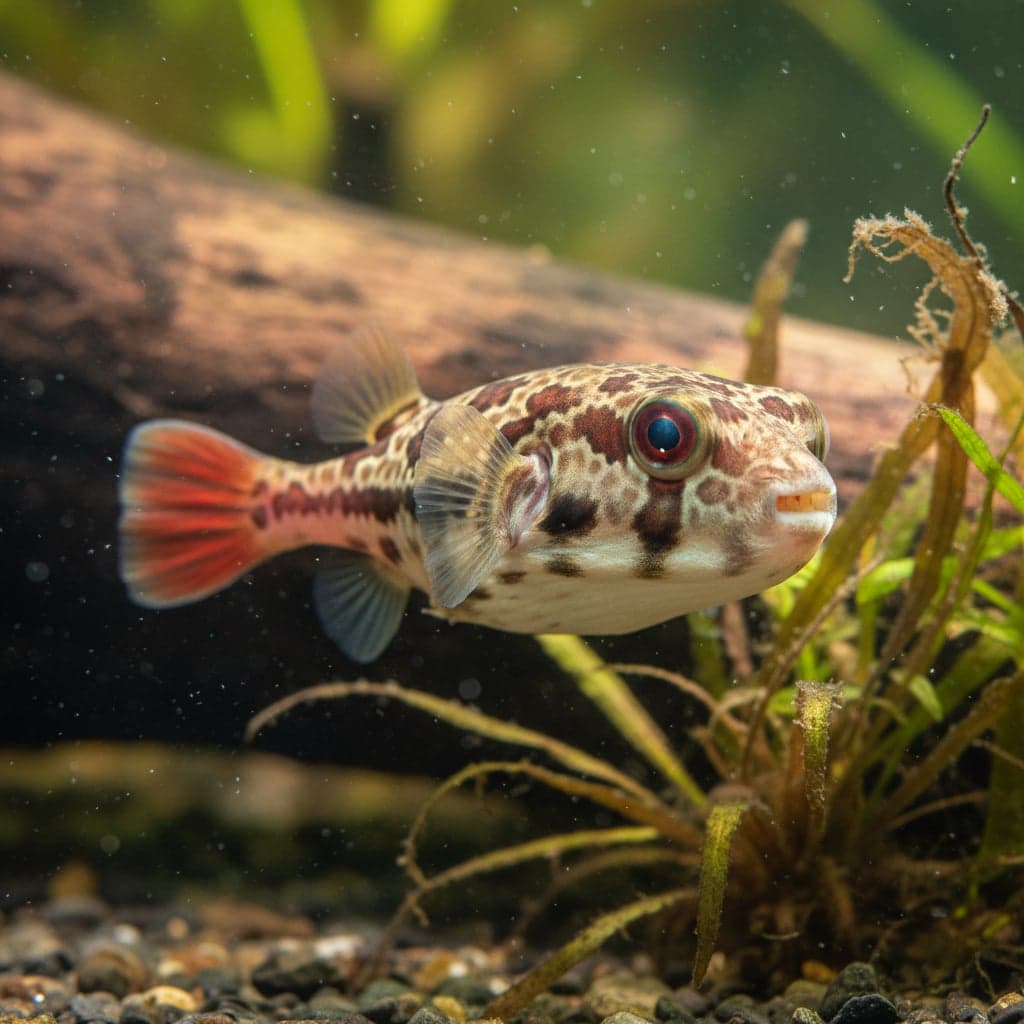
Red Tailed Red Eyed Puffer
The Red Tailed Red Eyed Puffer, scientifically known as Carinotetraodon irrubesco, is a striking and captivating species that has garnered the admiration of aquarium enthusiasts. This pufferfish is identifiable by its distinctive red tail and vibrant red eyes, which create a stunning contrast against its olive-green to brownish body. These unique visual characteristics make it a desirable addition for aquarists who appreciate aesthetically pleasing fish. Beyond its beauty, the Red Tailed Red Eyed Puffer is also significant in the aquarium hobby due to its highly interactive and inquisitive nature; it often displays playful behaviors, engaging with its environment in fascinating ways.
In the aquatic setting, the Red Tailed Red Eyed Puffer brings a lively presence and an array of personality traits. Known for their intelligence, these fish often exhibit problem-solving skills akin to some of the most interactive freshwater species. While they are a relatively rare find compared to other puffer varieties, their charming demeanor and striking appearance have led to an increase in popularity, making them an excellent choice for hobbyists looking to add a unique species to their collection. When properly cared for, the Red Tailed Red Eyed Puffer can become a memorable centerpiece in a well-maintained aquarium.
Natural Habitat & Origin
The Red Tailed Red Eyed Puffer hails from the tranquil waters of freshwater rivers and streams in Southeast Asia, particularly in regions of Indonesia and Malaysia. This species is commonly found in blackwater habitats, characterized by dark-stained waters rich in tannins from decomposing plant matter and organic debris. Such environments often feature a slow current and a substrate of sand or fine gravel, along with scattered leaf litter and submerged wood, which provide essential shelter and breeding grounds. Understanding the natural habitat of the Red Tailed Red Eyed Puffer is crucial for replicating optimal conditions in captivity, ensuring their health and vitality.
Care Requirements
To ensure the well-being of the Red Tailed Red Eyed Puffer, precise water parameters must be maintained within the aquarium. Ideal conditions include a pH range of 6.0 to 7.5, a water temperature of 74°F to 82°F, and a moderate hardness level around 5-15 dGH. These fish thrive in environments that mimic their natural habitat, so providing a spacious aquarium—preferably a minimum of 30 gallons—is essential. The tank should feature a soft sandy substrate to protect their sensitive bodies, ample hiding spots through driftwood and rocks, and live plants that can withstand their playful nature. Low to moderate lighting levels are preferable, as they mimic their dark, shaded habitats and reduce stress.
Diet & Feeding
The Red Tailed Red Eyed Puffer is classified as an omnivorous species with a predilection for a diverse diet. In captivity, they thrive on a mixture of high-quality dry flakes, pellets, and frozen or live foods. A well-balanced diet rich in protein is crucial for their health; therefore, offering them a variety of protein sources, such as bloodworms, brine shrimp, and snails, is highly recommended. Snails are particularly important, as they help wear down the puffer’s continuously growing beak-like teeth. It’s essential to avoid overfeeding, which can lead to health issues; instead, offer small meals two to three times a day to keep them satisfied and active.
Behavior & Temperament
The Red Tailed Red Eyed Puffer is known for its curious and playful personality. While these fish can exhibit territorial behaviors, particularly as they mature, they are generally more social than many other puffer species. They prefer ample space to swim and explore; thus, vertical swimming space is as critical as horizontal. Although they may occasionally display aggression during feeding times or when establishing territory, careful tank management and an appropriate selection of tank mates can help mitigate these tendencies.
Tank Mates
When considering tank mates for the Red Tailed Red Eyed Puffer, it is vital to choose compatible species that can coexist peacefully without becoming targets of aggression. Suitable tank mates include larger community fish like Rasboras, certain types of Tetras, and medium-sized catfish that are not particularly fin-nippy. Avoid small or slow-moving fish, as well as those with long fins, which may be viewed as prey. It is crucial to monitor interactions between fish closely, especially in the initial setup, to ensure a harmonious and balanced aquarium environment.
Breeding
Breeding the Red Tailed Red Eyed Puffer in captivity can be challenging but rewarding for dedicated aquarists. To create optimal spawning conditions, it is essential to provide a separate breeding tank with controlled water parameters, including a slightly acidic pH and softened water. The presence of flat surfaces or dense vegetation can encourage the female to lay eggs. After the spawning process, it is advisable to remove the adult fish to prevent them from consuming the eggs, which can happen if left unattended. Successful breeding may also require conditioning the fish with a nutritious diet prior to attempting to spawn.
Common Health Issues
Like many freshwater species, the Red Tailed Red Eyed Puffer can be susceptible to specific health issues if not properly cared for. Common ailments include ich, fin rot, and various parasitic infections, frequently resulting from poor water quality or stress. To prevent these issues, maintaining excellent water quality through regular filtration and partial water changes is essential. Additionally, quarantining new fish before introducing them to the main aquarium can help reduce the risk of disease transmission. Observing their behavior and appearance closely will allow for early detection and treatment of any health concerns, ensuring a thriving and healthy tank environment.