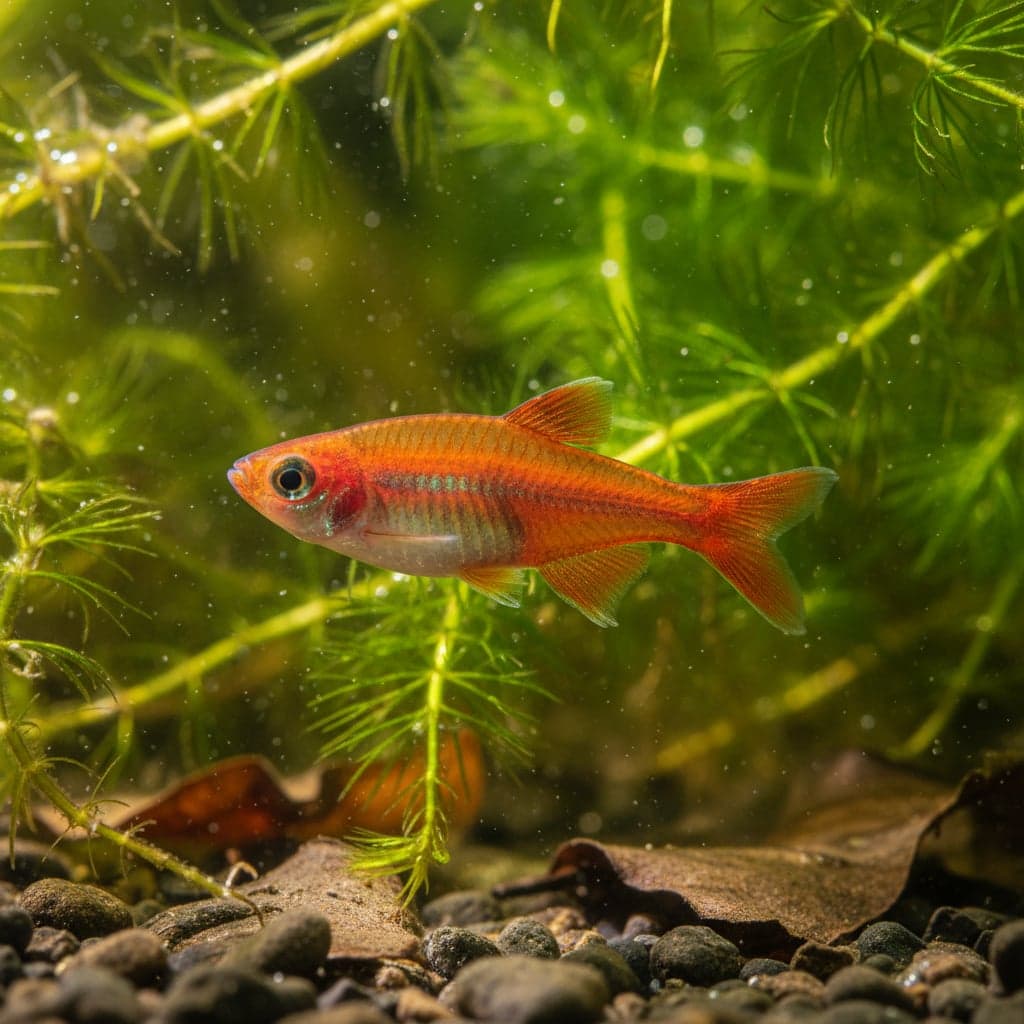
Somphong's Dwarf Rasbora: Trigonostigma somphongsi
A rare, delicate micro-rasbora for mature soft-water tanks at 24-27°C, pH 6.0-7.0. Group size, feeding and why it suits experienced keepers.
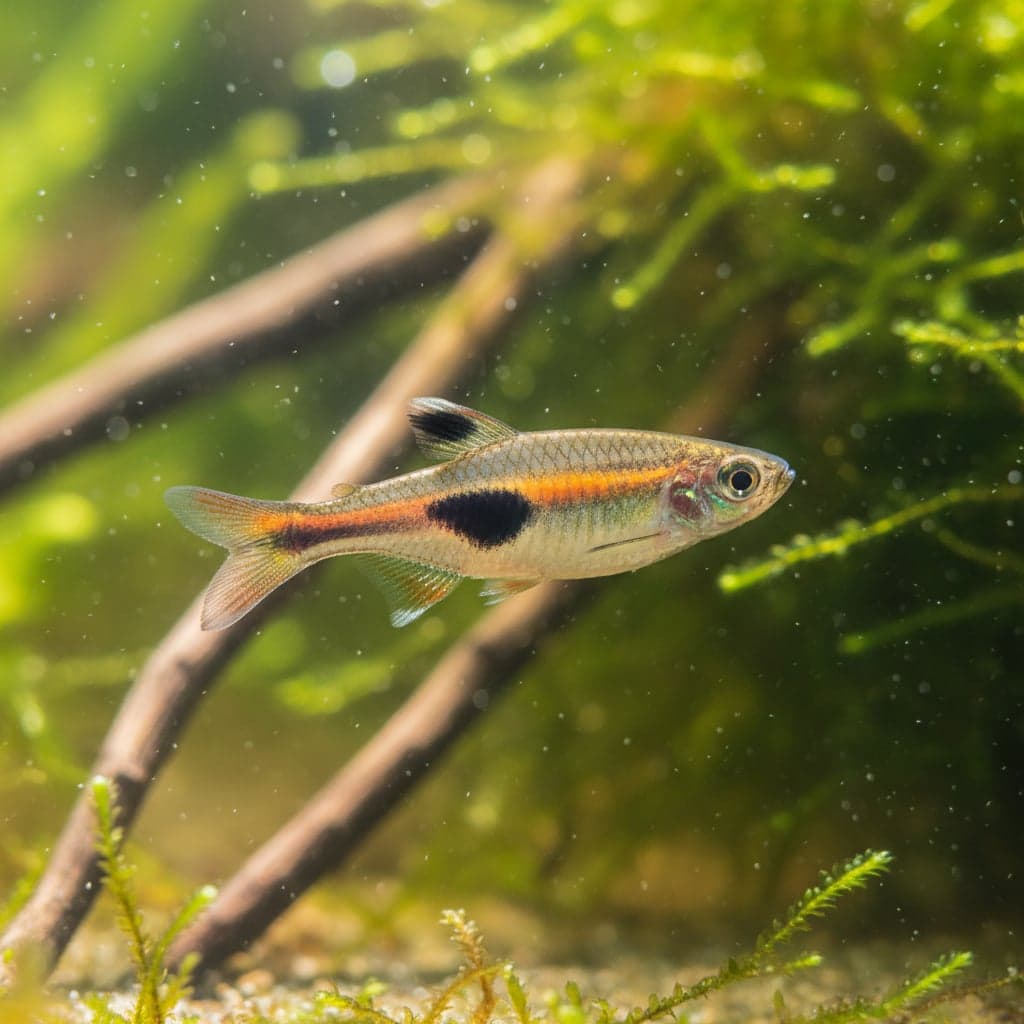
Somphong's Dwarf Rasbora
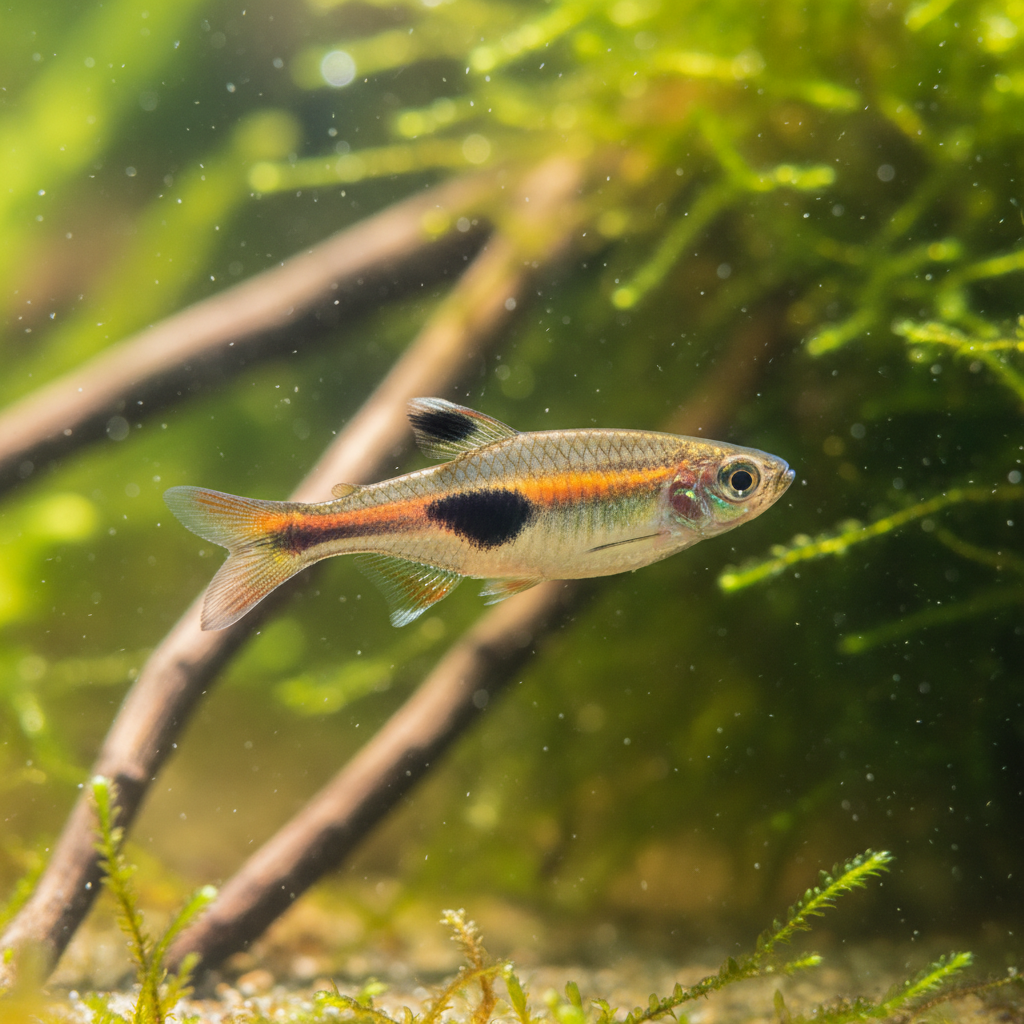
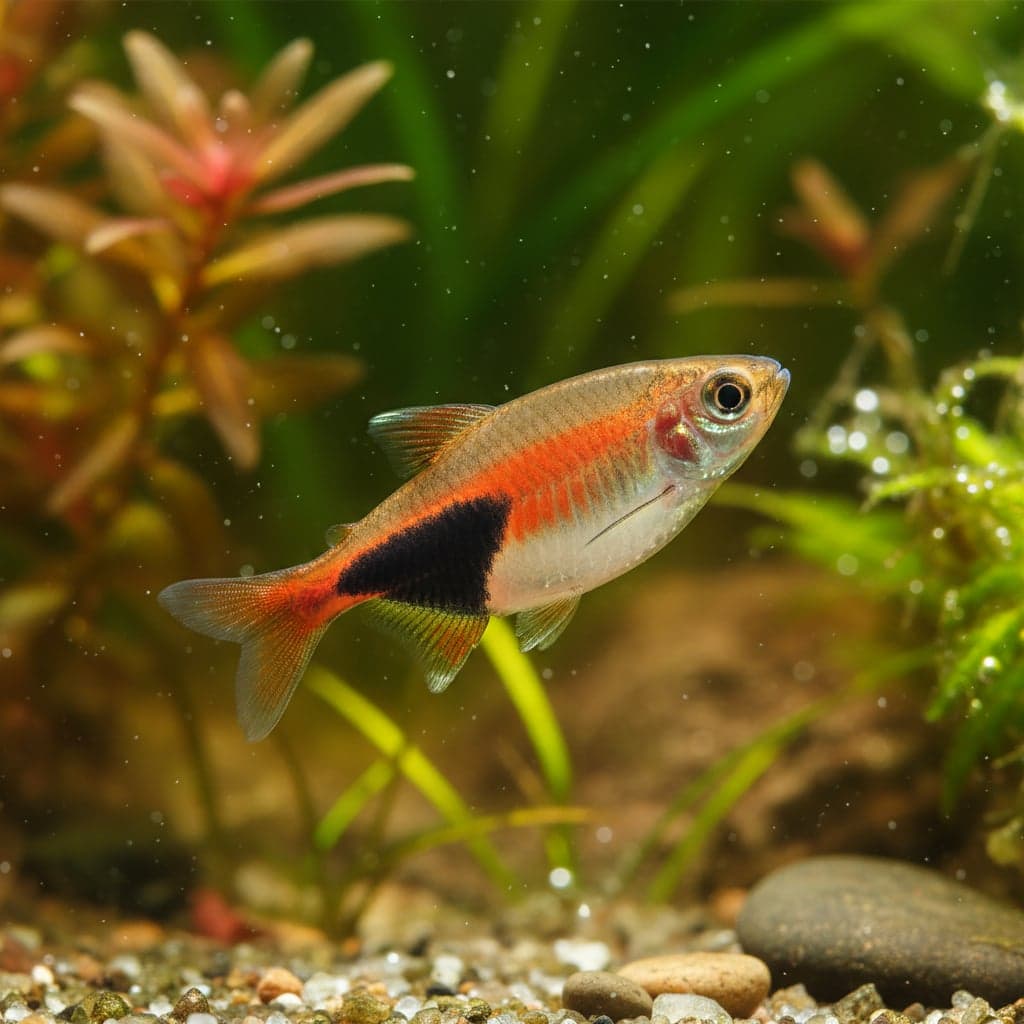
Somphong's Dwarf Rasbora (Trigonostigma somphongsi) is a captivating freshwater fish that has gained popularity among aquarium enthusiasts due to its vibrant coloration and calm demeanor. Typically growing to a size of about 1 to 1.5 inches, this small cyprinid showcases a striking appearance with a translucent body marked by vivid orange to red hues, complemented by contrasting black markings. The combination of its gentle disposition and stunning visual appeal makes it an ideal candidate for community aquariums, where it can thrive alongside compatible species. This attractive fish is not only about looks; its presence can bring life to a tank, as it actively engages in schooling behavior and exhibits playful activity.
In the aquarium hobby, Somphong's Dwarf Rasbora holds significance beyond its aesthetic charm. It serves as a symbol of the rich biodiversity found in Southeast Asian freshwater ecosystems. The delicate balance of colors and patterns on its body is an evolutionary adaptation that helps it blend seamlessly into its natural habitat, often dominated by lush vegetation in slow-moving waters. As a schooling fish, it encourages hobbyists to cultivate a community environment that mimics its social structure, further emphasizing the importance of appropriate tank dynamics. The combination of its visual allure and sociable nature makes Somphong's Dwarf Rasbora a standout choice for both novice aquarists and seasoned collectors alike.
Natural Habitat & Origin
Somphong's Dwarf Rasbora is native to the freshwater rivers and streams of Southeast Asia, particularly in Thailand and Laos. These fish inhabit densely vegetated, slow-flowing waters rich in leaf litter, making their natural environment a clear representation of a blackwater habitat. The dark, tannin-stained waters are low in minerals and have a slight acidity, providing an environment well-suited for the species. The presence of various aquatic plants and submerged branches helps to create a safe refuge from predators while offering ample foraging opportunities within their densely vegetated surroundings.
In their natural habitat, the water temperature typically ranges between 75°F to 82°F, with a pH level around 5.5 to 7.0. This specific set of conditions allows Somphong's Dwarf Rasbora to flourish, and replicating these parameters in the aquarium is essential for their health and well-being. Understanding their environmental context provides valuable insight into their requirements, enhancing the success rate of keeping this charming species in captivity.
Care Requirements
To successfully keep Somphong's Dwarf Rasbora in an aquarium, maintaining optimal water conditions is paramount. The ideal pH level for these fish ranges from 5.5 to 7.0, with a preference for mildly acidic to neutral waters. The water temperature should be kept between 75°F to 82°F, while soft to moderately hard water, ideally between 5 to 15 dGH, is recommended. Regular water changes and quality testing are essential to ensure a stable and healthy environment for these delicate fish.
In terms of tank setup, a minimum of a 10-gallon aquarium is recommended to accommodate a small school of at least six individuals to promote their social behavior. The substrate can be natural gravel or sand, mimicking their natural habitat. Providing ample hiding spots through the use of plants, driftwood, and rocky structures will create a secure environment that encourages exploration and swimming. Strong lighting should be avoided; instead, soft illumination will promote the growth of aquatic plants, which not only serves as a hiding spot but also enhances the tank's aesthetics, creating a serene atmosphere ideal for Somphong's Dwarf Rasbora.
Diet & Feeding
Somphong's Dwarf Rasbora is classified as an omnivore, possessing a diverse diet that can be easily catered to in captivity. In the wild, these fish forage on small insects, zooplankton, and organic debris found in their natural habitats. In the aquarium, they thrive on a diet that includes high-quality flake foods, small pellets, and live or frozen foods such as daphnia, brine shrimp, and micro-worms. Offering a varied diet not only ensures that they receive the necessary nutrients but also enhances their coloration and overall vitality.
Feeding should be conducted multiple times a day in small amounts, as these fish have small mouths and can only consume small particles. It’s essential to observe their feeding habits to prevent overfeeding, which can lead to water quality issues. A balanced diet that mimics their natural feeding behavior will contribute to their health and longevity in an aquarium setting.
Behavior & Temperament
Somphong's Dwarf Rasbora is known for its peaceful temperament and social demeanor. They exhibit strong schooling behavior and are best kept in groups of six or more, which helps them feel secure, reduces stress, and allows for natural interactions among themselves. In a properly maintained aquarium, they display playful and energetic behavior, often darting through the tank or foraging among plants.
Their behavior is primarily horizontal, swimming in mid to upper water levels. While they are generally non-aggressive, should be kept with similarly sized, peaceful fish to prevent any territorial disputes. Their tranquil nature makes them an excellent addition to community tanks, where they can coexist harmoniously with other gentle species.
Tank Mates
When selecting tank mates for Somphong's Dwarf Rasbora, it’s crucial to choose species that share similar care requirements and behavioral traits. Compatible tank mates include peaceful fish such as:
- Neon Tetras (Paracheirodon innesi)
- Cardinal Tetras (Paracheirodon axelrodi)
- Cherry Barbs (Puntius titteya)
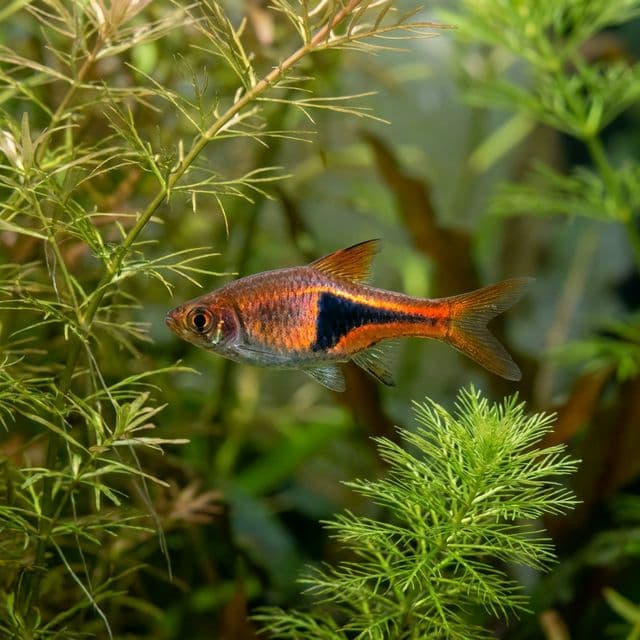
- Small Rasboras (e.g. Harlequin Rasbora)
- Corydoras Catfish (Corydoras spp.)
- Guppies (Poecilia reticulata)
It is important to avoid aggressive or larger species that may perceive these small fish as prey. Species such as bettas, cichlids, and larger barbs should be avoided, as their temperament and size can pose a threat to the well-being of Somphong's Dwarf Rasbora.
Breeding
Breeding Somphong's Dwarf Rasbora in captivity can be rewarding, but it requires specific conditions to encourage spawning. These fish are egg scatterers, meaning that they do not exhibit parental care. To trigger spawning behavior, a dedicated breeding tank should be set up with soft, slightly acidic water and plenty of fine-leaved plants to provide shelter for the eggs. Temperature should be maintained around 78°F to 80°F, and the water should be conditioned with fresh, good-quality food leading up to spawning.
When ready to spawn, males engage in courtship displays that include chasing females and swirling around them. After the female lays eggs (typically around 40 to 100 eggs), she will scatter them among the plants. The adults should be removed shortly after spawning to prevent them from eating the eggs. The eggs will usually hatch within 24-36 hours, and the fry can be fed infusoria or powdered flakes once they are free-swimming. With the right conditions and care, hobbyists can successfully breed Somphong’s Dwarf Rasbora in a home aquarium.
Common Health Issues
Like any other fish species, Somphong's Dwarf Rasbora can develop ich, fin rot, or bacterial infections when water quality declines or stress is high. Keep the tank clean with gentle filtration and regular small water changes, and avoid sudden temperature swings. Quarantine new fish before adding them to a nano community. Early signs include clamped fins, faded colour, or reduced schooling; correct water issues first and treat promptly so these delicate rasboras recover quickly.