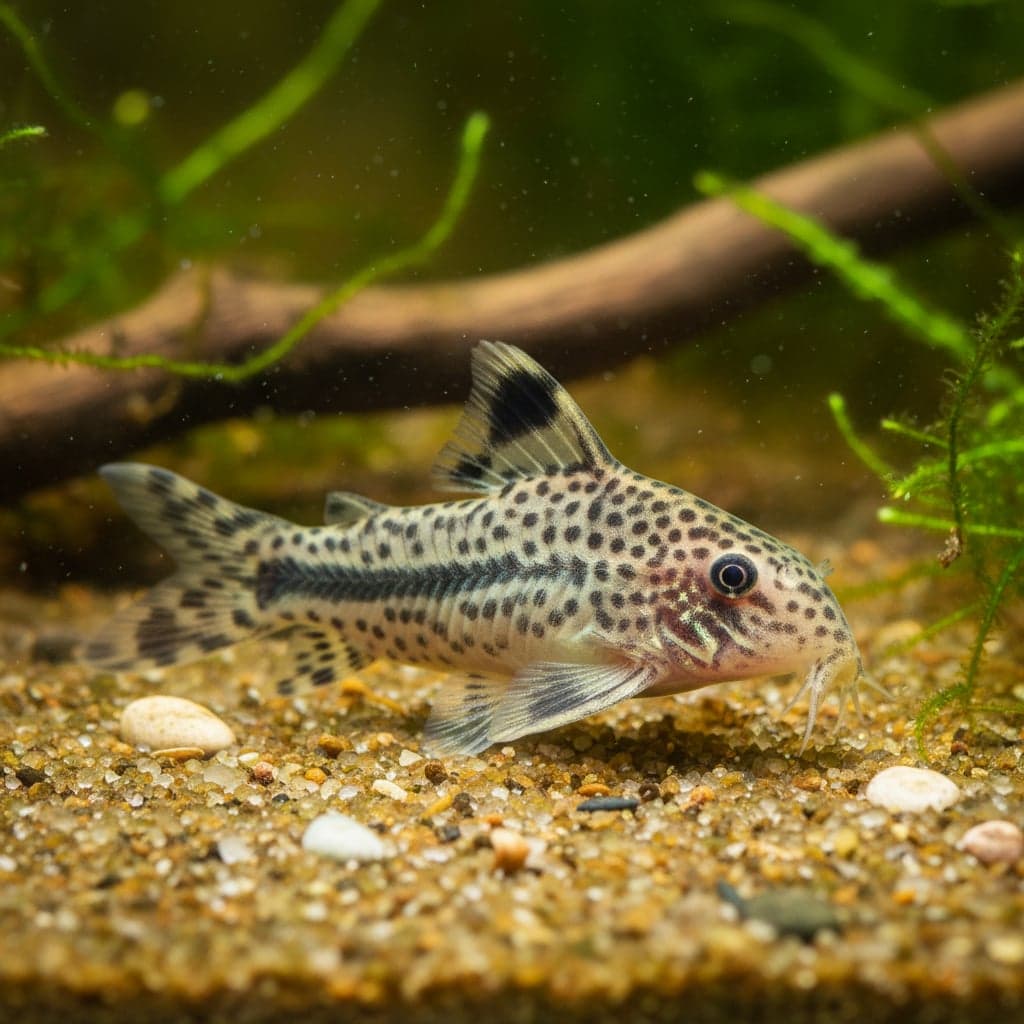
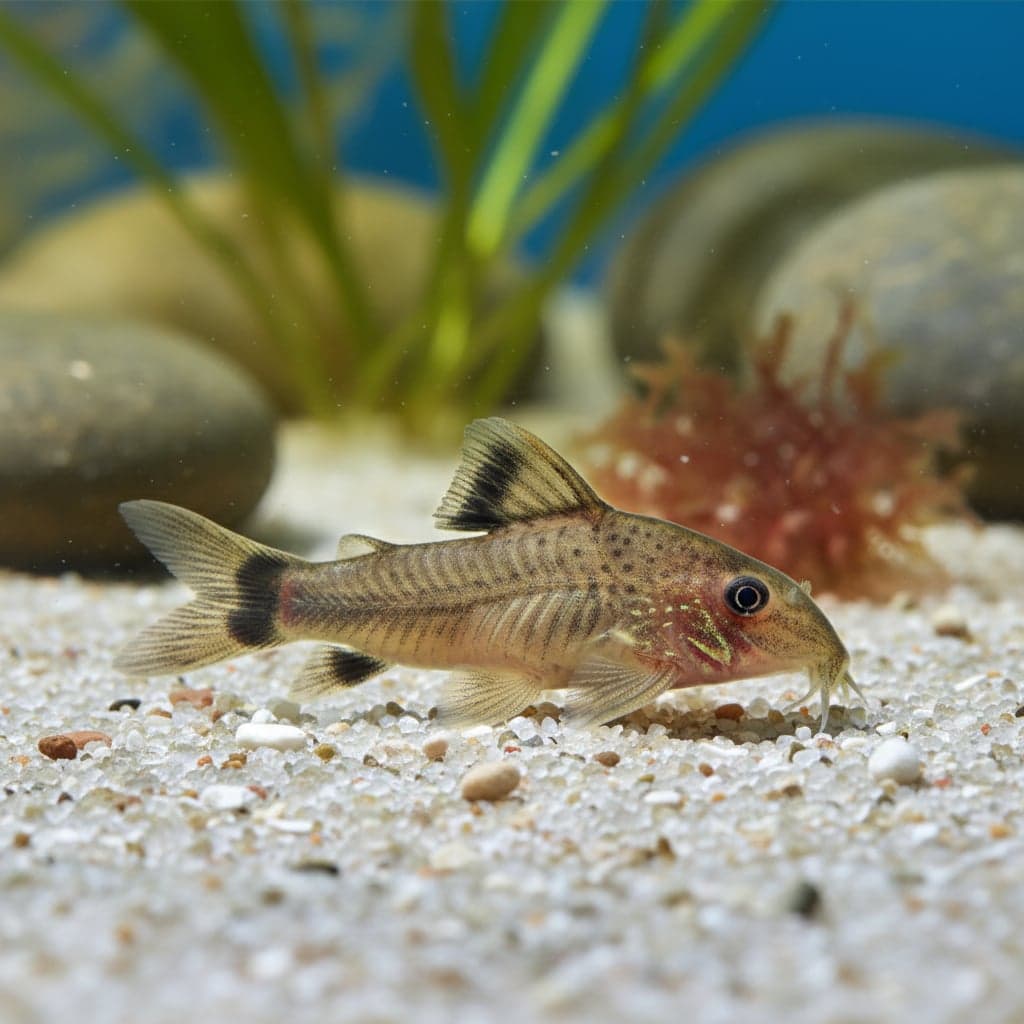
The Sterbai Corydoras: Corydoras sterbai
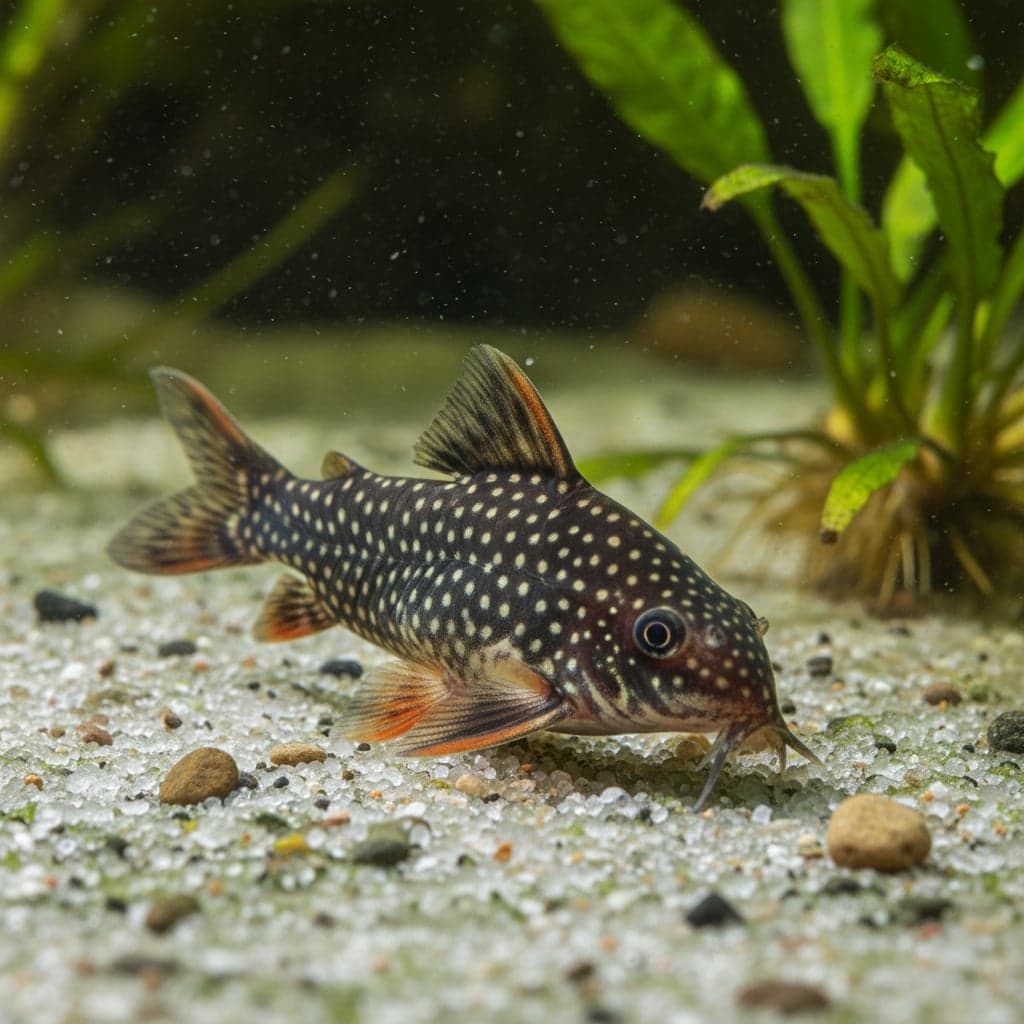
A premium Cory with striking white spots on a dark body and bright orange pectoral fins. Tolerates higher temperatures than other Corys.
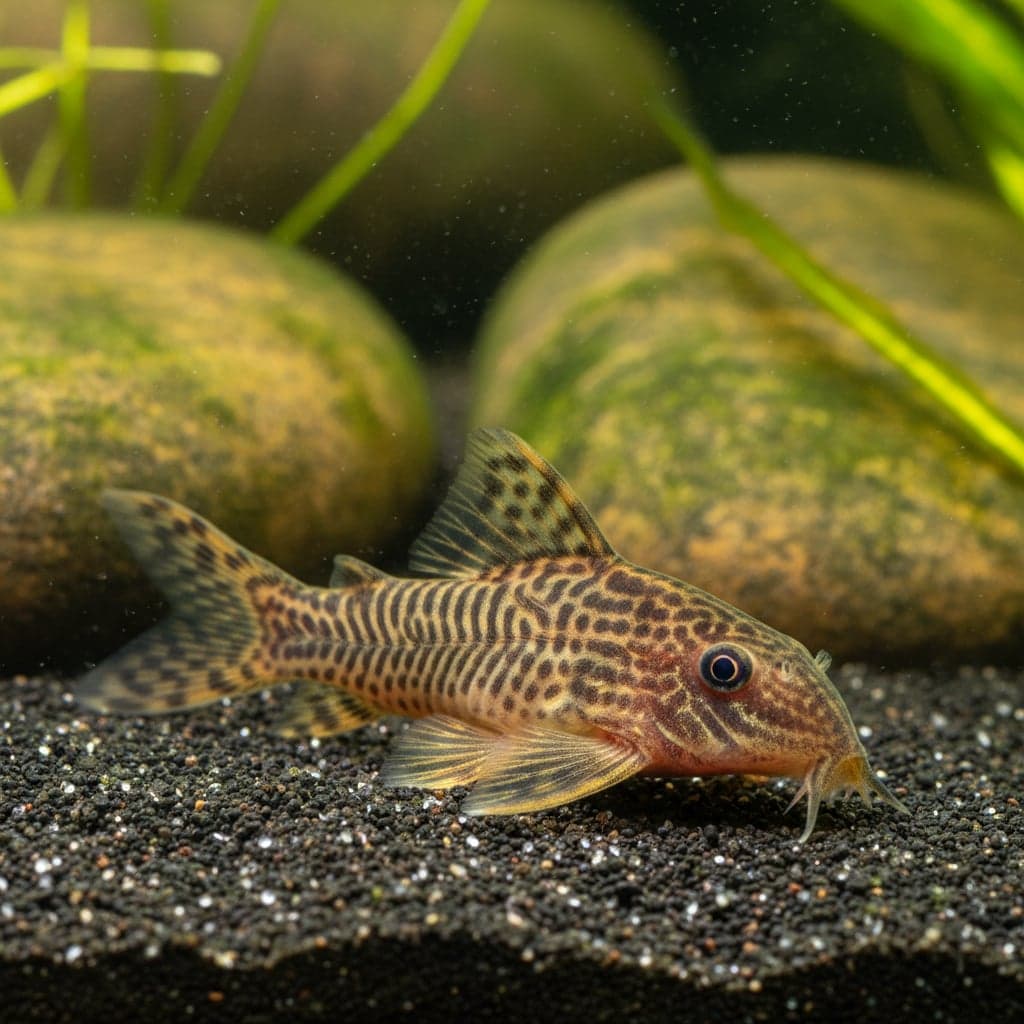
Sterbai Corydoras
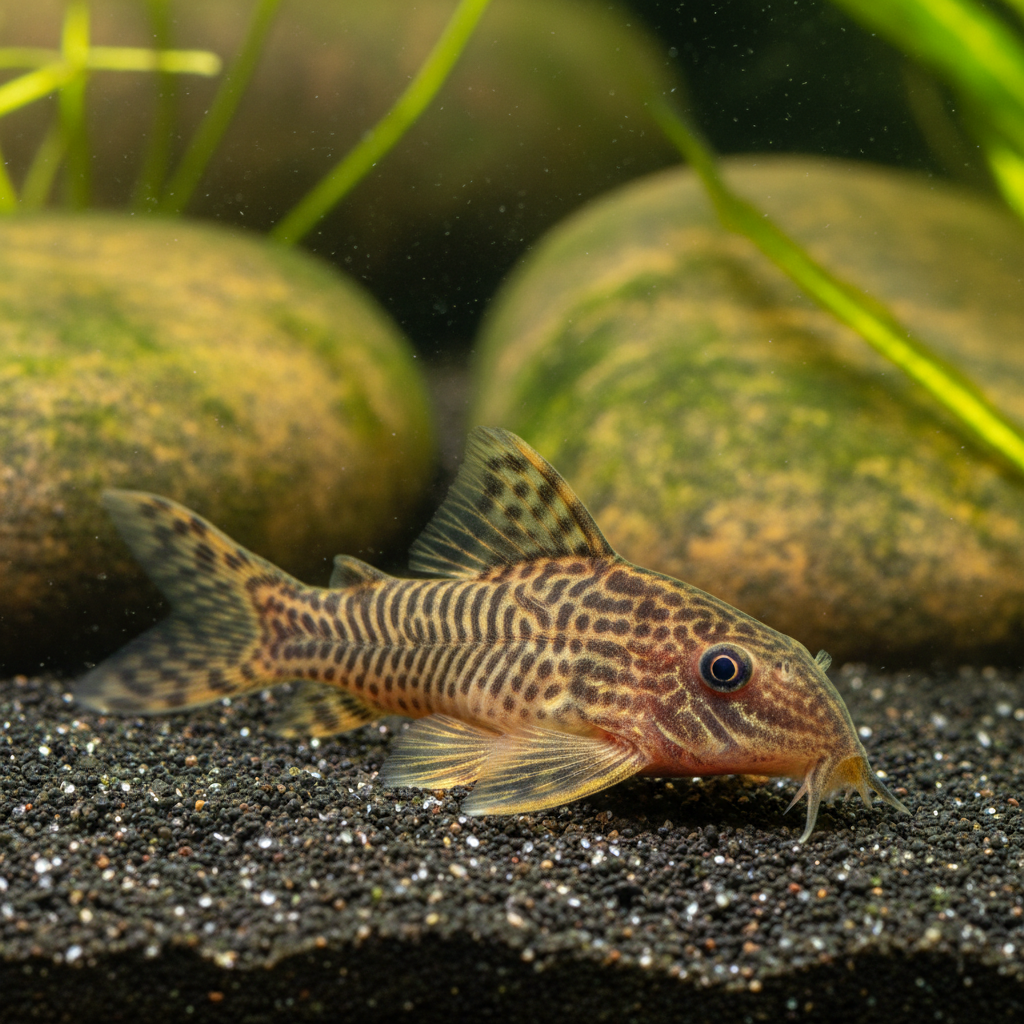
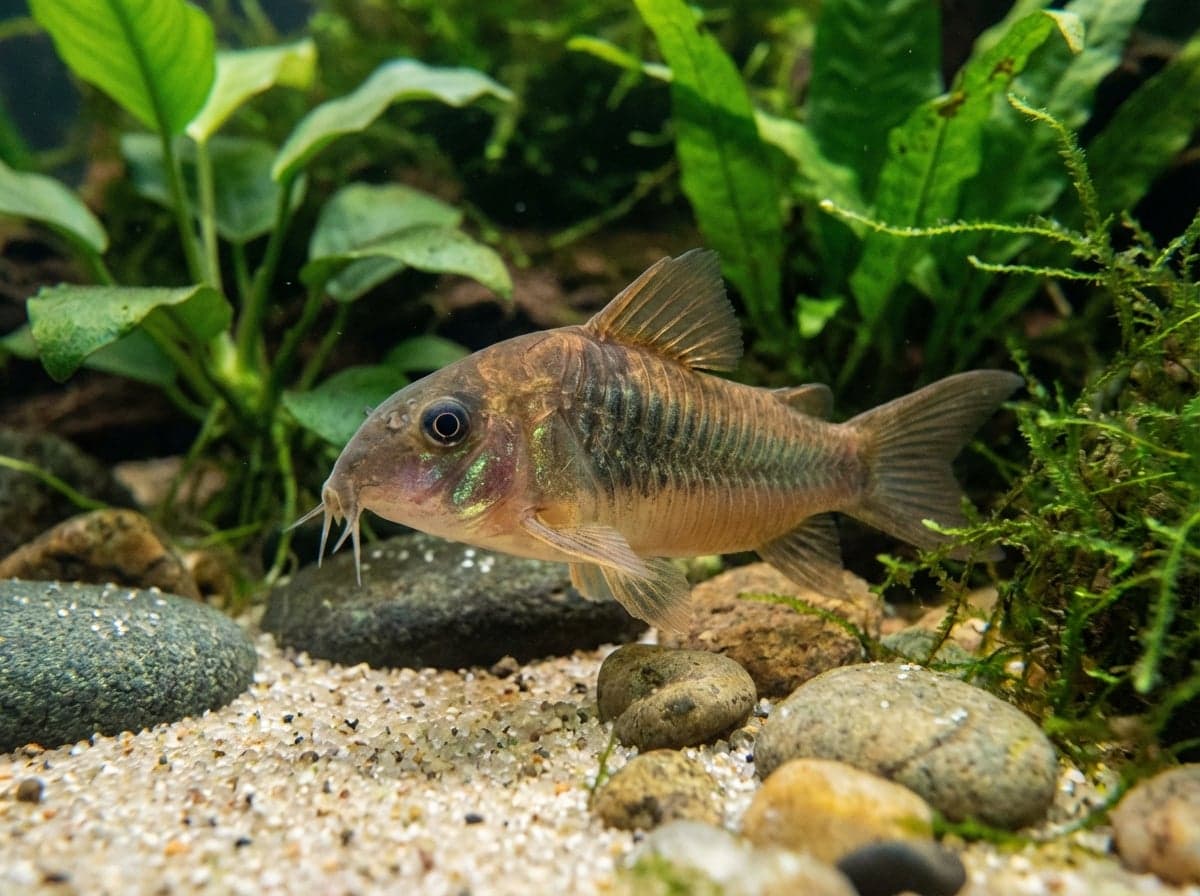
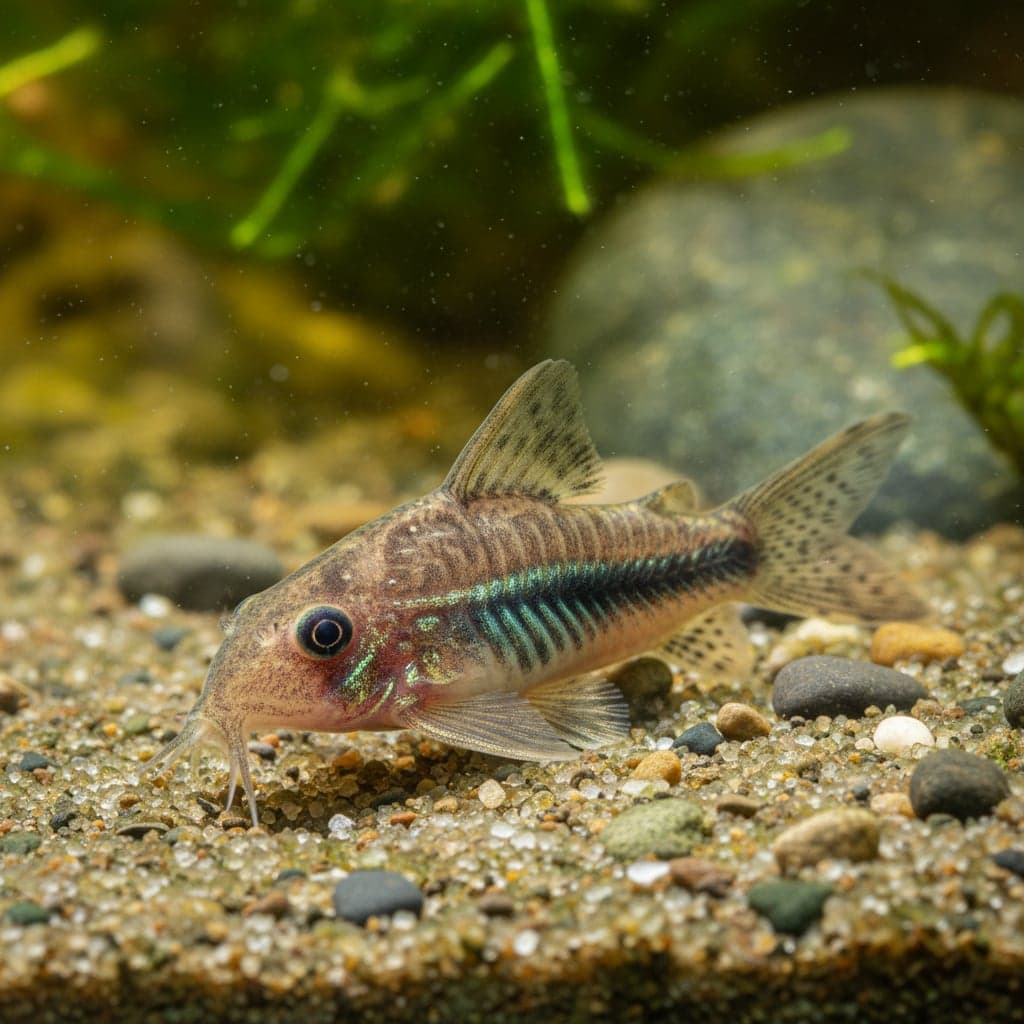
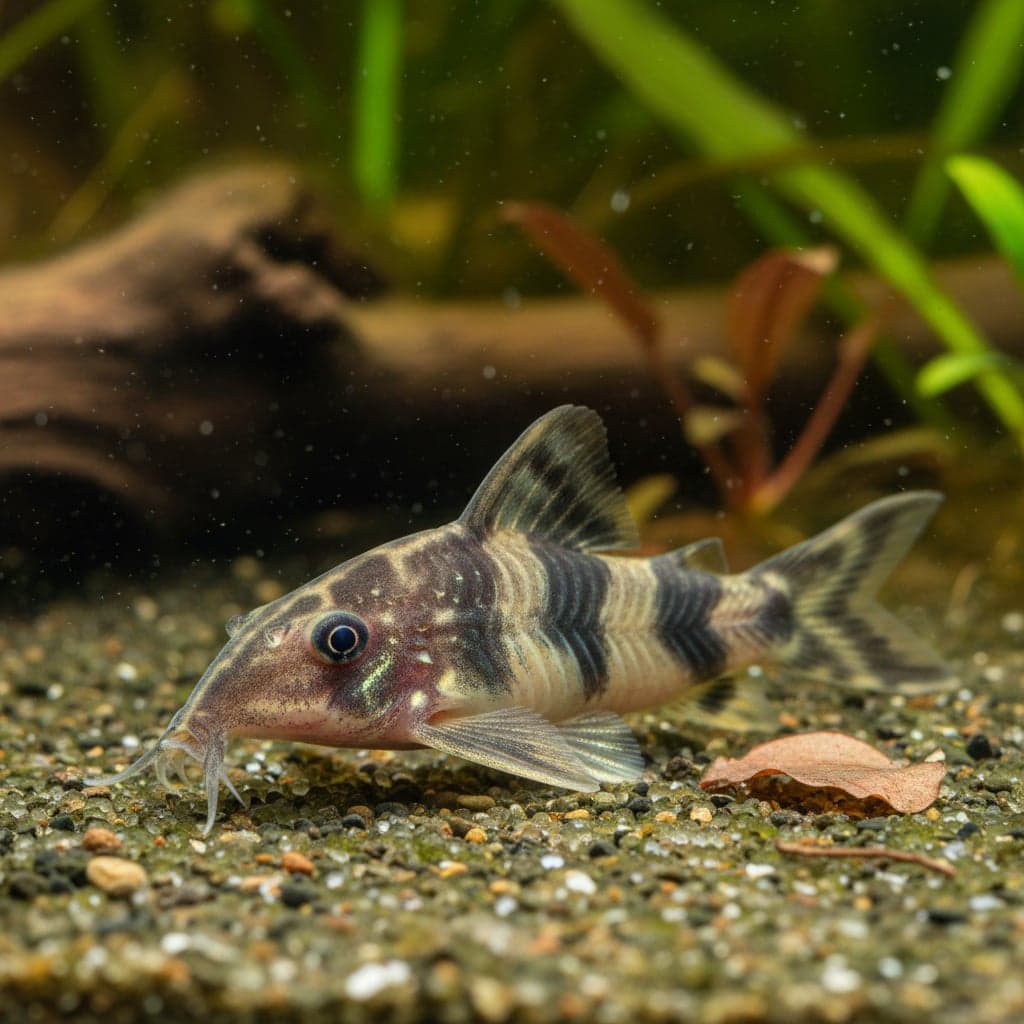
The Sterbai Corydoras, scientifically known as Corydoras sterbai, is a delightful species that has gained popularity among aquarium enthusiasts for its charming appearance and engaging behavior. Characterized by its striking patterns of black spots against a sandy-yellow or light-tan background, this small catfish typically grows to about 2.5 inches in length. Its unique coloration and distinctive barbels give it a visually appealing presence in both planted and community tanks. The Sterbai Corydoras is not only admired for its beauty but also for its vital role in the aquarium ecosystem, acting as a scavenger that helps maintain tank cleanliness by consuming leftover food and detritus.
In addition to its aesthetic appeal, the Sterbai Corydoras holds significance in the aquarium hobby due to its relatively peaceful nature and compatibility with a wide range of other fish species. These sociable little creatures thrive in groups and are known for their playful antics, which can bring life to any aquatic environment. Enthusiasts value the Sterbai Corydoras not only for its role in enhancing the biodiversity of aquariums but also for being a relatively hardy species that is well-suited for both novice and experienced aquarists alike.
Natural Habitat & Origin
The Sterbai Corydoras hails from the diverse waterways of the Amazon Basin, specifically in Brazil, where it inhabits the floodplains and slow-moving streams. This species is typically found in clear to slightly stained blackwater environments, which are rich in organic matter and feature soft, acidic waters. The natural habitat is characterized by dense vegetation, submerged driftwood, and leaf litter, providing both shelter and foraging opportunities for these fish. This ecological context allows the Sterbai Corydoras to thrive and develop its adaptive behaviors that are essential for survival.
These fish are often found in shallow waters where they forage along the substrate for food, relying on their sensitive lateral line and barbels to locate algae and detritus. The specific environmental conditions of their natural habitat contribute significantly to their care requirements in captivity, making it essential for aquarists to replicate these conditions as closely as possible for the wellbeing of this delightful species.
Care Requirements
To ensure optimal health and vitality of the Sterbai Corydoras, specific water parameters should be maintained. The ideal pH level ranges from 6.0 to 7.5, with a temperature of 72°F to 78°F (22°C to 26°C) and a hardness of 2-15 dGH. These parameters closely mirror their natural habitat, providing a conducive environment for their growth and wellbeing. For the tank setup, a minimum aquarium size of 20 gallons is recommended to allow for adequate swimming space and to accommodate a small school of these sociable fish.
The substrate for a Sterbai Corydoras tank should be soft and smooth, such as fine sand or rounded gravel, to protect their delicate barbels as they forage on the bottom. Incorporating plenty of live plants, driftwood, and leaf litter will create hiding spots and mimic their natural habitat. Lighting should be moderate to low to help plants thrive while providing a naturalistic setting. Additionally, maintaining good water quality through regular maintenance, such as partial water changes, will keep the Sterbai Corydoras healthy and thriving.
Diet & Feeding
The Sterbai Corydoras is an omnivorous species that thrives on a varied diet. In the wild, these fish consume a mix of plant matter, detritus, and small invertebrates, making it essential to replicate this diversity in captivity. High-quality sinking pellets or wafers that are specifically formulated for catfish will form the bulk of their diet. In addition to prepared foods, offering a variety of live and frozen foods such as daphnia, bloodworms, and brine shrimp will enhance their diet and encourage natural foraging behavior.
It is crucial to feed Sterbai Corydoras multiple times a day in small amounts to prevent overfeeding and maintain water quality. Supplementing their diet with blanched vegetables like zucchini or spinach can provide essential nutrients and promote overall health. Monitoring feeding behavior is important, as hungry Sterbai Corydoras will often scavenge for food among the substrate, demonstrating their natural foraging instincts.
Behavior & Temperament
The Sterbai Corydoras is known for its engaging and sociable behavior, making it an excellent addition to community tanks. These fish are peaceful and thrive in groups, so it’s best to keep them in schools of at least six individuals to encourage natural social interactions and reduce stress. In a well-established tank, the Sterbai Corydoras will often be seen swimming together near the bottom and actively foraging.
They exhibit minimal aggression, making them compatible with a variety of peaceful tank mates. Typically, they occupy the lower levels or substrate of the aquarium, where they feel most comfortable. Though they primarily dwell near the bottom, the Sterbai Corydoras may occasionally venture up to mid-water if they feel secure, particularly during feeding time.
Tank Mates
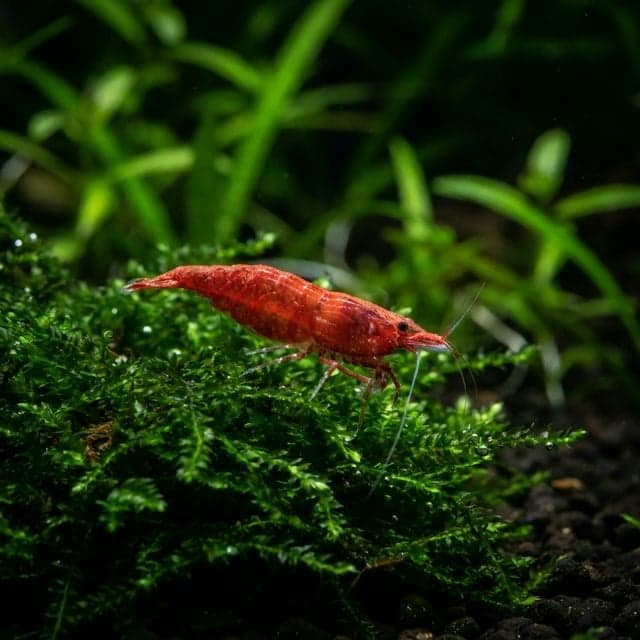
The Sterbai Corydoras is compatible with a diverse array of peaceful fish species that inhabit similar environments. Recommended tank mates include small to medium-sized community fish such as tetras (e.g., Neon Tetras, Rummy Nose Tetras), rasboras, guppies, and peaceful barbs. Additionally, other peaceful bottom-dwelling species like dwarf cichlids (e.g., Apistogramma) and some species of shrimp, such as Cherry Shrimp, can coexist harmoniously with Sterbai Corydoras.
However, there are species to avoid as tank mates. Aggressive or fin-nipping species, such as cichlids (particularly larger ones), some types of barbs, and fish with a territorial nature, should not be kept with Sterbai Corydoras, as they can cause undue stress or injury. Ensuring a balanced mix of tank mates will help maintain a tranquil environment for these delightful catfish.
Breeding
Breeding Sterbai Corydoras in captivity is possible with the right conditions. To encourage spawning, provide a spacious breeding tank with soft, slightly acidic water (pH 6.0 to 7.0) and a temperature of around 75°F to 80°F (24°C to 27°C). The use of spawning mops or flat surfaces, such as broad-leafed plants, can provide suitable sites for egg deposition.
The male Sterbai Corydoras will display courtship behavior, often chasing the female around the tank. Once paired, the female will lay adhesive eggs on the chosen surface, which typically hatch in 3-5 days. After hatching, the fry should be fed infusoria or powdered fry food until they are large enough to consume finely crushed flakes. It's important to remove the adults once spawning is complete, as they may consume the eggs or fry.
Common Health Issues
Sterbai Corydoras are generally hardy but can be prone to certain health issues if not properly cared for. Common ailments include ich (white spot disease), fin rot, and bacterial infections, often stemming from poor water quality or stress. Regular water testing and maintenance, including routine water changes, can help prevent these issues.
Preventative measures include maintaining a soft sand substrate, avoiding sharp gravel that can injure their sensitive barbels, and choosing copper-free medications when treating illness. Quarantine new arrivals and keep them in a proper group to reduce stress. Stable parameters and a varied diet keep Sterbai Corydoras active and healthy for years.