Betta and Guppy Together? Fin Nipping and Colour Triggers
Why bettas target male guppies, when the mix can be conditional, and how fry and feeding order change outcomes.
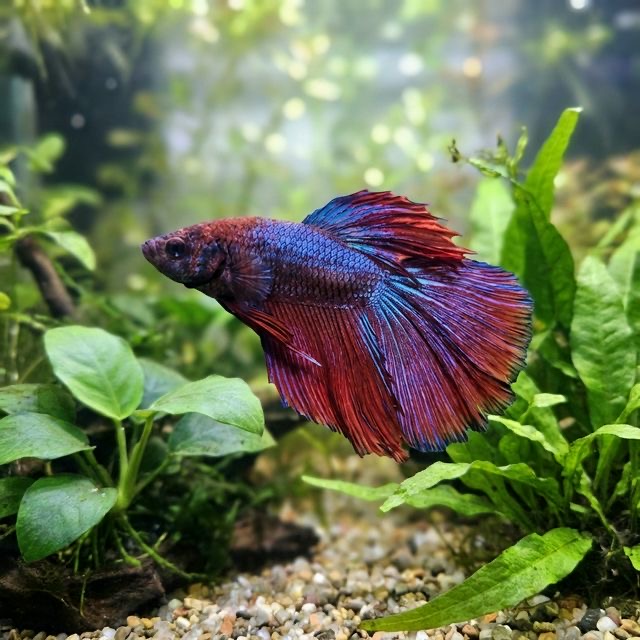
Bettas and guppies clash when fancy male guppies flash colour and long fins in the betta’s line of sight. Female guppies, plakat or short-finned bettas, and a long planted tank improve odds, but default expectation remains poor to conditional. Fry will attract hunting unless controlled.
Scientific names: Betta (Betta splendens) · Guppy (Poecilia reticulata)
Compatibility summary
| | Betta | Guppy | | --- | --- | --- | | Typical verdict | Poor to conditional | Fancy males highest risk | | Primary zone | Surface / mid | Upper display | | Main lever | Plakat / mild male | Female-heavy; dull morphs |
| Signal | Betta response | | --- | --- | | Bright long-finned male guppy | Flare, chase, strikes | | Fry movement | Hunting drive | | Surface-only feeding | Competition |
Behaviour analysis
Guppies signal with colour and fin spread; bettas read that as another betta. The behaviour is predictable, not personal. Female guppies and wild-type colour lower the signal. Surface feeding stacks both species in one band; mid-water feeding for guppies first pulls them out of the betta’s prime zone. Endless fry from breeding keeps the betta in hunting mode and spikes ammonia if the filter cannot keep up.
Why this pairing can work
Bettas are triggered by what looks like a rival: bright colour and long, flowing fins. If you choose guppies that are less “banner-like” (for example, female-heavy groups or duller/wilder colour lines) and build the tank with tall stems, floating cover, and other sight breaks, you reduce constant direct face-time between the fish.
Feeding order matters just as much as décor. If you feed guppies first in mid-water and then feed the betta at the surface in one consistent corner, you prevent the fight for food from turning into fin damage. Finally, because guppies breed fast, you must decide on fry control (separate, remove, or accept predation) so nitrate and ammonia do not creep up behind the scenes.
Why this pairing often fails
The most common failure is predictable: a single flashy male guppy in a short, bare tank. When his tail and colour are always in the betta’s line of sight, flaring can turn into repeated chasing at feeding time.
Warm water speeds up both guppy activity and breeding, which keeps the betta “on alert.” If you also feed in a way that stacks both species at the surface (surface-only feeding for everyone), guppies win the meal, the betta bites, and the whole tank becomes a cycle of torn fins, dead guppies, and a betta that never really settles.
Environmental comparison
Both live in typical tropical community bands. Guppies tolerate harder water; bettas are flexible. Warmth helps guppies breed—which works against a calm betta display. If you run the pair, plan fry control.
| Parameter | Betta | Guppy | Compromise | | --- | --- | --- | --- | | Temperature | 24–28 °C | 24–28 °C | 25–27 °C + fry plan | | pH / hardness | Flexible | ~7–8.5 | ~7.0–7.5 typical | | Flow | Gentle | Low OK | Avoid tank-wide blast |
Tank setup guidance
Treat this as a “signal management” pairing: fancy male guppy tails and bright colours are the exact visual cue many bettas react to. Build the tank with upper-level sight breaks (floating plants, tall stems, driftwood “columns”) so guppies aren’t constantly displaying in the betta’s face.
Stocking order: cycle → add guppies first (ideally female-heavy or dull morphs) → observe a week → add betta last under dim light. Use two feeding routines: feed guppies first in the water column, then feed the betta at the surface in a fixed corner so they don’t collide at food time.
Minimum viable setup: long footprint, heavy cover, realistic fry plan, and a ready backup tank/divider.
Risks
- Fin nips and secondary infection: trigger is flashy males or tight quarters. Signs: shredded guppy tails, betta stress posture, repeating chases. Mitigation: remove the “trigger fish” first; add cover; separate if patterns repeat.
- Fry-driven ammonia/instability: trigger is uncontrolled breeding in small filtration. Signs: rising nitrate slope, cloudy water, fish hanging near surface. Mitigation: decide in advance—separate breeders, remove fry, or accept predation—but do not pretend fry are “free.”
- Chronic stress loop: trigger is constant line-of-sight contact and surface-only feeding. Signs: betta clamped fins, guppies glass-surfing. Mitigation: change feeding geometry and add sight breaks before adding more fish.
Tips
- Start here: betta tank mates · guppy tank mates.
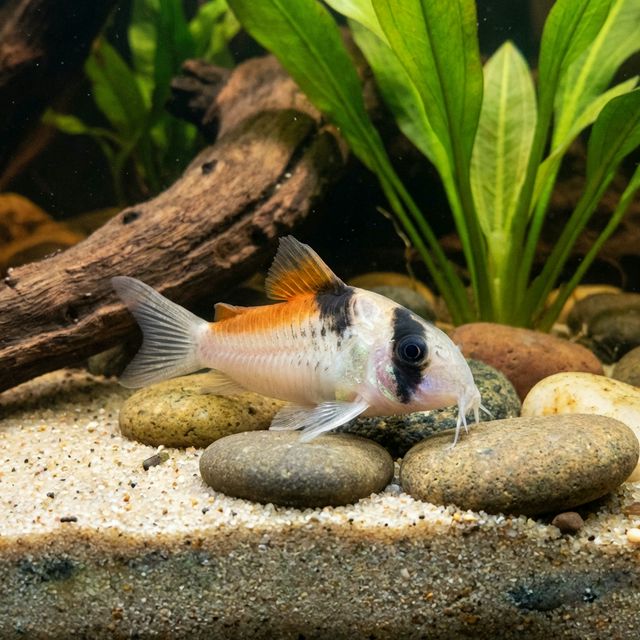
- If you want a safer betta community, read: betta + Adolfos cory.
- If you want colour without the betta-vs-tail problem, compare: neon tetra + guppy and betta + neon tetra.
- Choose guppies intentionally: females, endlers, and wild-type colours usually trigger less than show males.
- Feed guppies first, then the betta; never “dump” food at the surface for both.
- Care sheets: Betta · Guppy
FAQ
Are female guppies safe with a betta? Safer than flashy males, but not guaranteed. The key is whether the betta escalates from flaring to repeated chasing.
Are Endler’s guppies better? Often. They’re usually smaller and less “banner-like” than fancy males, but a reactive betta can still hunt or nip.
Can I add more guppies to dilute aggression? Only if your tank size and filtration can handle it. More guppies can also mean more movement and more trigger signals.
If chasing happens only during feeding, what should I change? Feeding geometry. Feed guppies mid-water first, wait until they’re engaged, then feed the betta at the surface in one corner.
What about guppy fry? Either separate breeders/fry or accept predation. Unplanned fry in a small tank usually means ammonia spikes and stress.
Watching the first month
Week one through four, log male guppy tail spread against betta interest—not every flare means attack, but repeated lunges at the same male predict fin loss. Female guppies with heavy gravid spots sometimes draw less surface attention than long males; still watch post-spawning males. If fry appear, the betta may hunt; a breeder box or second tank for fry is cheaper than replacing adults.
Water chemistry swings from overfeeding guppies (more waste) can irritate betta labyrinth tissue—test ammonia and nitrite twice weekly in new setups. Guppies tolerate harder water; if you soften for the betta, watch guppy colour and spine curve. Temperature held steady near 25–26 °C suits both better than chasing “ideal” extremes.
Dim evenings help: bright overhead light plus bare glass stresses both species differently but shows up as glass surfing. Add floating stem or lid shade before blaming personality. If you must remove the betta for treatment, reintroduce with tank rearranged so old territory lines blur. For other paths, see betta and neon tetra and guppy and angelfish.
Chemistry, feeding rhythm, and when to split the tank
Stable KH helps pH not crash when guppy bioload climbs; soft-water betta setups sometimes need buffering if you add guppies—test after the second week. Feed smaller amounts twice daily rather than one heavy dump; uneaten guppy food rots fast and inflames betta gills. When nitrates rise faster than before guppies arrived, increase change volume or frequency before algae and stress show on fins.
Split when male guppies show shredded tails that grow worse, not better, or when the betta refuses food while stalking. Fry production without a plan usually ends in ammonia spikes—remove fry or add a grow-out. For reroutes, read betta and neon tetra and guppy and Adolfos cory; hubs betta and guppy list every pair in this compatibility set.
Long-term management (weeks 5–12)
By week five the novelty wears off and real habits show. Male guppies that once flared away may now ignore the betta—or the betta may have learned which tail to target. Continue a simple written log: feeding response, any fin fraying, and whether females are dropping fry into the main tank. Fry explosions without export crash parameters faster than most beginners expect; if you will not run a grow-out, cull humanely or separate breeders.
Seasonal room temperature swings affect small betta tanks disproportionately; guppies often shrug off a degree the betta feels as lethargy. If you add tank mates later (betta and neon tetra), rescape before introduction so the betta does not map old paths onto new fish. The betta tank mates hub ties every pair together; guppy and angelfish is the article to read if you outgrow betta risk entirely.
Pre-purchase and add-order checklist
Before you combine Betta and Guppy, confirm tank volume after hardscape—not label volume. Cycle fully; add guppies first in a sex ratio you can sustain, then introduce a known-mild betta under dim light. Have a cycled backup for whoever fails. Read betta and neon tetra if you prefer schooling mid-water fish; guppy and Adolfos cory if you want less surface tension.
One-minute recap
Betta plus guppy lives or dies on individual temperament, tail length, and nitrate slope—not on hope. Mild betta, short-finned or female guppy bias, dim corners, tiered feeding, and a cycled backup tank beat one heroic water change after fins shred. Hubs: betta · guppy. Next reads: betta and neon tetra, guppy and angelfish.
If the pairing fails, default to separating the betta—guppies tolerate rehoming in groups; a stressed betta often needs species-only recovery. Log nitrate weekly; guppy-heavy surfaces correlate with faster organic load. Guppy and Adolfos cory is your bottom-guild alternative without labyrinth aggression overhead.
Third-week checkpoint: if the betta still flares at every feeding but never strikes, you may be stable; if strikes occur even once, assume escalation. Paper log beats memory.
Final verdict
Conditional to poor for typical fancy male + long-finned betta. Prefer betta + Adolfos cory or guppy + neon from this test.
Also in this guide: betta adolfos cory · neon tetra guppy. Species: Betta · Guppy. Hubs: Betta · Guppy.