Neon Tetra and Guppy: Classic Community Combo
School size, guppy breeding, and feeding order when keeping neon tetras and guppies together.
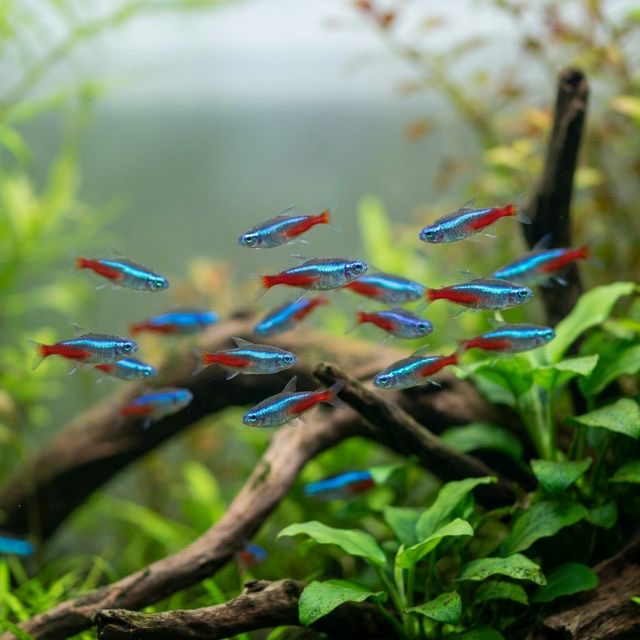
Neon tetras and guppies are a common community pairing when parameters overlap. Neons school in mid-water; guppies use upper levels. You need ten or more neons, controlled guppy breeding, and tiered feeding so neons receive micro foods before surface flakes vanish.
Scientific names: Neon tetra (Paracheirodon innesi) · Guppy (Poecilia reticulata)
Compatibility summary
| | Neon tetra | Guppy | | --- | --- | --- | | Typical verdict | Usually works | Usually works | | Primary zone | Mid school | Upper / mid | | Main lever | 10+ neons | Fry control |
| Risk | Mitigation | | --- | --- | | Neons outcompeted | Mid-water feed first | | Fry boom | Predators or separation |
Behaviour analysis
Guppies display upward; neons hold mid-water bands. Conflict is usually indirect—feeding hierarchy and water chemistry drift—not chasing. Underschooling neons makes them shy; overbreeding guppies dirties water fast.
Why this pairing can work
Neon tetras stay calmer when they can move as a school. In a mixed tank, they need enough numbers so that losing one fish does not collapse the group and leave individuals exposed. A long footprint, gentle flow, and plants that break up sight lines help the neon “lane” stay stable.
Guppies are mostly an upper-water fish and breed readily, so the key is keeping their impact predictable. If you control guppy numbers/fry production and feed in layers (micro foods mid-water for neons first, then surface feeding for guppies), you reduce both competition and the nitrate creep that comes from heavy breeding plus heavy feeding.
Why this pairing often fails
Most failures happen when beginners combine two common mistakes: underschooling neons and letting guppies win the feeding. When neons are too few or do not get fed in mid-water first, they stop schooling at feed time and gradually fade (thin bodies and dull red).
The second failure mechanism is “slow water-quality drift.” Unplanned fry plus surface-focused feeding increases ammonia/nitrate faster than people expect, so the tank looks calm until it is not. If you do not track nitrate and maintain the temperature compromise band, you end up with both stress and color loss that look like “disease” but are really husbandry timing problems.
Environmental comparison
Overlap near 24–26 °C and neutral pH suits both. Guppies accept harder water; neons colour well with some botanical tint.
| Parameter | Neon tetra | Guppy | Compromise | | --- | --- | --- | --- | | Temperature | 22–26 °C ideal neons | 24–28 °C | 24–26 °C | | pH / hardness | Acidic–neutral | 7–8.5 | ~7.0–7.5 | | Flow | Gentle | Low OK | Calm school lane |
Tank setup guidance
This pairing succeeds when you treat it as two separate “projects”: keep the neon school cohesive in mid-water, and keep guppy breeding/bioload predictable at the surface.
Tank footprint and layout: choose length over height. Use plants to create a mid-water lane for neons and a broken-sight surface for guppies. Keep flow gentle so the school can hold shape.
Stocking order: cycle fully → add 10+ neons as one batch and let them settle → add guppies after you’ve confirmed the school is feeding confidently. Feed in layers: micro foods mid-water first for neons, then a surface feed for guppies.
Fry plan (non-optional): decide now whether you will (a) separate breeders/fry, (b) accept population control, or (c) run a second tank. “I’ll see what happens” is how ammonia spikes happen.
Risks
- Ammonia/nitrate climbs from fry and overfeeding: trigger is uncontrolled breeding plus heavy feeding. Signs: rising nitrate slope, cloudy water, fish hanging near surface. Mitigation: set a change schedule, reduce feed volume, separate fry or accept controlled predation.
- Thin/pale neons from being outcompeted: trigger is surface-only feeding or big guppy feeding frenzies. Signs: neons stop schooling at feed time, lose red, get hollow-bellied. Mitigation: feed mid-water micro foods first, keep the school at 10–12+, and watch body condition weekly.
- Parameter drift / “stable but wrong”: trigger is slowly rising hardness, temperature creep, or inconsistent water changes. Signs: gradual colour loss and skittish schooling without obvious disease. Mitigation: keep temp in the 24–26 °C compromise band and track nitrate rather than guessing.
- Stress spikes after big maintenance: trigger is major rescapes or cold water changes. Signs: neons scatter and hide; guppies glass-surf. Mitigation: temperature-match water changes and keep scape changes incremental.
Tips
- Start with the hubs: neon tetra tank mates · guppy tank mates.
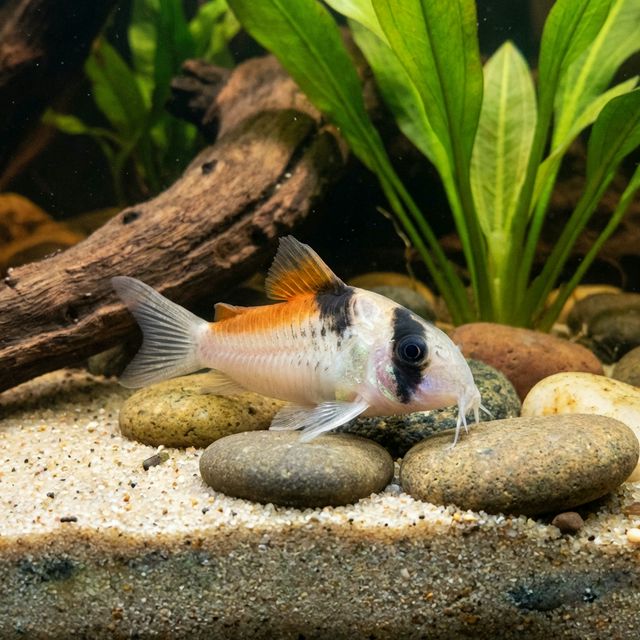
- If you want to add a bottom layer safely, read: neon tetra + Adolfos cory and guppy + Adolfos cory.
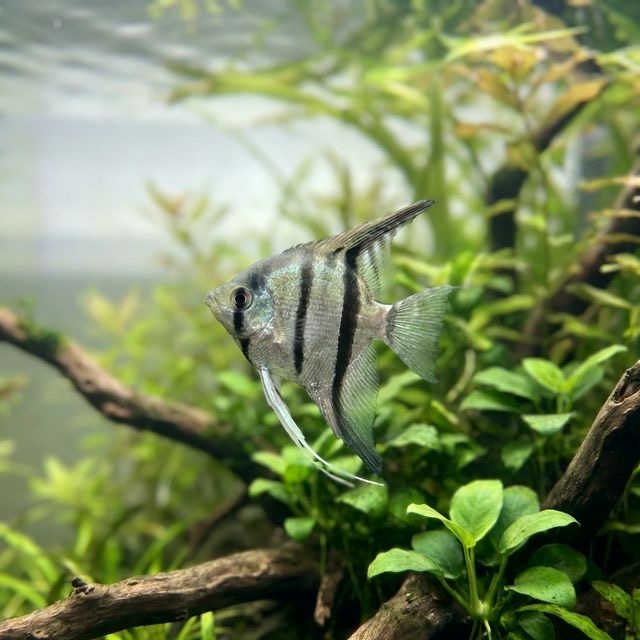
- If your next step is a centerpiece predator, read first: neon tetra + angelfish (time-limited) and guppy + angelfish.
- Feed “neons first, guppies second” every day; consistency is part of the solution.
- Keep neon school numbers high enough that one loss doesn’t break cohesion.
- Care sheets: Neon tetra · Guppy
FAQ
How many neons should I keep with guppies? Treat 10+ as the practical minimum, and 12+ is better if your tank length supports it. Small schools break apart, and neons get outcompeted more easily.
What should I do about guppy fry? Decide before you mix fish: separate breeders/fry if you want to raise fry, or accept predation as population control. Unplanned fry plus heavy feeding is the fastest route to water-quality drift.
My neons look pale—what’s the first check? School size and temperature. If the school is under 8–10, fix that. Then verify you’re not running too warm and that neons are actually getting food mid-water.
Hard water—will it harm neons? Many neons do fine around neutral pH with stable conditions, even if water is moderately hard. The bigger killer is instability and long-term drift you don’t measure.
Can I add angelfish later? Read neon tetra + angelfish first—this becomes a size-and-predation problem as angels grow.
Watching the first month
Both species eat greedily; the first month often looks perfect until nitrate climbs and neons lose red. Test weekly; partial changes on a schedule beat reactive panic. Guppy fry will be eaten by adults including neons if not separated—decide in advance.
School integrity: if neons drop below eight visible together, add more or accept higher predation stress. Guppy males sparring can drive neons into corners—add line-of-sight breaks. Temperature 24–26 °C keeps both breeding and disease pressure predictable.
If neons pale after guppy introduction, check temperature first, then aggression second. Neon tetra and Adolfos cory adds bottom activity without surface chaos; guppy and angelfish is a different risk profile if you outgrow this pair.
Chemistry, feeding rhythm, and when to split the tank
Guppies push nitrate faster than neons alone; schedule changes so nitrate never trends up week on week. Neons need stable temperature—guppy splashing at surface during feeding can chill mid-water briefly in small tanks; use lids and avoid cold-room drafts. Copper-based meds often rule out invertebrates later; if you treat the community, verify tetra tolerance on the label.
Split if neons school vertically at the filter, lose red across the body, or if guppy harassment pins them daily. Adding dither fish sometimes helps but can worsen bioload—often cooler, cory-backed setups work better; see neon tetra and Adolfos cory. Fancy guppy keepers comparing angel risk should open guppy and angelfish. Hubs: neon tetra · guppy.
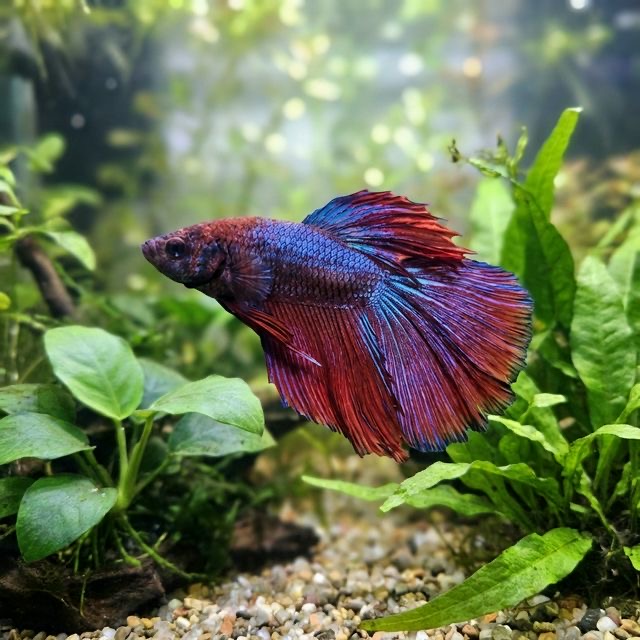
Guppy colour genetics vary; neons from different farms vary in red depth—compare like with like when judging “fading.” Holiday weekends skip changes in busy houses—schedule around absence, not around convenience. Betta and guppy shows how surface specialists fight for territory when you add labyrinth fish later.
Long-term management (weeks 5–12)
After the first month, nitrate slope tells the truth: guppies plus heavy feeding outpace many neon setups. Plant mass and disciplined changes beat reactive “big clean” weekends that shock bacteria. Neons that lose lateral line sheen or hold fins tight at rest need parameter review before disease labels. Guppy lines that inbreed heavily show weaker immunity—quarantine newcomers even from the same shop.
If you expand the stock list, add bottom fish only after reading neon tetra and Adolfos cory; mid-water expansion toward angels belongs in neon tetra and angelfish. The neon tetra tank mates hub links every pair in this five-species test; guppy and Adolfos cory shows how waste profile changes with corys in the mix.
Pre-purchase and add-order checklist
Neons need stable chemistry before guppies raise bioload—fish-in cycle with both is a common failure story. Buy neons in one batch (eight minimum, twelve better); guppies next week after behaviour is logged. Test kits for ammonia, nitrite, nitrate, and pH should be open before day one. Alternative layouts: neon tetra and Adolfos cory, neon tetra and angelfish.
Add-order detail: neons first reduces guppy-driven nitrate shock on a fresh biofilter; guppies first is only valid if the tank is mature months deep. Temperature: set heater before either species ships—drift during acclimation kills neons silently. Fry: if you buy mixed-sex guppies, assume pregnancy; sponge pre-filters on intakes save fry you want and reduce impeller deaths. Feeding stock: micro foods for neons and standard guppy flake—buy both before day one so neither guild fasts while you shop. Guppy and Adolfos cory and betta and neon tetra extend the hub in different directions.
One-minute recap
Neon tetra and guppy are beginner-friendly only if the tank is mature, neons are many, nitrates are tracked, and fry have a plan. Guppies push waste; neons need stable warmth and tight schools—test kits beat optimism. Neon tetra and Adolfos cory adds bottom interest; neon tetra and angelfish is the predator upgrade path.
Fry from guppies can overload filtration—decide cull, grow-out, or predator acceptance before week six. Neons that pale but keep schooling often need cooler water or lower nitrate, not salt. Betta and neon tetra is the hotter, more volatile mid-water cousin of this pairing.
Floating plants cut guppy surface glare and give neons shaded mid-water; bare tanks amplify both species’ stress tells. When guppy males spar, neons sometimes join the chaos—add stem breaks, not more guppies.
Holiday feeding: auto feeders overfeed guppies and foul water—use a trusted human or reduced ration blocks only in mature, understocked tanks. New neons from different batches may not school—quarantine then merge in one evening after dark.
Final verdict
Recommended community pairing when school size and feeding are managed. Next reads: neon + cory and guppy + angelfish if you add height.
Treat “easy” as chemistry discipline, not absence of testing. Fry from guppies change nitrate slope—log before and after introduction. If neons stop schooling after guppies arrive, suspect harassment or parameter drift before disease. This pairing is the calm lane of the five-species test only while you keep the lane maintained.
Also in this guide: neon tetra adolfos cory · guppy angelfish. Species: Neon tetra · Guppy. Hubs: Neon tetra · Guppy.