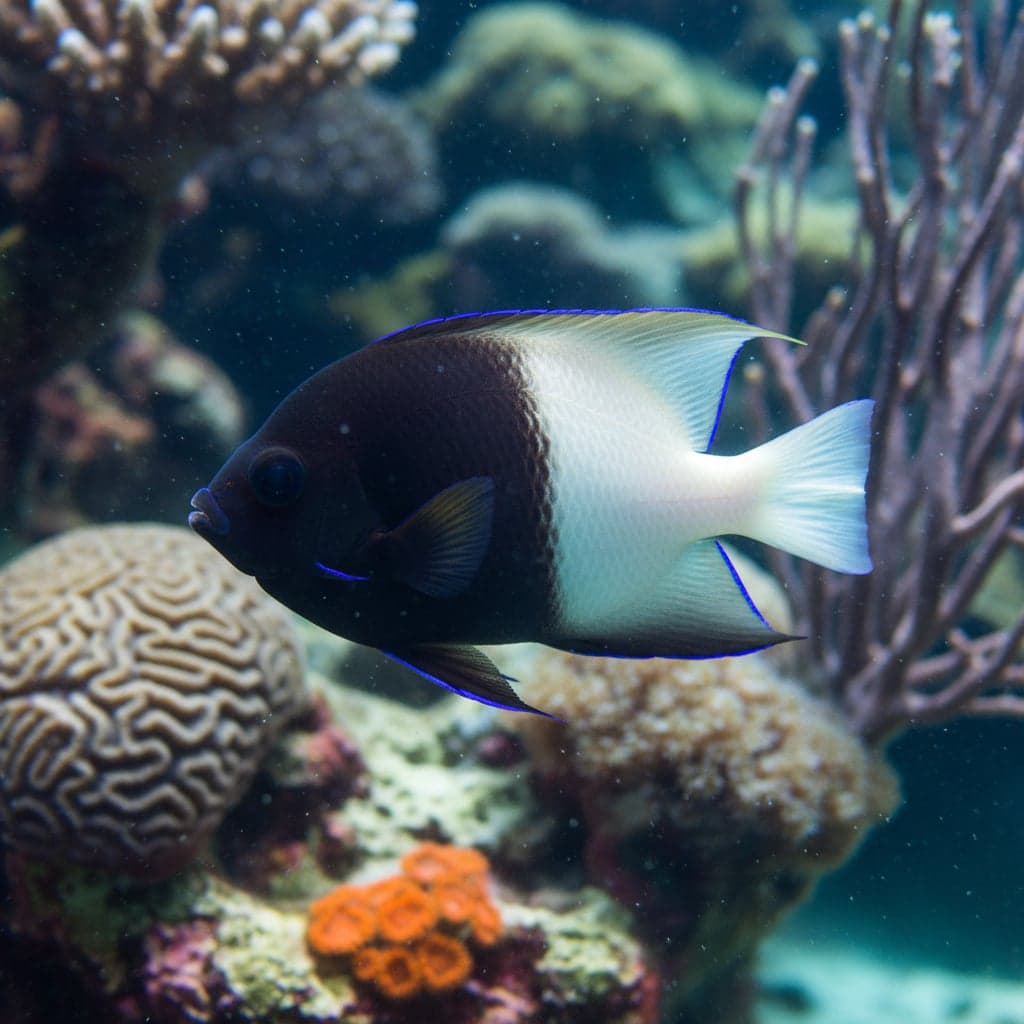
Rusty Angelfish
The Rusty Angelfish (Centropyge ferrugata) is a hardy rust-orange dwarf marine angelfish from the Western Pacific — an active algae grazer best kept with reef caution.
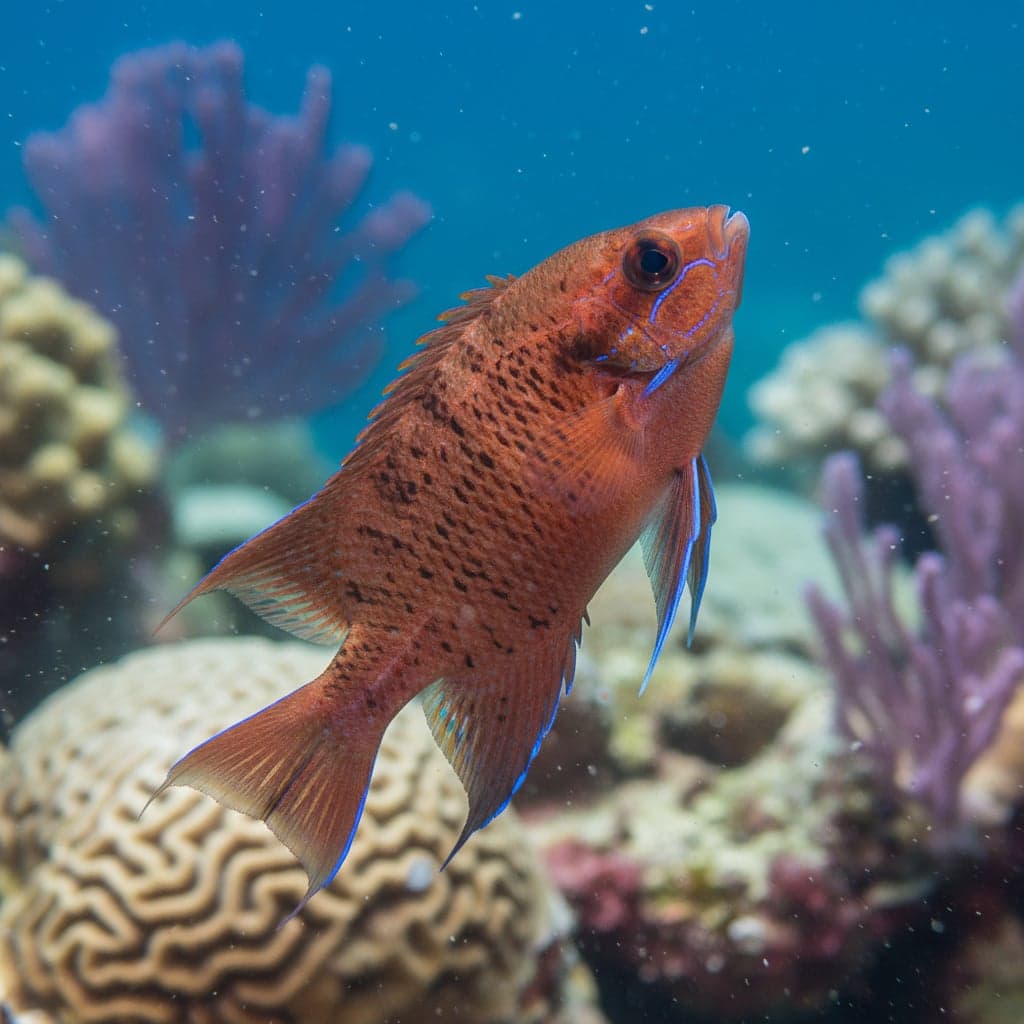
Rusty Angelfish
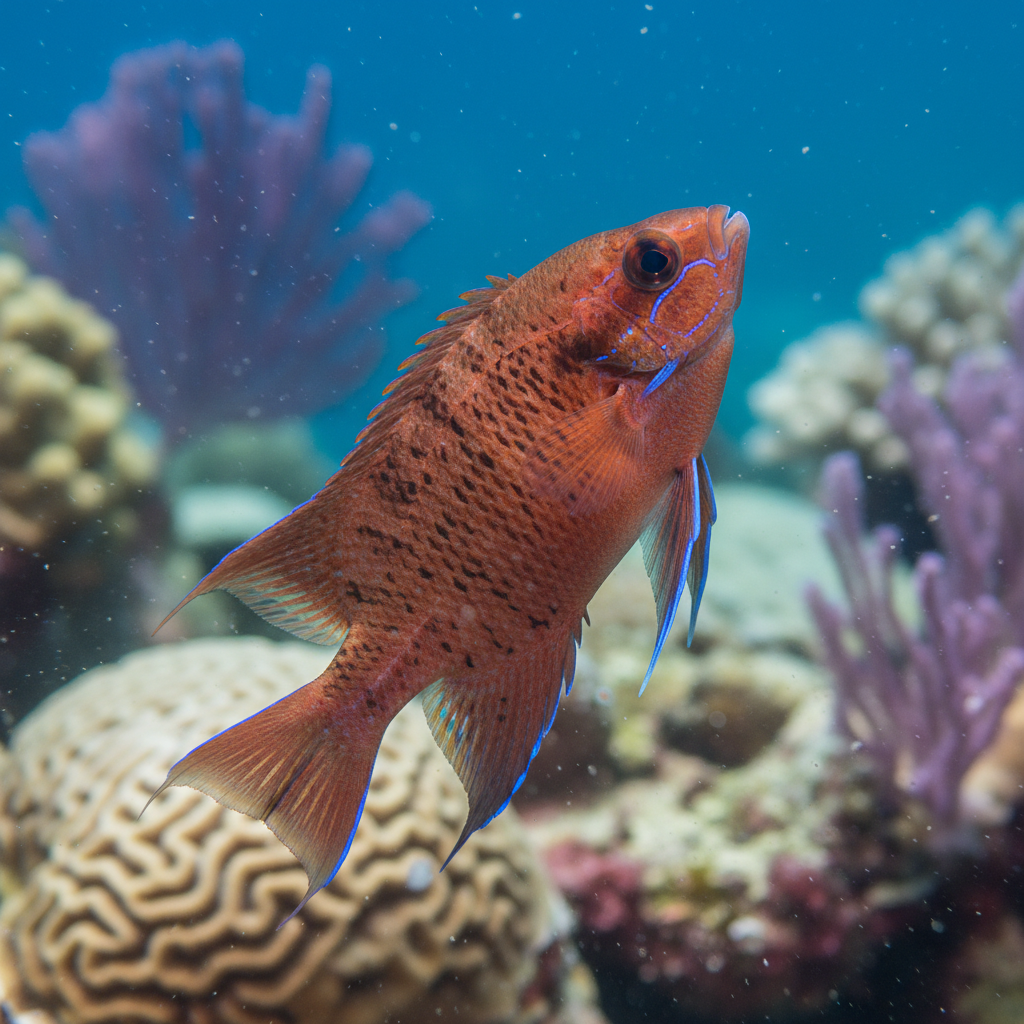
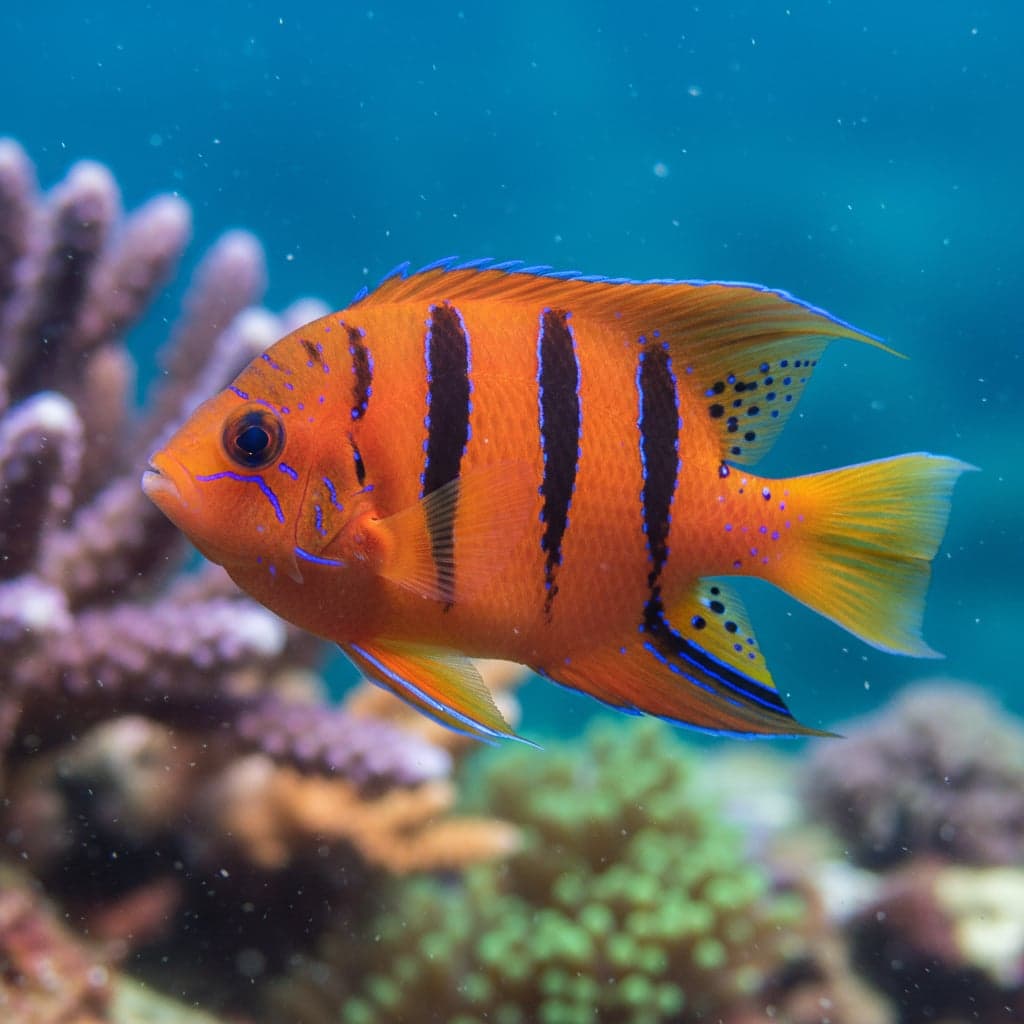
The Rusty Angelfish (Centropyge ferrugata) is a small, warmly coloured dwarf marine angelfish named for its rust-orange body, which is peppered with dark spots toward the rear. Hardy, active and readily available, it is one of the more forgiving dwarf angels and a popular choice for fish-only and reef-with-caution systems alike. Its constant grazing and bold-but-manageable personality make it an engaging addition to a mature marine aquarium.
Like all Centropyge, the Rusty Angelfish rewards a well-established tank with plenty of rockwork. Given that, it is a robust and long-lived fish that settles quickly and feeds enthusiastically.
Natural Habitat & Origin
Centropyge ferrugata occurs in the Western Pacific, from Tanabe Bay in southern Japan south to southern Taiwan and the Philippines. It lives on seaward rocky reefs and in rubble zones, particularly where there is dense algal growth, at depths of roughly 6 to 30 metres (20–98 feet). It is found alone or in small groups and, like its relatives, is a protogynous hermaphrodite.
Recreating that environment — abundant live rock, rubble, and grazing surfaces with established algae — is the key to keeping this fish content and healthy in captivity.
Care Requirements
Maintain stable marine conditions: salinity around 1.024–1.026, pH 8.1–8.4, and a temperature of about 24–26°C (75–79°F), with low nitrate and phosphate. A minimum tank of roughly 113 litres (30 US gallons) is appropriate for its adult size of around 10 cm (4 inches), with extra room and rockwork improving both behaviour and grazing.
A mature aquarium with live rock is strongly preferred. The natural algae and microfauna it supports give the Rusty Angelfish a continuous food source and a sense of security.
Diet & Feeding
In the wild, C. ferrugata grazes filamentous algae mats and also takes detritus, coral polyps, sponges and small gastropods — so it is best described as an omnivore with a strong herbivorous lean. In the aquarium, provide a varied diet of marine angelfish and herbivore preparations (including spirulina and marine algae), supplemented with frozen mysis and enriched foods. Feed small portions several times daily and allow natural grazing in between.
Behavior & Temperament
The Rusty Angelfish is semi-aggressive and territorial, especially toward other dwarf angels. Keep just one dwarf angel per tank unless the system is large with well-divided rockwork. With unrelated species it is usually peaceful, spending its day working the rocks and retreating to cover when disturbed. Adding it after calmer fish are established helps prevent it from dominating the tank.
Tank Mates
Suitable companions include peaceful to semi-aggressive reef fish in different niches — wrasses, gobies, blennies, cardinalfish, anthias and tangs. Avoid other dwarf angels in smaller tanks and any aggressive fish likely to harass it. As a comparatively bold dwarf angel, it generally holds its own in a mixed community.
In a reef it should be kept with caution: its natural diet includes coral polyps and sponges, so it may nip at stony corals, clam mantles or zoanthids. Behaviour varies between individuals.
Breeding
Centropyge ferrugata is a protogynous hermaphrodite that forms harems in the wild, with the dominant fish becoming male. Notably, it is among the dwarf angels that have been bred and reared in captivity, though this requires dedicated broodstock and larval-rearing systems and is not achievable in a typical home aquarium. Trade specimens are predominantly wild-collected.
Common Health Issues
The Rusty Angelfish is hardy but, like all marine fish, can be affected by marine ich (Cryptocaryon irritans) and marine velvet (Amyloodinium ocellatum), particularly when stressed. Maintaining excellent, stable water quality and quarantining new arrivals are the best defences. Choose a specimen you have seen feeding, provide a mature tank with grazing surfaces, and this is one of the more dependable dwarf angels for an intermediate marine keeper.