Can Betta Fish Live With Neon Tetras? Compatibility Explained
When bettas and neon tetras can share a tank, and when temperature, tank length, and school size make the pairing unrealistic.
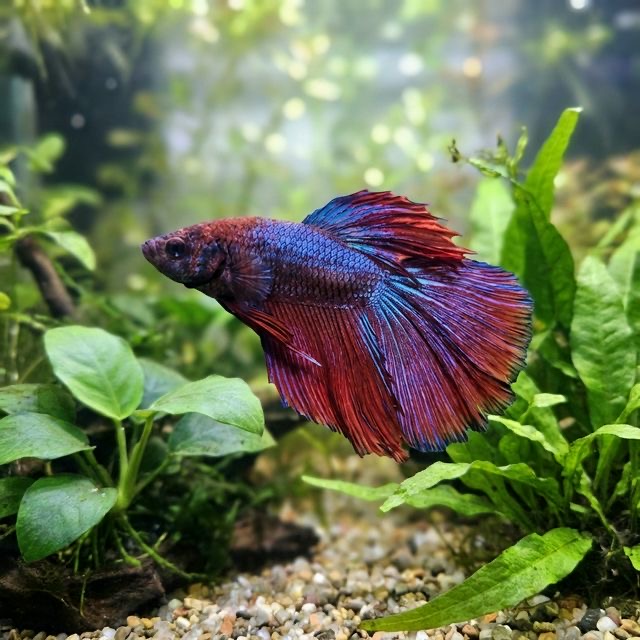
Betta fish and neon tetras rarely make a dependable pair in average home tanks. A mild betta, a long planted tank, and a strong neon school can sometimes work, but temperature ideals differ and encounter rate in short tanks drives most failures. Treat as conditional only with a spare tank ready.
Scientific names: Betta (Betta splendens) · Neon tetra (Paracheirodon innesi)
Compatibility summary
| | Betta | Neon tetra | | --- | --- | --- | | Typical verdict | Conditional (individual) | Needs large school + lane | | Primary zone | Surface / mid patrol | Mid-water school | | Main lever | Mild betta; shorter fins help | 10–12+ neons; long tank |
| Outcome | What you see | | --- | --- | | Best | Betta ignores school; neons tight and coloured | | Typical | Flaring; neons thin or faded in warm water | | Worst | Fin damage; isolated neons eaten |
Behaviour analysis
Bettas patrol where they rest and feed. Neon tetras move as a shimmering school through mid-water—the same visual band many bettas defend. In a short aquarium those paths cross constantly; in a long, planted tank encounters are spaced out. A broken school leaves single neons exposed. Long-finned bettas advertise the way rival males do; gaudy motion reads as a threat. Temperature pushes the story further: warm betta water stresses neons slowly even when no one gets bitten.
Why this pairing can work
Neon tetras stay safer in a betta tank when they can form a tight, confident school. In a long, planted layout, the school has room to cruise so a single neon is less likely to get singled out. The betta patrols a resting-and-feeding zone, and the school moves through the rest of the tank as a group.
If you keep temperature in a true compromise band (about 25-26 °C) and feed in layers (neon food in mid-water first, then a small surface feed for the betta), you reduce the “everyone competes for the same bite” moment. That one change is often what turns a conditional pairing into calm day-to-day cohabitation.
Why this pairing often fails
Most neon-betta failures start with a broken school. When there are too few neons, when temperature runs too warm for the neon, or when stress keeps them from moving as a group, the betta has more opportunities to redirect attention at an individual.
Beginners often notice the problem late: they see a week of normal behaviour and assume it will stay that way. But surface-only feeding and betta-optimized warm water can cause slow decline (neons thin, lose red, and become shy at feeding). Without daily observation for the first couple of weeks, you miss the fix point (school size, layout, and feeding geometry).
Environmental comparison
The betta–neon story is partly a temperature story. Many betta keepers run 27–28 °C; neons often do better and live longer cooler. Compromise near 25–26 °C is standard but not free. Soft to moderately hard water works if stable. Gentle flow lets the school hold shape without exhausting fish.
| Parameter | Betta | Neon tetra | Compromise | | --- | --- | --- | --- | | Temperature | Often 24–28 °C | ~20–26 °C ideal long-term | ~25–26 °C; log range | | pH / hardness | Wide range | Acidic–neutral typical | Stability over chasing extremes | | Flow | Low–moderate | Gentle | Baffle; one calm lane |
Tank setup guidance
Think of this pairing as “betta temperament + neon school integrity.” Make the tank long enough that the school can cruise without constantly crossing the betta’s resting zone. A planted mid-and-back wall plus floating cover creates a calm surface corner the betta can claim without policing the entire tank.
Stocking order: cycle fully → add 10–12+ neons as one batch → let the school settle for at least a week → add the betta last (dim lights, lots of cover). Feed the neons in the water column first (micro pellets/crushed flake), then feed the betta at the surface in one consistent corner.
Minimum viable setup: long footprint, heavy planting, calm-flow lane, stable (~25–26 °C), and a ready divider/backup tank before you try it.
Risks
- “One-neon problem” predation: trigger is a broken school (low numbers, stress, illness). Signs: a lone neon hangs back, betta stalks at lights-on. Mitigation: restore school size, add cover, separate if nips occur.
- Slow neon decline from warmth/feeding: trigger is running betta-leaning heat or surface-only feeding. Signs: neons get thin or lose red over weeks. Mitigation: adjust to a true compromise temp, feed mid-water first, track body condition weekly.
- Territory reset events (rescape, big maintenance): trigger is changing hardscape mid-month. Signs: sudden renewed flaring/chasing after a “clean up.” Mitigation: rearrange gently, dim lights, re-establish cover lanes.
- Disease after mixing: trigger is skipping quarantine when fish are already stressed. Signs: multiple fish clamp fins/stop eating after introduction. Mitigation: quarantine new fish; hospital-tank treatment instead of dosing the display.
Tips
- Start with the hubs: betta tank mates · neon tetra tank mates.
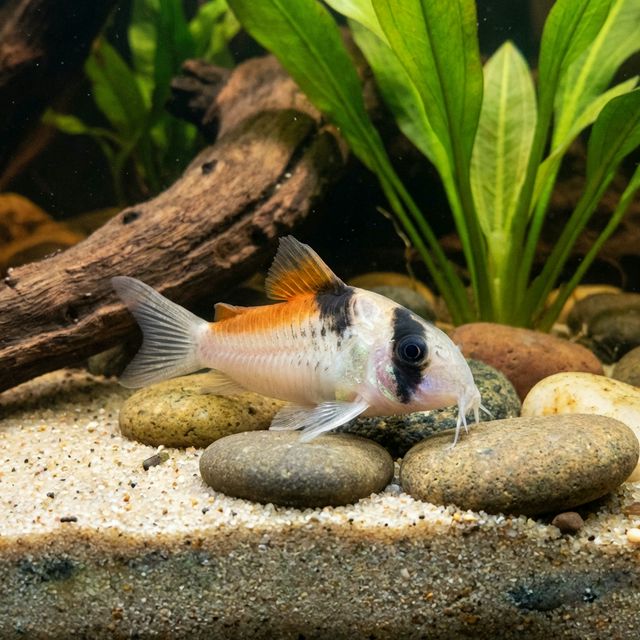
- If you want a calmer stacked community, compare: betta + Adolfos cory and neon tetra + Adolfos cory.
- If you want a busier surface without the betta “territory tax,” see: neon tetra + guppy.
- Separate feeding geometry: mid-water first, surface second, same corner every day.
- Keep cover “tall + floating”: stems for neon lanes, floaters for the betta’s roof.
- Care sheets: Betta · Neon tetra.
FAQ
Is a female betta easier with neons? Often, but the bigger predictor is individual temperament. A mellow male can be safer than a feisty female; watch for repeated stalking after the first week.
Minimum tank length for a serious attempt? Aim for about 90 cm of horizontal swim path so the school can move without constantly brushing the betta’s favourite surface corner.
How many neons? Treat 10–12+ as the practical minimum. Below that, the school breaks, and lone neons become targets.
Should I have a divider or second tank? Yes—treat it as mandatory equipment. If you wait until a neon is bitten, you’re already behind.
Neons nipping the betta? It can happen during feeding chaos. Fix it by feeding neons mid-water first, then feeding the betta separately at the surface.
Watching the first month
Treat the first thirty days as data collection, not decoration. Same time each evening, note three things: betta posture (relaxed fins vs puffed gill), neon school shape (tight ball vs stragglers), and whether any fish refuses food. A single neon hugging the glass while the rest school is a red flag—remove that fish or re-school before loss. Temperature drift on water-change day is where neons fade first; match new water within 0.5 °C and drip or slow-fill. If you raised temperature for the betta, do not creep upward “because the heater said so”—log the actual thermometer reading weekly.
Feeding rhythm matters more than food brand. Mid-column first (micro pellets or crushed flake for neons), wait until the school is actively eating, then offer the betta at the surface in a fixed corner. If the betta charges the school during feeding, skip a surface feed next day and add more plants between zones. Long tanks reward patience: week one may look fine while week three shows thin neons—body condition beats behaviour alone.
Plant rearrangement or removing a big piece of hardscape mid-month can reset territories and trigger chasing. If you must rescape, do it with lights dim and betta distracted with food at the far end. Document any torn fin on neons; one nip often repeats. The neon tetra tank mates hub and betta tank mates hub list other pairings if this combination fails. Cross-check betta and guppy or neon tetra and Adolfos cory for alternative community shapes.
Chemistry, feeding rhythm, and when to split the tank
Aim for ammonia and nitrite at zero always; nitrate below roughly 30 ppm unless heavily planted and you know your ceiling. Log pH at the same time of day—swings matter more than a single “ideal” number. If you must medicate the tank, assume the betta tolerates formulation better than neons; read labels for scaleless and small tetra warnings before dosing.
Split triggers: repeated single-neon losses, school that will not tighten after a week of good conditions, or betta that fixates on one corner of the school. Moving the betta to a species tank is usually kinder to both than hoping personality changes. Keep a quarantine or hospital vessel cycled or sponge-filter ready—you should not need to “wait and see” without a destination for the loser.
This guide’s betta tank mates hub and neon tetra tank mates hub anchor the wider set; pair articles betta and guppy and neon tetra and Adolfos cory give different zone stacks if you split.
Final verdict
Default recommendation: do not combine unless you accept daily checks, a separation plan, and temperature compromise. Stronger matches in this test include betta + Adolfos cory and neon tetra + Adolfos cory.
Also in this guide: betta adolfos cory · neon tetra adolfos cory. Species: Betta · Neon tetra. Hubs: Betta · Neon tetra.