Neon Tetra and Angelfish: Predation Risk by Size
Juvenile grace period, adult gape, and when to rehome before neons disappear.
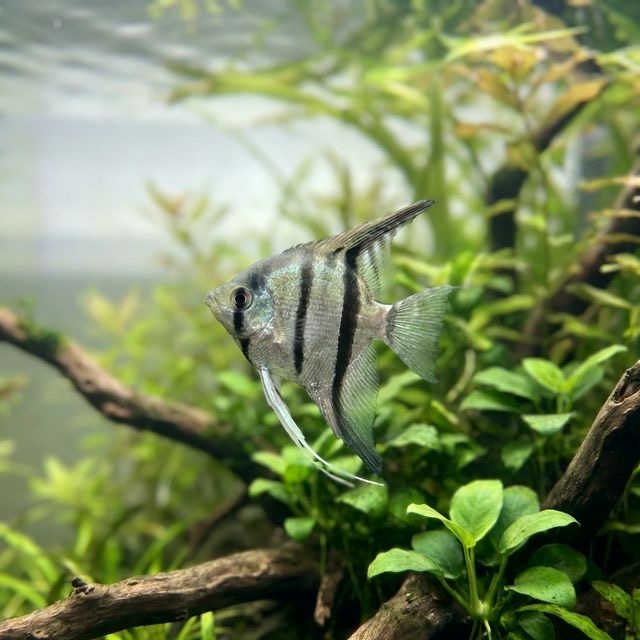
Small angelfish with a large neon school in a long tank can look peaceful for months. Adult angelfish often eat standard neons once body depth and gape increase. Treat as time-limited or conditional and plan rehoming before predation becomes routine.
Scientific names: Neon tetra (Paracheirodon innesi) · Angelfish (Pterophyllum scalare)
Compatibility summary
| | Neon tetra | Angelfish | | --- | --- | --- | | Typical verdict | Conditional / time-limited | Predator growth | | Primary zone | Mid prey-sized | Mid hunter | | Main lever | Huge school; length | Juvenile only window |
| Angelfish size | Neon risk | | --- | --- | | Small juvenile | Lower short-term | | Adult | High |
Behaviour analysis
Angelfish hunting is partly mechanical: mouth gape versus neon thickness. Juveniles ignore what adults eat. Lights-on hunting on sluggish neons is a common report.
Why this pairing can work
This pairing has a built-in time limit: angelfish grow into neon-sized predators. If the angels are still small enough that their mouth gape does not match neon thickness, and you keep a large school of neons, the first months can look surprisingly peaceful.
The “why it can work” is mostly management. Use length, plants, and cover lanes so neons can escape. Feed angels well so hunting is less impulsive, but treat it as a countdown: you need a separation plan before the safe window closes.
Why this pairing often fails
The usual failure is expecting the juvenile behaviour to last. People see months of “no drama” and then suddenly find neons disappearing, because adult angel size changes the prey/predator match.
Bare tanks and small neon schools accelerate the timeline by removing escape geometry. Once the school shrinks, predation gets easier and losses snowball, which is why this pair needs weekly counts and action, not hope.
Environmental comparison
Warm angelfish water speeds growth—shortening the safe window. Tall tanks help angelfish, not neons’ escape odds.
| Parameter | Neon tetra | Angelfish | Compromise | | --- | --- | --- | --- | | Temperature | Cooler better neons | Warm common angels | Pick neons or angels long-term | | pH / hardness | Soft | Soft–neutral | Stable | | Flow | Gentle | Moderate | Cover matters more |
Tank setup guidance
This pairing is about time: angelfish grow into neon-sized predators. If you attempt it, design the tank around escape geometry and accept a separation date before you start.
Minimum viable setup (if attempted): long footprint, heavy vertical plants, a very large neon school, and a pre-funded rehome plan for either the angels or the neons. Add neons in a full school first so they establish cohesion; add juvenile angels last.
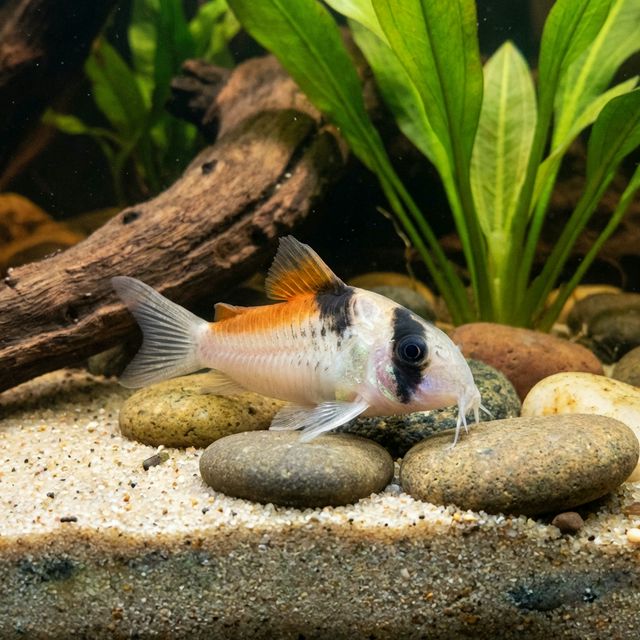
If you want a stable long-term neon community instead, choose neon tetra + Adolfos cory.
Risks
- Silent predation (“missing fish”): trigger is angel growth + undersized neon school. Signs: neon count drops without bodies. Mitigation: accept the exit plan; do not rationalize.
- Lights-on strikes: trigger is hungry angels at dawn. Signs: sudden chases at first light. Mitigation: feed angels more frequently, reduce “dawn shock,” and keep cover lanes.
Tips
- Start with the hubs: neon tetra tank mates · angelfish tank mates.
- If you insist on angels with other fish, compare: Adolfos cory + angelfish and guppy + angelfish.
- Count neons weekly; “I think there are fewer” is your early alarm.
- Feed angels well on schedule; underfed angels hunt harder.
- Care sheets: Neon tetra · Angelfish
FAQ
How long is this “safe”? There’s no guarantee—often months, not years. The timer is angelfish growth, not your hope.
Would bigger tetras fix it? It can delay predation, but angelfish are still gape-limited predators. You’re changing the timetable, not the outcome.
Does night feeding help? It can reduce dawn strikes slightly by lowering hunger, but it does not remove predatory behaviour.
Is a divider a failure? No—dividers are the honest tool when your plan is “time-limited coexistence.”
What’s the best stable neon pairing in this series? neon tetra + Adolfos cory.
Watching the first month
Size gap is the story: week one angels may ignore neons; week eight the same angels may hunt. Photograph neons next to a ruler monthly; shrinking school numbers without bodies often means predation. Maintain fifteen or more neons in a long tank so losses do not break school psychology.
Feed angels well on purpose-grown foods so hunting drive drops slightly—underfed angels are worse tankmates. Tall plants and vertical wood give neons escape geometry. If angels begin “herding” neons into a corner, intervene before fin clips become missing fish.
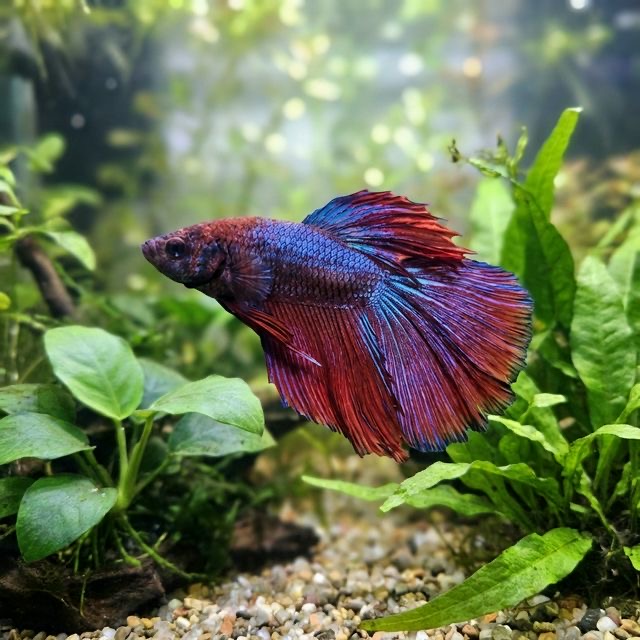
For a cooler, smaller alternative to angels with neons, compare betta and neon tetra—different top-water risk, same mid-water focus. Adolfos cory and angelfish layers bottom risk with the same angelfish temperament.
Chemistry, feeding rhythm, and when to split the tank
Protein-heavy angel diets elevate phosphate; algae and fin issues follow—balance with plant mass and consistent export. Neons in warm angel water age faster on paper; accept the trade or run a neon-heavy species tank instead. Photoperiod consistency reduces sudden hunting bursts at “dawn”; ramp lights or use dawn simulators if budget allows.
Split when school count drops without explanation, when angels station above neons at feeding, or when you see tail notches on multiple neons. Clipping angel hunger with more frequent small feeds is a stopgap, not a cure. Safer angel communities often use guppy and angelfish or larger dither schools—compare Adolfos cory and angelfish for bottom layer.
Dither math: fifteen neons in a 120 cm tank behave differently than fifteen in a 90 cm tank—length buys time. Angels that “rest” head-down above neons are not resting. Blackwater tint sometimes dulls neons; clarity vs colour is a trade you log, not guess.
Long-term management (weeks 5–12)
Months two and three separate luck from planning: angels with round bellies and hunting crouches need more frequent small feeds, not larger tetras as targets. School count is your insurance—if you started with twelve neons and now see eight without corpses, assume predation and add fish or remove angels before the school psychology collapses. Tall stem plants that reach the surface give neons vertical escape that horizontal wood cannot.
If you downgrade angel ambition, betta and neon tetra is a different predator class entirely; bottom reinforcement via Adolfos cory and angelfish shows how angels treat substrate fish. Angelfish tank mates hub and neon tetra hub cross-link every article in this series.
Pre-purchase and add-order checklist
Buy the longest tank you can afford; short highs are neon traps. Start with neons at full school size if angels are already present—small neons disappear. Quarantine angels; ich on angels will roll through neons under heat stress. Have a rehome plan for angels before they reach adult gape. Pair pages guppy and angelfish and betta and neon tetra frame different centerpiece choices.
School math: budget for replacement neons at month three—predation is often silent. Plants: order tall stems before angels arrive; retrofitting mid-angel is stressful for everyone. Feeding: angel pellets and neon micro food on the same invoice—underfed angels hunt. Capture gear: net with fine mesh for neons, larger for angels—chase events damage fins. Legal rehome: know local club or shop policy before angels outgrow ethics. Adolfos cory and angelfish adds bottom guild risk to the same centerpiece.
One-minute recap
Neons with angelfish needs length, plant height, a fat school, and honest acceptance of predation. Underfed angels and small neons are a food chain, not a community—feed angels, replace neons ethically, or remove angels. Guppy and angelfish and Adolfos cory and angelfish show other angel pairings in this guide.
Silent losses mean count fish weekly; a school that “looks fine” at eight members was twelve at purchase. Tall stems beat plastic castles for escape geometry. Betta and angelfish is a different incompatible pairing—same lesson: juvenile angels mislead.
Angels stationing under floating plants at feeding while neons refuse mid-water is a predation map—feed angels elsewhere or accept losses. Photograph angel profile monthly; when body depth exceeds neon length, ethics demand action.
Cannister filter maintenance: disturbed mulm can spike ammonia—clean media in tank water, never hot tap, and stagger sponge cleans across weeks. Neons sometimes jump during angel charges—tight-fitting lid beats “they never jump” optimism.
Final verdict
Plan an exit. Safer long-term: neon + Adolfos cory. Angelfish bottom mates: cory + angelfish.
Predation often looks like “disappearing” neons—count fish, do not narrate. If you refuse head counts, you are not keeping this pair ethically. Feed angels enough that hunting is choice, not necessity; then accept that some angels still hunt. The exit plan should be funded, not improvised after the third missing neon. Guppy + angelfish is the parallel predation article for upper-water targets instead of tetras. Betta + angelfish shows the same angel temperament against a smaller, slower target. Length buys neons time; height alone does not.
Also in this guide: neon tetra adolfos cory · adolfos cory angelfish. Species: Neon tetra · Angelfish. Hubs: Neon tetra · Angelfish.