Tropica Specialized vs Premium: Best Fertilizer Guide
Discover the differences between Tropica Specialized and Premium Nutrition to select the best fertilizer for your aquarium's specific needs.
Tropica Specialized vs. Premium: Choosing the Right Fertilizer for Your Aquarium
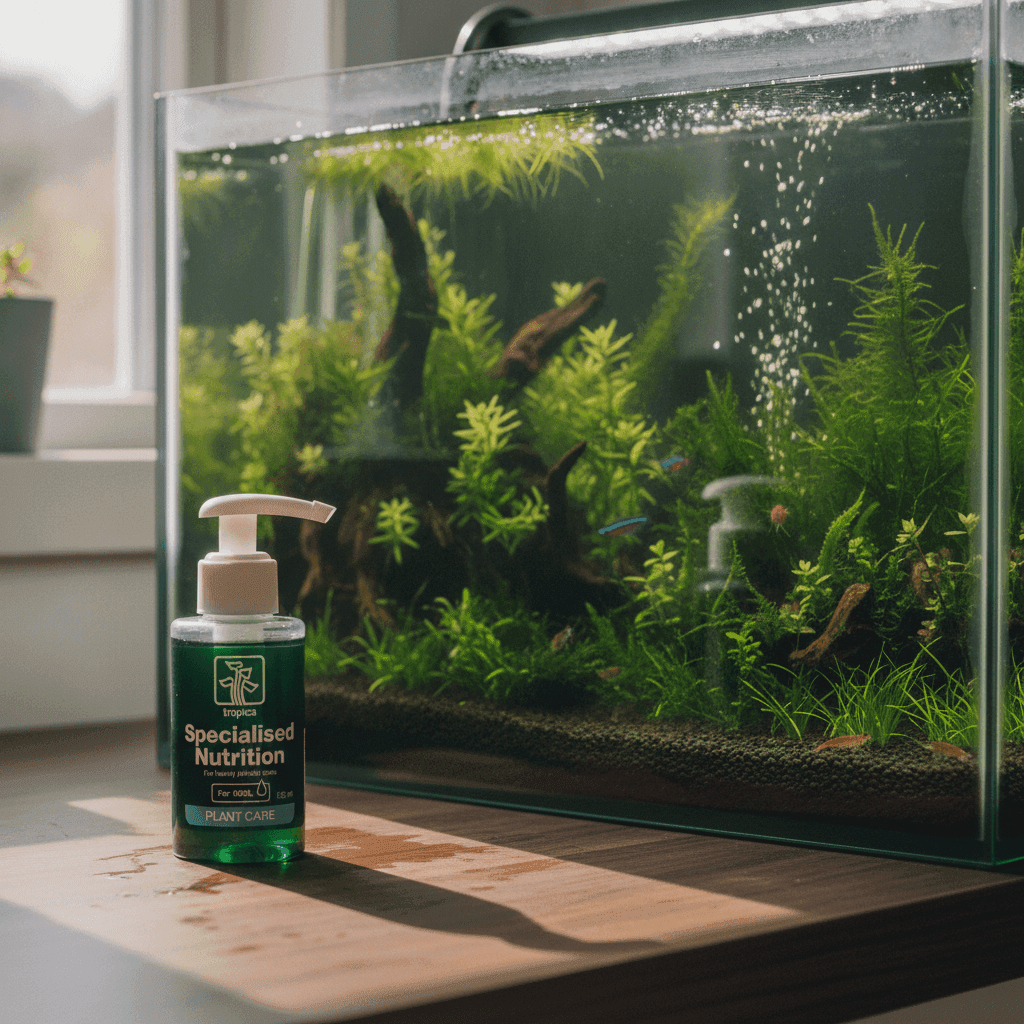
Aquascaping is both an art and a science, requiring a balance of knowledge, patience, and precision to create a thriving aquatic landscape. A crucial aspect of this process is ensuring your plants get the right nutrients. Liquid fertilizers are essential in aquascaping as they provide nutrients that closed aquatic environments often lack. They promote plant vitality, prevent nutrient deficiencies, and reduce algae growth. Among the many fertilizers available, Tropica offers two popular options: Tropica Specialized Nutrition and Tropica Premium Nutrition. This article highlights the key differences between these two fertilizers to help you choose the best one for your aquarium.
Understanding Tropica Specialized and Premium Nutrition
Tropica Specialized Nutrition
Designed for aquariums with dense plant populations, Tropica Specialized Nutrition offers an enriched formulation that focuses on macronutrients like nitrogen (N) and phosphorus (P), alongside essential micronutrients. This makes it ideal for high-tech tanks equipped with CO2 injection systems and intense lighting. Effective Aquarium CO2 System Setup for Plant Growth can complement this choice by ensuring optimal carbon levels for robust plant growth.
In this formula, nitrogen promotes rapid plant growth and lush foliage, while phosphorus aids in energy transfer and photosynthesis. Tanks with many plants but few fish benefit from this nutrient blend as it compensates for potential deficiencies.
Tropica Premium Nutrition
Tropica Premium Nutrition is tailored for aquariums with lower plant densities or those that rely on fish waste for nitrogen and phosphorus. It omits these macronutrients, focusing instead on a range of micronutrients like iron and manganese. This helps promote plant growth and vibrant colors without the risk of nitrogen and phosphorus overdose, which can lead to algae growth in low-demand tanks.
Direct Answer: Which Tropica Fertilizer Do You Need?
Deciding between Tropica Specialized and Premium Nutrition depends largely on your aquarium's plant density and bioload. If your setup has a high plant density with few fish to provide nutrients, Tropica Specialized Nutrition is the way to go. If you have fewer plants but a larger fish population supplying nitrogen and phosphorus naturally, Tropica Premium Nutrition will suffice.
Key Differences Between Tropica Specialized and Premium
Nutrient Composition
The main difference between Tropica Specialized and Premium Nutrition lies in their nutrient make-up. Tropica Specialized Nutrition includes nitrogen and phosphorus, crucial for heavily planted aquariums. It supports robust growth, especially in stem plants that need larger doses of these nutrients.
In contrast, Tropica Premium Nutrition focuses on micronutrients and excludes nitrogen and phosphorus. This makes it ideal for tanks where fish populations naturally contribute these macronutrients.
Effects on Plant Health
Tropica Specialized Nutrition can accelerate plant growth in high-demand systems, fostering lush greenery even with aggressive trimming schedules.
Alternatively, Tropica Premium Nutrition supports plant health by focusing on micronutrients, suitable for tanks where macronutrients are provided by the fauna. It prevents nutrient surpluses that could cause imbalances.
Practical Steps to Use Tropica Fertilizers in Your Aquarium
Pre-application Considerations
Before using any liquid fertilizers, assess your aquarium's needs. Consider plant density and the number of fish. High plant density with few fish suggests using Tropica Specialized Nutrition, whereas a low plant setup with more fish may benefit from Tropica Premium Nutrition.
Check your water parameters for existing nutrient levels to guide your dosing strategy. Our Plant Care Basics for Planted Tanks guide can provide additional insights into diagnosing and addressing plant health issues effectively.
Application Procedure
Proper dosing is key to successful fertilization. Tropica Specialized Nutrition might require more frequent, smaller doses for consistent nutrient supply, while Tropica Premium Nutrition may need fewer applications.
For best results, introduce fertilizers during water changes or while the lights are on to ensure plants absorb them efficiently. Begin with recommended dosages from the packaging and adjust based on plant responses and water readings.
Common Mistakes to Avoid with Liquid Fertilizers
Even experienced aquarists can make fertilization errors. Overdosing can lead to excess nutrients, algae blooms, and water quality issues. Keep an eye on plant growth changes, which may suggest a need for dosage adjustments. Monitor your plants for deficiency signs like yellowing or stunted growth and modify your approach as needed. To further avoid algae issues, explore our Battling Black Beard Algae: Tips for a Clean Tank guide for preventive measures.
Choosing the Right Nutrient Solution for Your Plants
Understanding your aquarium's specific needs is crucial for selecting the appropriate Tropica fertilizer. Both Tropica Specialized and Premium Nutrition offer flexibility for various setups. Beginners or those uncertain about their tank's nutrient demands might start with Tropica Premium Nutrition due to its balanced profile.
FAQ
Is Tropica Specialized harmful to fish?
Tropica Specialized Nutrition, while containing higher nitrogen and phosphorus levels, is safe for most aquarium fish when used correctly. Monitor water quality and avoid over-fertilizing to protect fish health.
Can I use both Tropica Specialized and Premium together?
You can combine both fertilizers, but do so carefully to maintain nutrient balance. Keep an eye on plant health and algae, and adjust doses to prevent nutrient overload.
How do I know if my plants need more nutrients?
Watch for signs of nutrient deficiency, such as yellowing leaves, brown spots, stunted growth, or poor color development. Regular observation will help you fine-tune your fertilization plan.