Plant Care Basics for Planted Tanks
Light, nutrients, and CO2—how to keep aquatic plants healthy. Practical tips for low-tech and high-tech setups.
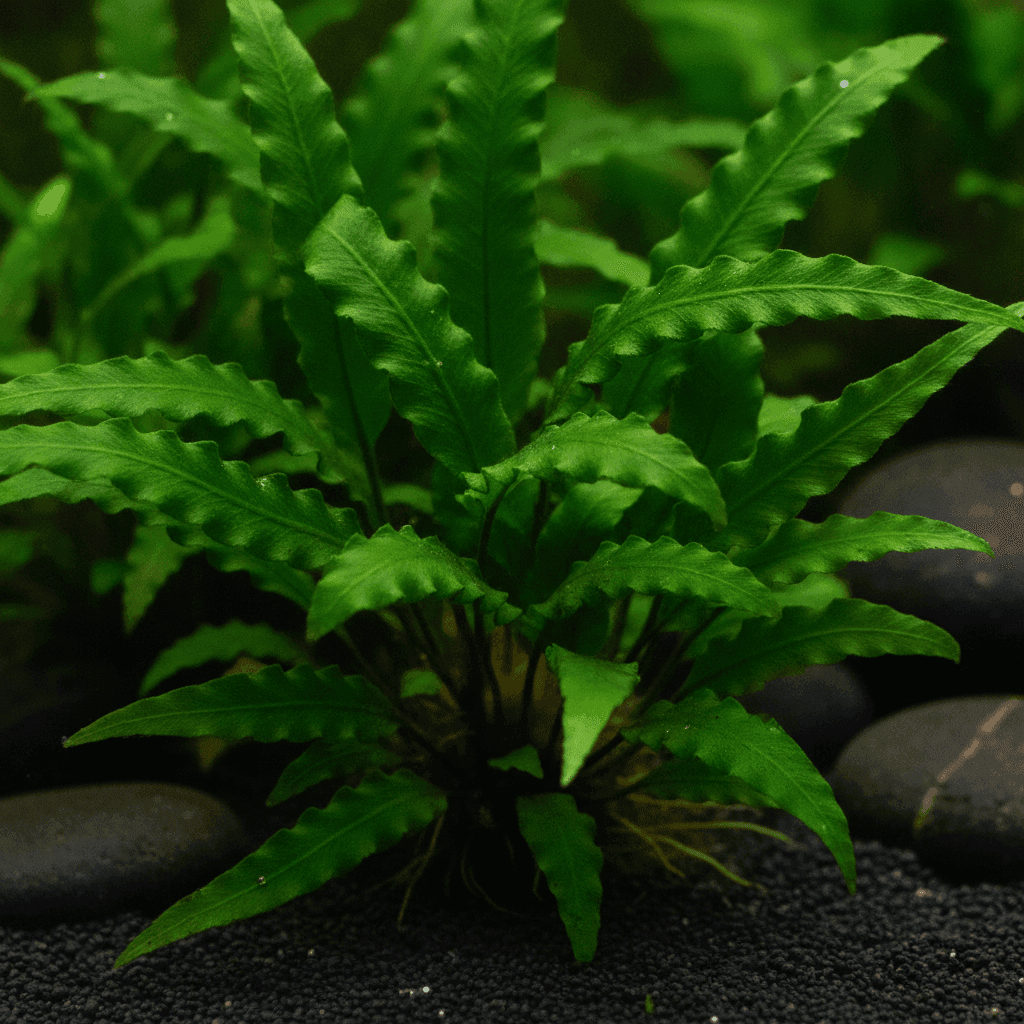
Healthy plants are the backbone of a strong aquascape. Whether you're running a low-tech tank with Java Fern and Anubias or a high-tech setup with carpets and red stems, the same three factors decide success: light, nutrients, and—optionally—CO2. Get these in balance and your plants will grow; let one run ahead of the others and you'll see algae, melt, or stunted growth. This guide walks you through plant care basics for planted tanks so you can match your choices to your setup and avoid the most common mistakes.
In short: Give plants 6–8 hours of consistent light, feed them through the water column (liquid fertiliser) and/or the substrate (root tabs or aquasoil), and only add CO2 if you're ready to keep it consistent and pair it with enough light and nutrients. Low-tech tanks do best with undemanding species; high-light and CO2 open the door to carpets and red plants. For a full system from tank to maintenance, see our step-by-step aquascaping guide.
Light
Most aquatic plants need at least 6–8 hours of consistent light per day. Too little and growth is slow or leggy; too much and algae takes over before the plants can use the extra energy. LED fixtures designed for planted tanks usually offer the right spectrum and intensity—avoid generic household LEDs if you want reliable growth.
Start with 6 hours and increase gradually only if plants look pale or stretched. Use a timer so the photoperiod is the same every day. A practical observation: tanks that run 10–12 hours "to help the plants" often develop more algae than those kept at 6–7 hours with a balanced nutrient routine. If you're not injecting CO2, keep lighting moderate; high light without extra CO2 and ferts is a common recipe for green water or hair algae.
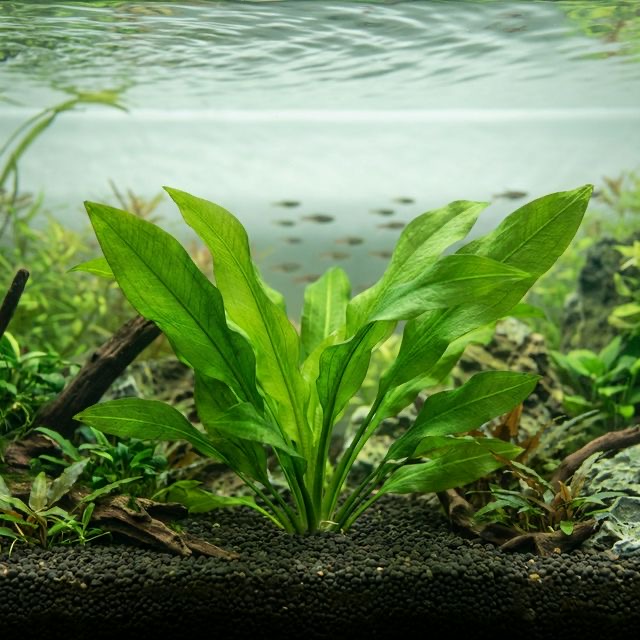 Planted aquarium with healthy growth under consistent lighting
Nutrients
Plants take up nutrients through their roots and their leaves. Root-feeders (swords, crypts, many stems) benefit from a nutrient-rich substrate or root tabs (or both). Water column and epiphyte feeders (Java Fern, Anubias, floating plants like Amazon frogbit) rely on what's in the water—liquid fertiliser does the work.
Use a complete liquid fertiliser that includes macro and micro nutrients. If you're not injecting CO2, dose lightly; excess nutrients with limited growth potential feed algae. Once you add CO2 and increase light, you can increase feeding to match the faster growth. The goal is balance: enough for the plants, not so much that algae wins. For species-specific needs, see our plant care guides. Many aquascapers follow a simple weekly schedule (e.g. one or two doses after a water change) and adjust only when plants show deficiency—yellow leaves, pinholes, or very slow growth.
Substrate and Root Feeding
Not all plants need a rich substrate, but heavy root-feeders like Amazon sword and Cryptocoryne do. Aquasoil or other nutrient-rich substrates release nutrients over time and buffer the water; they're ideal for densely planted tanks. Inert substrate (sand or gravel) works too if you add root tabs near root-feeders and keep up with liquid fertiliser for the rest.
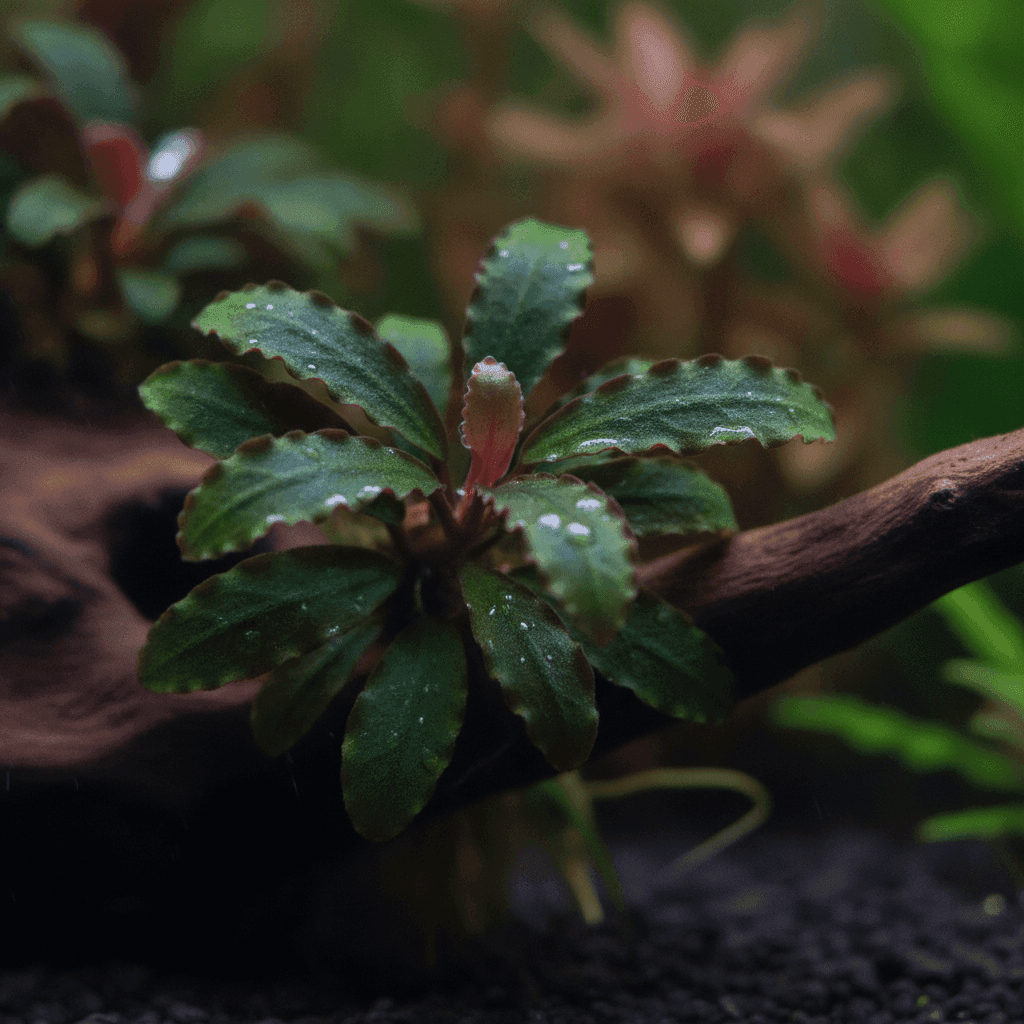
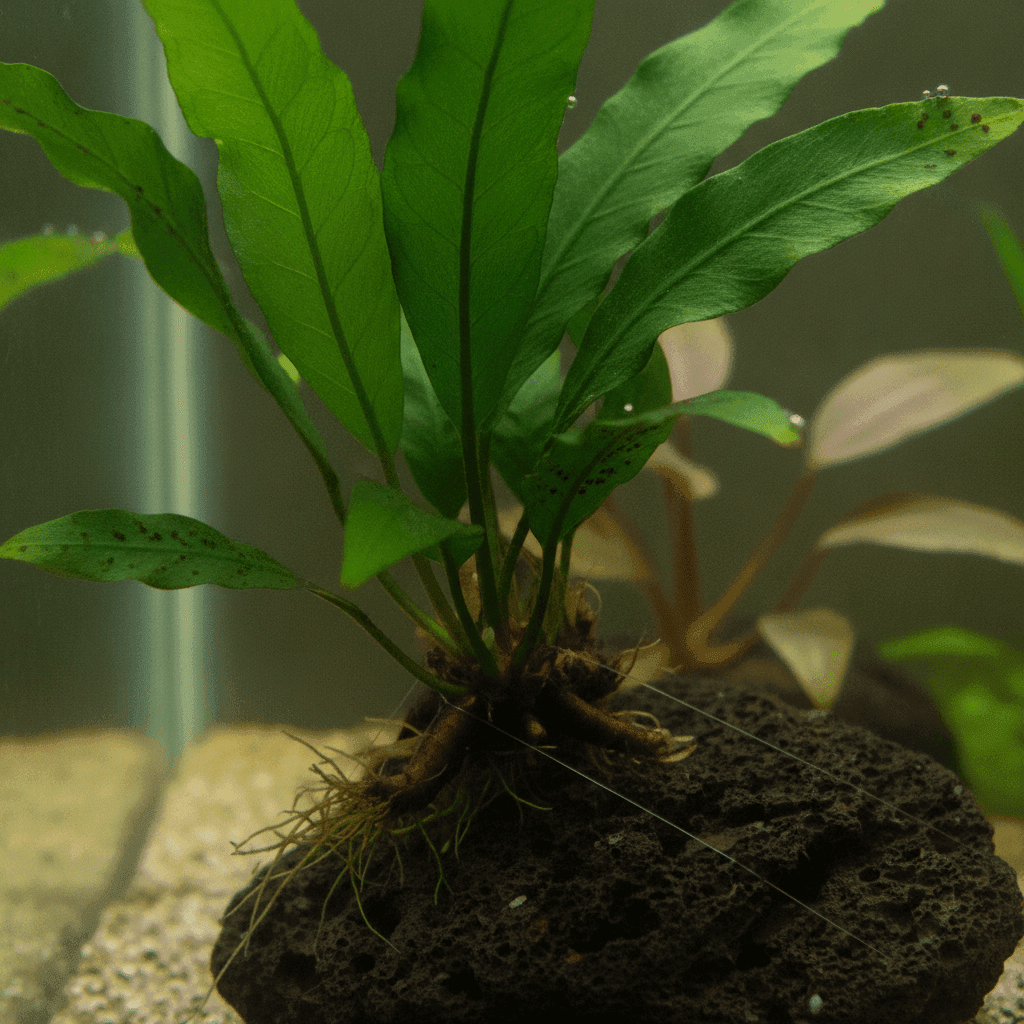
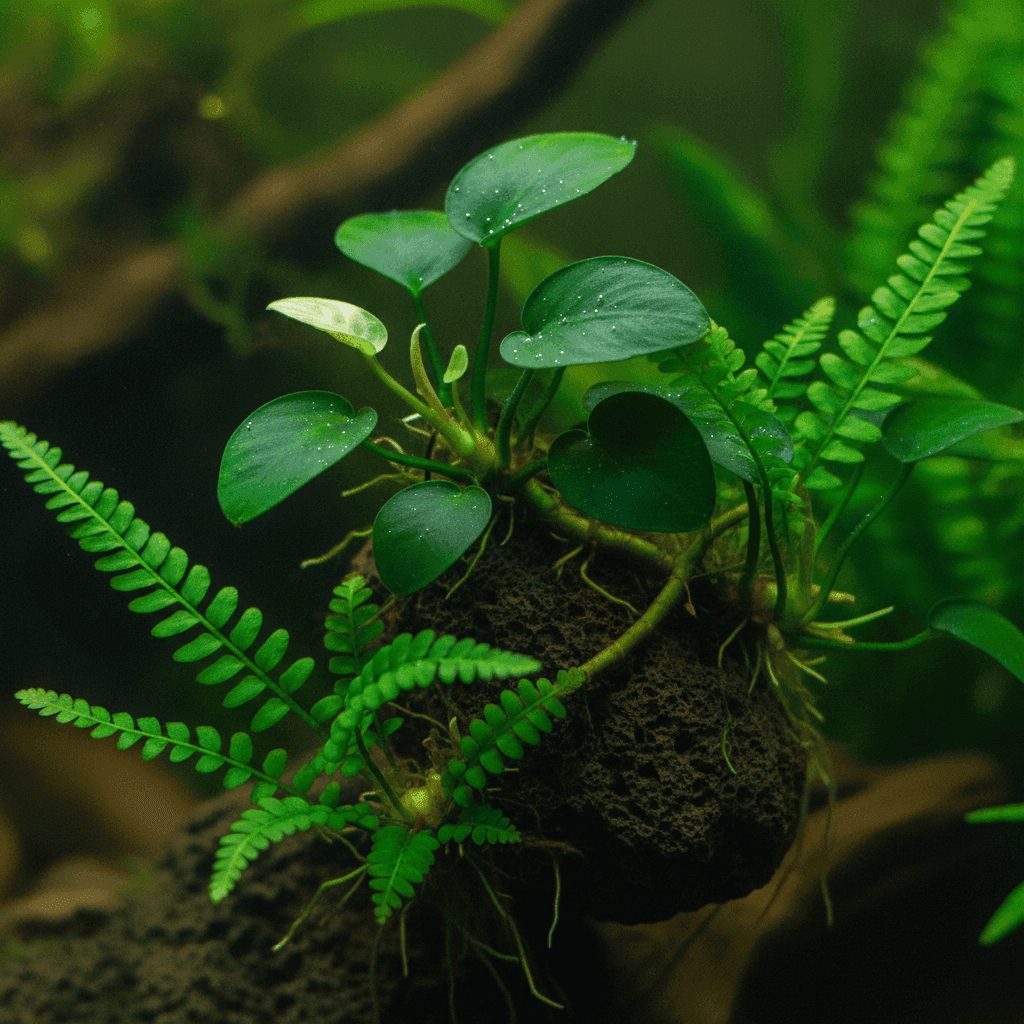
When planting, push roots into the substrate without burying the crown (where leaves meet roots) on stems and rosettes. Epiphytes like Java Fern and Anubias should not be buried at all—attach them to rock or wood with thread or gel. For more on substrate choice and planting order, see our substrate guide: aquasoil vs inert + root tabs and our step-by-step aquascaping guide.
CO2 (Optional)
CO2 injection isn't required for a planted tank. Many beautiful aquascapes are low-tech. But adding CO2 speeds growth and lets you grow more demanding species—carpets, red plants, and dense stems. If you add it, keep it consistent: same schedule every day, with the drop checker in the green by the time lights come on.
Inconsistent CO2 is one of the most common causes of algae in high-tech tanks. Plants adapt to a certain level; when CO2 dips (e.g. runs out or is turned off), growth stalls while light and nutrients stay high—algae fills the gap. So either run CO2 on a timer aligned with your lights and refill before it runs out, or stay low-tech and skip it. There’s no need to feel behind if you don’t use CO2; beginner-friendly plants thrive without it.
Choosing Plants for Your Setup
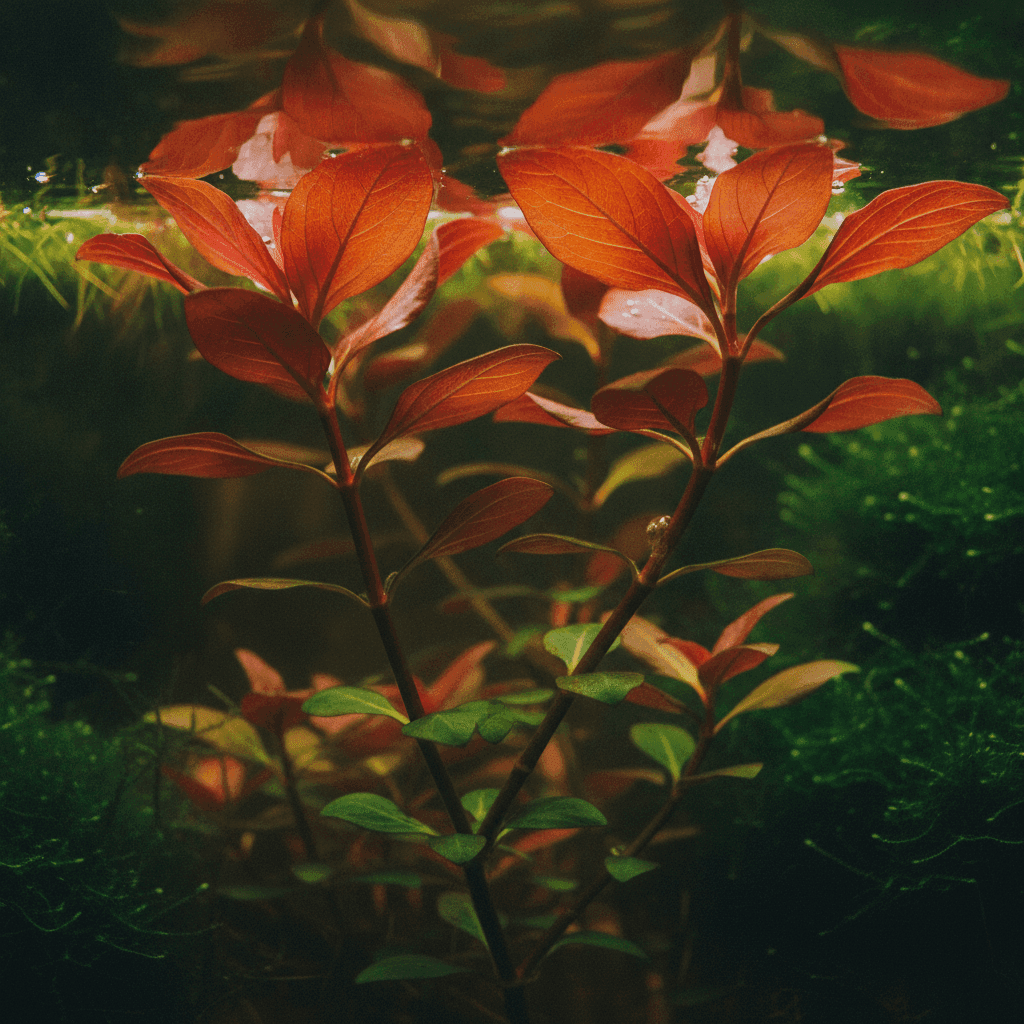
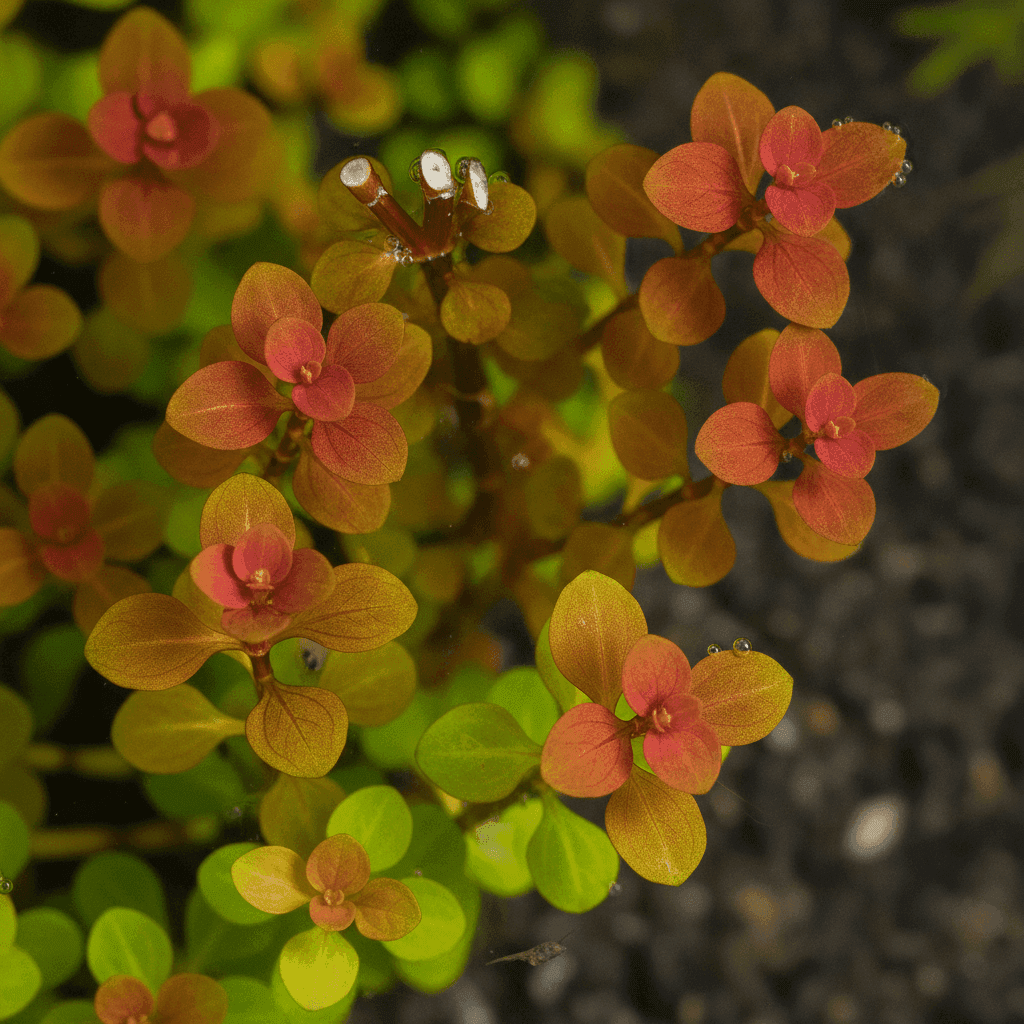
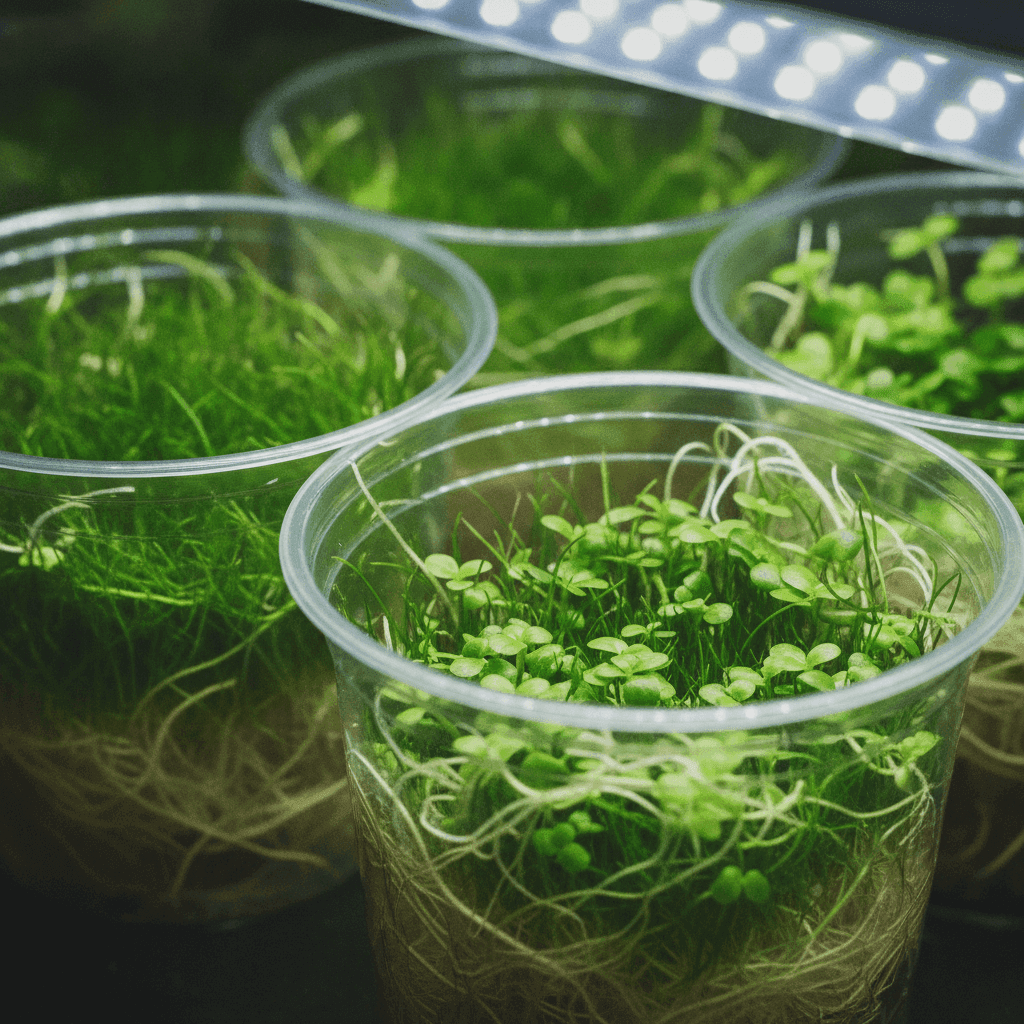
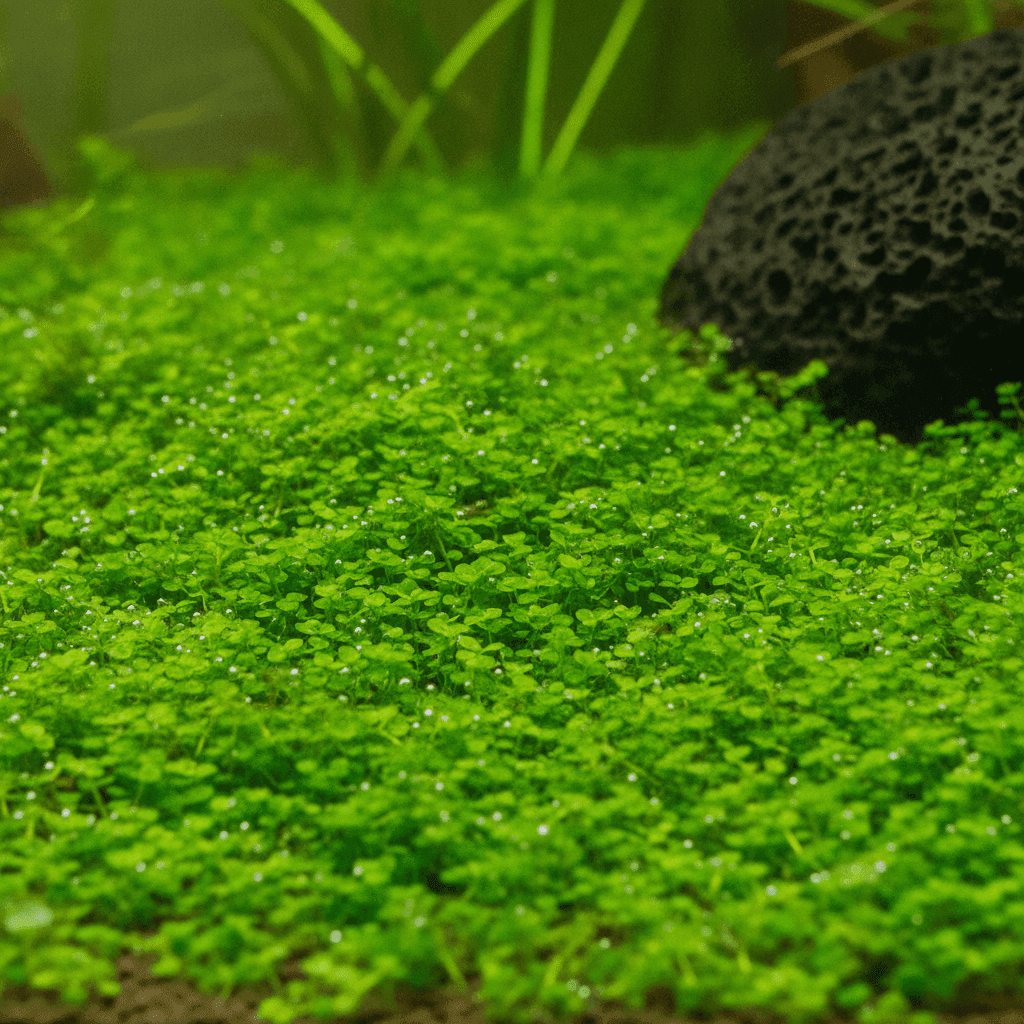
Match plants to your light and CO2. Low-tech, lower-light tanks suit Java Fern, Anubias, Cryptocoryne, and hardy stems like Rotala. Carpet plants such as Monte Carlo and Dwarf Hairgrass usually need more light and often CO2 to spread and stay compact.
If you're new to planted tanks, start with a few easy species and add variety once growth is stable. Mixing a dozen demanding plants in a low-tech tank often leads to melt and frustration; a smaller, well-matched list performs better.
Common Plant Care Mistakes
- Too much light too soon: Long or intense lighting without enough plants or CO2 feeds algae. Start with 6 hours and increase only when growth and balance are good.
- Ignoring the balance: Pushing light or ferts without matching CO2 (or the other way around) creates imbalance. Algae exploits the surplus.
- Burying epiphytes: Java Fern, Anubias, and similar plants rot if the rhizome is buried. Attach them to hardscape instead.
- Skipping consistency: Irregular photoperiods, forgotten fertiliser, or CO2 that runs out mid-week stress plants and favour algae.
- Overfeeding the tank: Excess fish food and waste raise nutrients; combined with strong light, that fuels algae. Feed sparingly and remove leftovers.
Prevention and Maintenance
Stability beats perfection. Use a timer for lights and, if you use it, for CO2. Do regular water changes (e.g. 25–50% weekly) to export excess nutrients and keep parameters stable. Trim overgrown plants so they don’t shade each other or block flow; remove dead leaves before they decay.
If algae appears, address the cause—light, nutrients, CO2, or flow—rather than only scrubbing the glass. Once the balance is right, plants will outcompete algae. Over time you can add more advanced species and techniques as your aquascaping confidence grows.
FAQ
Do I need CO2 for a planted tank?
No. Many healthy planted tanks run without CO2. CO2 injection speeds growth and opens more plant options but adds cost and routine. Start without it unless you're ready for a consistent high-tech schedule.
How many hours of light do aquatic plants need?
Most do well with 6–8 hours of consistent light per day. Avoid 10–12 hours unless you have strong plant mass, CO2, and fertilisation; otherwise algae often wins.
Why are my plants turning yellow or melting?
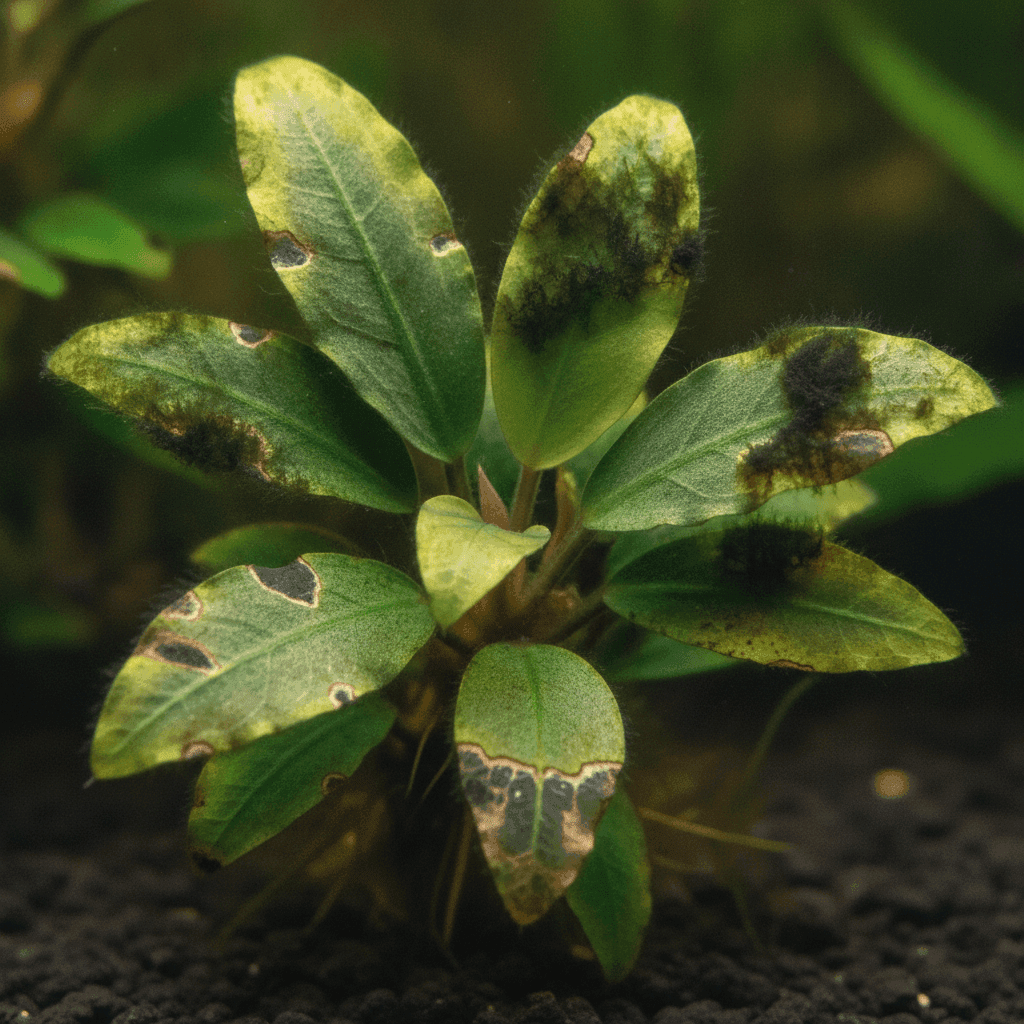
Common causes include lack of nutrients (try a complete liquid fertiliser or root tabs), too little light, or transition shock after planting. Give new plants a few weeks to adapt; if yellowing continues, check light and nutrients.
Can I use sand or gravel for planted tanks?
Yes. Inert sand or gravel works with root tabs for root-feeders and liquid fertiliser for the rest. Aquasoil is easier for heavy planting but not required.
What’s the single most important habit for plant health?
Consistency: same lighting hours, same water change day, same fertiliser and CO2 routine. Irregular care is the main cause of algae and melt in planted tanks.