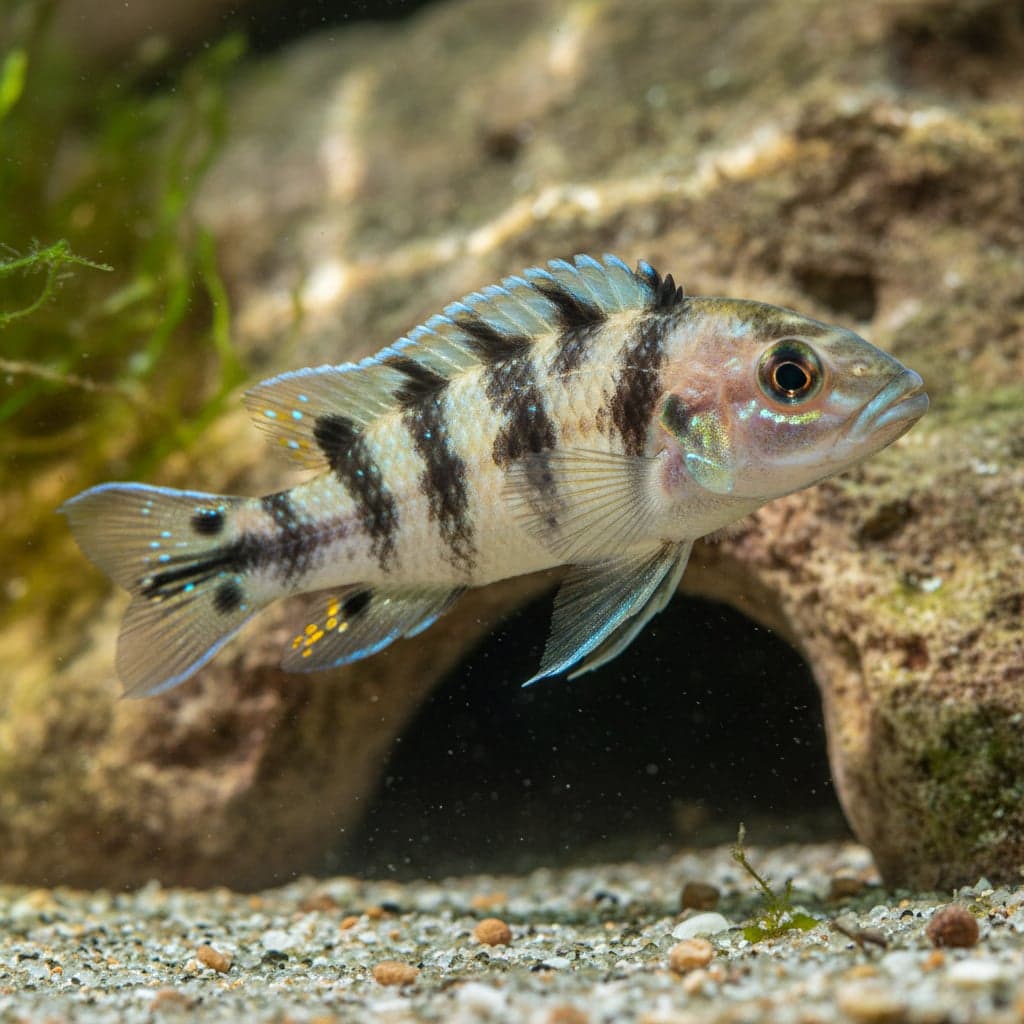
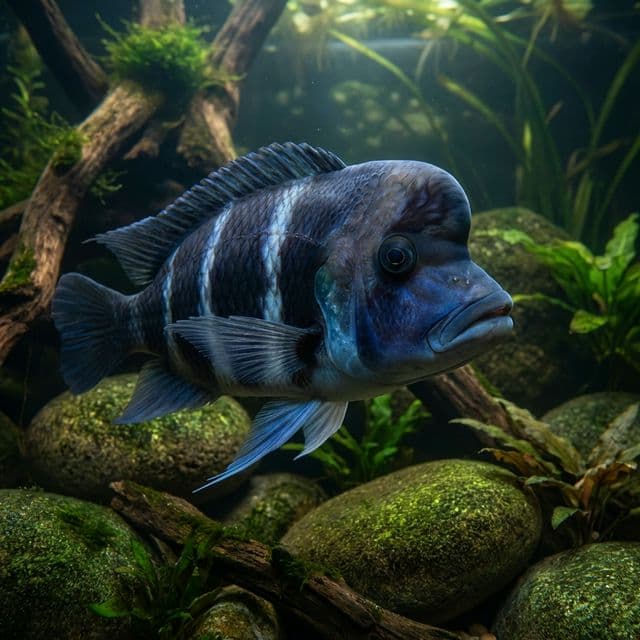
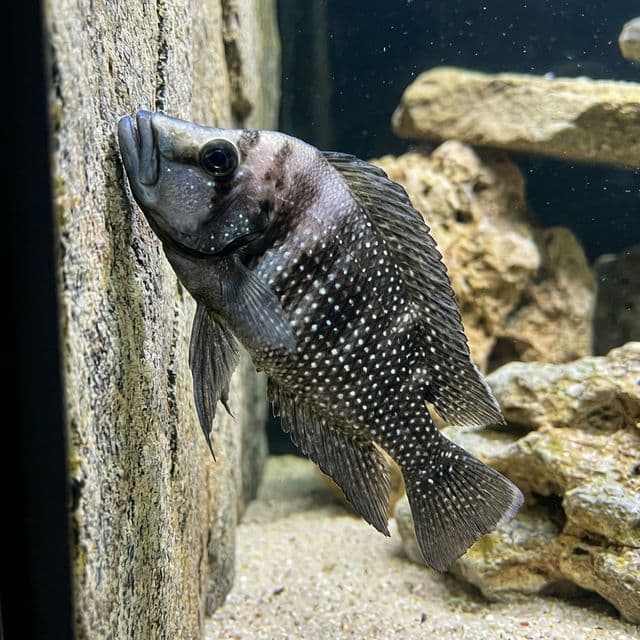
Lake Tanganyika
Ancient rift lake, second deepest in the world; sandy and rocky substrates, sparse vegetation, and unique endemic species.
Natural Habitat & Origin
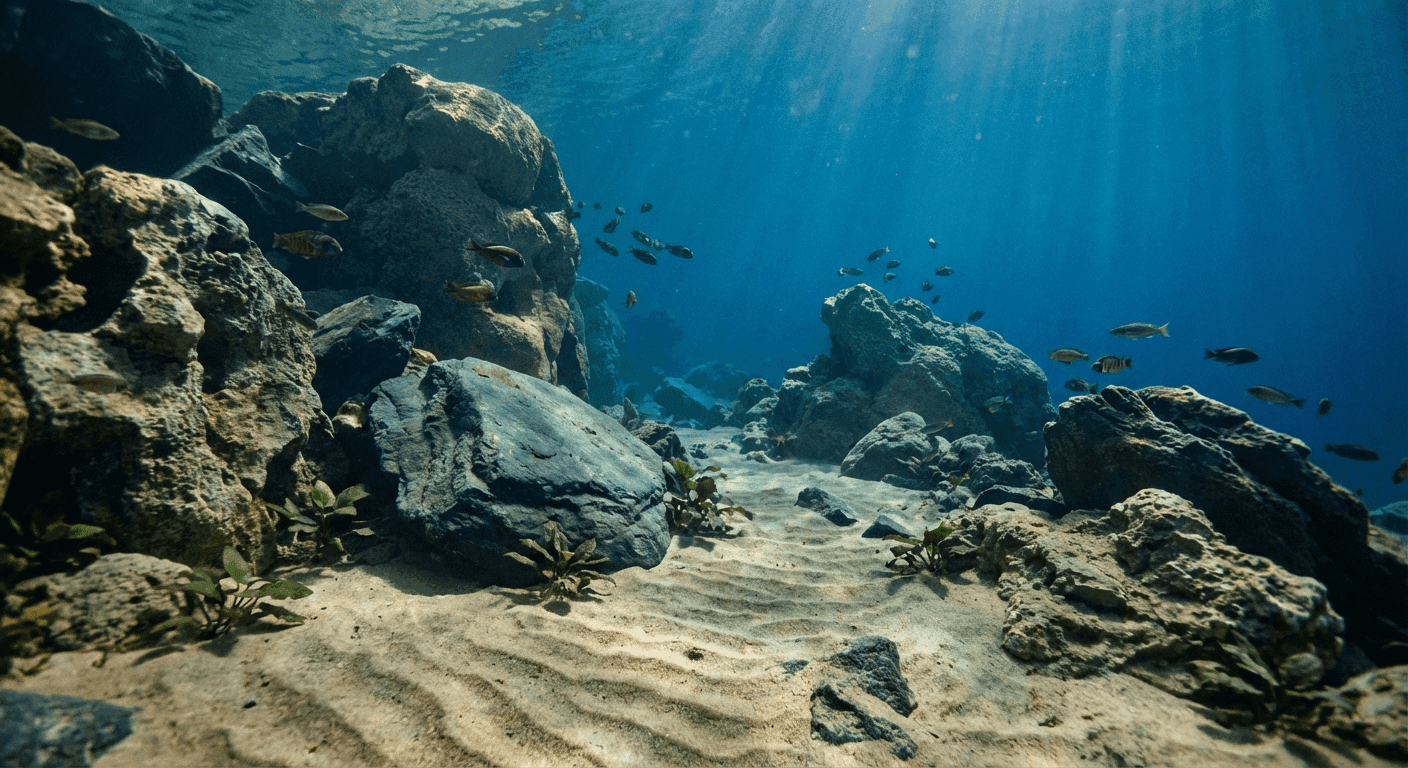
Lake Tanganyika is an ancient, liquid abyss—the oldest and deepest lake in Africa. Its waters are unique, saturated with minerals through millions of years of isolation, creating a highly stable and extremely alkaline environment. This is a landscape of vast, underwater mountains and endless sandy plains that descend into a dark, oxygen-poor deep. Along the margins, however, life thrives in the sunlit shallows and rocky reefs.
Underwater, the world of Tanganyika is one of architectural precision. Intricate shell-strewn beds provide homes for tiny cichlids, while massive limestone spires serve as the backdrop for graceful, schooling predators. The water is exceptionally clear, offering visibility that rivals the ocean, and the stability of the parameters has led to the evolution of species found nowhere else on earth. It is a biome of quiet majesty, where the sheer scale of the environment is reflected in the specialized behaviors of its ancient inhabitants.
Plants
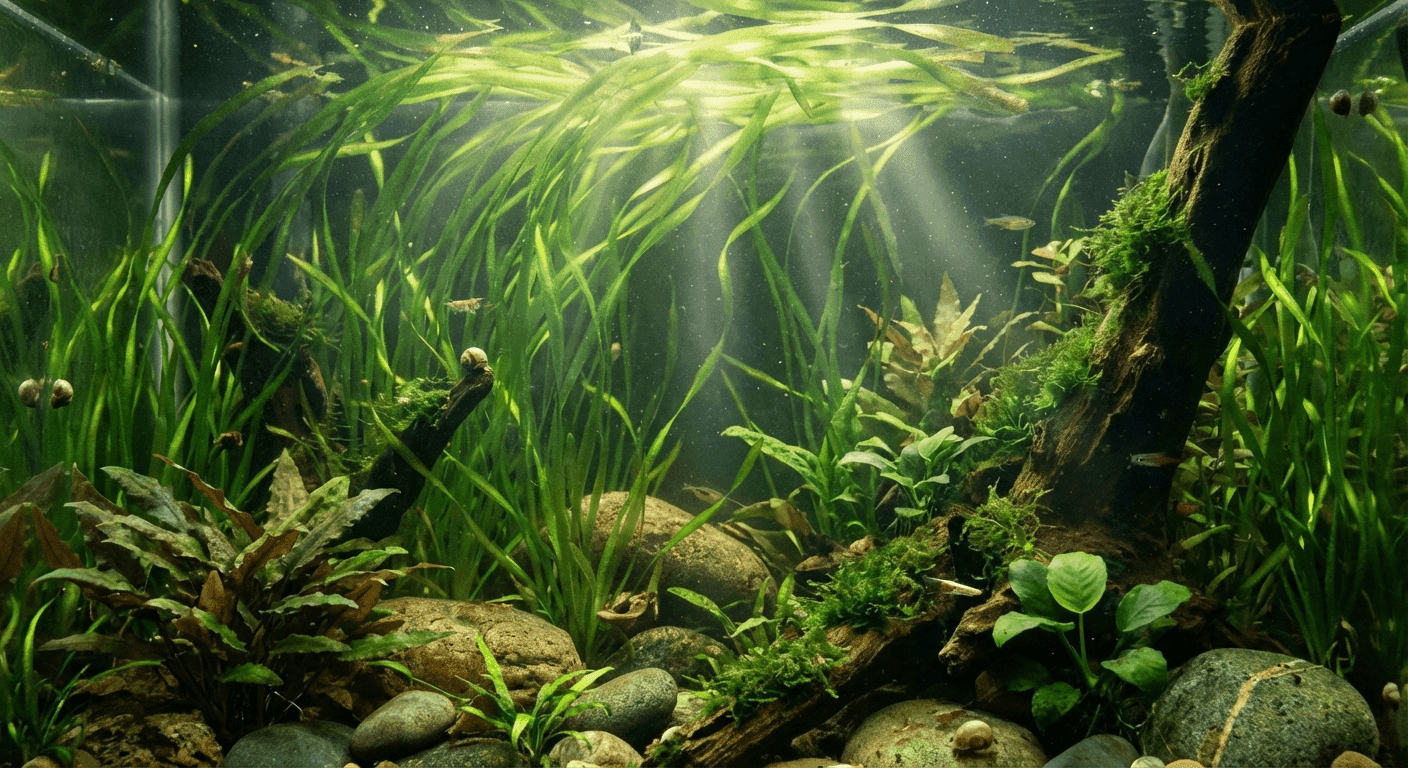
In the mineral-rich waters of Tanganyika, plants like Vallisneria form sparse but resilient meadows that sway in the deep-water currents.
Hardscape
Large-scale limestone rocks and fine silty sands are the primary building blocks for recreating the ancient, mineral-rich rift valley bed.


Fish & Invertebrates
The shell-dwellers and graceful Frontosas of Lake Tanganyika are masters of one of the world's most specialized and stable aquatic environments.