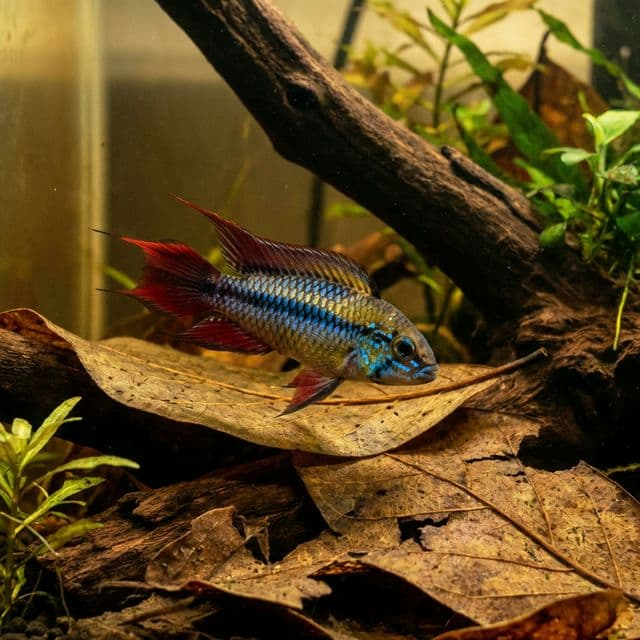
Rio Negro
Famous blackwater tributary with dark, tea-colored waters, fine white sand, leaf litter, and seasonal flooding of the forest floor.
Natural Habitat & Origin
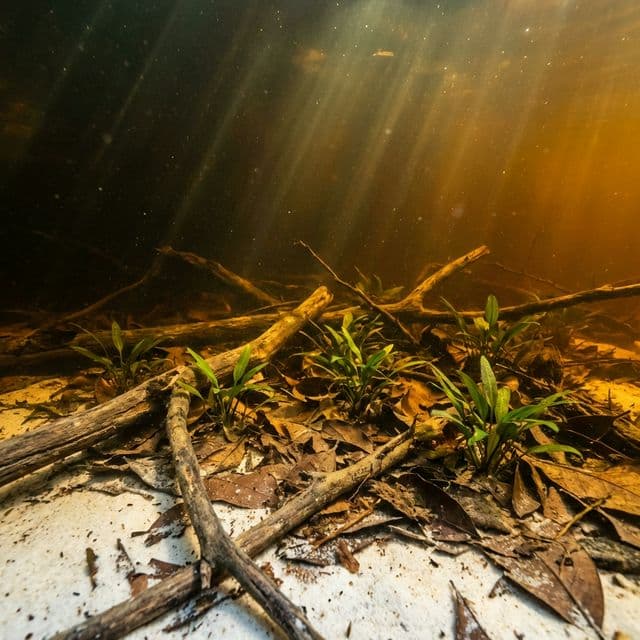
The Rio Negro, the largest blackwater river in the world, is an ethereal landscape of liquid obsidian. Its waters, extraordinarily acidic and devoid of minerals, are stained a dark, translucent mahogany by the immense volume of decaying plant matter gathered from the surrounding rainforest. Beneath the surface, the world is one of high contrast: brilliant white silicate sands shimmer through the dark water, while vast carpets of fallen leaves create a soft, rustling bed.
This is a low-energy environment where time seems to slow. In the shaded reaches of the Igapó, gnarled roots of giant trees reach into the water, providing the only structural anchor in an otherwise fluid world. There are no fast currents here; instead, the water creeps through the forest floor, gently leaching tannins and creating a habitat that is both harsh and incredibly beautiful. The air is thick with humidity, and the underwater silence is broken only by the occasional splash of a surfacing inhabitant in this extraordinary, dark-water sanctuary.
Plants
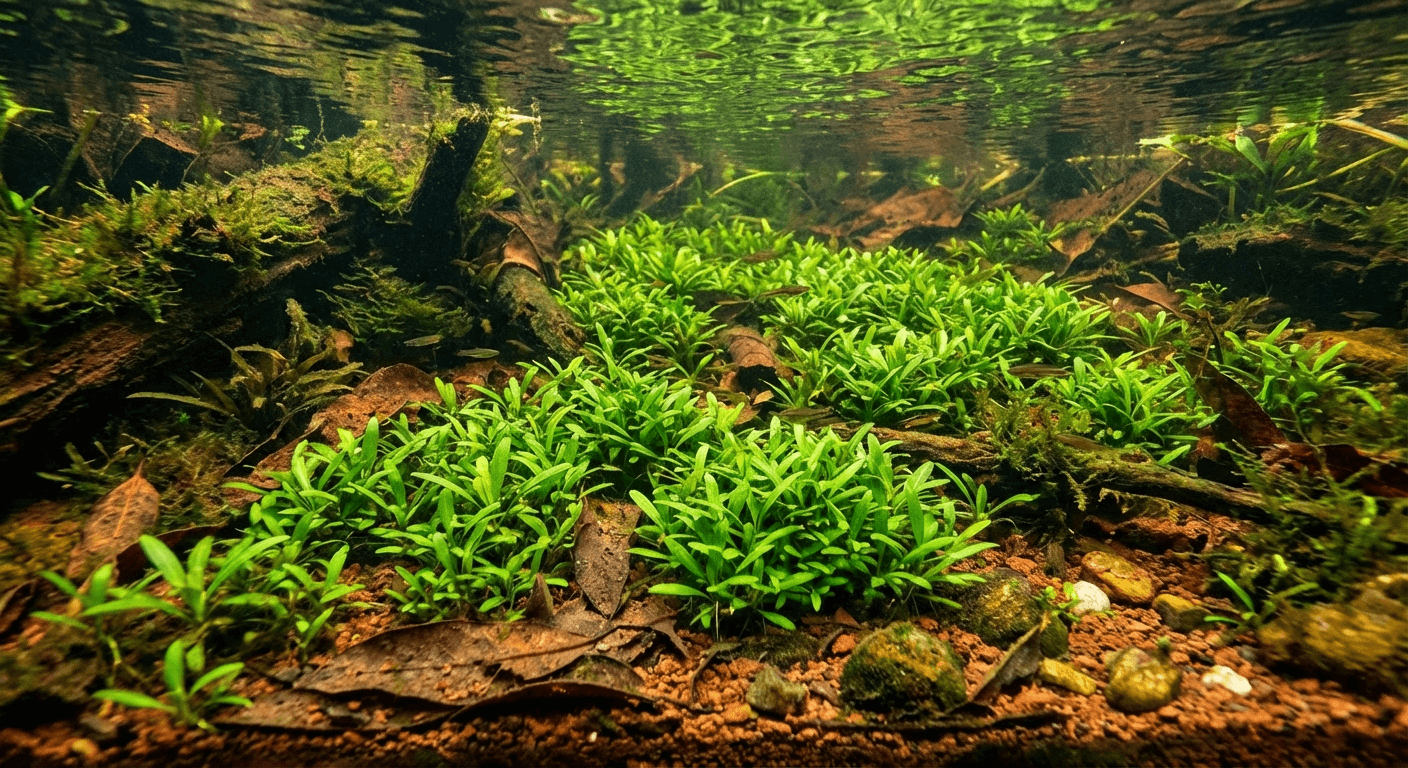
Adapting to the extreme acidity and sparse minerals of the Rio Negro, these resilient species cling to submerged roots and floating debris.

Hardscape
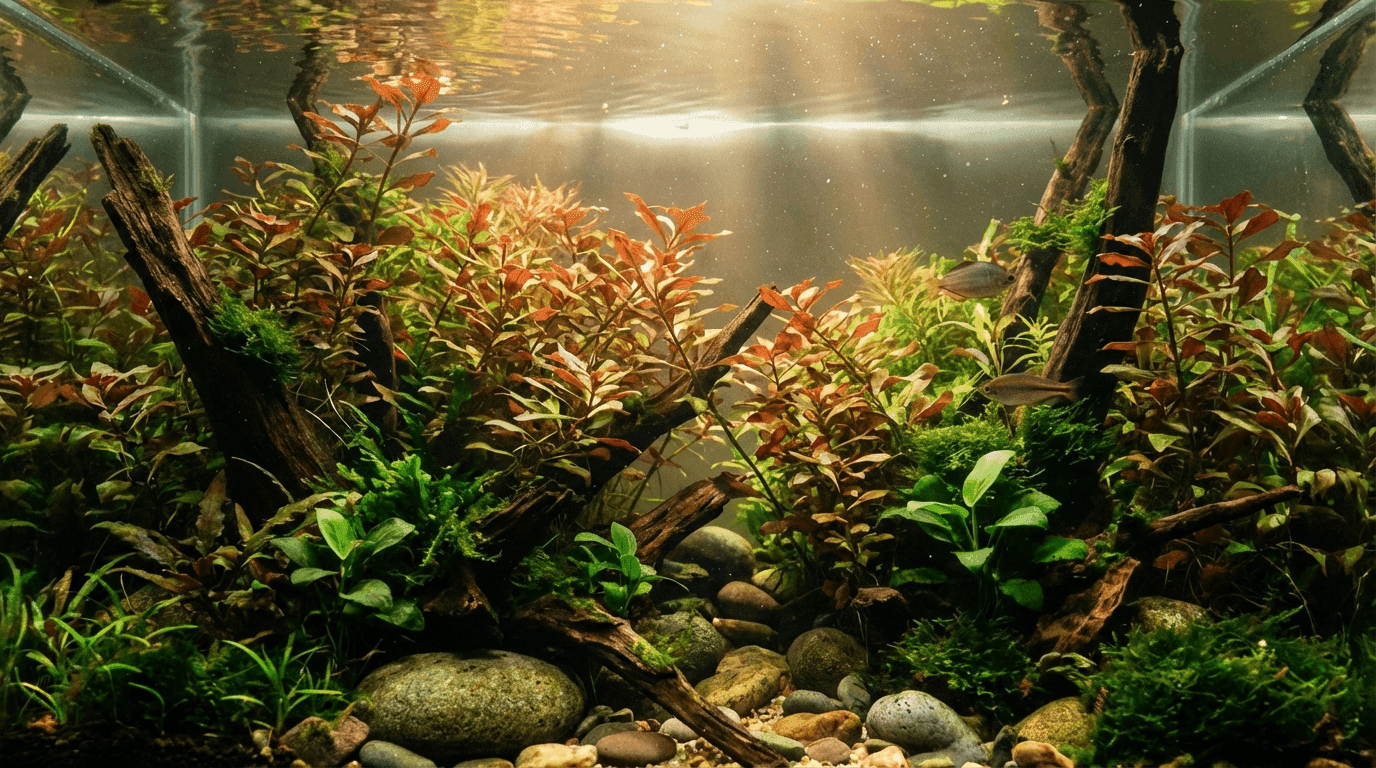
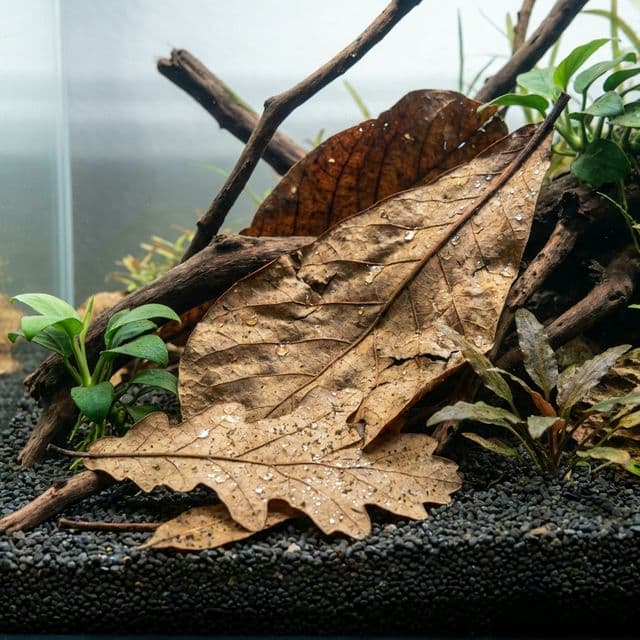
Striking white sands and dense layers of Catappa or Oak leaves are essential for achieving the Rio Negro's iconic high-contrast aesthetic.


Fish & Invertebrates
The Rio Negro is the jewel of the aquarium world, home to the most vibrant cardinal tetras and reclusive dwarf cichlids that glow against the dark water.