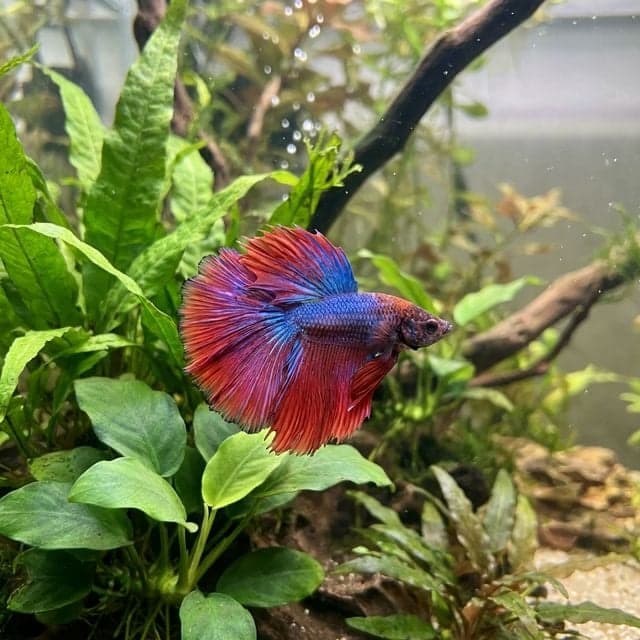
Betta Fin Rot and Common Health Problems
Fin rot, velvet, dropsy, constipation and swim bladder trouble — how to tell them apart, what to treat and what to fix instead. Most betta illness is a water quality problem with a name attached.
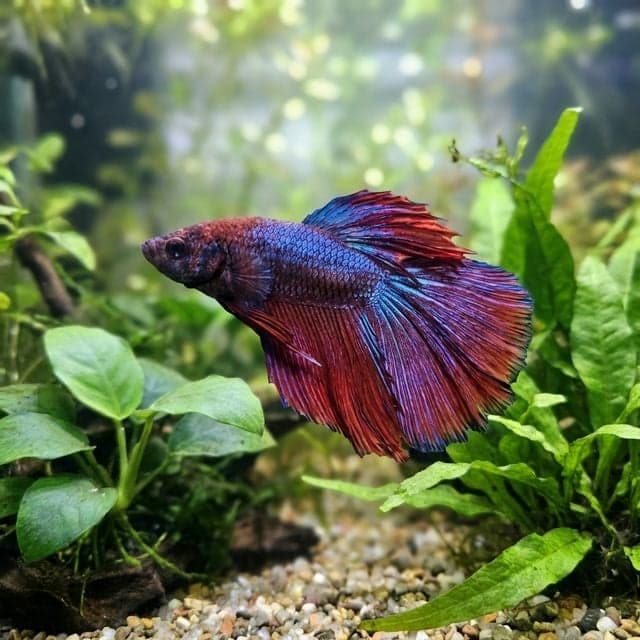
Bettas get sick in a small number of predictable ways, and most of them trace back to the same three causes: water that is too cold, water that is too dirty, or a fin that tore on something sharp. Medication is the last step in this article for a reason — reaching for it first is how a treatable fish becomes a dead one.
Start here, every time
Before identifying anything, do these three things. They resolve a majority of cases outright.
- Check the temperature. Below 23°C produces lethargy, clamped fins and refusal to eat, and mimics half the diseases below. See betta water and temperature.
- Test ammonia and nitrite. Anything above zero is the problem, whatever else you are seeing.
- Look for something sharp. Torn fins are mechanical damage that then gets infected, and the decor that caused it is still in the tank.
Fin rot
What you see. Fin edges going ragged, then receding. Black, brown or red darkening along the margin. Progressive loss over days. In advanced cases the rot reaches the fin base and then the body, which is when it becomes serious.
What causes it. Opportunistic bacteria that are present in every tank and only take hold when the fish is compromised — by ammonia, cold, or a physical tear. Long-finned halfmoons and veiltails are far more affected than plakats, because there is more fin to damage.
Distinguishing it from tail biting. Fin rot progresses gradually with discoloured edges. Tail biting appears overnight as clean, symmetrical chunks missing — bettas do bite their own fins out of stress or boredom, and the fix is enrichment and cover, not medication.
Treatment. Mild cases need no medication at all. Daily or every-other-day 25% water changes, correct temperature, and clean water regrow the fin over two to six weeks. New growth comes in clear or pale and is the sign it is working. Escalate to an aquarium antibacterial only if the rot keeps advancing on clean water, or has reached the fin base. Full protocol in fin rot.
Velvet
What you see. A fine gold or rust-coloured dust over the body, best seen with a torch held at an angle in a dark room. Flashing against decor, clamped fins, lethargy.
Why it matters. Velvet is caused by a parasite that moves faster than white spot and kills quickly. It is contagious and needs prompt treatment rather than water changes alone.
Treatment. Dim the tank or black it out — the parasite is partly photosynthetic. Raise temperature slowly toward 28°C, and use a proprietary velvet or general parasite treatment. Remove carbon from the filter first, or it strips the medication.
Ich (white spot)
Distinct salt-grain white spots on body and fins, unlike velvet's fine dust. Same flashing behaviour. Slower moving and very treatable. Raise temperature gradually to 28°C with extra aeration and treat as in white spot.
Constipation and swim bladder problems
What you see. A swollen belly, no faeces or long stringy white ones, and often a fish that struggles to hold depth — floating at the surface or sinking and unable to rise.
What causes it. Overfeeding, and dried foods that swell after being eaten. Freeze-dried bloodworm is the usual culprit. This is by a wide margin the most common non-infectious betta problem, and it is self-inflicted every time.
Treatment. Fast for two to three days, then feed a small piece of deshelled, blanched pea or frozen daphnia. Most cases clear within a week. Then feed less permanently: a betta's stomach is about the size of its eye, and two or three pellets twice a day is a full meal.
Double tail bettas have a genuinely higher rate of swim bladder trouble because of the shortened body that comes with the trait — in those fish it may be structural rather than dietary.
Dropsy
What you see. A grossly swollen abdomen with scales standing out from the body, giving a pinecone silhouette when viewed from above. The view from above is the diagnostic one.
What it is. Not a disease but a symptom — organ failure, usually kidney, causing fluid retention. Underlying causes range from bacterial infection to chronic poor water quality to old age.
Prognosis. Poor, honestly. Late-stage dropsy is rarely reversible and the kindest response is often euthanasia rather than a series of treatments the fish will not survive. Caught very early, an antibacterial in a hospital tank with pristine water occasionally works. Do not let anyone sell you a guaranteed cure.
Popeye, columnaris and fungus
Popeye — one or both eyes protruding. One eye usually means injury; both usually means water quality. Clean water resolves most cases.
Columnaris — white or grey fuzzy patches, often around the mouth ("mouth fungus", though it is bacterial). Moves fast, and warmth accelerates it, so do not raise the temperature. Needs prompt antibacterial treatment.
True fungus — distinctly cottony white tufts on a wound. Less common than the things mistaken for it. Antifungal treatment, and find the injury.
Prevention, which is most of it
- Hold 25–27°C steadily, with a thermometer you trust.
- Keep ammonia and nitrite at zero and nitrate under 20 ppm.
- Weekly 25% temperature-matched water changes.
- Remove anything a pair of tights snags on.
- Feed small, vary the diet, and skip the freeze-dried bloodworm as a staple.
- Quarantine new fish and plants — velvet and ich arrive from somewhere.
Keeping a dated note of symptoms, temperature and test results turns guesswork into something you can act on. Most misdiagnosis is a memory problem.
Before you medicate
- Confirm temperature and test the water first. Fix those and wait 48 hours.
- Identify the symptom precisely — dust versus spots, gradual versus overnight.
- Remove carbon from the filter, or the medication will not work.
- Treat in the main tank unless the illness is contagious and the tank is shared.
- One medication at a time. Stacking treatments kills more bettas than it saves.