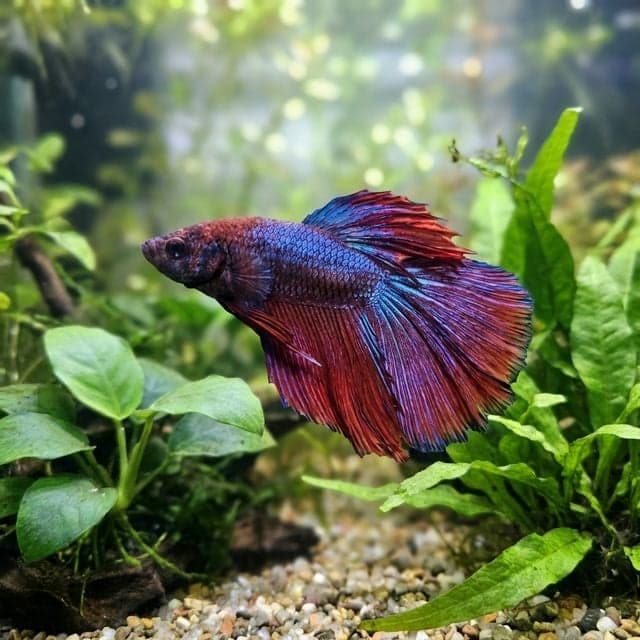
Betta Water Parameters: Temperature, pH and Hardness
Bettas want warm, soft to moderately hard, near-neutral water with almost no flow. Temperature is the parameter that actually decides how a betta does — and the one most often left to the room.
Most betta care advice front-loads pH. It is the wrong emphasis. Bettas are adaptable about chemistry and inflexible about temperature, and almost every "my betta is lethargic and won't eat" case is a temperature problem wearing a disease costume.
Temperature is the parameter that matters
25–27°C (78–80°F). Narrower than most tropical fish, and the difference between the ends of that range is visible in the fish.
Bettas come from equatorial Southeast Asia where water temperature barely moves across the year. They have correspondingly little tolerance for the daily swings a room-temperature tank produces.
| Temperature | What you see |
|---|---|
| Below 22°C / 72°F | Lethargy, sitting on the substrate, refusing food, clamped fins. Immune function drops and infections follow. |
| 22–24°C / 72–75°F | Sluggish and dull. Survivable, not healthy. Very commonly mistaken for a calm personality. |
| 25–27°C / 78–80°F | Target. Active, alert, feeding well, colour up, building bubble nests. |
| 28–30°C / 82–86°F | Metabolism runs hot. Faster ageing, more waste, less oxygen. Used deliberately for breeding, not for daily keeping. |
| Above 30°C / 86°F | Distress. Surface gasping, rapid gill movement. |
The single most useful diagnostic in betta keeping: before treating a listless betta for anything, check the thermometer. A fish kept at 21°C shows nearly every symptom of illness and needs no medication at all — just heat, applied slowly.
Raise temperature at no more than a degree an hour. A sudden jump causes its own stress response, and the fish you are trying to help is the one least able to absorb it.
pH and hardness: adaptable, within reason
pH 6.5–7.5 is the comfortable band, and bettas manage outside it without much complaint. GH 3–12 dGH and KH 3–8 dKH cover soft to moderately hard water.
Note how different this is from a livebearer. Where guppies genuinely require hard, alkaline water, bettas came from soft, slightly acidic, tannin-stained water and merely tolerate harder conditions. That asymmetry is the main reason the two are an awkward community pairing on parameters alone, before temperament enters the discussion.
Do not chase a pH number. This is where beginners do real damage. pH-adjusting chemicals move the number, get exhausted, and let it snap back — and it is the swing, not the value, that harms fish. A betta is far better off at a stable pH of 7.8 than oscillating around 7.0.
If you want to move gently toward the water they evolved in, do it biologically: Indian almond leaves, driftwood or alder cones release tannins that lower pH slightly, tint the water and bring mild antibacterial benefit. The tint is the point rather than a side effect — it is close to their natural habitat and visibly reduces skittishness.
Check your KH before doing any of it. Water with a KH below about 3 has little buffering capacity and can swing sharply; that is the one case where a remineraliser to raise KH is the right move.
Ammonia, nitrite, nitrate
Non-negotiable, and unaffected by how tough bettas look:
- Ammonia 0 ppm
- Nitrite 0 ppm
- Nitrate under 20 ppm
The labyrinth organ lets a betta breathe atmospheric air, so it survives stagnant, oxygen-poor water. It does nothing whatsoever about ammonia. This is the mechanism behind the cup myth: the fish in the cup was not fine, it was merely still breathing.
Ammonia burns gills and fins. A betta in a small uncycled tank with reddened gills, frayed fin edges and heavy surface breathing is being chemically burned, and no medication fixes that — only water changes and a cycled filter do.
Water changes
25% weekly in a cycled 19L tank; more often in anything smaller or uncycled.
Match the temperature of the replacement water by hand rather than by eye, and dechlorinate every time. Bettas react badly to large changes — a 50% change with water two degrees off is a genuine stressor. Small and frequent beats large and occasional.
Do not replace the filter media wholesale. Rinse it in old tank water and put it back; the bacteria living in it are the cycle.
Reading the fish
The betta tells you about the water before your test kit does.
Clamped fins held tight to the body — cold water, or poor quality. Sitting on the substrate, barely moving — almost always too cold. Gasping at the surface repeatedly beyond normal labyrinth breathing — ammonia or heat. Faded colour — chronic stress, cold, or age. A bubble nest — a good sign. Males build them when conditions suit them, and its appearance after you fix something is decent confirmation you fixed the right thing.
Symptom-by-symptom diagnosis is in betta fin rot and common health problems, but check temperature first every time.
Before you buy
- Buy the heater and thermometer with the tank, not later.
- Test your tap water's GH, KH and pH once, then work with what you have.
- Never use pH-down products; use botanicals if you want a gentler pH.
- Cycle the tank before the fish arrives.
- Weekly 25% changes, temperature-matched and dechlorinated.