Bristlenose Pleco Diet: Why Driftwood Is Not Optional
Bristlenose plecos need wood to digest properly, and they will starve in a clean tank. What to feed, why algae is not enough, and which wood works.
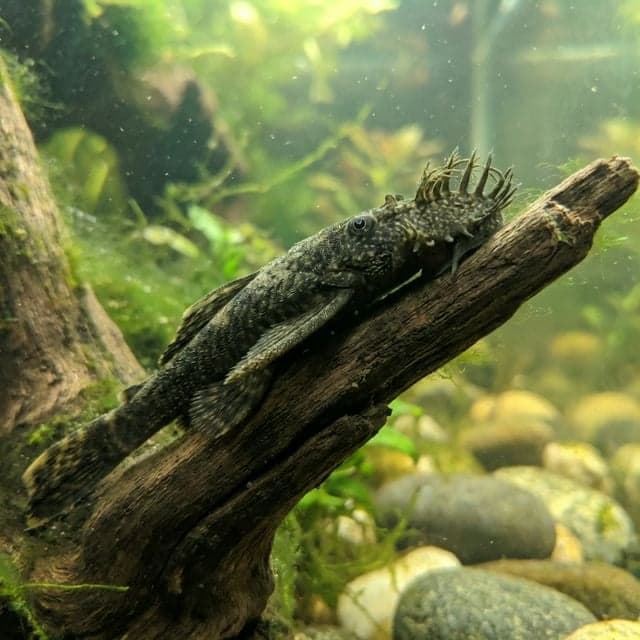
Bristlenose plecos are sold as cleaner fish, and the assumption that follows — that they live on tank algae — kills a great many of them slowly.
An adult bristlenose in a well-maintained tank has almost nothing to eat. The algae runs out within weeks, the fish is nocturnal so nobody sees it not eating, and it wastes away over months while looking, to a casual glance, fine.
They also need wood, and this is not a preference.
Why driftwood matters
Ancistrus are xylivores — wood eaters. In the wild they rasp submerged timber, and their gut is adapted to processing it.
Two things are going on. The wood provides cellulose and lignin that the digestive tract is built around, and it supports the microbial community in the gut that does the actual breakdown. Bristlenoses kept without wood commonly develop digestive problems, show poor growth, and do not colour up properly.
You can see them using it: a bristlenose parked on a piece of driftwood is rasping it, and over a year or two you will see the wood visibly eroded.
Provide at least one substantial piece of driftwood per fish. Not a token ornament — something they can sit on and work at.
Safe woods: mopani, spider/azalea root, Malaysian driftwood, manzanita, bogwood, cholla. Boil or soak new wood before use to sink it and release the worst of the tannins. Some tannin staining is normal and harmless; bristlenoses come from tannin-stained water and are unbothered.
Avoid: resin ornaments, painted wood, anything from a garden centre not sold as aquarium safe, and conifer or treated timber.
What to feed
Wood is the foundation, not the meal. A proper diet is roughly 70–80% plant matter with some protein.
Vegetables — the staple. Blanch briefly and weight down or skewer:
| Vegetable | Notes |
|---|---|
| Courgette / zucchini | The standard. Sliced into rounds, blanched 30 seconds. |
| Cucumber | Readily taken, lower nutritional value than courgette. |
| Sweet potato | Excellent, dense, popular. |
| Butternut squash | Very well received. |
| Deshelled peas | Good for digestion. |
| Spinach, kale | Blanch well. |
| Carrot | Blanch properly — raw is too hard. |
Remove uneaten vegetable after about 24 hours before it fouls the water.
Prepared foods. Quality algae wafers and spirulina-based sinking tablets as a convenient staple. Check the ingredients: many "algae wafers" are mostly fishmeal and wheat. Repashy-style gel foods are excellent if you want to go further.
Protein, occasionally. Bristlenoses are not strict herbivores. A frozen bloodworm or brine shrimp once or twice a week supports condition, and it matters more for breeding fish. Do not overdo it — too much protein causes bloating in a gut built for plant matter.
How and when to feed
Feed after lights out. Bristlenoses are nocturnal and will otherwise be outcompeted by every other fish in the tank. Drop food in as the lights go off, or shortly after.
Feed every day or every other day. The idea that they scavenge enough from leftovers is the same mistake as the algae assumption.
Watch the belly. A well-fed bristlenose has a gently rounded abdomen viewed from below. A sunken or concave belly is the reliable sign of starvation, and it is the single most useful check on this page — because the fish is otherwise undemonstrative and hides all day.
The "cleaner fish" myth, properly stated
Bristlenoses do eat algae, genuinely and throughout their lives, which makes them better at it than a common pleco. They are effective on green spot and green dust algae on glass and hardscape.
What they will not do:
- Eat black beard algae or most hair algae. See hair algae for what actually works.
- Clean the tank in any general sense. They produce a lot of waste — a bristlenose adds to your filtration load rather than reducing it.
- Live on what is already there. A clean tank is a tank with no pleco food in it.
A bristlenose is a fish you keep because you want it, and it happens to graze algae. It is not maintenance equipment.
Signs you are getting it wrong
- Sunken belly — underfed. The most important sign.
- Constantly on the glass in daylight — often hunting for food that is not there.
- Pale colour, no growth — chronic malnutrition.
- Bloating after feeding — too much protein, not enough plant matter.
- Wood untouched after a year — either the wood is unsuitable or the fish is not thriving.
Before you buy
- Buy driftwood at the same time as the fish. It is part of the specification.
- Plan to feed vegetables two or three times a week, after lights out.
- Buy algae wafers with algae actually near the top of the ingredients.
- Check the belly profile weekly — it is your feeding gauge.
- Do not buy one to solve an algae problem; buy it because you want the fish.