Molly Varieties: Sailfin, Balloon, Dalmatian and More
Short-fin, sailfin, lyretail and balloon — which are size differences, which are colour, and which one is a deformity you should think twice about buying.
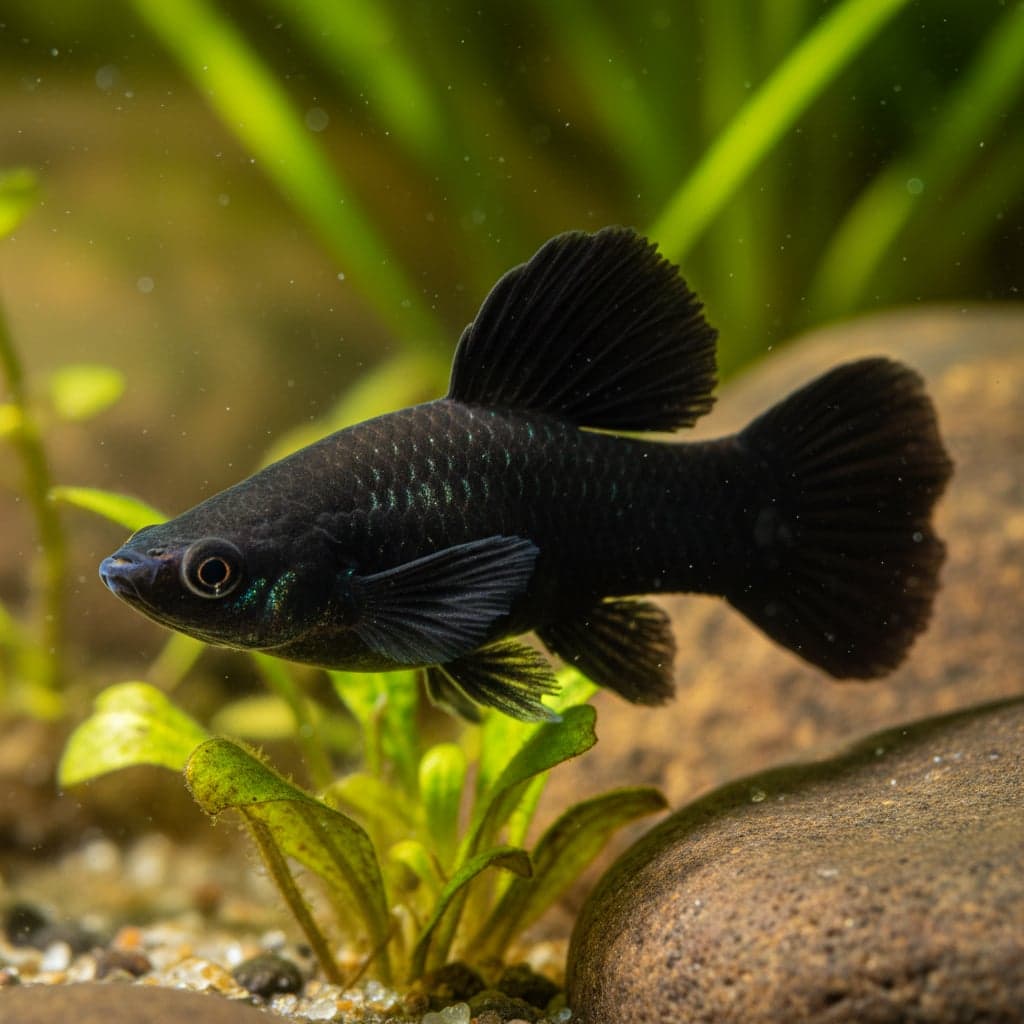
Molly names mix three separate things: the underlying species, the fin type, and the colour pattern. "Black sailfin molly" is a colour and a fin type. "Dalmatian lyretail" is two more. Once you separate the axes, the shelf makes sense.
One variety on this page is a deformity rather than a decoration, and it is worth knowing which before you buy.
The underlying species
Short-fin molly (Poecilia sphenops). The common molly. Reaches 8–10cm, plain dorsal fin, and the basis of black mollies and most cheap shop stock. Hardiest and most forgiving of the group.
Sailfin molly (Poecilia latipinna). Reaches 12–15cm, with males growing a tall, spectacular dorsal fin they display at each other. Needs a bigger tank — 100L or more — and the sail only develops properly in a fish with room and good feeding. Stunted sailfins never show the trait that makes them worth keeping.
Giant sailfin molly (Poecilia velifera). The largest, to 15cm+, with the most extreme sail. Wants hard, warm, ideally slightly brackish water and is the most demanding of the three.
Most shop "mollies" are sphenops, hybrids, or unlabelled crosses — the three species interbreed freely and much commercial stock is of mixed ancestry.
Fin types
Short-fin — the standard dorsal. Nothing to note.
Sailfin — the tall dorsal described above, on males only. Females of sailfin species have a normal dorsal, which surprises people who bought a pair.
Lyretail — the caudal fin extends into trailing points top and bottom. Attractive, and the extended rays are more prone to fin rot and to nipping by fast tank mates such as zebra danios.
Colour patterns
Black molly — solid velvet black, the most recognisable molly of all. A sphenops colour form. Worth knowing that the black pigmentation makes the gravid spot nearly impossible to read, so pregnancy is judged on body shape instead — see breeding and fry.
Dalmatian molly — white or silver with irregular black speckling. Patterning varies between individuals and shifts somewhat as the fish grows.
Gold / golden molly — orange-gold, sometimes marketed as "gold dust".
Silver and marble — pale bodies with variable dark patterning.
Platinum / white — solid pale, showing colour least but water quality most: white mollies display fin damage and disease earlier than dark ones, which makes them a useful sentinel fish.
Colour is independent of fin type and largely independent of species, so most combinations exist somewhere.
Balloon mollies: read this before buying
The balloon molly is a short-fin molly selectively bred for a severely shortened, rounded body caused by spinal deformity — specifically a compressed and curved vertebral column.
It is not a colour or a fin trait. It is a structural deformity maintained deliberately, and it carries consequences the fish lives with:
- Compressed internal organs, giving chronically higher rates of digestive problems, constipation and swim bladder disorder.
- Impaired swimming. Balloon mollies are visibly poorer swimmers and struggle in flow that a normal molly enjoys.
- Difficult pregnancies. Females have less body cavity for a brood, and complications during birth are more common.
- Shorter lifespans, typically two to three years against three to five.
Whether to keep them is a judgement call and the fish already exist — buying one that is in a shop does not create it. But it is a decision that should be made knowingly rather than because it looked cute on the shelf, and if you do keep them, give gentler flow, easily digestible food with plenty of vegetable matter, and avoid breeding them.
The same reasoning applies to balloon and short-bodied forms of other species.
Which to buy
A first molly: short-fin, any colour. Hardiest, cheapest, smallest tank requirement, best-tempered.
For display: a male sailfin in 100L or more. The dorsal display of a well-grown sailfin male is genuinely one of the better sights in a freshwater community tank.
Mixed varieties shoal and interbreed happily — they are one group for stocking purposes. Offspring of mixed strains drift toward plain colouring within a couple of generations.
Whatever the variety, the water requirement does not change: hard, alkaline, warm, as set out in salt and brackish water.
Before you buy
- Identify short-fin versus sailfin — it doubles the tank requirement.
- Expect the sail on males only.
- Know what a balloon molly is before you choose one.
- Lyretails need calmer tank mates.
- Colour makes no difference to care; body shape and species do.