Angelfish Varieties: Koi, Marble, Veil and More
Silver, zebra, marble, koi, platinum, blushing and veiltail — what the names mean, which combine, and the two forms that carry real care implications.
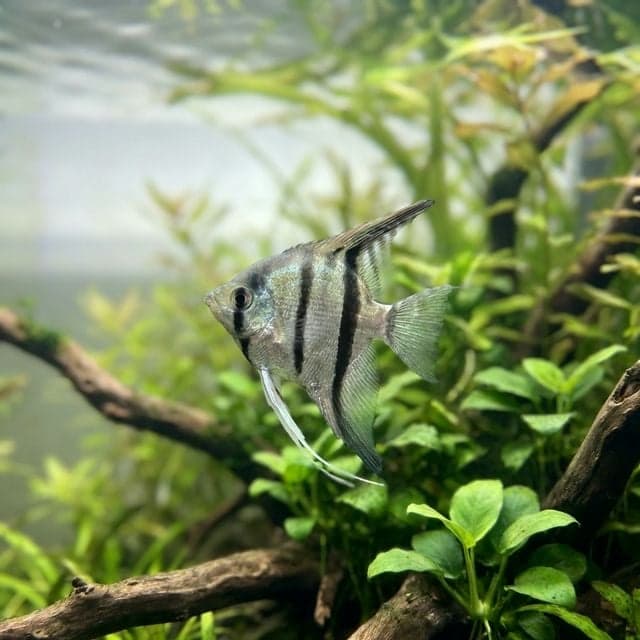
Angelfish names stack two independent things: a colour or pattern, and a fin form. A "koi veiltail" is one of each. Nearly every combination exists, because domestic angelfish have been bred intensively for decades.
Two of the forms below carry genuine care implications, and one of them is a welfare consideration worth knowing before you buy.
Colour and pattern
Silver. The wild type: silver body with three or four vertical black bars. The bars darken and fade with mood, which makes them a useful stress indicator — a fish showing hard dark bars is often unhappy rather than showing off.
Zebra. Like silver but with additional vertical stripes — four to six rather than three.
Marble. Irregular black and silver-gold marbling, no two identical. One of the most common and most attractive forms.
Koi. Marble with orange or red patching, usually strongest on the head. The current favourite in the trade. The orange typically intensifies with age and good feeding, and often deepens under stress — a koi that "colours up" after a move is not necessarily a happy fish.
Gold. Solid pale gold to yellow, no bars.
Platinum. Solid iridescent white-silver. Clean and striking; shows fin damage and disease earlier than patterned fish, which makes it a useful sentinel.
Blushing. Reduced gill-plate pigmentation, so the red gills show through as a pink "blush" on the cheeks. Usually combined with other patterns.
Black / smokey. Solid or partial dark forms. Black angelfish are noticeably less common and tend to be less robust.
Half-black. Rear half of the body dark, front pale.
Ghost. Mostly clear silver with minimal barring.
Pattern is largely independent of everything else, and none of it changes care.
Fin forms
Standard. Normal dorsal, anal and ventral fins. The default.
Veiltail. Extended, flowing fins — dramatically taller and longer than standard. Genuinely spectacular in a tall tank, and the form with real implications:
- They need more tank height still. A veiltail in a 45cm tank is cramped where a standard fish is adequate. 50–60cm is the sensible floor. See tank size and height.
- The fins are fragile and tear on sharp decor.
- They are slower, so nipping tank mates such as zebra danios and tiger barbs cause more damage, and the fish loses out at feeding time.
- Fin rot risk is higher, because there is more fin and more of it gets damaged.
Super veil. More extreme again, and correspondingly more delicate.
Balloon angelfish: know what it is
The balloon angelfish has a shortened, rounded body produced by spinal compression — the same category of deliberate deformity as the balloon molly.
The consequences are real:
- Compressed organs and higher rates of digestive and swim bladder problems.
- Impaired swimming, and poor tolerance of flow.
- Shorter lifespan than standard-bodied angelfish.
- More difficulty in breeding.
Whether to keep one is a personal call, and the fish in the shop already exists. But it should be a knowing choice, and if you do keep them, give gentler flow, easily digested food, and do not breed them.
Altum angelfish
Pterophyllum altum is a different species, not a variety, and it is routinely mis-sold as a fancy domestic angelfish.
Altums are taller — to 30cm+ — wild-caught almost without exception, and require genuinely soft, acidic, warm blackwater: pH around 5.0–6.0, very low hardness, 28–30°C. They are delicate on import, expensive, and not a fish for a general community tank.
If a shop is selling "altums" cheaply next to the koi and marbles, they are almost certainly domestic scalare.
Which to buy
A first angelfish: silver, marble or zebra, standard fin. Hardiest, cheapest, most available, and the bars give you a free stress gauge.
For display: koi or platinum, standard fin. Strong colour without the fragility of extended fins.
Veiltails only if the tank is 50cm+ tall and the tank mates are peaceful.
Mixed varieties shoal and pair freely — they are all the same species, and a mixed group is fine. Offspring of mixed pairs are unpredictable and drift toward plainer patterning over generations.
Before you buy
- Fin form matters; colour does not.
- Veiltails need more height and calmer company.
- Know what a balloon angelfish is before choosing one.
- "Altum" at a low price is not an altum.
- Dark vertical bars on a silver mean mood, not markings.