Bluestripe Flasher Wrasse
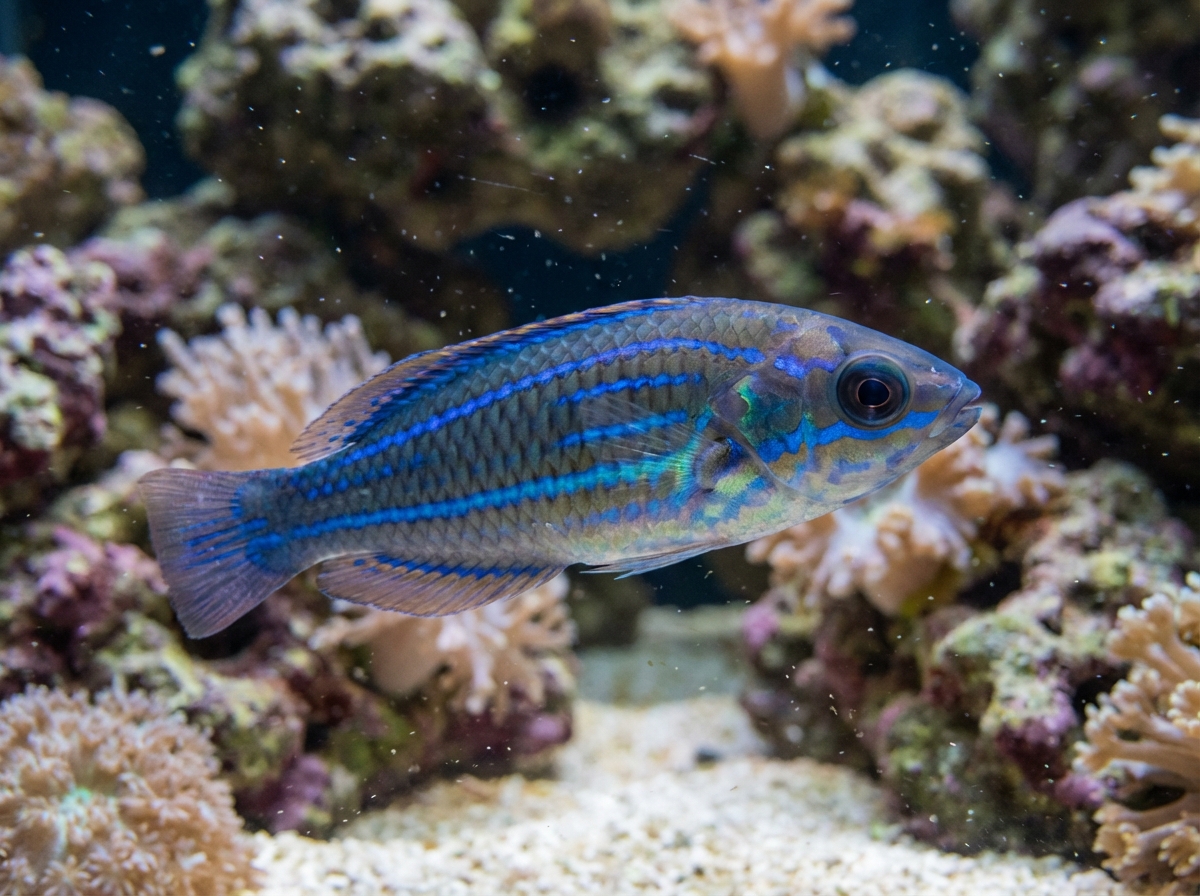
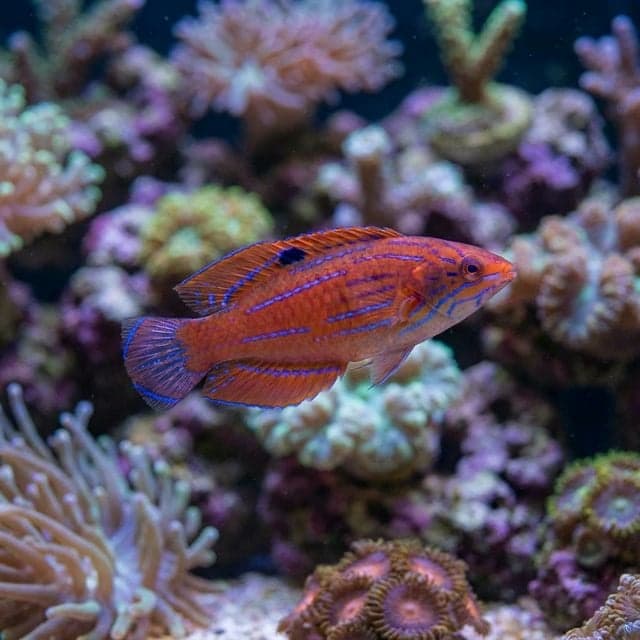
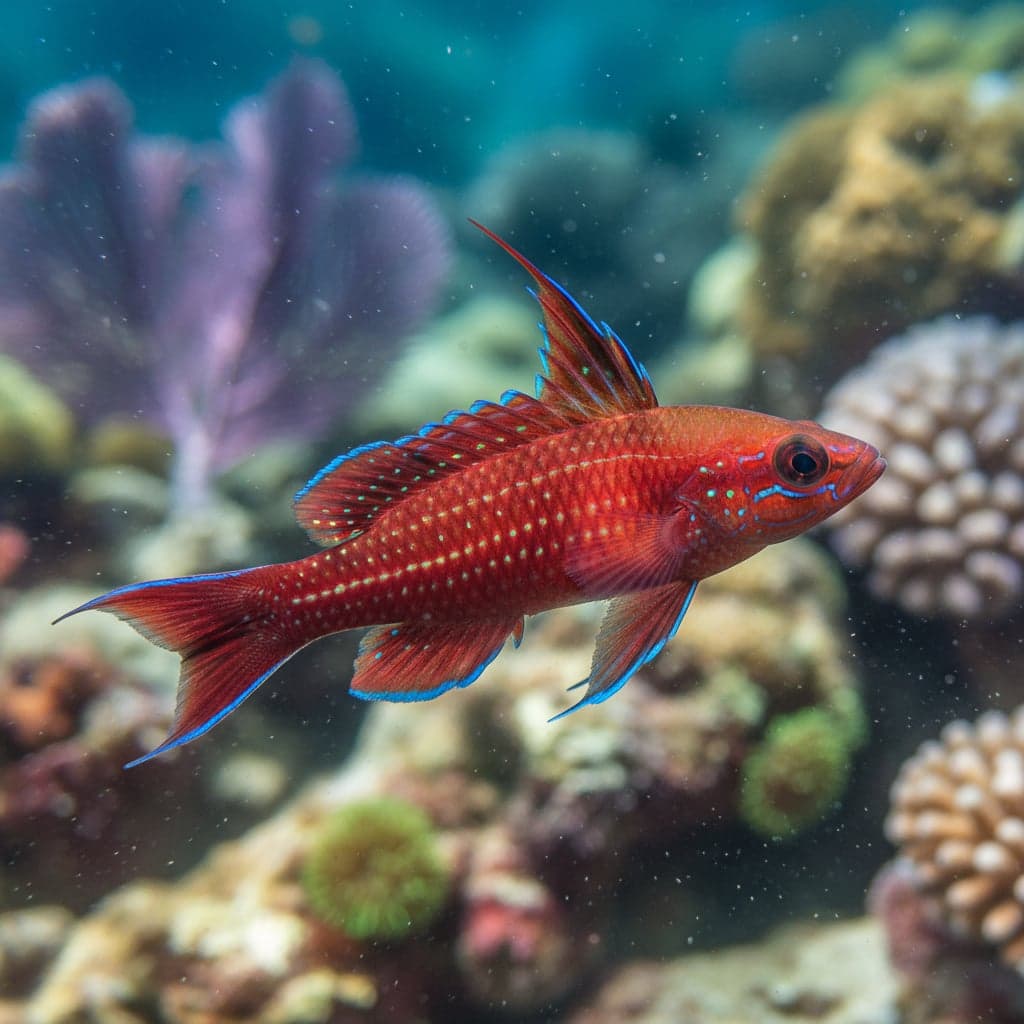
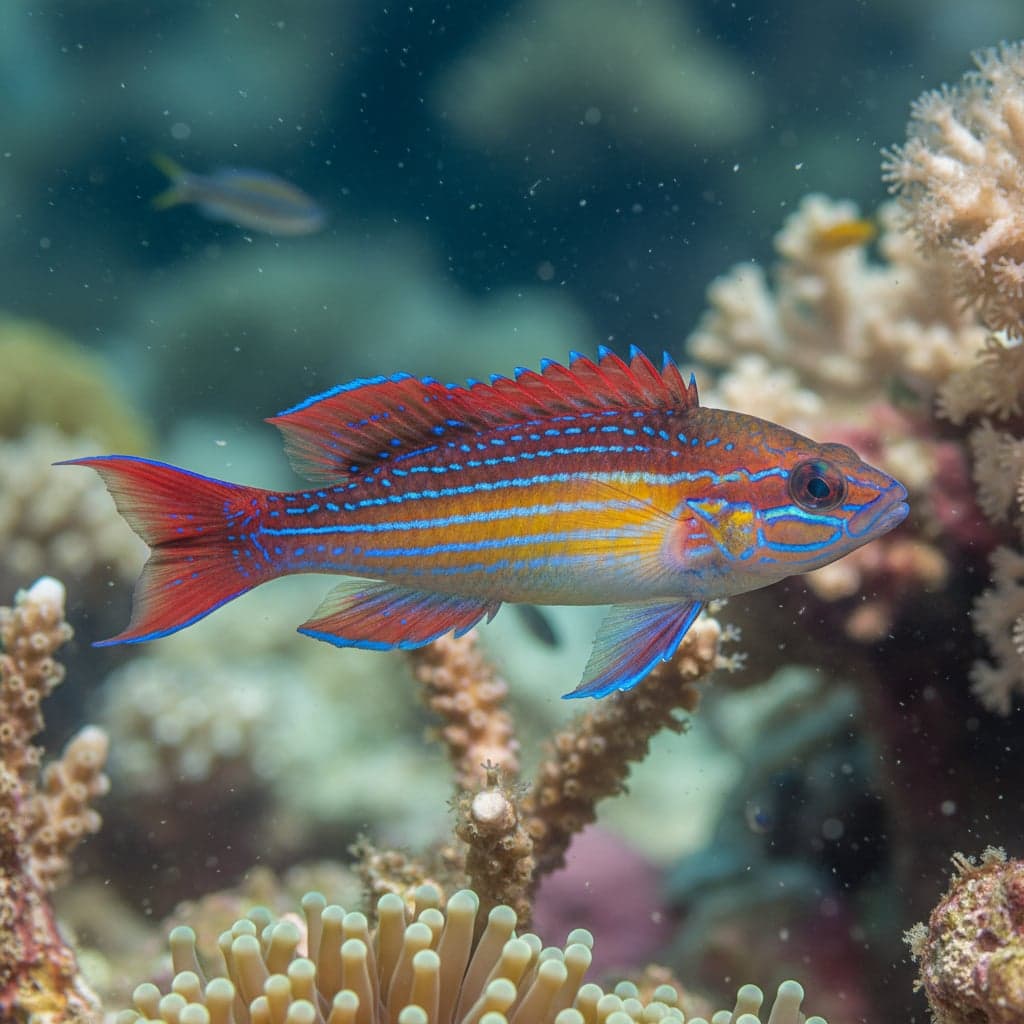
The Bluestripe Flasher Wrasse (Paracheilinus mccoskeri) is a small, dazzling reef-safe wrasse whose males "flash" intense colour — peaceful and ideal for a community reef.
Bluestripe Flasher Wrasse
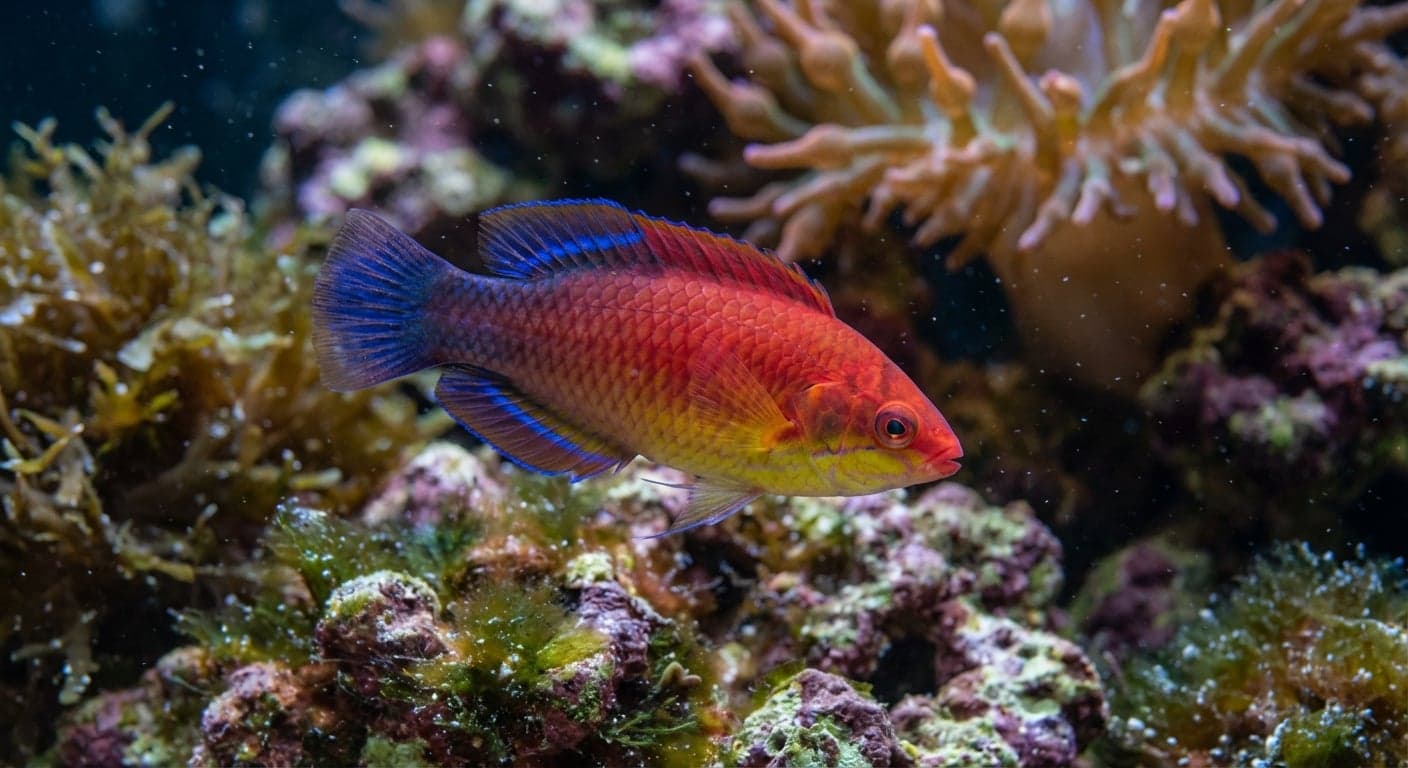
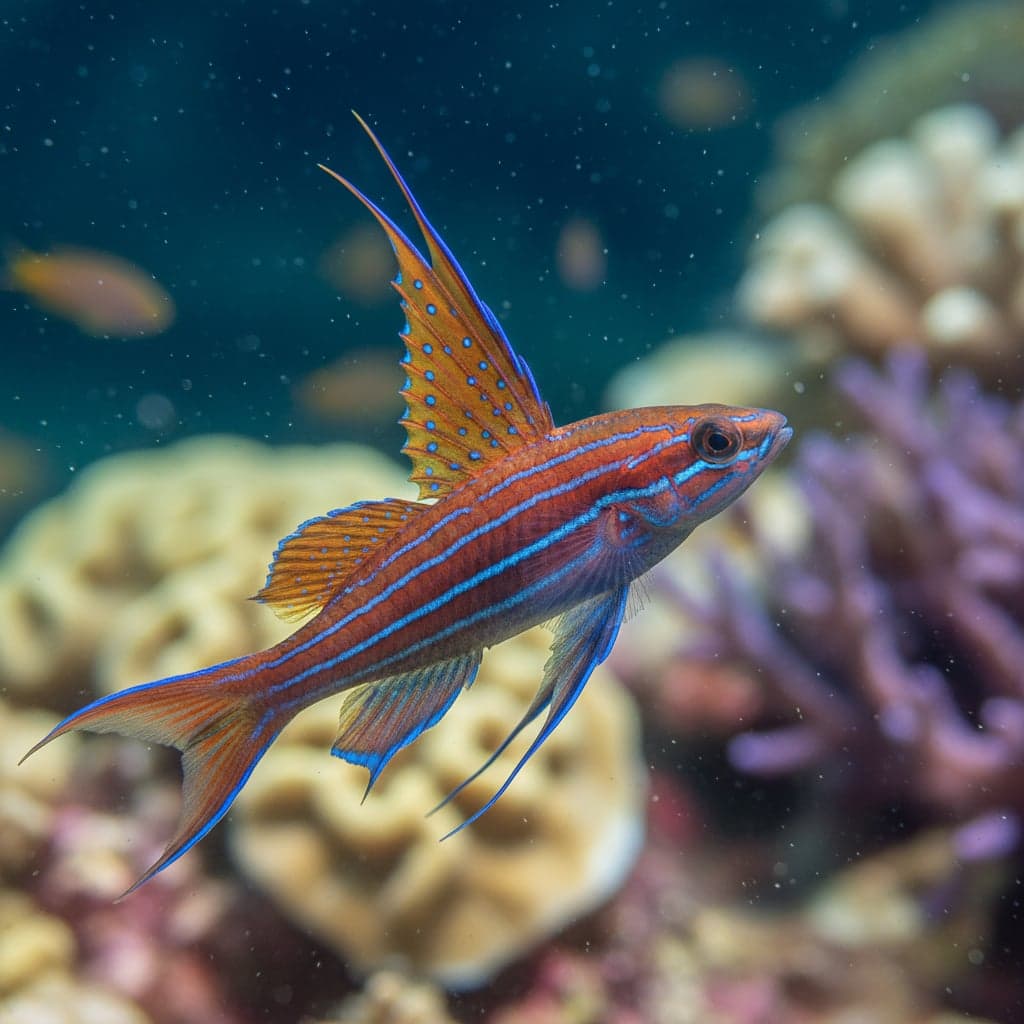
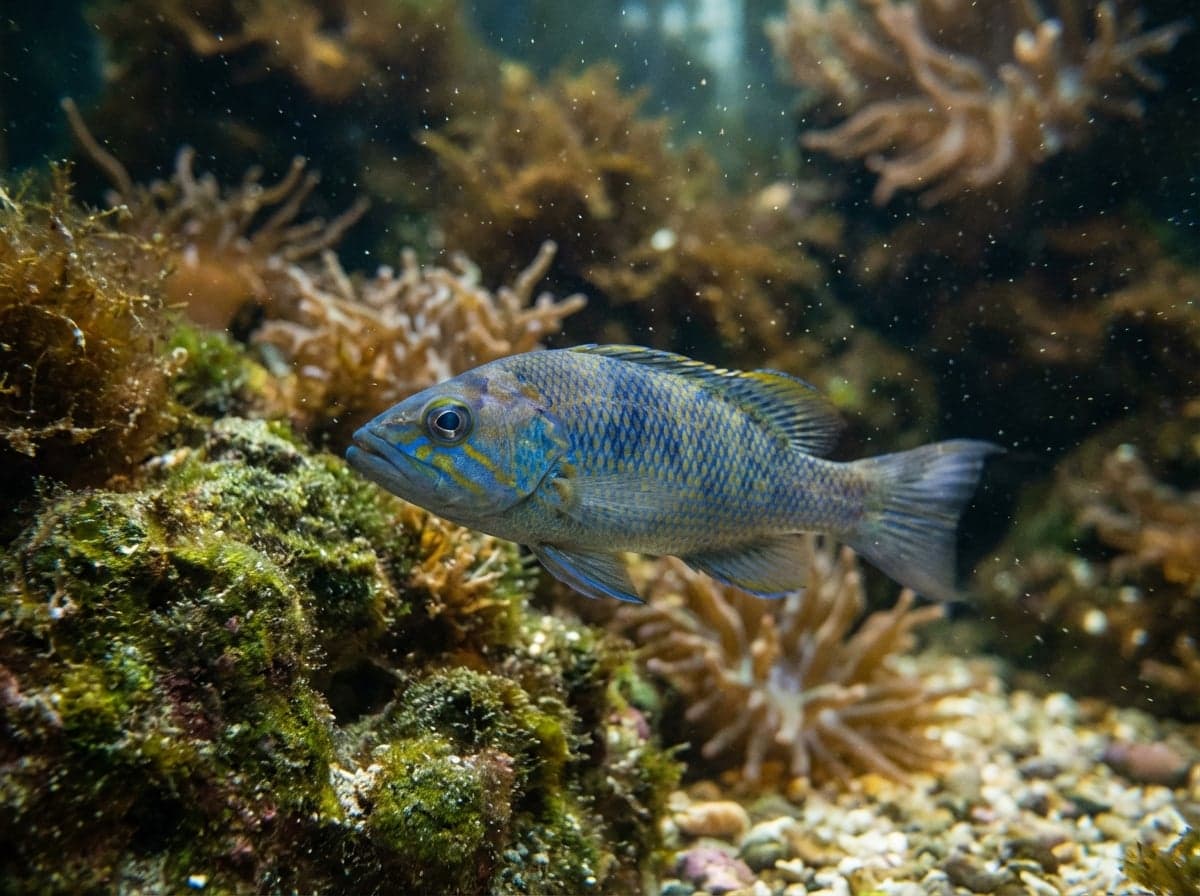
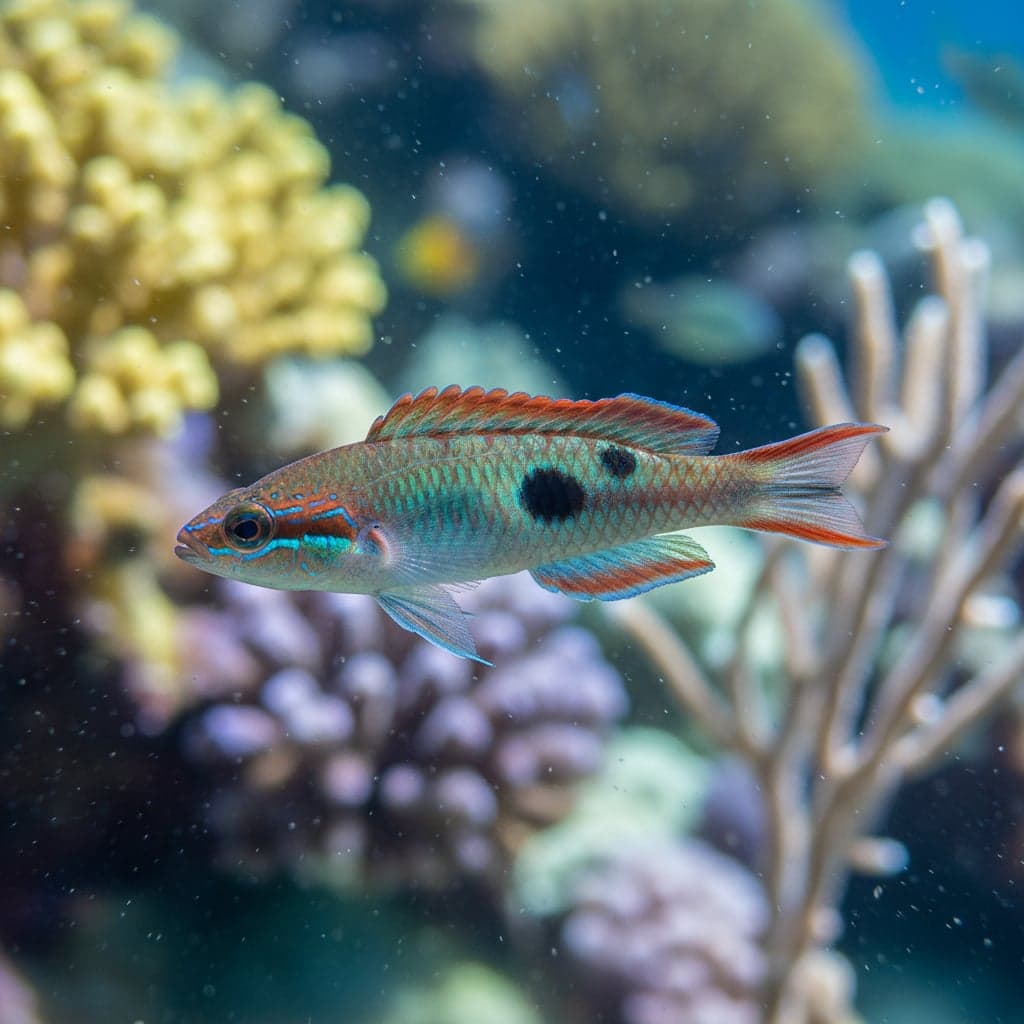
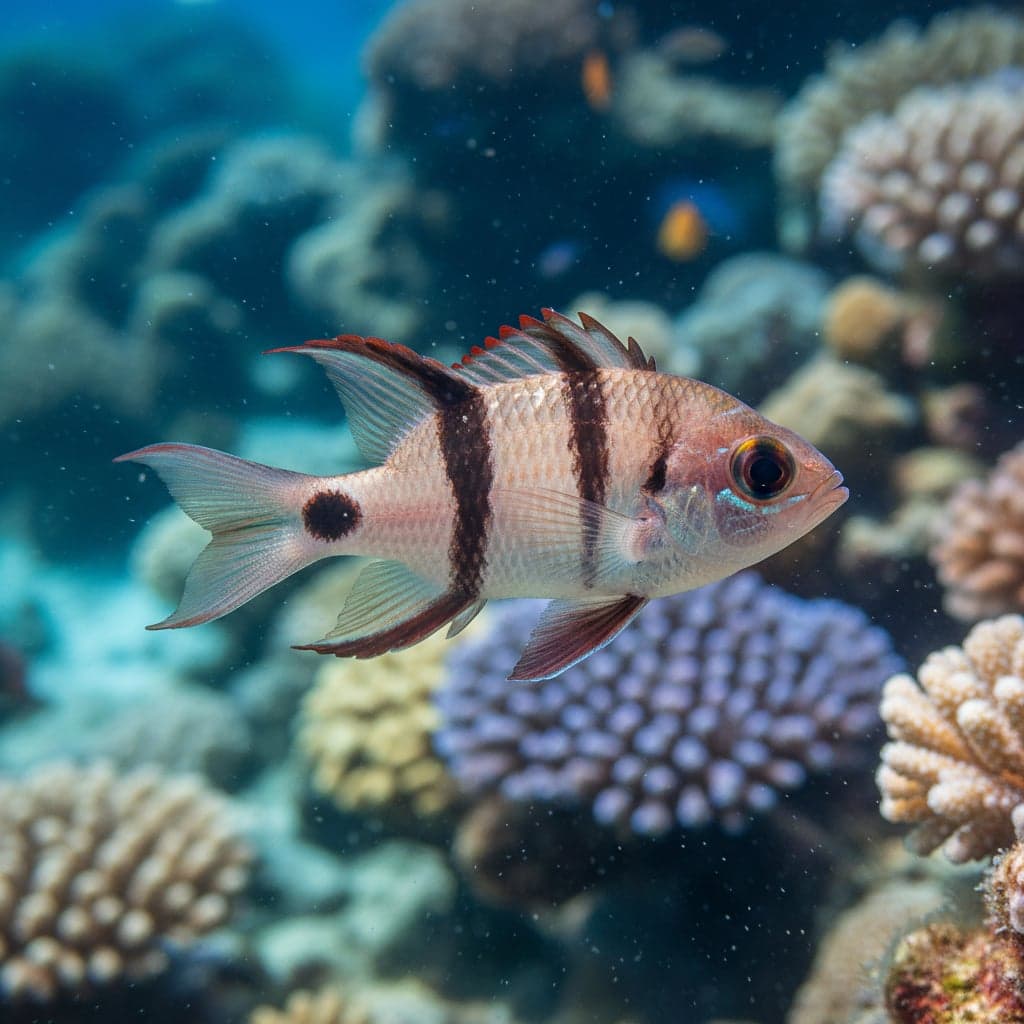
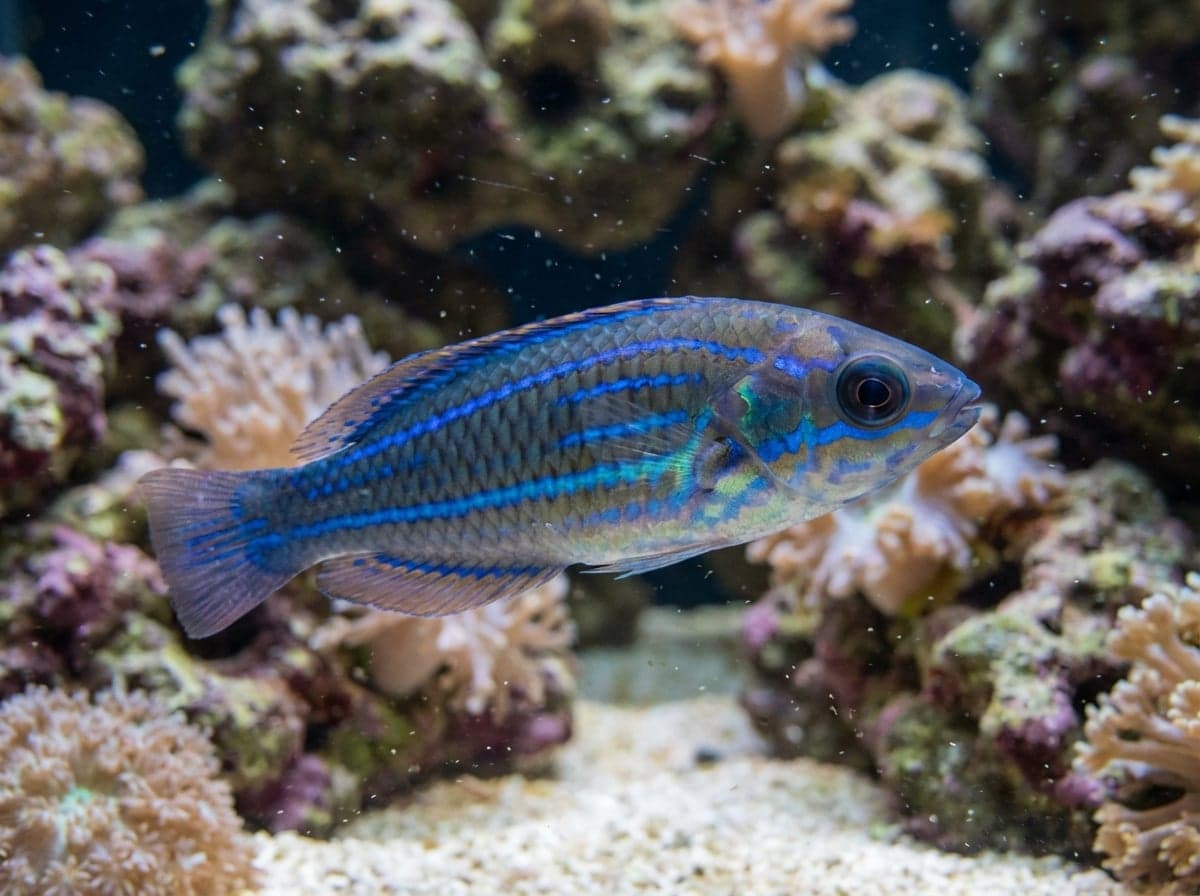
The Bluestripe Flasher Wrasse (Paracheilinus mccoskeri), or McCosker's flasher wrasse, is a small jewel of a reef fish whose males put on one of the best shows in the hobby. At rest they read orange and pastel with fine blue lines; a courting or competing male “flashes” — fins erect, colours slamming to electric blue, red and yellow for a few seconds — then settles again. Peaceful, reef-safe and hardy once eating, it is a superb mid-water fish for community reefs.
Frontmatter lists Shoaling because wild fish gather in loose aggregations. In a home aquarium that almost never means a mixed school of flashing males — it means one male with two or more females, where low-level competition keeps the display coming.
As with other flasher wrasses, a sealed lid and frequent small feeds are the real price of admission. Aggression toward conspecific males is the second. This is a beginner-friendly reef fish only if you respect jumping and harem math.
Natural Habitat & Origin
Paracheilinus mccoskeri occurs in the Indian Ocean and adjacent western Pacific over reef slopes and rubble, feeding on zooplankton in the water column. Males display above the reef to harems of females, especially toward dusk — the same flash that sells the fish in shops.
In the aquarium recreate open water above the rock for mid-water swimming and displays, plus rockwork and rubble for night shelter. A solid rock wall with no open column wastes the behaviour you bought the fish for. They are not sand-sleepers like some wrasses; they dive into the rock and may rest in a mucus cocoon.
Care Requirements
Stable marine water: salinity about 1.024–1.026, pH 8.1–8.4, temperature 24–26°C (75–79°F). Adults reach only about 8 cm (3 inches). A single fish can live in around 115 litres (30 US gallons); a male-plus-females group wants more footprint so subordinates are not cornered. Length and open mid-water matter more than a tall nano stuffed with coral.
A secure, gap-free lid is essential. Flasher wrasses are notorious jumpers — one open corner, one spook, one dry carpet. Quarantine new arrivals. Small wild wrasses still import marine ich (Cryptocaryon irritans) and marine velvet (Amyloodinium ocellatum). Observe or treat in QT before the reef; medications stay in hospital tanks, not on sessile inverts after spots appear.
Use the Aquarium Tracker to log salinity, temperature and feeding frequency. These fish have fast metabolisms; chronic underfeeding shows as dull colour and a skinny belly long before they stop flashing.
Diet & Feeding
Micro-carnivore / planktivore. Wild fish pick zooplankton all day. In captivity offer frequent small meals of frozen mysis, enriched brine, copepod-style foods, finely chopped seafood and quality small marine pellets or flakes. Several feedings daily suit the metabolism better than one dump at lights-out.
Prove feeding in QT. A flasher that ignores food is not “shy and mysterious” — it is a starvation risk in a busy reef where anthias and wrasses outcompete it. Colour intensity tracks diet and calm; a male that never flashes may be alone without rivals, underfed, or chronically intimidated. Keep foods varied so the fish cannot fixate on one item and refuse everything else.
Behavior & Temperament
Peaceful toward unrelated reef fish. Males display and may gently spar with each other; keep a single male unless the system is large and carefully aquascaped. A male with several females is the classic setup and brings out the best flashing. Daytime is busy mid-water swimming; night is a dive into the rock.
Do not confuse peaceful with unkillable. Boisterous damsels, large wrasses and aggressive triggers will suppress a flasher until it hides and starves. Hunger and male–male crowding turn pretty displays into relentless chasing. Frontmatter Shoaling describes wild social structure — it does not license three males in 115 litres.
Tank Mates
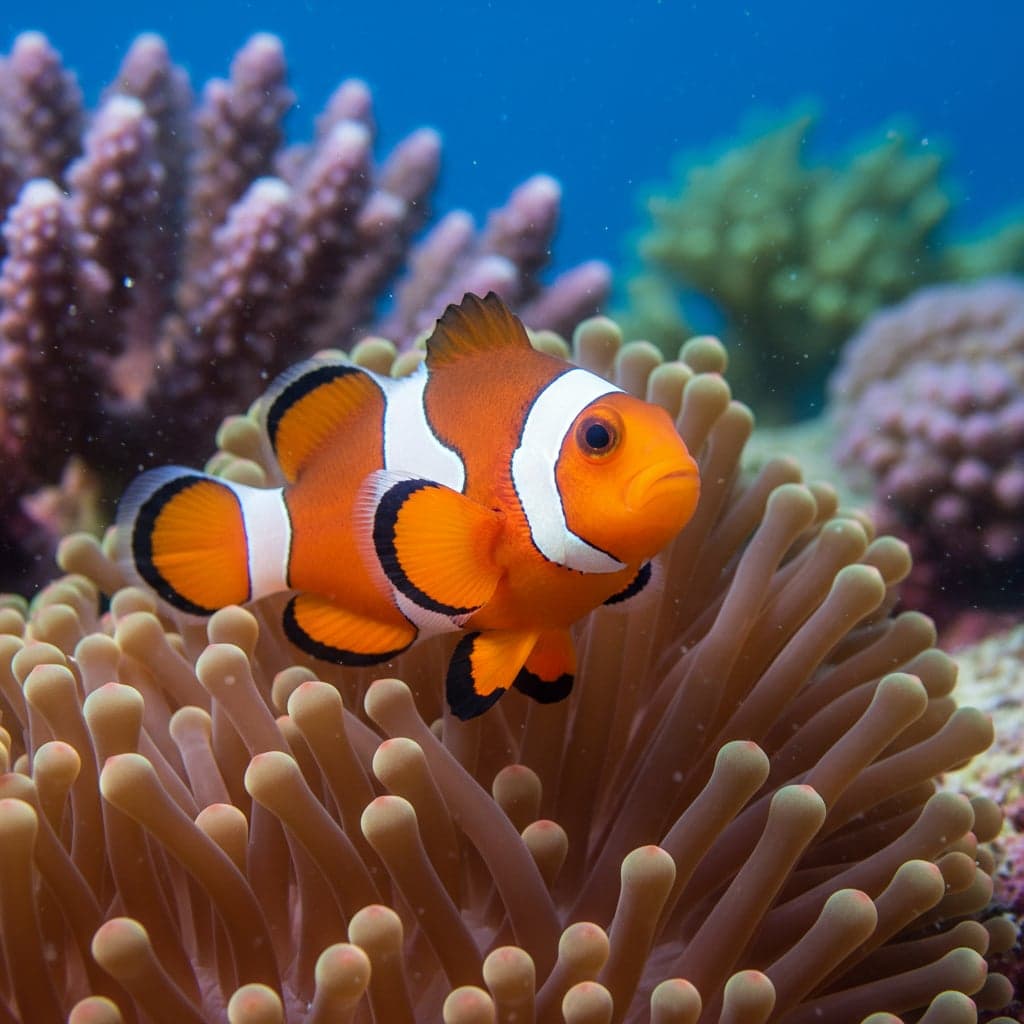
Good companions are other peaceful reef fish: clownfish, gobies, cardinalfish, anthias, other small peaceful wrasses and similar. Avoid large semi-aggressive species that own the water column. Fully reef-safe with corals and ornamental invertebrates — this is a plankton picker, not a shrimp hunter — which makes it one of the best small colour fish for a true mixed reef.
Do not house with predatory or mouth-sized-threat fish. Compatibility charts that dump all “wrasses” together will mislead you into pairing flashers with hogfish or bird wrasses; those are different risk profiles entirely.
Breeding
Paracheilinus mccoskeri spawns in pelagic fashion; aquarium spawning is occasionally seen when a harem is well fed and settled, but rearing the tiny larvae is difficult and rarely achieved at home. Trade specimens are wild-collected. Enjoy the flash as behaviour, not as a backyard breeding program.
Common Health Issues
Hardy when settled, but still prone to marine ich and marine velvet under shipping stress. Jump injuries are the husbandry classic. Quarantine every fish. Keep water stable, feeds frequent and the lid sealed.
A bluestripe flasher that refuses food or never leaves the rock is not “settling for a month” — prove feeding in QT, stock one male with females if you want the show, and give open water above the reef. Done that way, P. mccoskeri is a brilliant, beginner-accessible reef wrasse. Skip the lid or add a second male in a small tank and the entertainment ends on the floor or in a corner.