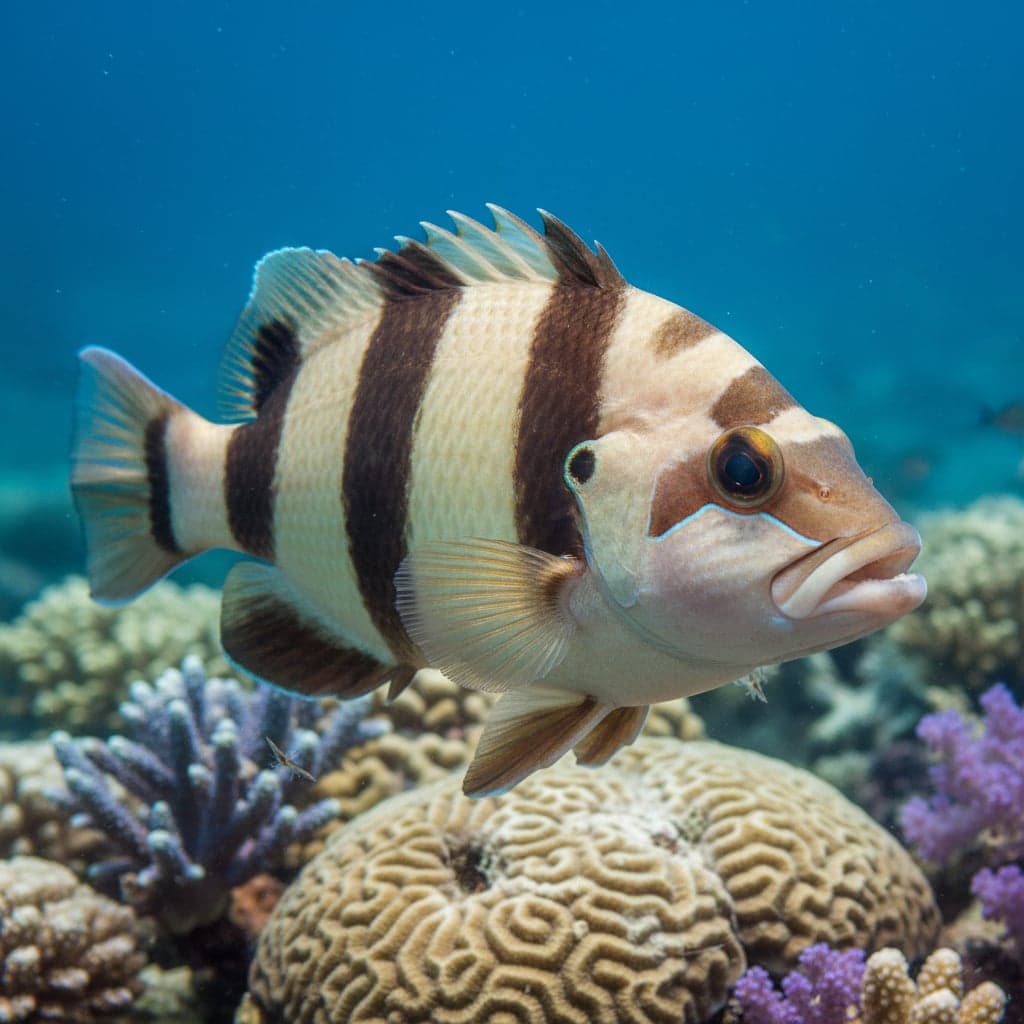
Coral Hogfish
The Coral Hogfish (Bodianus mesothorax) is a hardy, two-tone Indo-Pacific wrasse — coral-safe but a predator of small invertebrates.

Coral Hogfish
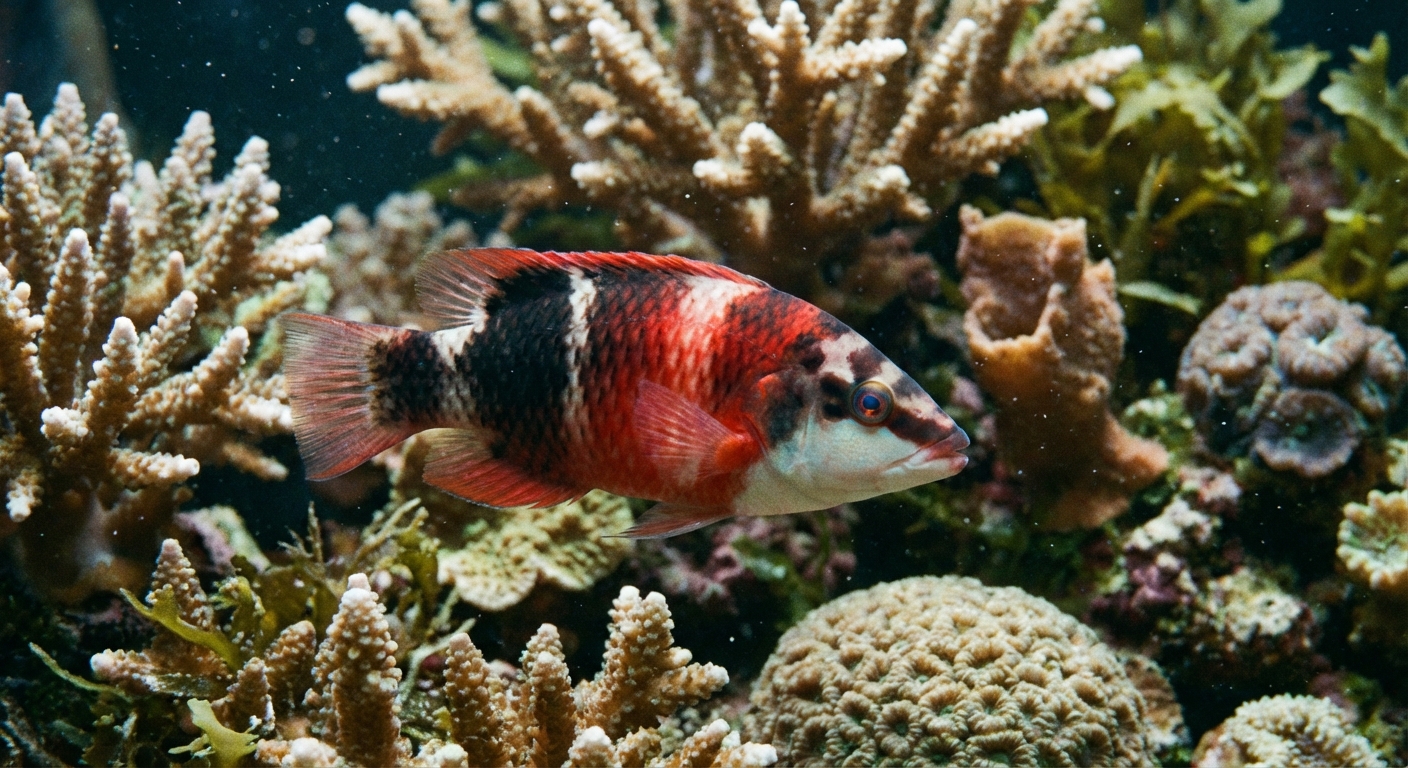
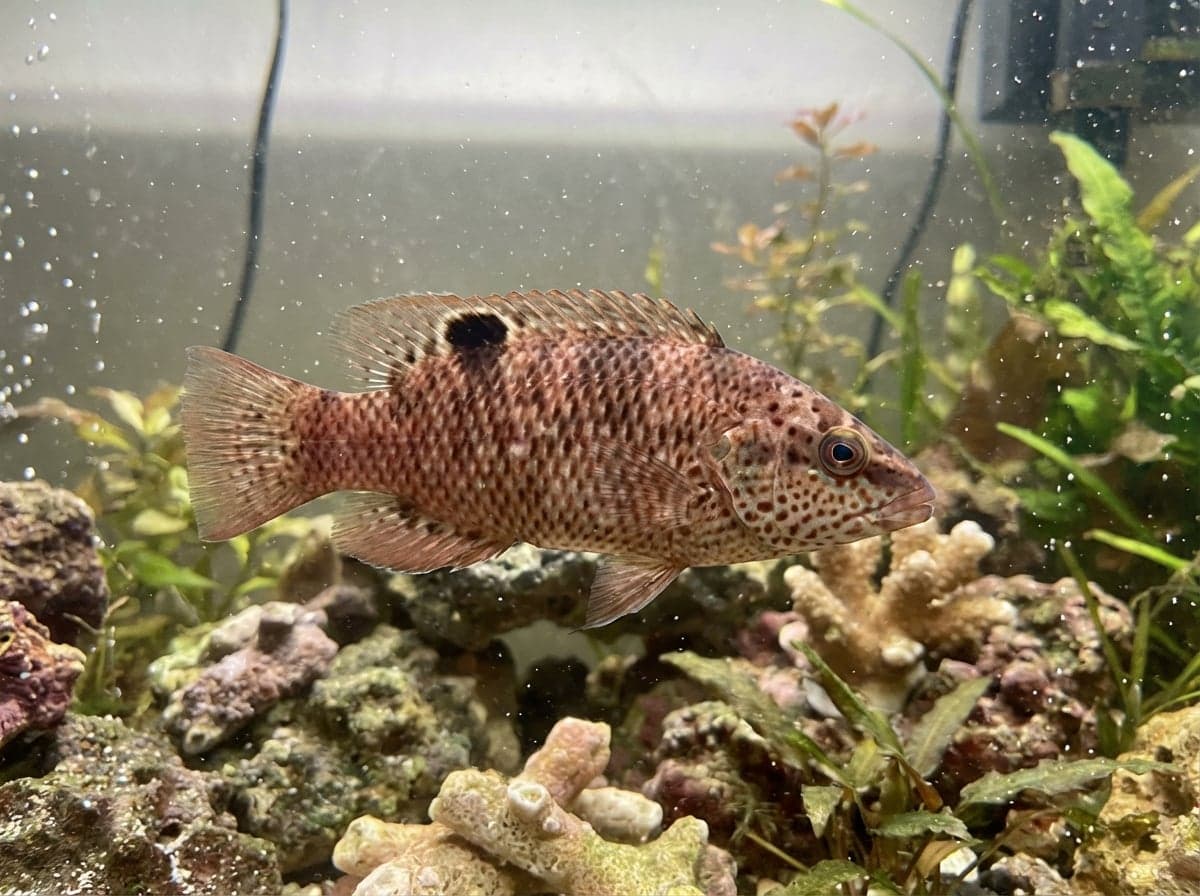
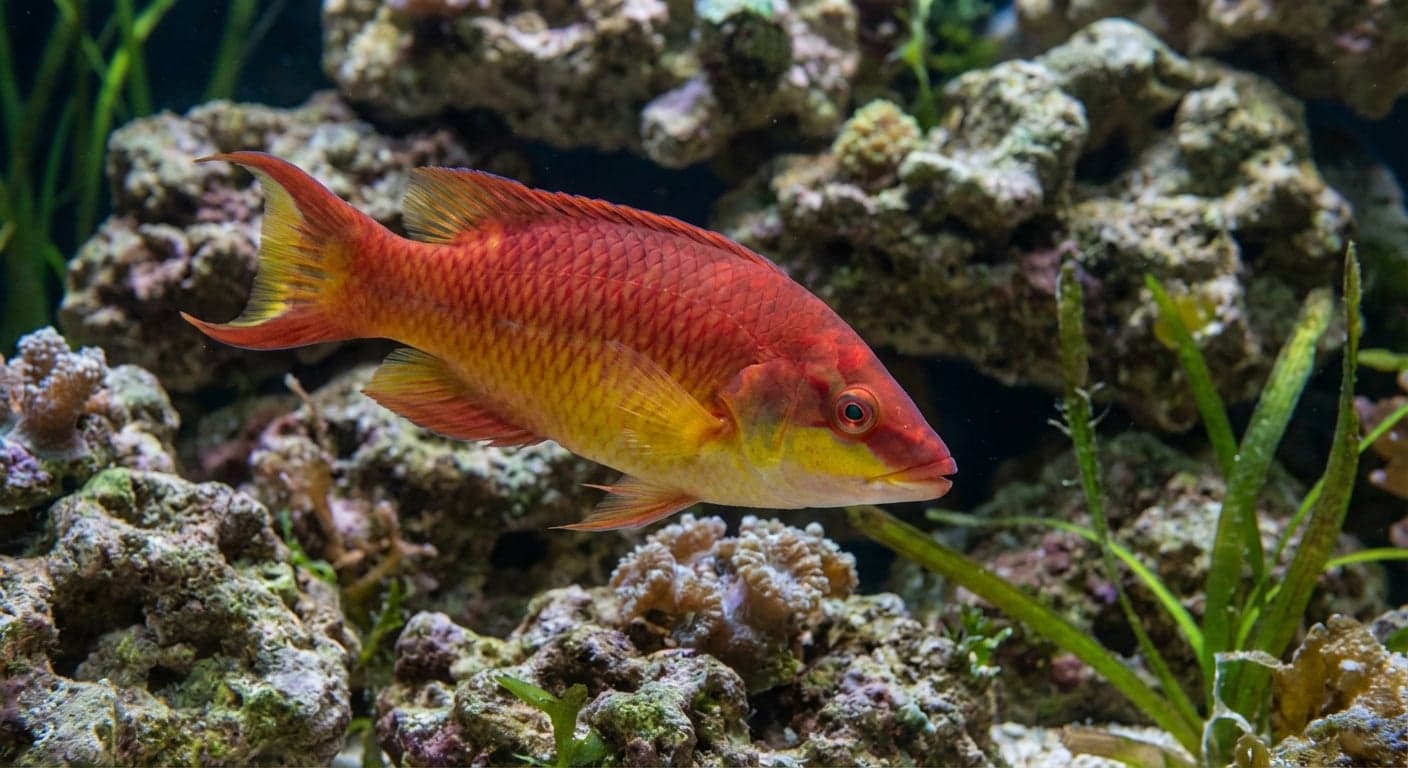
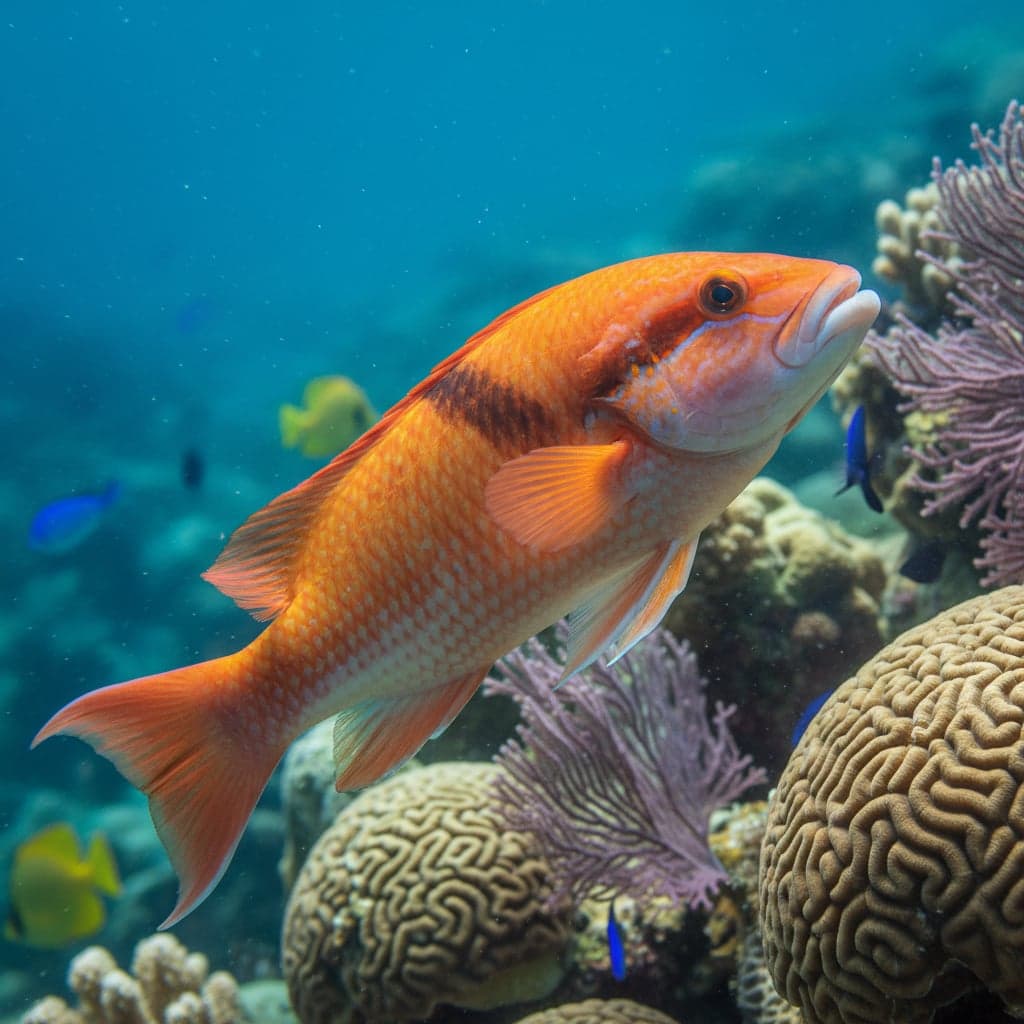
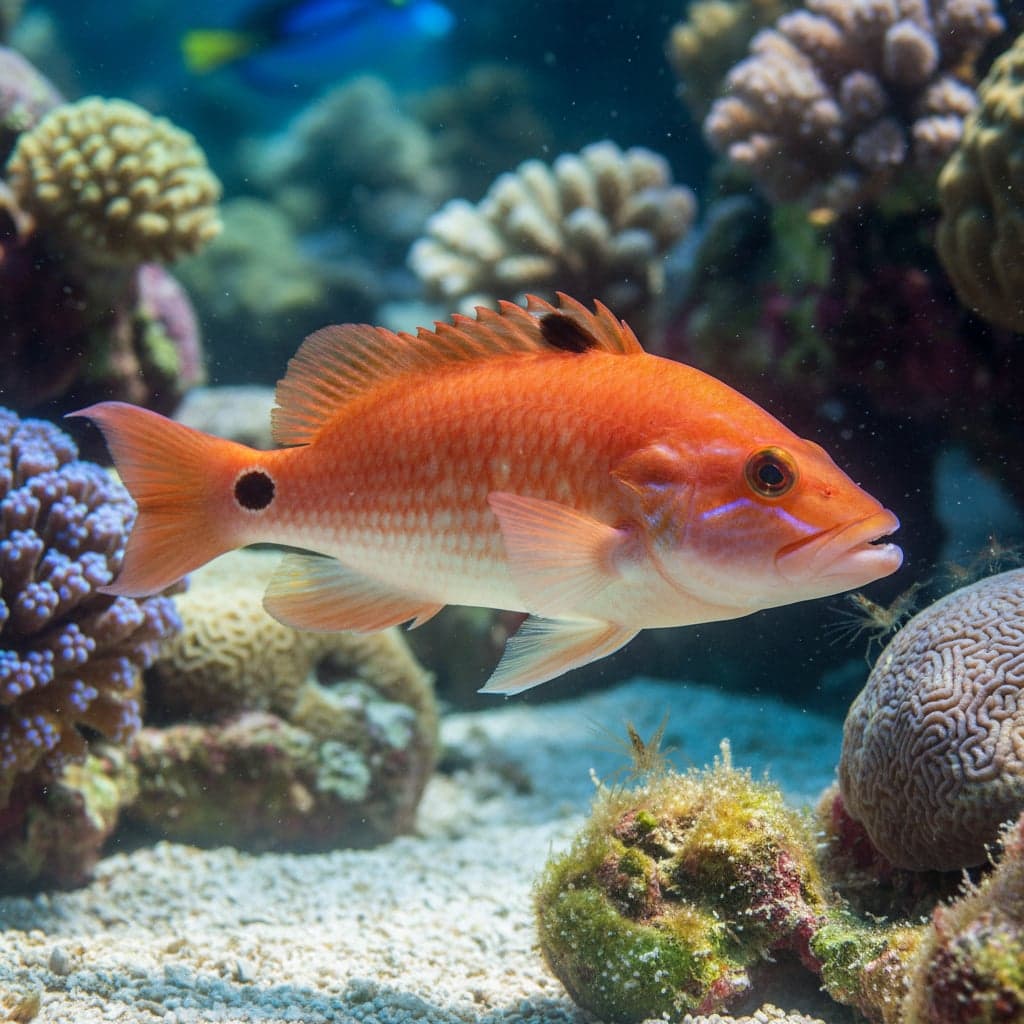
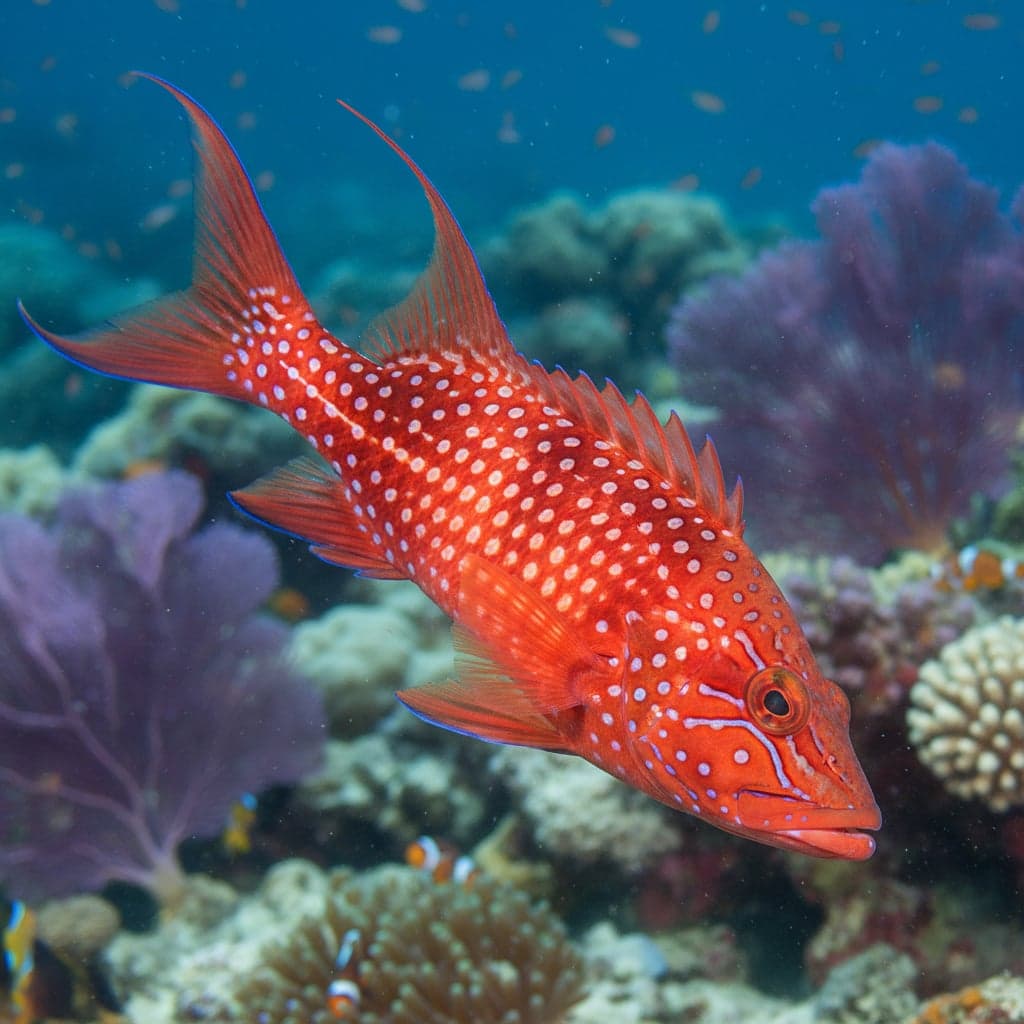
The Coral Hogfish (Bodianus mesothorax), also sold as the split-level or eclipse hogfish, is a robust Indo-Pacific wrasse with a body colour that looks almost painted in two passes: dark purple-brown forward, then a clean break into bright yellow aft. Juveniles are a different animal again — black and yellow spotted, sometimes mistaken for a different species at the shop — and they may spend a stage acting as cleaners on larger fish before the adult diet takes over.
Hardy, active and full of personality, it is a strong choice for a fish-focused marine tank or a reef that has no ornamental shrimp to lose. The appetite for mobile invertebrates is not a footnote; it is the main stocking constraint.
Natural Habitat & Origin
Bodianus mesothorax ranges widely across the Indo-Pacific, from the eastern Indian Ocean through Indonesia and the Philippines into the western Pacific. Adults patrol coral and rocky reefs, working overhangs, caves and rubble slopes where small crustaceans, molluscs and other benthic prey concentrate. They are day-active hunters, not sand-sleeping fairy wrasses; expect a fish that spends hours inspecting every crack.
Juveniles occupy similar structure at a smaller scale and are often seen picking parasites and mucus from larger fish — a temporary cleaning niche that disappears as the hogfish grows and turns fully to invertebrate prey. That shift matters in captivity: a cute spotted juvenile in a reef full of cleaner shrimp is still going to be a predator when it colours up.
Care Requirements
Maintain stable reef chemistry: salinity about 1.024–1.026, pH 8.1–8.4, temperature 24–26°C (75–79°F). Adults reach roughly 20 cm (8 inches) and need room to cruise — around 340 litres (about 90 US gallons) or more is the practical minimum for a single fish with substantial rock. Longer footprints beat tall nano cubes; this is a horizontal patroller.
Live rock should include caves and overhangs worth inspecting, plus open lanes to swim. A secure lid is not optional theatre. Active wrasses jump, especially when startled at night or during netting, and a Coral Hogfish on the floor is a dead Coral Hogfish. Substrate can be sand or fine rubble; the fish is not a dedicated burrower but will nose the bottom while hunting.
Water quality should stay oligotrophic enough for a marine predator’s bioload: zero ammonia and nitrite, nitrate controlled with water changes and export. See ammonia and nitrite and nitrate. Skimming helps in fish-only systems where feeding is heavy. Log parameters in the Aquarium Tracker so a slow nitrate climb does not sneak up between water changes.
Diet & Feeding
This is a carnivore built to eat hard-shelled and soft benthic invertebrates — crustaceans, molluscs, urchins and similar prey on the reef. In the aquarium it takes frozen mysis, enriched brine shrimp, chopped seafood (shrimp, clam, squid), and quality marine pellets once trained. Feed once or twice a day; it learns the glass schedule quickly and will beg.
Variety prevents the “only mysis” trap. Include some harder items periodically so jaw and gut stay exercised on more than paste. It will also hunt the live rock’s microfauna; that is normal and one reason a pristine ornamental invert collection and a Coral Hogfish do not share a plan. Broader guidance sits under marine diets and feeding schedules.
A newly imported fish that refuses food for days needs patience, enriched frozen foods and low stress — not constant chasing with a net. Once eating, it is among the easier large wrasses to keep fed.
Behavior & Temperament
Semi-aggressive and inquisitive. Toward similarly sized, confident fish it is usually manageable; toward small, timid or cave-dwelling species it can harass, especially as it grows into the adult colour phase. Keep one per tank unless you have a very large system and a clear plan — hogfish are not community wrasses in the six-line sense.
It spends the day touring rockwork, flipping rubble mentally if not literally, and investigating anything that looks edible. That curiosity is entertaining and is exactly how ornamental shrimp disappear. At night it wedges into a cave; sudden frantic swimming against the glass after lights-out often precedes a jump, which is another reason for a tight lid.
Add it after peaceful fish are established if the community includes anything shy. Adding it first lets it define the entire aquascape as hunting ground.
Tank Mates
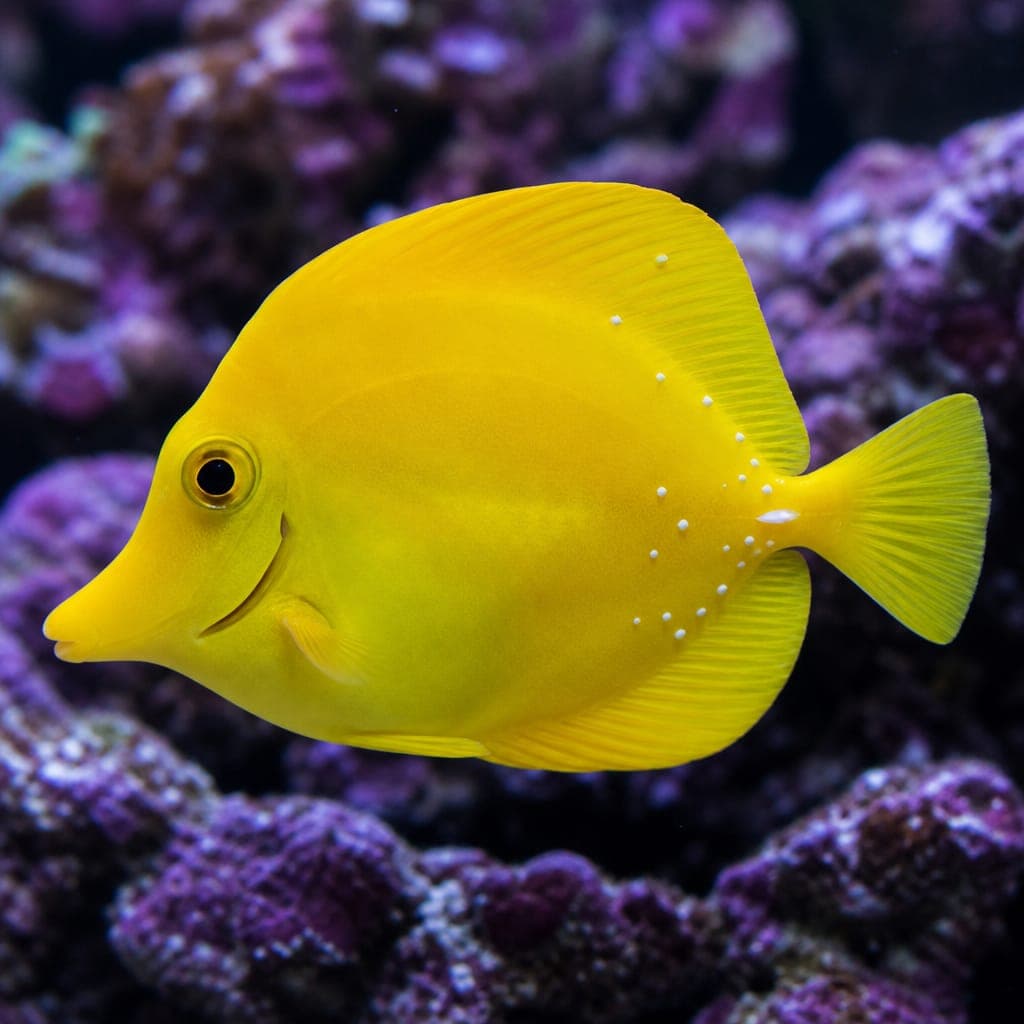
Robust tankmates work: yellow tang and other tangs in large systems, larger wrasses, angelfish that can hold their own, and similarly sized fish-only community species. Avoid tiny gobies, firefish and dwarf species that live in the same cracks the hogfish inspects for lunch.
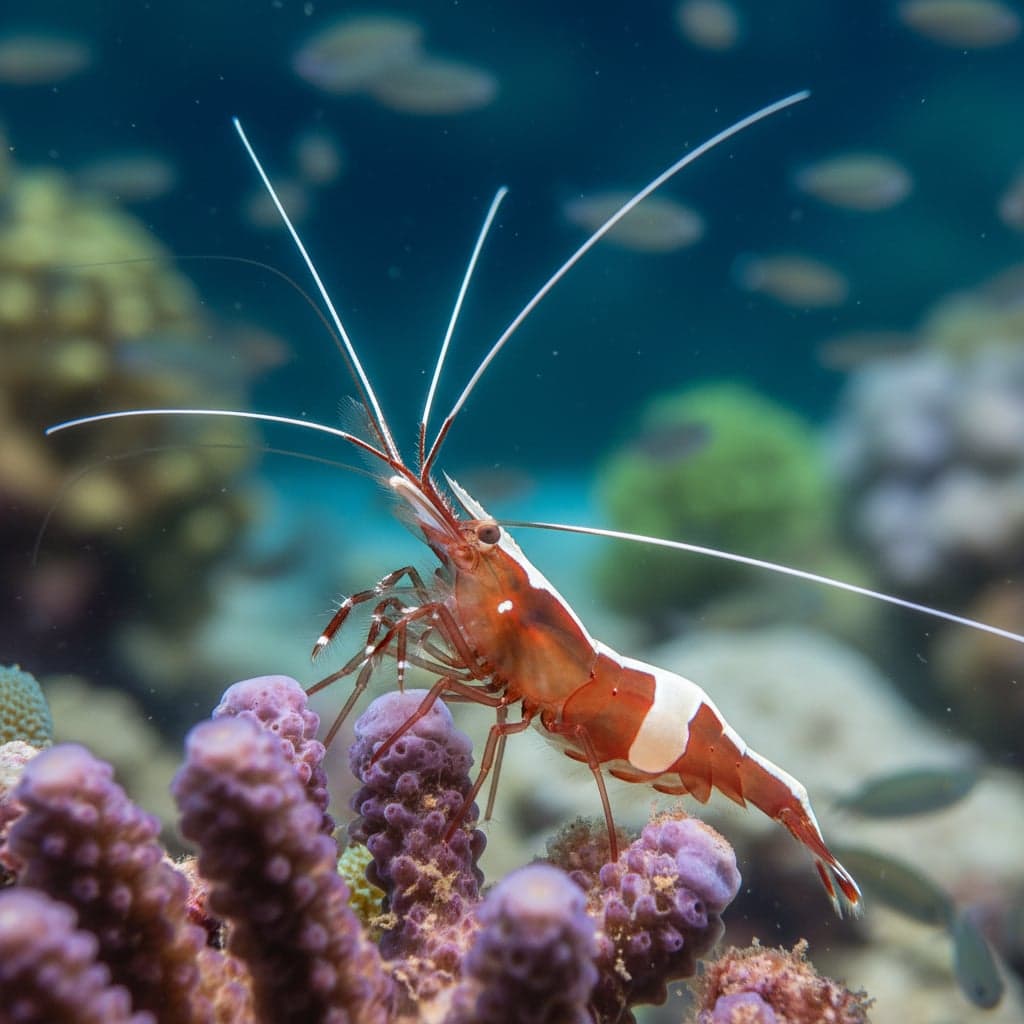
On the reef question, be precise. It is coral-safe: it does not farm or eat SPS, LPS or soft coral polyps as a staple. It is not invertebrate-safe. It will eat ornamental shrimp (including skunk cleaner shrimp), small crabs, snails, serpents stars small enough to swallow, and bristleworms. Keep it in fish-only systems, or in reefs that have already accepted the loss of mobile inverts. “Reef-safe” marketing that skips that distinction is the usual source of regret with Bodianus.
Breeding
Bodianus species are typically protogynous hermaphrodites — females can change to male as social structure requires. They are pelagic spawners; eggs and larvae drift in the plankton. Home breeding is not a realistic project. Trade specimens are wild-collected. Sexing by eye in the shop is unreliable for most hobbyists; buy for the individual fish and the tank plan, not for a breeding pair fantasy.
Common Health Issues
Hardy does not mean parasite-proof. Marine ich (Cryptocaryon irritans) and velvet (Amyloodinium ocellatum) remain the headline risks after collection and shipping stress. Quarantine every new fish under a quarantine protocol and medicate in a hospital tank. Copper and many bath treatments are incompatible with reef invertebrates; see medications.
Jumping is a husbandry killer as often as disease. Secure the lid, reduce night-time startle (sudden light, aggressive tankmates flushing it from a cave), and net carefully. Bacterial infections follow scrapes from rock or poor water; keep the bioload matched to filtration and do not let uneaten seafood rot in the sand.
Given volume, a meaty diet, robust company and no prized shrimp, the Coral Hogfish is a dependable intermediate wrasse — characterful, colourful and honest about what it eats.