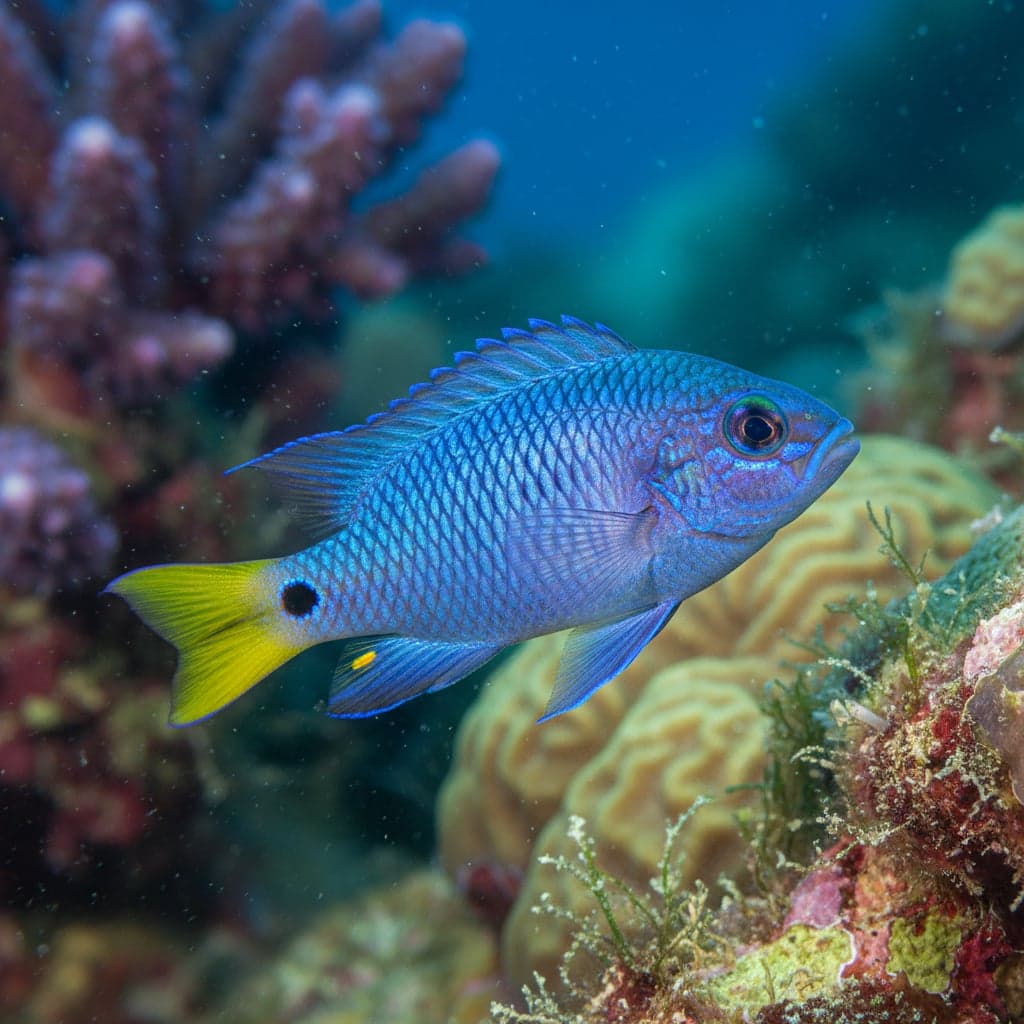
Emperor Damselfish
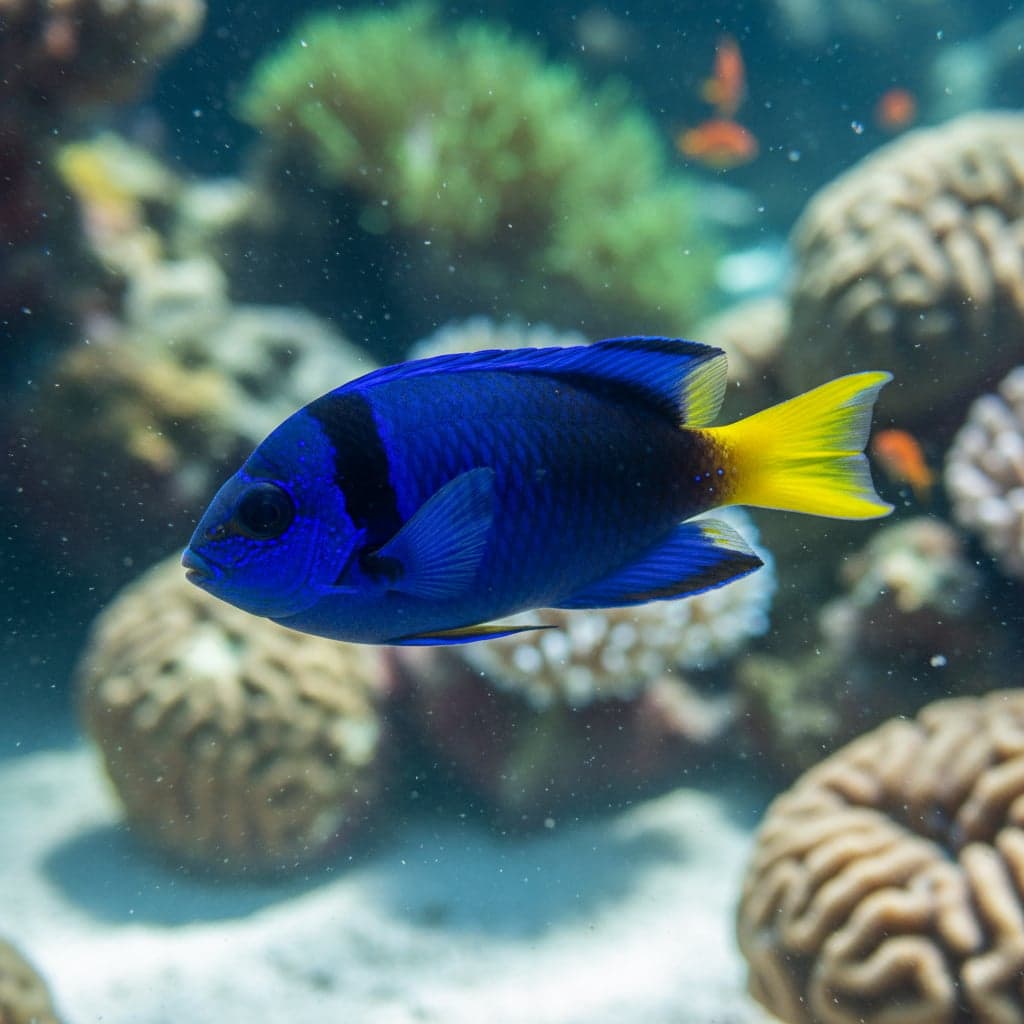
The Emperor Damselfish (Chrysiptera arnazae) is a small, vivid blue-and-yellow Western Pacific damsel — hardy and reef-safe, but feisty like its relatives.

Emperor Damselfish
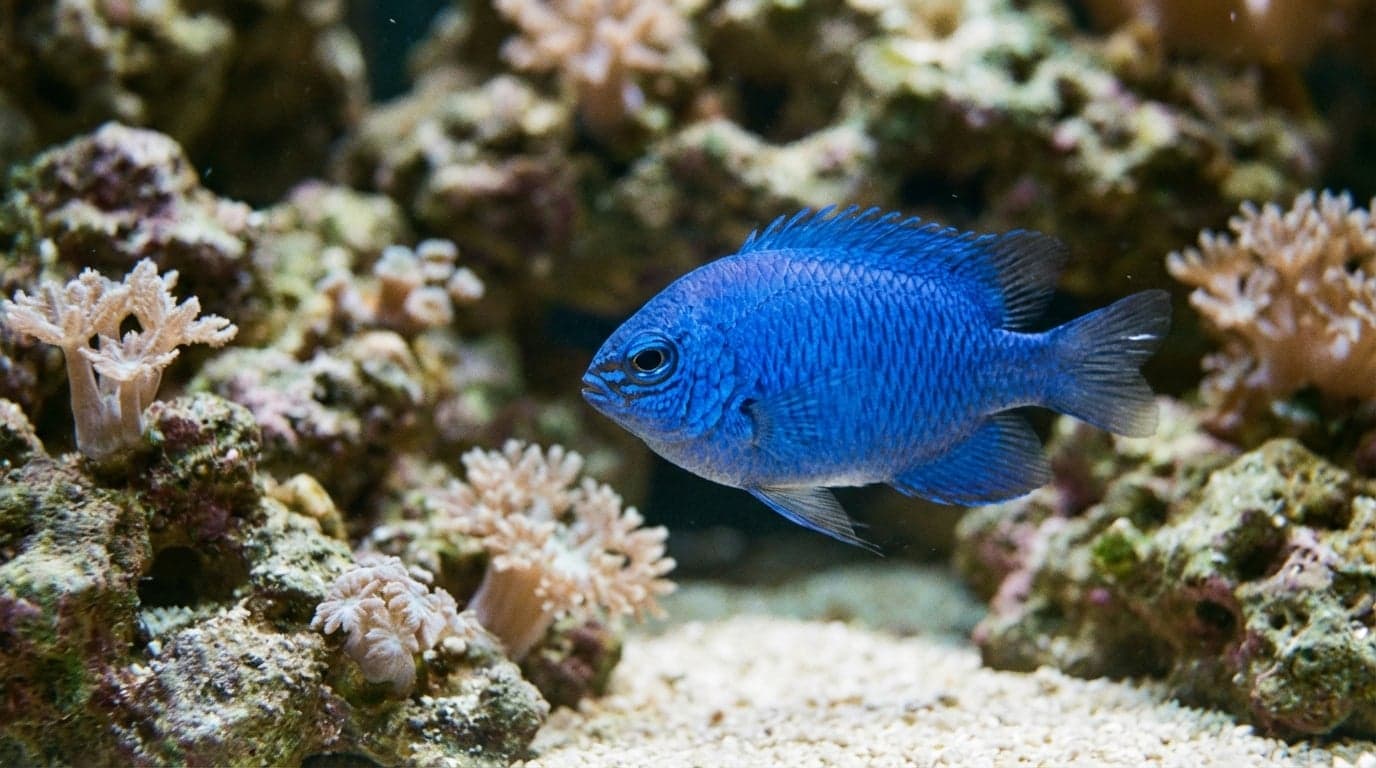
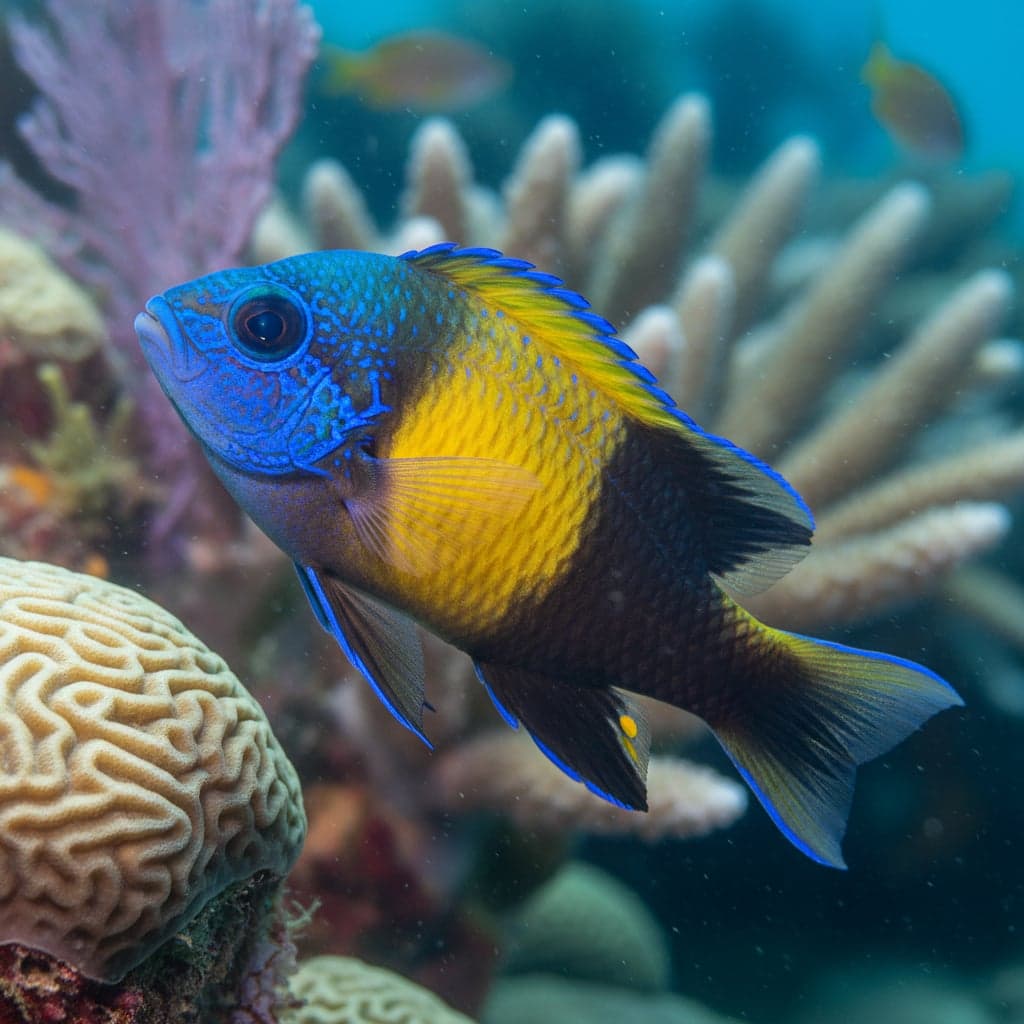
The Emperor Damselfish (Chrysiptera arnazae) is the pocket version of the classic blue-and-yellow damsel look: an electric blue body cut with a bright yellow belly and lower caudal. It sits in the same visual neighbourhood as the popular yellow-tail blue and other Chrysiptera blues, and shops often sell it on colour alone. At about 6 cm (2.5 inches) it is small, cheap and almost absurdly tough — which is why it is still used as a “first fish” to cycle tanks, a practice that works for the damsel and is rough on everything you add later.
The trade-off is attitude. This is not a sunface. It is bold, territorial and perfectly willing to harass fish twice its length if the tank is small and the rock pile is “its” rock pile. Buy it for colour and hardiness; plan the stocking order around the temperament.
Natural Habitat & Origin
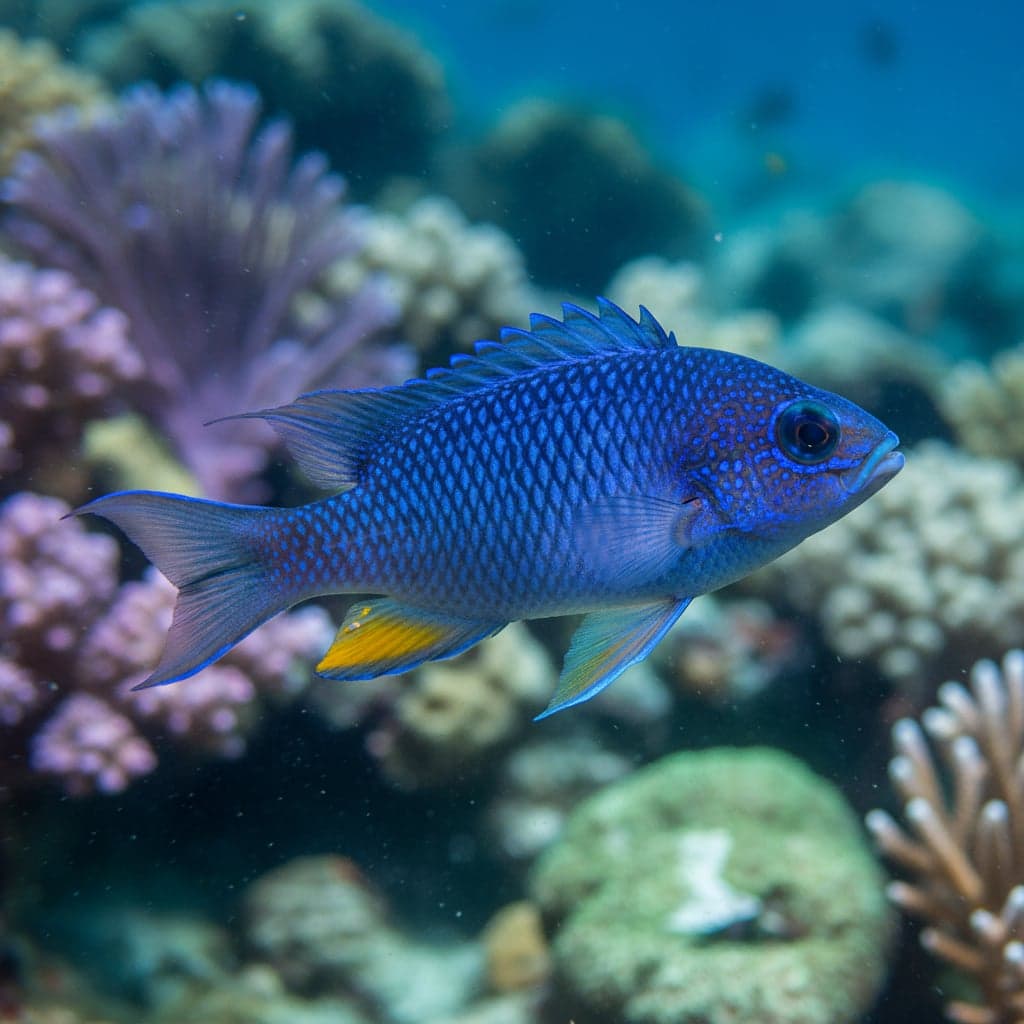
Chrysiptera arnazae is a western Pacific species associated with coral reefs and rubble, where it holds a small territory around branching coral or rock into which it can vanish. Like related damsels it feeds on zooplankton in the water column and picks at small invertebrates and algae on the substrate. It does not roam widely; the home patch is defended, and neighbours are warned off with dashes and fin displays more often than with prolonged fights.
In the aquarium that means the rockwork is the fish’s world. Branching structure, caves and multiple sight-line breaks reduce how much of the tank one individual can police. A bare nano with one arch turns a small damsel into the landlord of the entire volume.
Care Requirements
Keep standard tropical reef parameters: salinity about 1.024–1.026, pH 8.1–8.4, temperature 24–26°C (75–79°F). Stability beats perfection. Ammonia and nitrite at zero, nitrate kept in check with water changes — the same baseline every marine fish needs. See ammonia and nitrite and nitrate if you are building the system from scratch.
Minimum volume around 75 litres (20 US gallons) suits a single fish with dense live rock. That number is about territory and water stability as much as body length; in a smaller cube the Emperor’s aggression concentrates and tankmate options collapse. Larger systems dilute the problem and let you keep more robust community fish alongside it.
Filtration and flow should match a normal small reef or fish-only marine tank. The species tolerates a wide range of flow, but stagnant corners and rotting detritus under rock are still how beginners lose “bulletproof” damsels to bacterial issues and poor oxygen at night.
Do not use this fish as ammonia-cycle fodder if you can avoid it. A bottle of nitrifying bacteria and a test kit are kinder than stressing a damsel for weeks and then wondering why it attacks every fish you add afterwards. Use the Aquarium Tracker to log parameters so you know the tank is ready before livestock goes in.
Diet & Feeding
The Emperor is an omnivore: zooplankton, small benthic invertebrates and algae in the wild. In captivity it eats almost anything marine fish eat — frozen mysis and brine shrimp, quality flakes and small pellets, and preparations with marine algae. Feed small portions twice a day. It is an enthusiastic feeder and will beg at the glass; that eagerness is useful for ensuring intake and dangerous for overfeeding in a small system.
A varied diet keeps condition and colour. All-flake laziness works for survival but not for a fish you bought for electric blue. Occasional meaty frozen foods plus a green component is enough. Details on broader marine feeding patterns are in marine diets and feeding schedules.
Behavior & Temperament
Semi-aggressive and territorial is the accurate label. The Emperor punches above its size, especially toward fish that enter its chosen cave or hover in the same water column. In a spacious reef with broken rock it may settle into grumpy coexistence. In a 75-litre tank with one central structure it often becomes the fish that decides who is allowed to swim.
Add it last whenever you can. Damsels that go in first claim the whole aquascape and then treat every new arrival as an invader. Added last, the Emperor still claims a patch, but the rest of the community already owns the other corners. Keep a single specimen in typical home tanks; pairs or groups of this species need more space and more visual barriers than most people provide, and conspecific fighting is common.
It is active through the day, hovering near its territory and darting out for food. Night is spent in the rock. Sudden hiding and clamped fins after months of bold behaviour usually means water chemistry or disease, not a personality change.
Tank Mates
Choose robust tankmates that ignore a small blue tyrant: common clownfish, larger wrasses, other assertive damsels in big systems, and similarly confident community fish. Avoid tiny gobies, firefish that need open retreat lines, and slow, meek species that get chased off food. Soft anthias and cardinals often lose the feeding contest even if they are not physically injured.
Reef-wise it is safe with corals and ornamental invertebrates. The problem is fish temperament, not polyp-nipping. Do not confuse “reef-safe” with “community-safe”; the Emperor can live over expensive SPS and still make a nano unlivable for a firefish.
If you want blue-and-yellow colour with less drama, compare the sunface and the better-behaved end of the Chrysiptera blues before you buy on looks alone.
Breeding
Demersal spawner: the female lays on a cleaned surface, the male fertilises and guards the eggs until hatch. Larvae are pelagic and impractical to rear in a typical home setup. Trade fish are wild-collected. Spawning in a display tank is interesting to watch and does not mean you are about to raise a clutch to sale size.
Common Health Issues
Among the hardiest fish in the marine trade, the Emperor still carries and suffers marine ich (Cryptocaryon irritans) and velvet (Amyloodinium ocellatum). Hardiness is not immunity. Quarantine new arrivals under a proper quarantine protocol and treat parasites in a hospital tank — copper and many reef-toxic remedies belong nowhere near a display full of invertebrates; see medications.
Stress from bullying by this fish often shows up on its victims first: torn fins, hiding, weight loss. Stress on the Emperor itself is less common once settled, but shipping, poor acclimation and foul water still open the door to parasites and bacterial infection. Keep water stable, feed well, stock thoughtfully, and the fish will outlive several more expensive tankmates — which is useful only if those tankmates were chosen to survive its company.