Mystery Wrasse
The Mystery Wrasse (Pseudocheilinus ocellatus) is a hardy, beautifully marked reef wrasse — reef-safe and a useful pest-eater, but feisty toward similar fish.
Mystery Wrasse
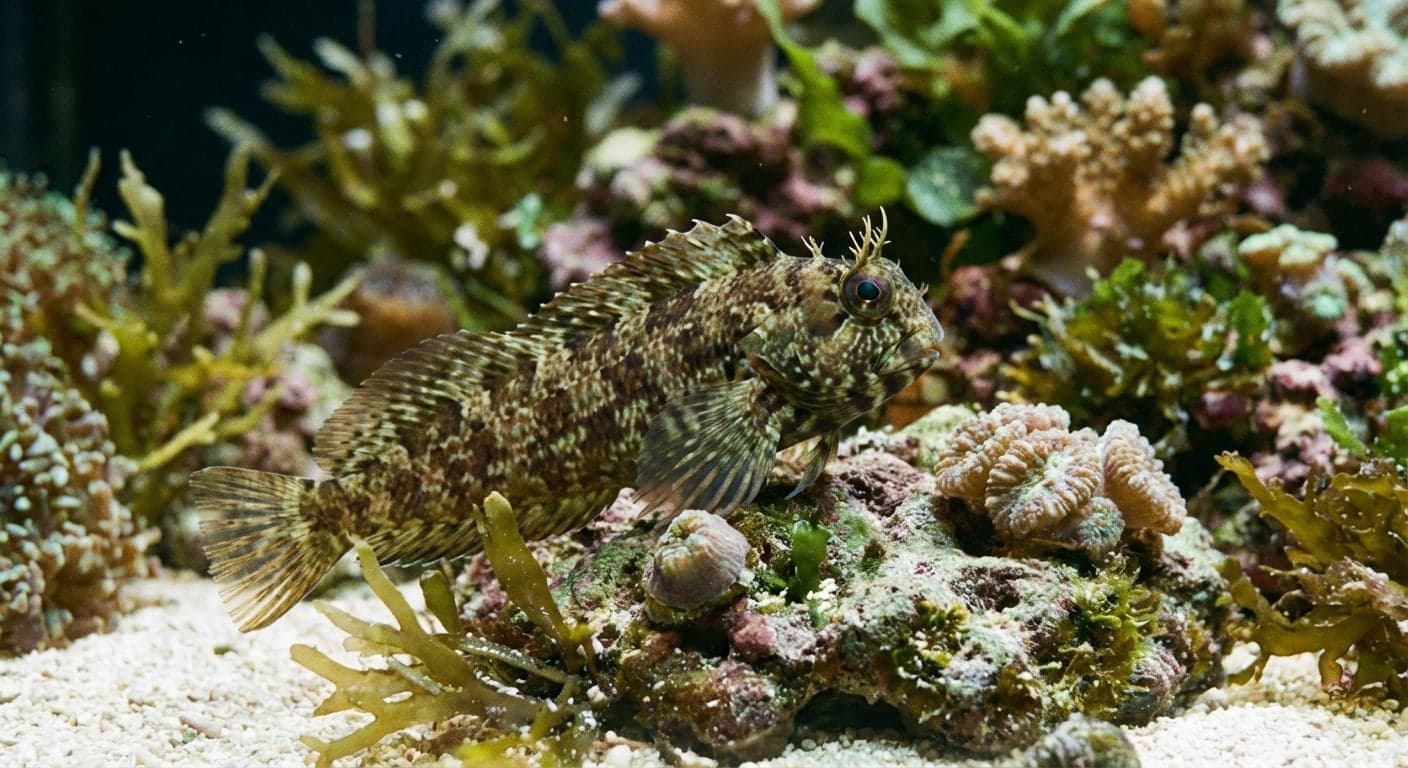
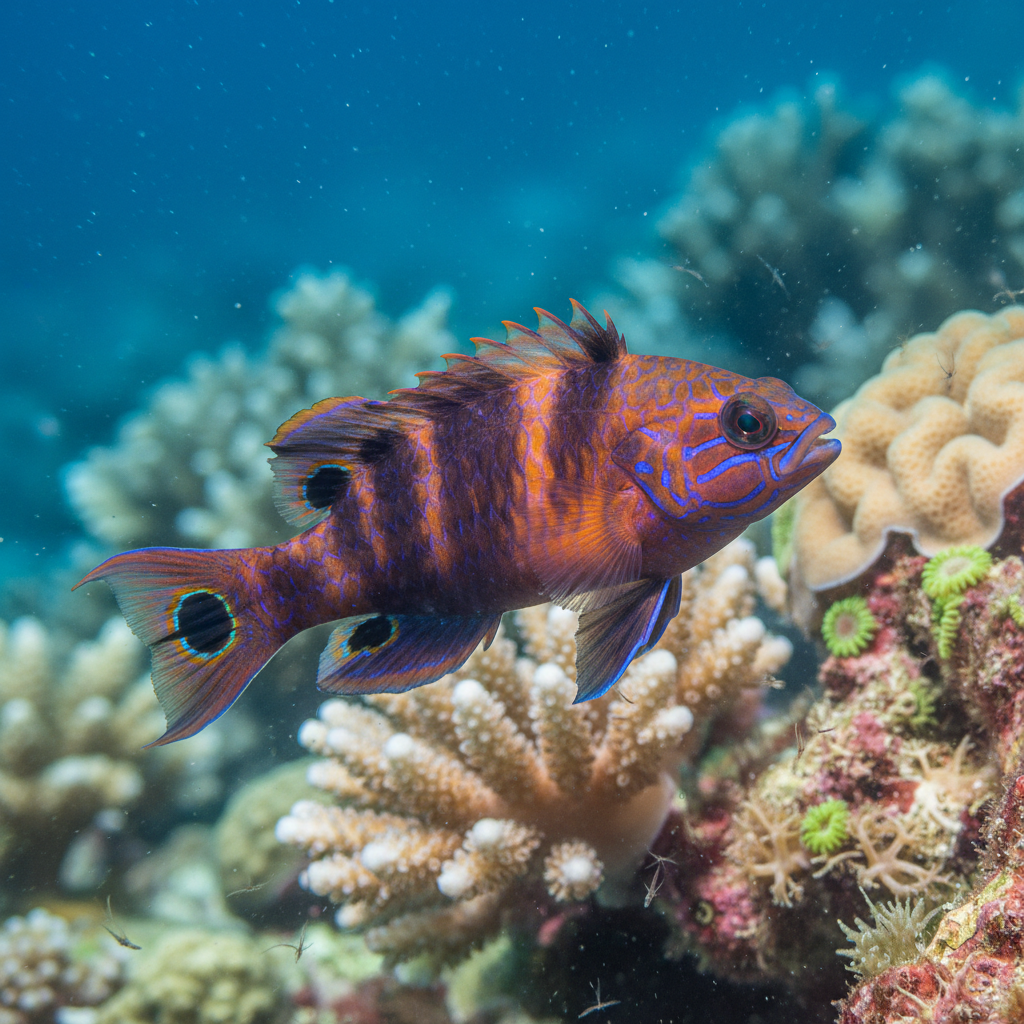
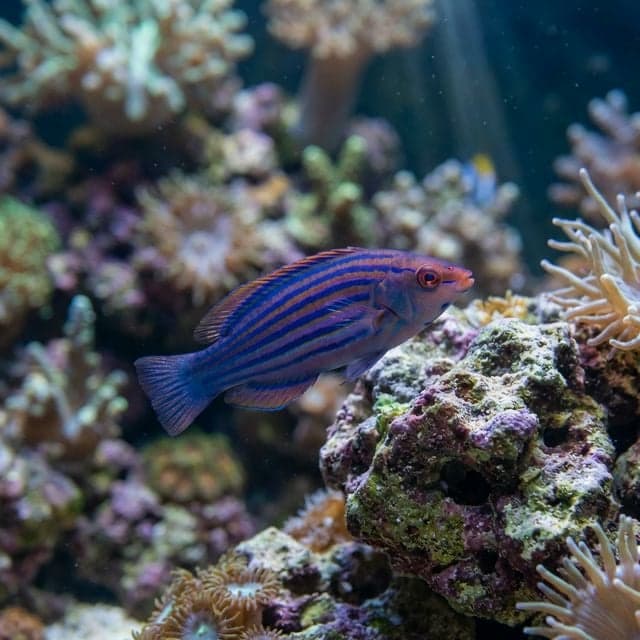
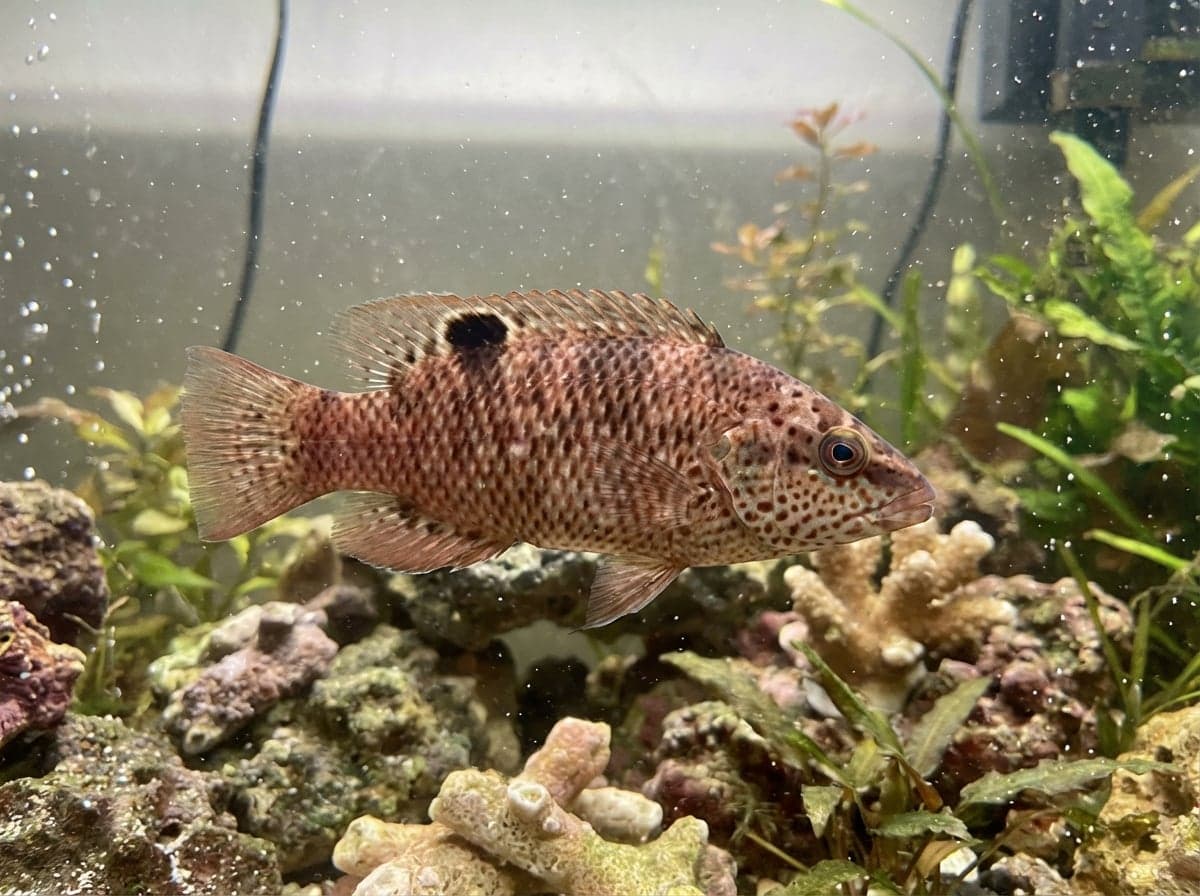
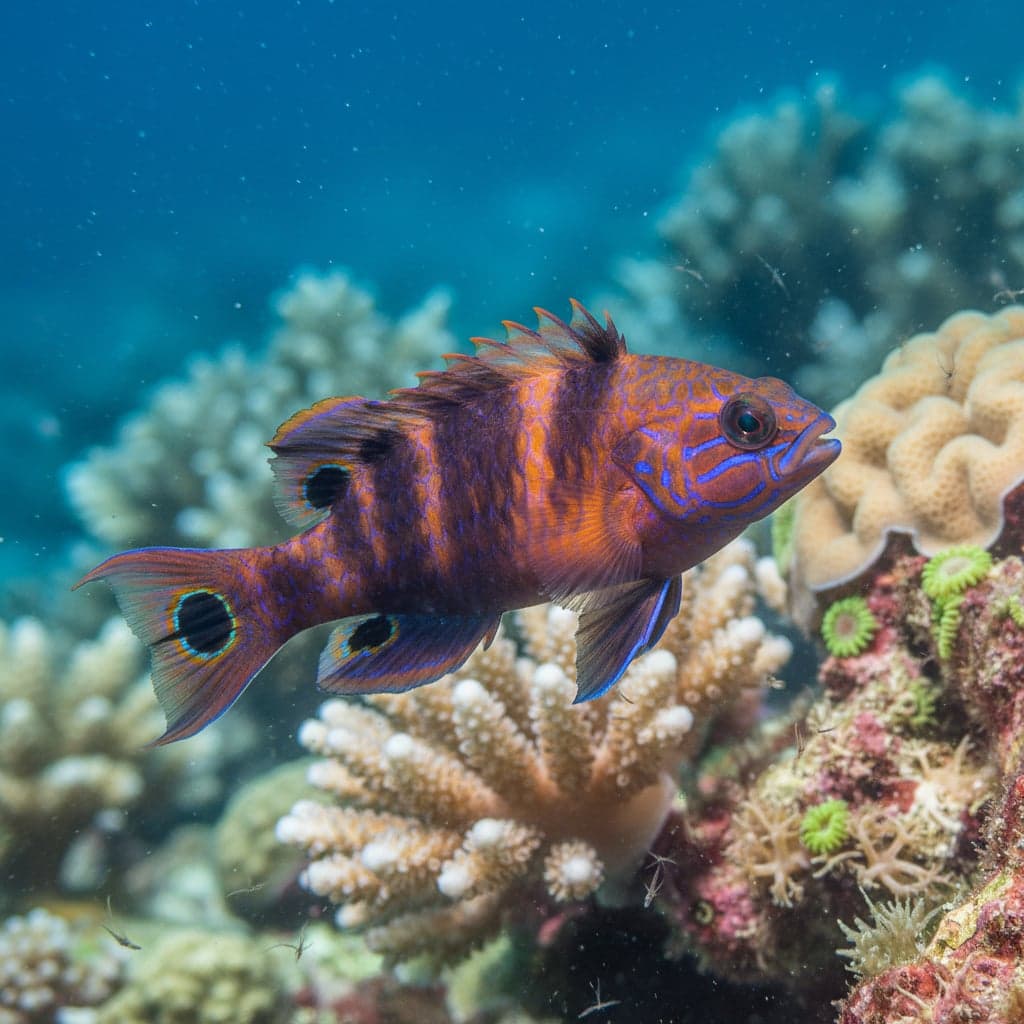
The Mystery Wrasse (Pseudocheilinus ocellatus) is a striking, secretive reef wrasse — lavender-to-pink body finely barred, yellow-washed head, and a conspicuous ocellus near the caudal peduncle that gives the species its name. Shops also label it the ocellated or white-barred wrasse. It is a close relative of the popular six line wrasse (P. hexataenia), hardier and longer-lived than many fairy wrasses, and it shares the genus’s useful habit of hunting small pest invertebrates in live rock.
Beauty, manageable adult size and pest-control value make it sought-after for reefs. Temperament is the price: bold for its size, and assertive toward other small wrasses that compete for the same cracks. Plan stocking around that attitude rather than assuming “small wrasse” means “community filler.”
Natural Habitat & Origin
Pseudocheilinus ocellatus ranges across Indo-Pacific reefs, often on deeper slopes and around rich coral, rubble and cave complexes where tiny crustaceans and other microfauna concentrate. It is a structure fish: short dashes between cover, constant inspection of crevices, rarely a long mid-water cruise. Wild individuals stay close to rock; open sand plains are transit, not home.
Unlike sand-sleeping Halichoeres and many fairy wrasses, Pseudocheilinus typically wedges into rockwork at night rather than burying. In the aquarium that means abundant live rock with real crevices matters more than a deep sand bed for this species — though sand is still fine as substrate. A mature system with natural microfauna gives it something to hunt between meals and softens the transition from wild diet to prepared foods.
Care Requirements
Stable marine water: salinity about 1.024–1.026, pH 8.1–8.4, temperature 24–26°C (75–79°F). Adults reach roughly 12 cm (5 inches). Frontmatter lists about 115 litres (30 US gallons) as a practical minimum for a single fish with serious rock — not a barren cube. Longer footprints with stacked rock beat tall nanos that leave no patrol route.
A secure, gap-free lid is mandatory. Like most wrasses, it jumps when startled at lights-out, during netting, or when chased from a cave. Dead fish on the floor are a husbandry failure, not bad luck. Flow should be moderate to strong but broken so the fish can work lee sides of rock; a single laminar blast that pins it against glass is wasted current.
Water quality should stay clean for a small carnivore’s bioload: zero ammonia and nitrite, nitrate controlled with changes and export. See ammonia and nitrite and nitrate. Log salinity and temperature in the Aquarium Tracker so slow drifts are visible before colour and appetite fade.
Diet & Feeding
Carnivore. Wild intake is small crustaceans and other invertebrates picked from rock — including pest species such as small bristleworms and pyramidellid snails, which is why reefs with flatworm or snail pressure often get a Pseudocheilinus. It is not a magic eraser for every pest, and it will not replace quarantine hygiene, but it is a genuine forager rather than a decoration that happens to swim.
Offer frozen mysis and enriched brine shrimp, finely chopped seafood, and quality small marine pellets or frozen preparations, once or twice a day. Variety beats a mysis-only routine. Feed when you can see the fish so competition from faster tankmates does not leave it on scraps. Broader routine guidance sits under marine diets and feeding schedules.
A newly imported specimen that hides and refuses food needs patience, enriched frozen offerings at lights-on, and low aggression — not daily chasing with a net. Once settled and eating, it is among the easier small wrasses to keep conditioned.
Behavior & Temperament
Semi-aggressive in the hobby sense: peaceful toward most unrelated fish of similar or larger size, assertive toward other small wrasses and similar niche competitors. Frontmatter lists solitary because that is the honest home plan — one Pseudocheilinus per typical reef, added later so it does not define every crack as exclusive territory from day one.
It spends the day working rockwork: dart, inspect, dart. That activity is entertaining and is exactly how tiny ornamental shrimp disappear if they share the same crevices. Toward tangs, clownfish, larger wrasses and mid-water fish it is usually fine. Toward another sixline, fourline or mystery wrasse in a small system, expect chasing.
Tank Mates
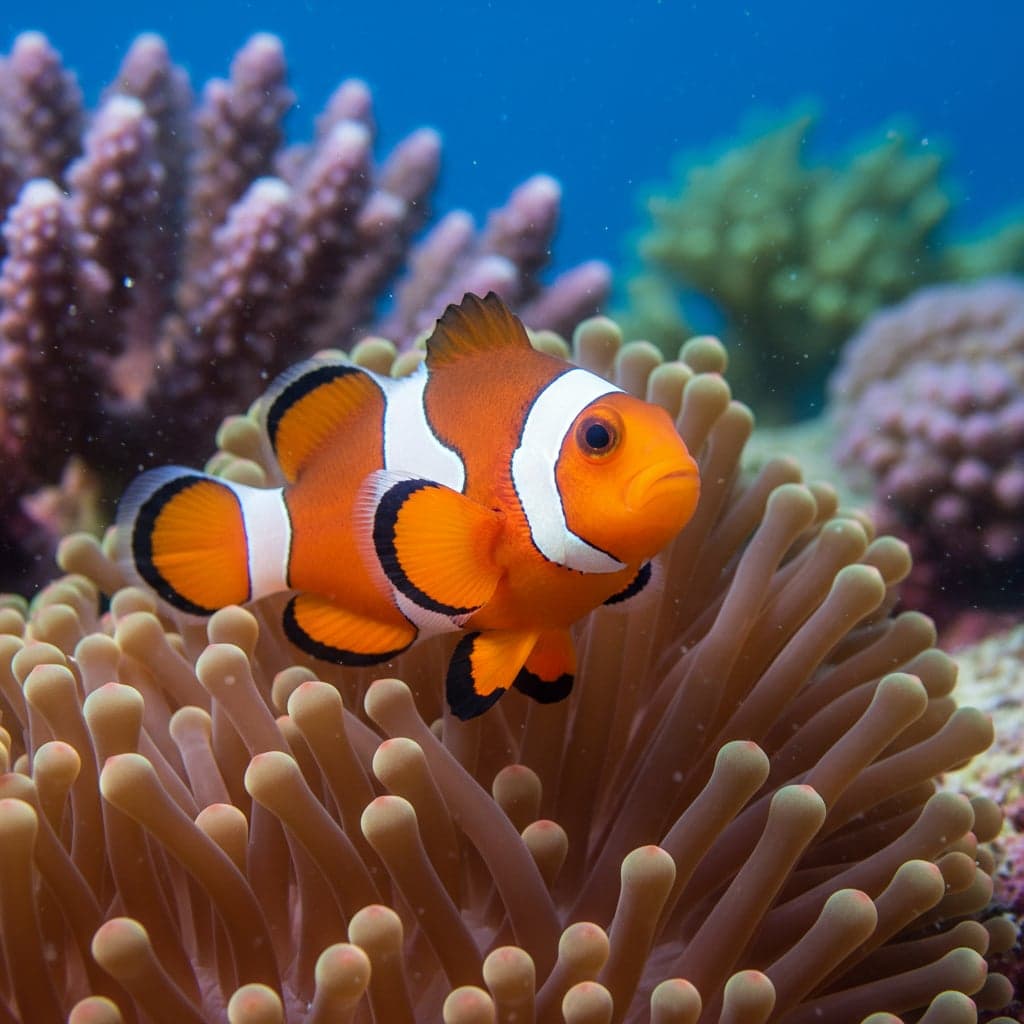
Good companions are a wide range of peaceful to semi-aggressive reef fish that do not live in the same micro-territory: tangs in tanks large enough for both, common clownfish, gobies that hold open sand territories, anthias, and larger wrasses that ignore the rock cracks. Avoid stacking multiple Pseudocheilinus or similar small wrasses unless the system is truly large and rock is partitioned by aquascape.
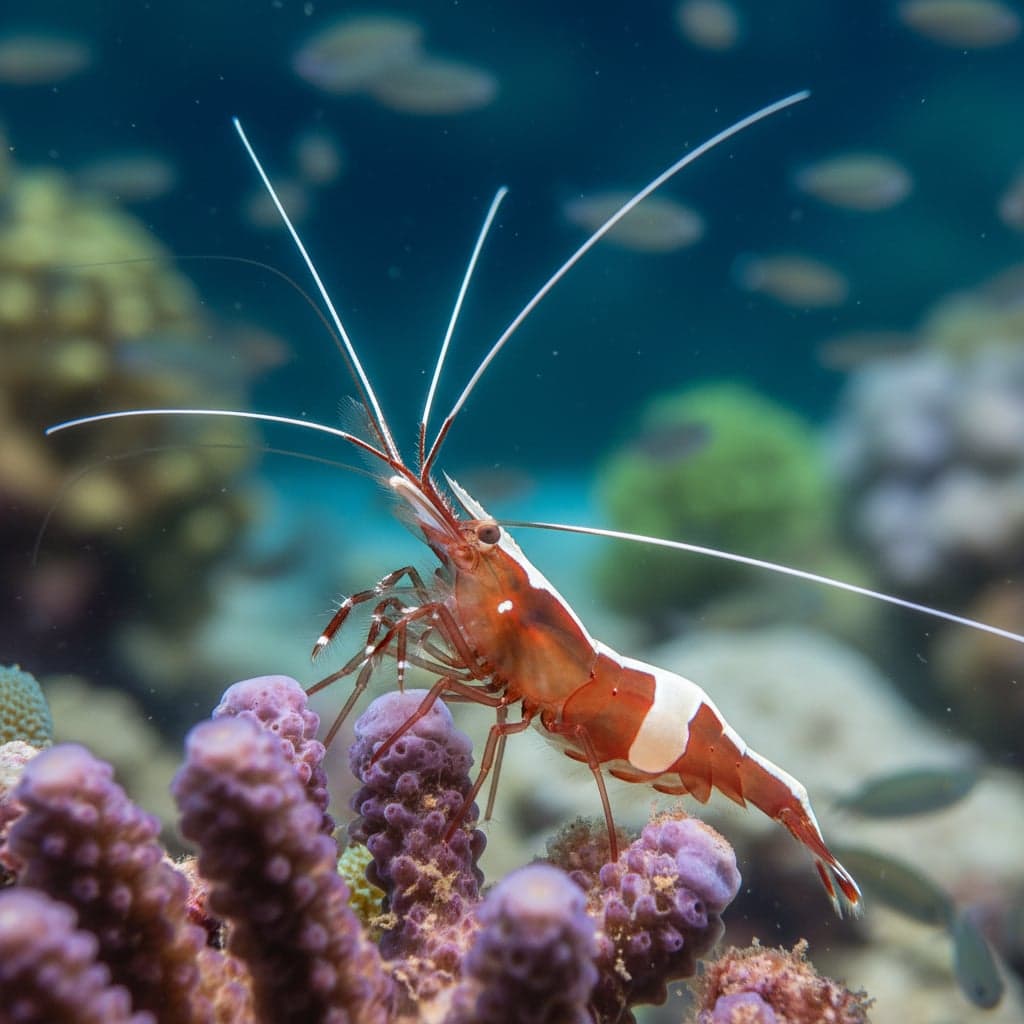
On reef safety, be precise. It is coral-safe: it does not farm SPS, LPS or soft coral polyps as a staple. The frontmatter description’s “reef-safe” claim tracks that coral behaviour. It is not guaranteed safe with the smallest ornamental shrimp — the same hunting instinct that clears pest snails can take tiny cleaner or sexy shrimp. Larger shrimp often survive; assume risk for dwarf species. Call the coral side reef-safe and the mobile-invert side caution.
Breeding
Pseudocheilinus ocellatus is a pelagic spawner. Eggs and larvae drift in the plankton; rearing is not a home-aquarium project. Trade specimens are wild-collected. Pair bonding and sex change in related wrasses are real biology; expecting fry from a display reef is not.
Common Health Issues
Hardy once established, still a marine import. Marine ich (Cryptocaryon irritans) and velvet (Amyloodinium ocellatum) hit stressed or freshly shipped fish hard. Quarantine under a quarantine protocol before the display. Treat in hospital systems; copper and many baths destroy invertebrates — see medications.
Jumping kills as often as parasites. Secure the lid, reduce night startle, and net carefully. Bacterial infections follow scrapes from rock fights or poor water; keep bioload matched to filtration.
Given rock-dense territory, a varied carnivore diet, one small wrasse niche and honest shrimp expectations, the Mystery Wrasse is a hardy, useful intermediate reef fish — pest forager and colour piece, not a nano community afterthought.