Red-Margined Fairy Wrasse
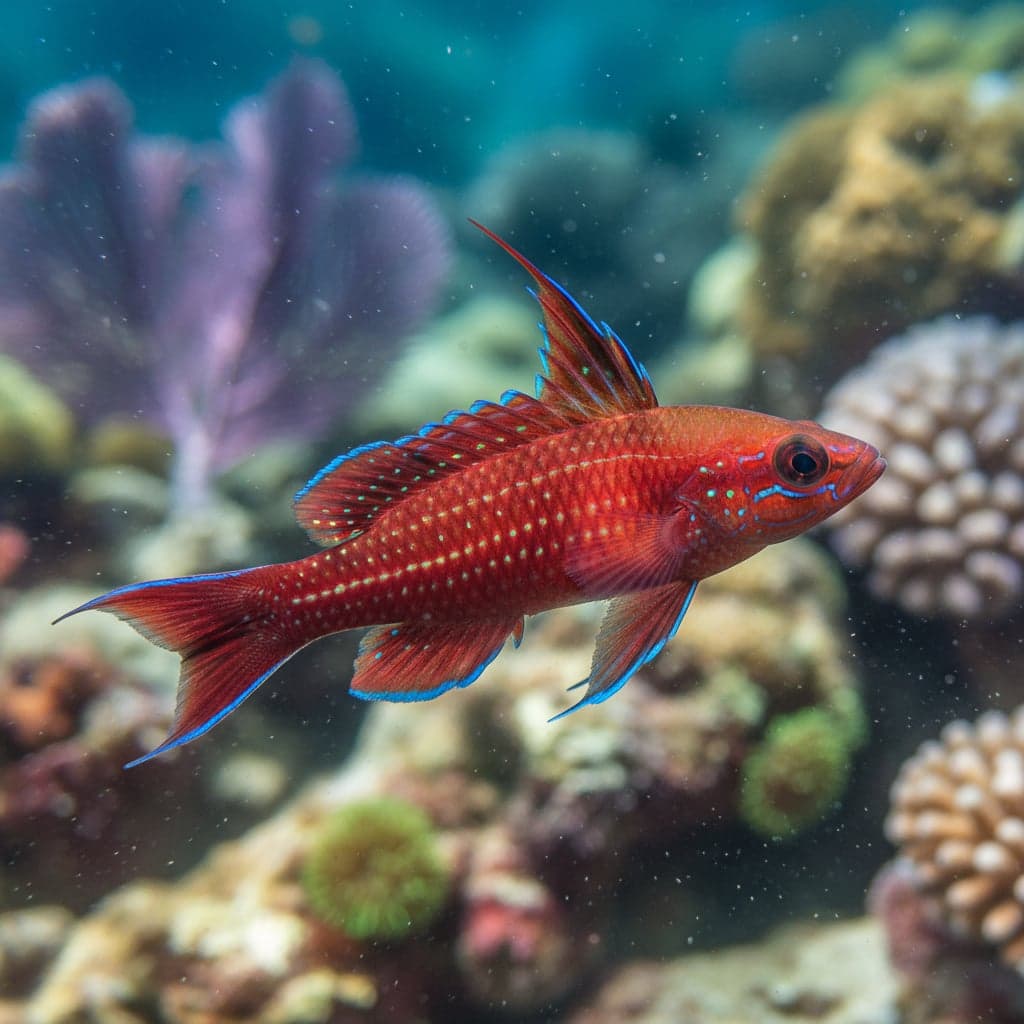
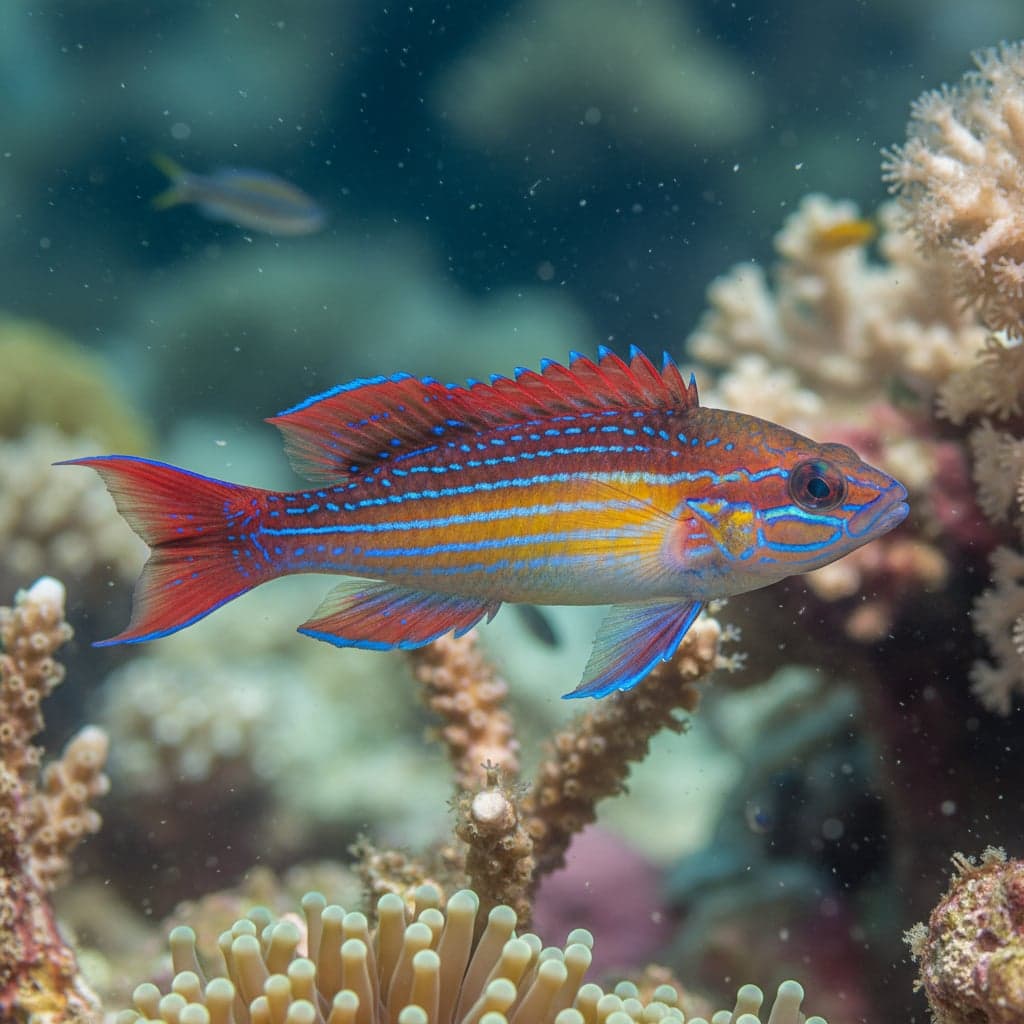
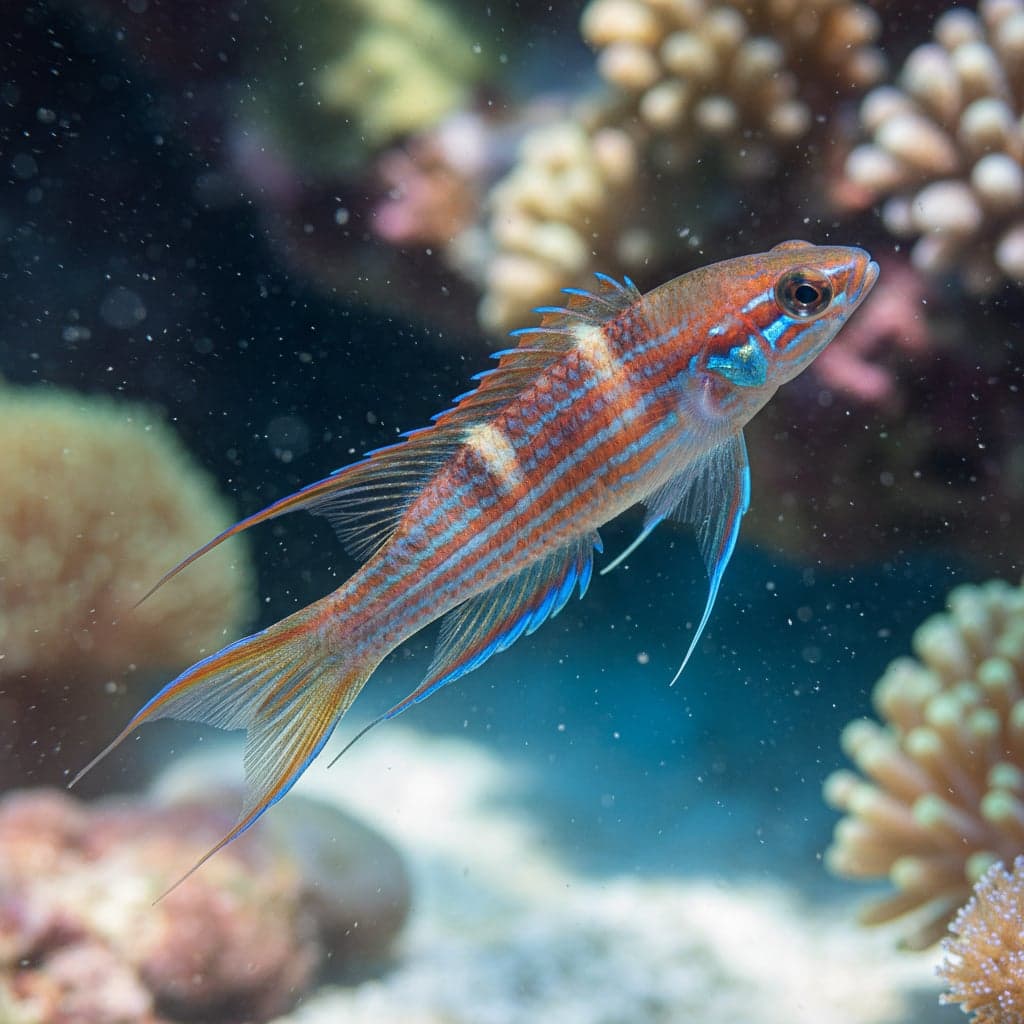
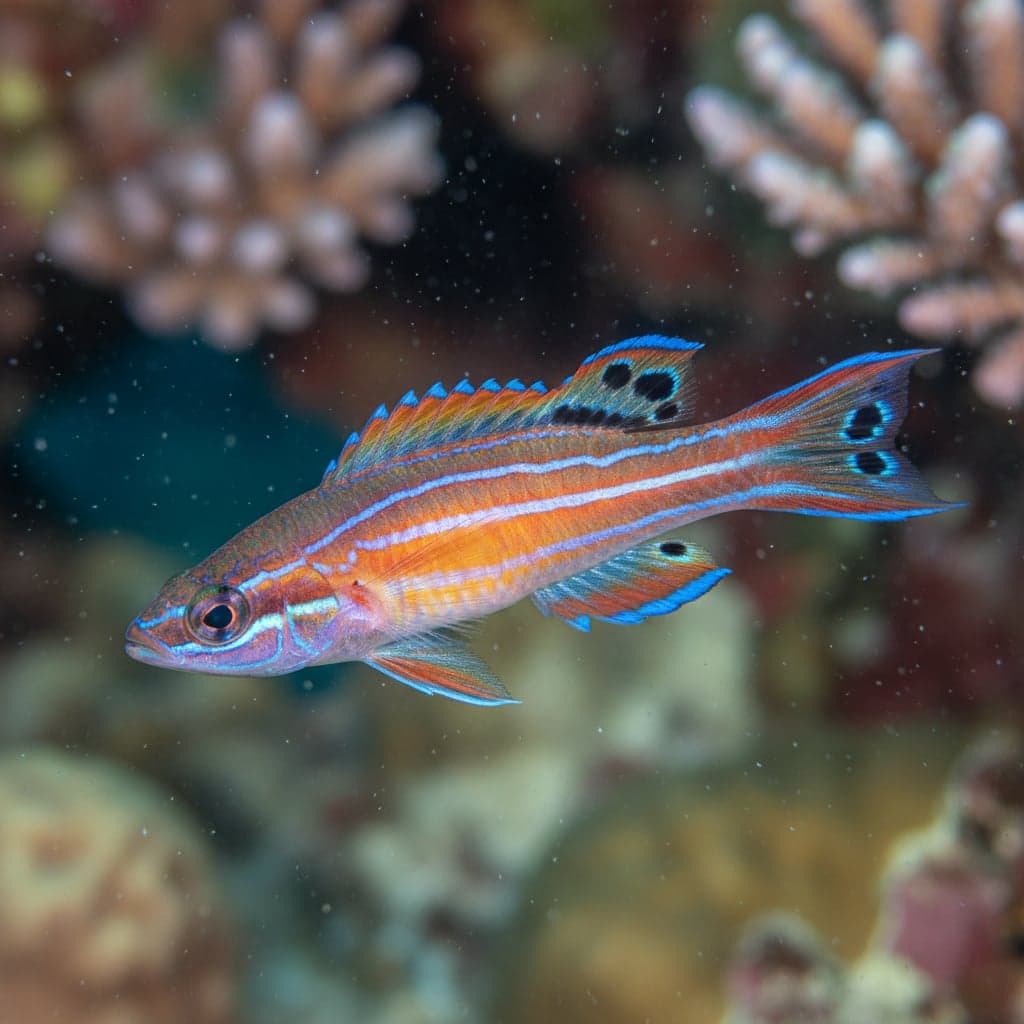
The Red-Margined Fairy Wrasse (Cirrhilabrus rubrimarginatus) is a dazzling, peaceful reef wrasse whose males flush with colour — fully reef-safe and ideal for a community reef.
Red-Margined Fairy Wrasse
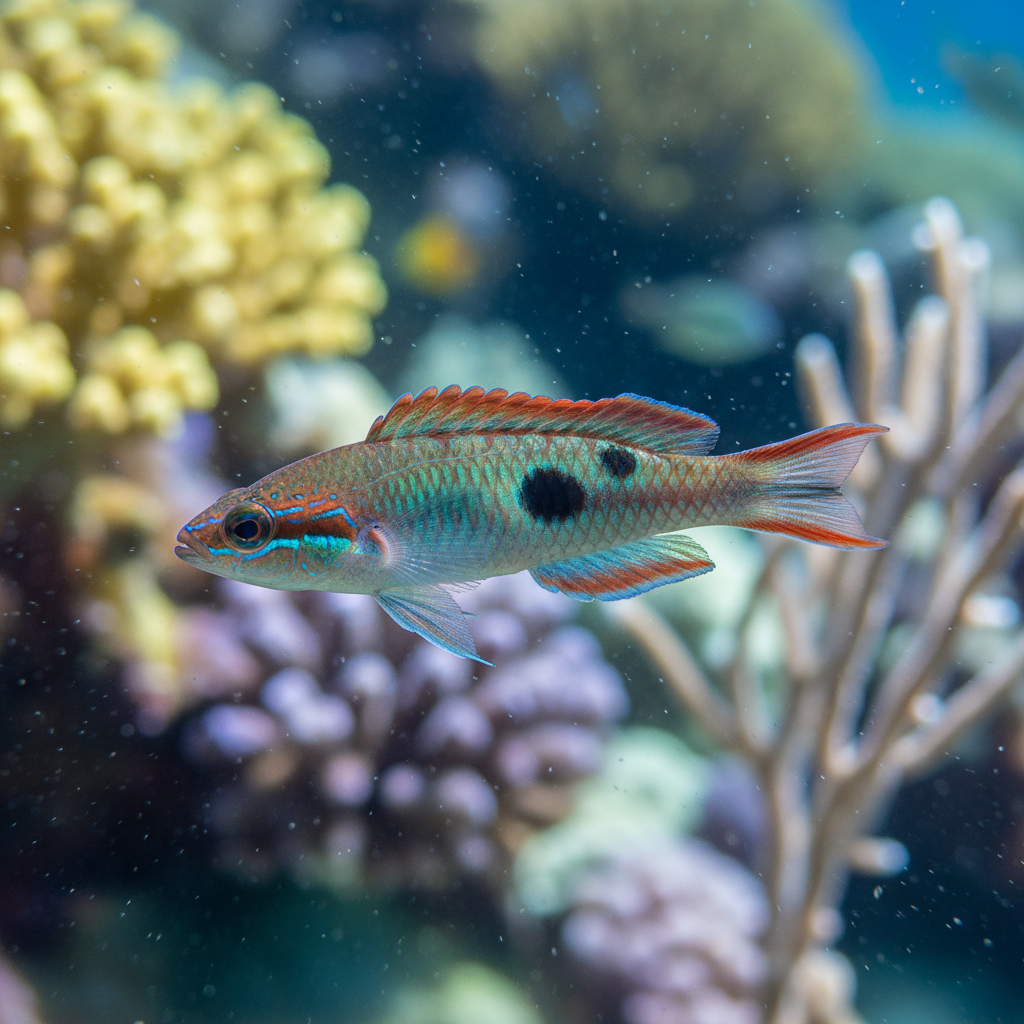
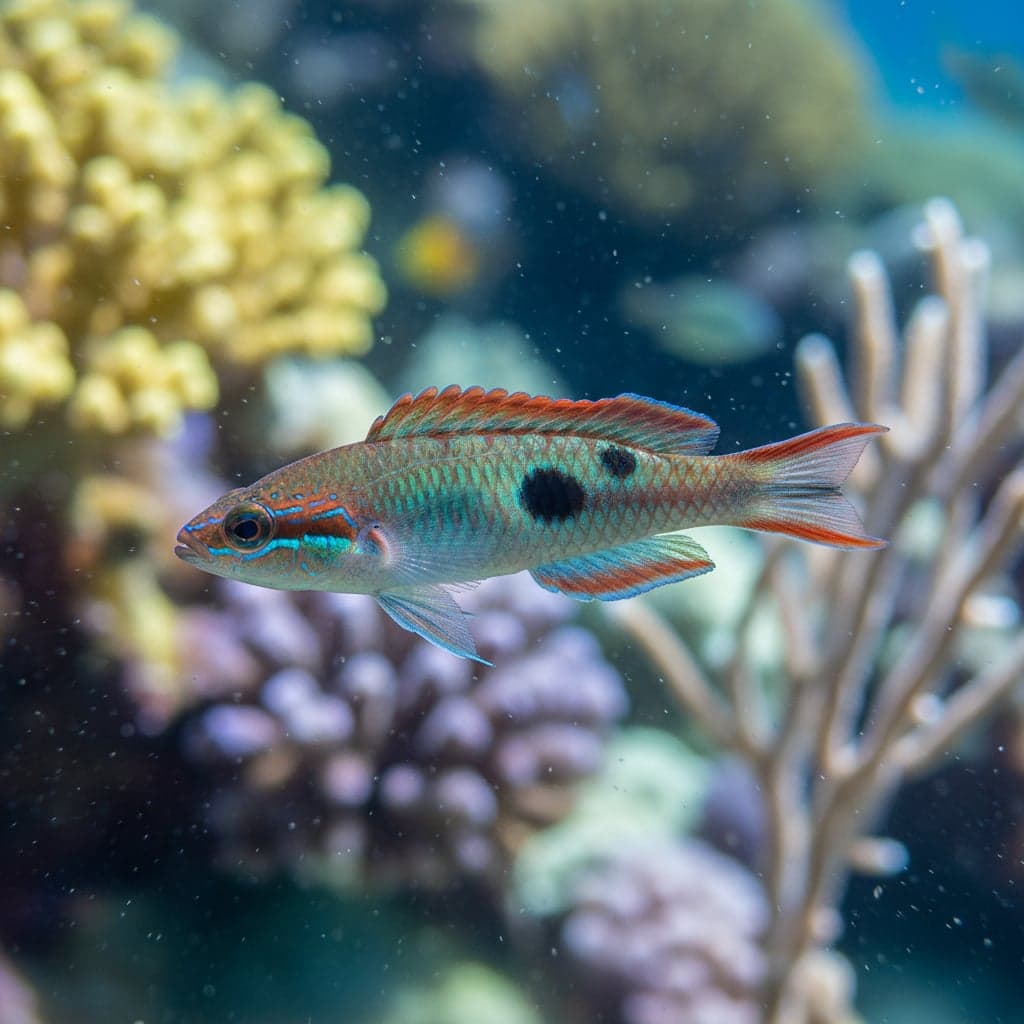
The Red-Margined Fairy Wrasse (Cirrhilabrus rubrimarginatus) is a western Pacific fairy wrasse built for colour and constant mid-water motion. Males blaze in pink, orange and magenta with red-edged fins, flushing harder when displaying; females stay a softer rose. Adults reach about 12 cm (5 inches). Active, hardy and fully reef-safe, fairy wrasses like this one bring flash to a community reef without touching corals or ornamental invertebrates.
It looks best as a male with one or more females, where display competition keeps male colour high. Frontmatter lists shoaling because wild fish aggregate; in a home aquarium that almost never means a mixed school of males in 200 litres — it means a harem plan, or a single male, in honest volume.
Natural Habitat & Origin
Cirrhilabrus rubrimarginatus lives over deeper reef slopes and rubble in the western Pacific, working loose aggregations and picking zooplankton from the current. Males display above the reef to harems of females. Night finds them in rock crevices, often inside a mucus cocoon.
In the aquarium recreate open water above the rock for swimming and display, plus caves for night shelter. A low, packed aquascape with no mid-water lane produces a nervous jumper that spends the day hiding.
Care Requirements
Stable marine water: salinity about 1.024–1.026, pH 8.1–8.4, temperature 24–26°C (75–79°F). Around 200 litres (about 55 US gallons) or more suits a single male or a small harem — prefer more space when running multiple females. A secure, gap-free lid is essential. Fairy wrasses are accomplished jumpers; overnight losses through overflow teeth, light gaps and filter lids are the classic husbandry failure for this genus.
Flow moderate to strong and broken, matching a plankton-picking slope fish. Keep nitrogen waste low; frequent feeding of micro-carnivores loads the system. Quarantine every arrival for marine ich (Cryptocaryon irritans) and marine velvet (Amyloodinium ocellatum). Treat in QT — medications do not belong on a reef display.
Use the Aquarium Tracker to log salinity and temperature. Once settled, this wrasse is hardy and undemanding; the lid and the meal schedule matter more than exotic chemistry tricks. Dim night periods and stable day length also help — sudden all-night light leaks keep fairy wrasses pacing when they should be in rock.
Diet & Feeding
Micro-carnivore. Wild intake is zooplankton. In captivity offer frequent small meals of frozen mysis and enriched brine shrimp, finely chopped seafood and quality small marine pellets and flakes. Several feedings a day suit a fast metabolism and keep colours vivid. A single evening dump leaves a high-energy wrasse underfed while still spiking nutrients.
It usually accepts prepared foods quickly. Prove that in QT before display life gets competitive. Broadcast feeding helps when anthias or other mid-water fish share the tank. Marine diets and feeding schedules cover routine structure for planktivore-biased carnivores.
Colour intensity tracks diet, light and male social context as much as genetics. A washed-out male in a bare tank with one meal a day is a husbandry problem, not a “dull morph.”
Behavior & Temperament
Peaceful toward unrelated tankmates. Males display and may gently spar with other male fairy wrasses, so keep a single male unless the system is large and you introduce males carefully. A male with several females is the ideal show stocking. By day it works open water; at night it shelters in rock, often in a mucus cocoon — do not panic if it vanishes after lights out.
Shoaling on the label does not license packing multiple flashy males into a standard reef. Aggression inside Cirrhilabrus is the common captive outcome when male density outruns volume and sightline breaks.
Tank Mates
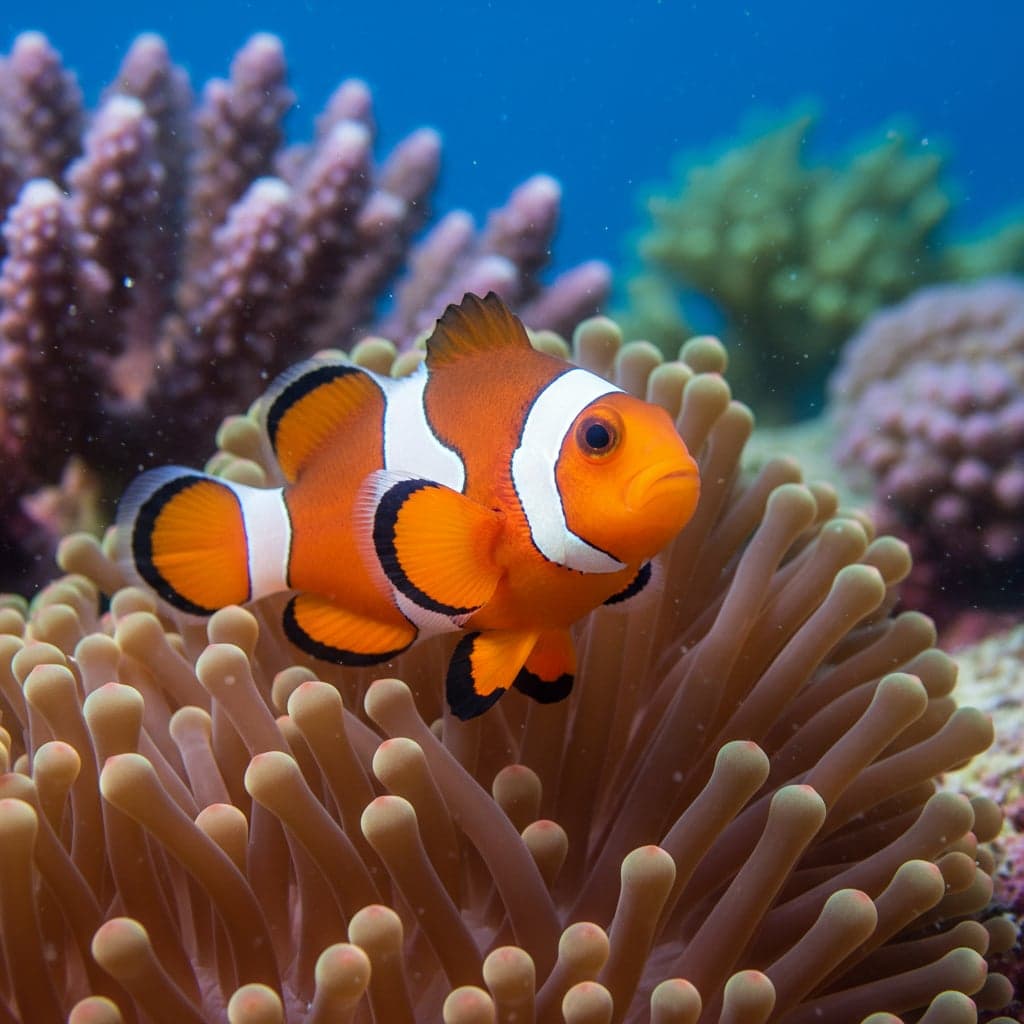
Good companions are other peaceful reef fish: clownfish, gobies, other small wrasses, anthias, cardinalfish and similar. Avoid aggressive or boisterous species that will pin a fairy wrasse away from food or drive it into the lid. It is fully reef-safe — corals and ornamental invertebrates are not on the menu — which makes it one of the best colourful additions to a peaceful reef.
Multiple fairy wrasse species can often be mixed in a large tank if added together and given broken rock structure. Adding a new male later into an established male’s territory is how long-running disputes start.
Breeding
Cirrhilabrus rubrimarginatus spawns in pelagic fashion. Aquarium spawning is occasionally observed in harems; rearing the tiny larvae is difficult and rarely achieved at home. Trade specimens are wild-collected. Protogynous tendencies in related fairy wrasses mean sex and colour can shift with social context — stock deliberately rather than assuming shop labels stay permanent forever.
Common Health Issues
Hardy once settled, still able to import ich and velvet under shipping stress. Quarantine new arrivals. Keep water stable. Secure the lid. Feed frequently. Jumping and post-shipping disease beat “mystery fairy wrasse failure” as the usual causes of loss.
Given those basics — ideally as a small harem under a sealed canopy — the red-margined fairy wrasse is a brilliant, beginner-friendly and reef-safe centrepiece for a community reef. Leave gaps in the lid, underfeed, or stock two rival males in 200 litres, and the dazzling pink becomes a fish that either disappears overnight or spends the day locked in a corner fight. Settle feeding and jump-proofing in QT first; a calm, eating male is the fish that actually delivers the colour the shop bag promised.