Royal Dottyback
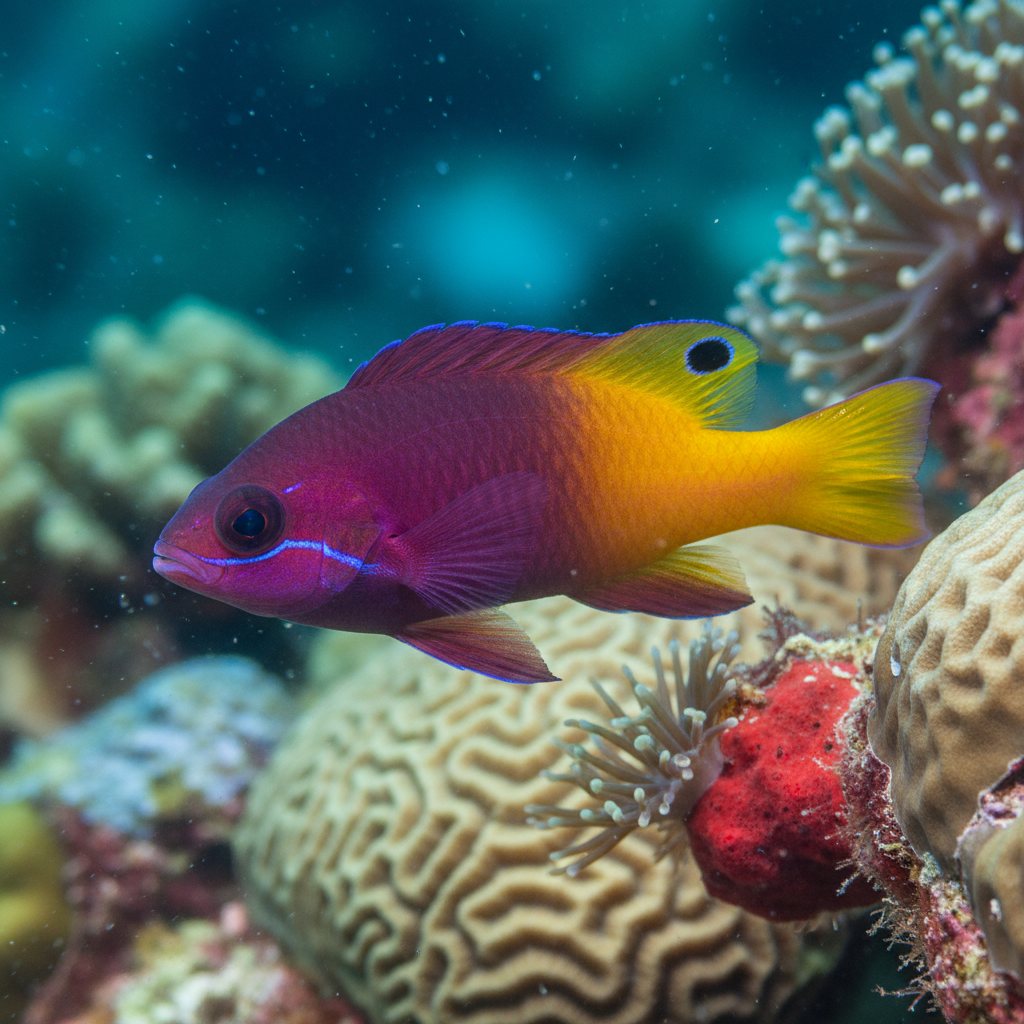
The Royal Dottyback (Pictichromis paccagnellorum) is a small, dazzling purple-and-yellow reef fish — hardy and reef-safe, but bold and territorial.
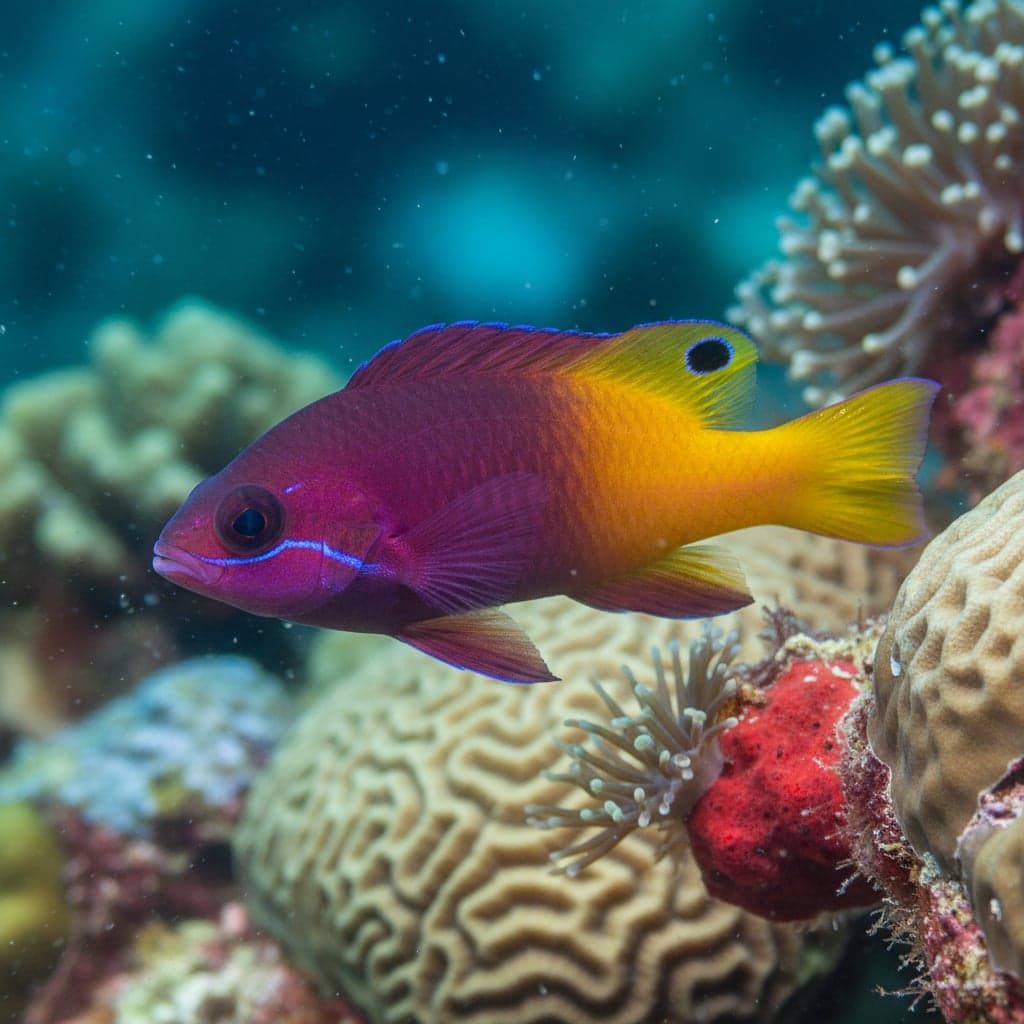
Royal Dottyback
The Royal Dottyback (Pictichromis paccagnellorum), also called the royal or bicolor dottyback, is a small reef fish split into two vivid blocks of colour — a deep purple front half meeting a brilliant yellow rear, divided cleanly down the middle. Hardy, inexpensive and dazzlingly coloured, it brings a jewel-like accent to nano and small reef aquariums, and it is an easy fish to keep on water chemistry and feeding. Its boldness, however, means temperament has to be planned around — especially toward other dottybacks.
Despite its tiny size, it is a confident, territorial fish that will hold its own against much larger tankmates. Frontmatter lists solitary because that is the honest captive plan: one royal per tank in almost every home system. Conspecific aggression in this family is not a rumour; same-species and similar-looking Pictichromis / Pseudochromis neighbours are the usual trigger for nonstop cave wars.
Natural Habitat & Origin
Pictichromis paccagnellorum occurs in the western Pacific, living close to the reef, sheltering among rock, rubble and crevices and darting out to feed. It is a secretive species that quickly retreats into cover when disturbed, then returns to the same small territory.
In the aquarium it wants exactly that: plenty of live rock with holes and caves to claim as territory and shelter. A bare tank with one ornament forces the whole aquarium to become “its” cave, which raises harassment of anything that swims past.
Care Requirements
Stable marine water: salinity about 1.024–1.026, pH 8.1–8.4, temperature 24–26°C (75–79°F). Adults reach only about 6 cm (2.5 inches). The listed minimum of around 75 litres (20 US gallons) works when rockwork is abundant; a larger footprint dilutes disputes with other assertive fish but does not make two royals share peacefully in a standard reef.
A secure lid is wise — dottybacks can jump when startled or chased. Quarantine new arrivals even though captive-bred fish are common and hardy. Marine ich (Cryptocaryon irritans) and marine velvet (Amyloodinium ocellatum) still follow stress; see medications and a proper quarantine protocol. Copper belongs in hospital tanks, not on mixed reefs.
Use the Aquarium Tracker to log salinity and temperature. Chronic neglect shows up as dull colour and clamped fins; territorial stress shows up as torn fins and a tankmate pinned in a corner.
Diet & Feeding
Carnivore. Wild intake is small crustaceans and zooplankton. In the aquarium it eagerly accepts meaty foods: frozen mysis and enriched brine shrimp, finely chopped seafood, and quality marine pellets or flakes. Feed once or twice a day; it is an easy, enthusiastic feeder and a useful appetite barometer.
It will also hunt tiny mobile invertebrates on the rock — ornamental shrimp fry, pods and bristleworms included. A well-fed fish is less frantic; it is not a guarantee that every expensive cleaner shrimp is safe in a nano shared with a hungry dottyback. Marine diets cover meaty staples for small reef carnivores.
Behavior & Temperament
Semi-aggressive and territorial — it punches well above its size. It can harass smaller or more timid tankmates, especially in a small tank, so it is usually best added last so it cannot establish dominance over the whole aquarium. It spends its day patrolling and defending its chosen patch of rock.
Conspecific aggression is the planning rule. Do not house two royal dottybacks together in typical home volumes. Do not stack multiple Pictichromis or Pseudochromis of similar size and habit in the same nano and hope “colour difference” is enough. Same-species and lookalike neighbours trigger persistent chasing, fin damage and deaths that look mysterious until you count the caves. One royal per system is the default; only very large, heavily broken reefs with clear sight-line breaks ever support more than one dottyback-type fish, and even then risk remains high.
Toward unrelated, robust fish the attitude is often manageable. Toward other dottybacks it is a different contract.
Tank Mates
Pair it with robust tankmates that can stand up to its attitude — common clownfish, damsels, larger wrasses and similar stock — rather than very shy or tiny fish. Avoid other dottybacks and basslets that want the same cave network unless the system is genuinely large and aquascaped to split territories.
It is reef-safe with corals. As a small predator it may eat ornamental shrimp, tiny crustaceans and bristleworms, which some keepers consider a useful pest trait and others consider a reason to skip expensive shrimp in the same nano.
Breeding
Pictichromis paccagnellorum is bred commercially, and captive-bred specimens — which tend to be especially hardy and well-adjusted — are often available. Males guard a clutch of eggs in a crevice; rearing the larvae requires dedicated effort but the species is a realistic candidate for marine breeding projects. Captive-bred status improves hardiness; it does not erase conspecific aggression once two adults share a small display.
Common Health Issues
Hardy and not especially disease-prone, still a marine fish. Ich and velvet follow shipping stress and poor oxygen. Fin damage from conspecific or territorial fights is the other common problem — secondary bacterial infection follows torn tissue in warm saltwater. Quarantine new arrivals, keep water quality stable, and secure the lid against jumping.
Mindful of bold temperament and conspecific aggression when choosing tankmates, the royal dottyback is otherwise an easy, brilliantly coloured and rewarding fish — a striking splash of purple and gold for a small reef that has room for exactly one boss of that shape.